Last Updated: October 9, 2026
- Top Marine Salt Mixes for Reef Tanks
- The Big Three: Calcium, Alkalinity, and Magnesium
- Salt Mix Chemistry Comparison
- Trace Elements: What the Label Doesn’t Tell You
- Mixing Protocol: Temperature, RO/DI Quality, and Aeration
- FOWLR vs. Reef: Do You Need Reef-Grade Salt?
- Frequently Asked Questions
- Related Articles
- Related Guides
- Top Pick: Coralife BioCube Saltwater Aquarium Fish Tank, 15 Gallon
- Best Value: Red Sea Coral Pro Reef Salt Mix Small Bucket – Makes 55 Gallons Complete Marine Saltwater Aquarium Advanced Formula Optimal Coral Health & Stability
- Premium Choice: Red Sea Reef Salt Mix Small Bucket | Makes 55 Gallons Complete Marine Saltwater Aquarium Advanced Formula Optimal Coral Health & Stability

TL;DR: Not all marine salt mixes are equal — the chemistry varies enough between brands to cause coral stress, accelerated calcium/alkalinity demand, and inconsistent NSW parameters. The right salt for a FOWLR system is not the right salt for an SPS reef. This comparison covers the key ionic ratios, trace element profiles, and real-world mixing behavior that matter when choosing a marine salt mix for a reef tank.
Marine Salt Mix Reef Tank Comparison: Which Salt Actually Matches NSW Chemistry?
Natural seawater (NSW) is not just “salt water.” It’s a specific ionic solution with a precise ratio of major elements (Na⁺, Cl⁻, Mg²⁺, Ca²⁺, K⁺, SO₄²⁻), a buffered alkalinity of approximately 2.5 mEq/L (7 dKH), and dozens of trace elements at parts-per-billion concentrations. A marine salt mix for a reef tank must replicate this chemistry consistently — batch to batch, bucket to bucket — or your coral calcification rate, color, and immune response will swing with every water change.
As an Amazon Associate we earn from qualifying purchases at no extra cost to you.


This comparison cuts through marketing claims and looks at what the independent test data shows about major-ion ratios, alkalinity consistency, and dissolved organic content across the salt mixes hobbyists actually buy.
🛒 Best Price Today on Amazon
Prime members get fast, free shipping on everything above, plus member-only deals. New members get a 30-day free trial — cancel anytime.
Start 30-Day Prime Free Trial →See Today’s Amazon DealsTop Marine Salt Mixes for Reef Tanks




As an Amazon Associate we earn from qualifying purchases. Product prices and availability are accurate as of the date/time indicated.




As an Amazon Associate we earn from qualifying purchases. Product prices and availability are accurate as of the date/time indicated.


As an Amazon Associate we earn from qualifying purchases. Product prices and availability are accurate as of the date/time indicated.
The Big Three: Calcium, Alkalinity, and Magnesium
Coral skeletal growth (calcification) is an aragonite deposition process requiring both calcium ions (Ca²⁺, target 420–440 ppm) and carbonate (alkalinity, target 8–10 dKH). These two parameters are chemically linked — raise one without the other and precipitation occurs, crashing both simultaneously. The third leg is magnesium (Mg²⁺, target 1,280–1,350 ppm): it inhibits unwanted calcium carbonate precipitation and is consumed by coralline algae at a rate 3× that of pure calcium.
A reef-grade salt mix should mix to NSW-parameter values at 1.025–1.026 specific gravity (35 ppt salinity). Many budget salt mixes mix to elevated alkalinity (11–13 dKH) with suppressed calcium (380–400 ppm) — a ratio that causes initial stability but depletes alkalinity faster than the coral can absorb it, leading to rapid dKH swings between water changes.
Salt Mix Chemistry Comparison
| Parameter | Natural Seawater | NSW-Grade Salt Target | Budget Salt Range |
|---|---|---|---|
| Salinity (ppt) | 35 | 35 at 1.026 SG | 33–36 (inconsistent) |
| Calcium (ppm) | 412 | 420–440 | 380–420 |
| Alkalinity (dKH) | 7–8 | 8–10 | 9–13 |
| Magnesium (ppm) | 1,284 | 1,280–1,350 | 1,100–1,280 |
| Potassium (ppm) | 392 | 380–420 | Often uncertified |
| Phosphate (ppm) | ~0.1 | <0.05 target | 0.1–0.5 (varies) |
Trace Elements: What the Label Doesn’t Tell You
Premium reef salts advertise “complete trace elements” — but the concentration and bioavailability of those traces varies enormously. The elements that matter most for coral pigmentation and immune function are iodine (I⁻), strontium (Sr²⁺), and the transition metals molybdenum, manganese, and vanadium. These exist in NSW at 0.5–60 µg/L concentrations.
Problem: most salt mix manufacturers don’t publish batch-specific trace element data. The two ways to assess trace element quality without ICP-OES testing are (1) reviewing independent community batch tests published in reef chemistry forums, and (2) observing coral coloration trends 4–6 weeks post-water-change. Color regression in chromis proteins (zooxanthellae density) is one of the earliest visible indicators of trace deficiency, preceding detectable parameter shifts by weeks.
For comparison, the saltwater vs. freshwater aquarium chemistry fundamentals are covered in our saltwater vs freshwater beginner guide.
Mixing Protocol: Temperature, RO/DI Quality, and Aeration
Salt mix chemistry is sensitive to mixing conditions. Always use RO/DI water with TDS below 5 ppm — municipal tap water introduces silicates, chloramines, and phosphates that directly compete with coral biochemistry. Mix to temperature before adding to the display: cold salt water added to a warm reef tank causes thermal shock and rapid degassing of CO₂, temporarily spiking pH.
Aerate mixed saltwater for at least 24 hours before use. Freshly mixed salt water has elevated CO₂ from the mixing process, which suppresses pH and reduces carbonate availability. Aerated saltwater at 78 °F with proper Mg/Ca/Alk parameters shows significantly higher coral polyp extension within 2 hours of a water change versus unaerated mix added directly. This is especially important for nano reef systems — see our nano aquarium setup guide for water change protocols scaled to small volumes.
FOWLR vs. Reef: Do You Need Reef-Grade Salt?
For a fish-only with live rock (FOWLR) system, NSW-grade salt is overkill. Fish tolerate a salinity range of 1.020–1.026 SG and are far less sensitive to major-ion ratios than corals. A quality budget salt that mixes to stable parameters is entirely adequate. The calcium/alkalinity/magnesium precision required for an SPS reef is unnecessary when the only calcium consumer is coralline algae on the rock.
Draw the line at live coral. Once you add any photosynthetic coral — soft, LPS, or SPS — invest in a salt with certified NSW parameters. The cost difference per water change is $2–5, while the cost of a single stressed coral is typically $40–200. Also consider a quality protein skimmer to maintain DOC levels low enough that salt chemistry stays stable between changes.
Frequently Asked Questions
How much marine salt mix per gallon of RO/DI water?
Most premium reef salts recommend approximately 0.5 cups (120–130 mL) per US gallon to reach 1.025–1.026 SG. Always verify with a calibrated refractometer rather than measuring by volume — salt density varies slightly between batches and brands. Target salinity of 35 ppt before checking temperature-corrected specific gravity.
Can I mix different salt brands together?
Technically yes, but not recommended. Different brands have different major-ion profiles — mixing them introduces unpredictable chemistry that’s difficult to troubleshoot. If transitioning between salts, switch fully on a single water change batch rather than blending the inventory. Test the new salt mix parameters before adding to your display tank.
Why is my reef salt mixing cloudy?
Cloudiness immediately after mixing is normal — calcium and alkalinity ions precipitate temporarily as ionic bonds re-form during dissolution. It should clear within 30–60 minutes of vigorous mixing. Persistent cloudiness after 2+ hours indicates either insufficient mixing, water that’s too cold (below 65 °F), or RO/DI water with elevated TDS that’s reacting with salt components.
How often should I do water changes on a reef tank?
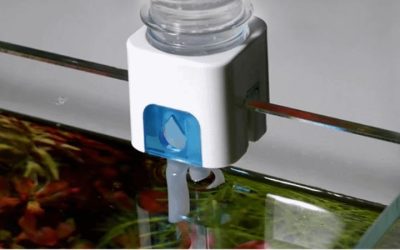
10–15% weekly is the standard for SPS-dominant systems with heavy feeding. Lower-bioload LPS/soft coral tanks can maintain stability at 10–20% every two weeks. The goal is to replenish trace elements and export dissolved organics before they accumulate to stressful levels. An auto water change system makes this completely hands-off and avoids the parameter swings from infrequent large changes.
Does water temperature affect how salt mix dissolves?
Yes significantly. Ionic solubility of calcium, magnesium, and sulfate compounds increases with temperature. Mixing at 60 °F yields lower effective concentrations and slower dissolution than mixing at 75–78 °F. Always mix at or near display tank temperature, and use a calibrated refractometer after full dissolution and temperature equilibration — not immediately after adding the salt.
Ready to decide? Our #1 pick for 2026 is the Salinity (ppt).
Live price & availability on Amazon.
Related Reviews & Guides

Best Budget Calcium Reactor: Trusted Expert Buying Guide
How to Choose Reef LED Light: Top Smart Guide for Real Tanks