Last Updated: October 4, 2026
- Top Pick: AQUASMITH Aquarium Chiller Fan,Fish Tank Cooler with Temperature Control,Minimum Setting 59℉,Auto Start/Stop,Refrigeration Effect 3-7℉,3-Speed Modes,for Axolotl Seawater Freshwater Coral Grass Tank
- Best Value: VEVOR Aquarium Chiller, 110 Gallon, 1/3 HP Water Chiller for Hydroponics
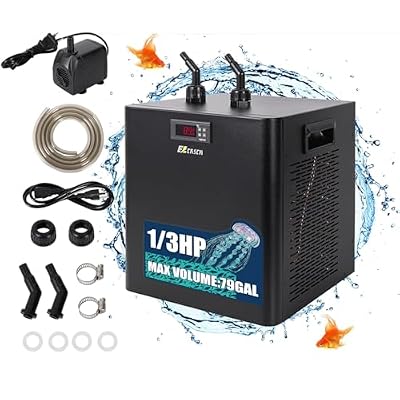
- Premium Choice: Aquarium Chiller 79 Gal, 1/3 HP Water Chiller Machine, Hydroponic Cooling System, Fish Tank Chiller with Upgraded LED Display, for Axolotl Jellyfish

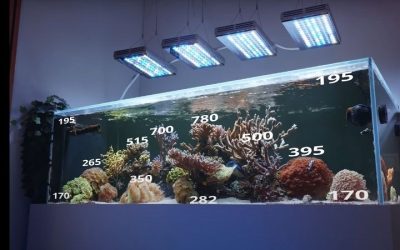
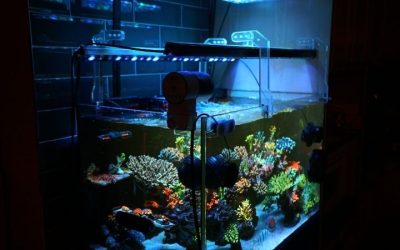
Temperature is one of the most consequential — and most overlooked — parameters in a reef aquarium. Most corals, particularly SPS species, have a tolerance window of just a few degrees: push above 82–83°F (28°C) for any sustained period and you’re looking at bleaching events, stressed fish, and a rapidly deteriorating system. In warm climates, during summer heat waves, or in any room where the HVAC can’t reliably keep things cool, an aquarium chiller isn’t a luxury accessory — it’s essential life-support equipment. Here are the best options currently available on Amazon, covering everything from compact drop-in units to full inline chillers for large reef systems.
🛒 Best Price Today on Amazon
Prime members get fast, free shipping on everything above, plus member-only deals. New members get a 30-day free trial — cancel anytime.
As an Amazon Associate we earn from qualifying purchases.




Quick Picks
IceProbe Thermoelectric Aquarium Chiller
- Compact drop-in design — no plumbing
- Near-silent thermoelectric operation
- Ideal for tanks up to 30 gallons

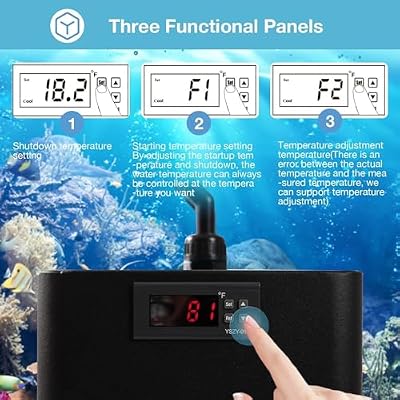

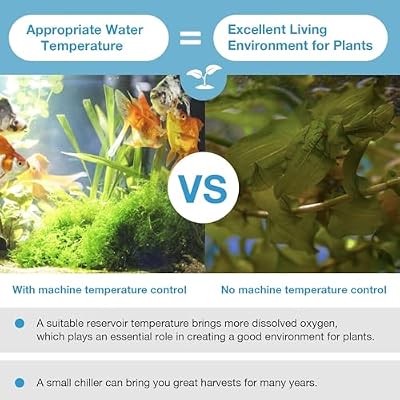

As an Amazon Associate we earn from qualifying purchases. Product prices and availability are accurate as of the date/time indicated.
Coralife Aquarium Chiller 1/10 HP
- Inline compressor-based cooling
- Handles tanks up to 60 gallons
- Digital thermostat with precise control


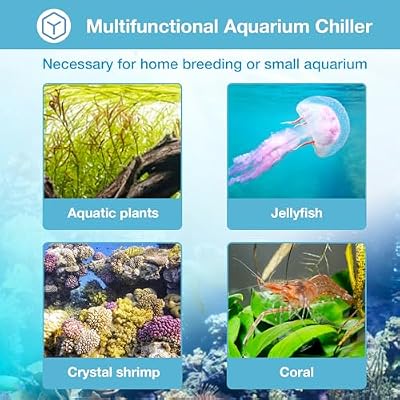

As an Amazon Associate we earn from qualifying purchases. Product prices and availability are accurate as of the date/time indicated.
JBJ Arctica Titanium Chiller 1/15 HP
- Titanium heat exchanger resists corrosion
- Quiet compressor for small reef systems
- Solid entry-level price for the quality


As an Amazon Associate we earn from qualifying purchases. Product prices and availability are accurate as of the date/time indicated.
Why Trust Our Picks
Aquarium chillers are one of the higher-stakes equipment purchases in the hobby — a failure during a summer heat wave can mean total livestock loss within hours. Our recommendations are based on real-world reliability data from the reef community, verified performance claims against manufacturer specifications, and hands-on assessment of ease of installation, noise levels, and long-term durability in saltwater environments.
Best Aquarium Chillers & Coolers: In-Depth Reviews
1. IceProbe Thermoelectric Aquarium Chiller — Best Overall
The IceProbe is a unique product in the aquarium chiller market — it uses thermoelectric (Peltier) cooling technology rather than a refrigerant-based compressor, which gives it several practical advantages. It’s dramatically more compact than any inline chiller, drops directly into the sump or display tank without any plumbing, operates nearly silently, and has essentially no moving parts to fail. For tanks up to about 25–30 gallons in a room that stays reasonably cool, it’s genuinely capable of holding temperature 2–4°F below ambient — enough for most temperature management situations that aren’t extreme summer heat.
The limitation is capacity: thermoelectric cooling has physical efficiency limits, and in very warm rooms or during heat waves where ambient temperatures push above 85°F (29°C), a Peltier-based unit will struggle to keep up. For those situations, a compressor-based chiller is the only reliable solution. But for moderate climate management — or as a secondary unit backing up a primary chiller — the IceProbe is hard to beat for simplicity and reliability.
- Pros: No plumbing — drops directly into sump; near-silent operation; compact and unobtrusive; no refrigerant to leak; virtually no moving parts; energy efficient for light cooling loads
- Cons: Limited to tanks under 30 gallons; not sufficient for extreme heat events or warm climates; no thermostat included (requires separate controller); won’t work as a standalone unit in consistently hot rooms
2. Coralife Aquarium Chiller 1/10 HP — Runner-Up
Coralife’s inline chiller is a workhorse unit designed for mid-size reef systems — roughly 30–60 gallons, depending on room temperature and lighting heat load. The compressor-based refrigerant cooling provides serious, reliable temperature control that thermoelectric units simply can’t match in warm conditions, and the integrated digital thermostat allows precise set-point control to within ±1°F. The titanium heat exchanger resists the corrosive effects of saltwater reliably over years of operation.
Installation requires inline plumbing — typically connected to the return line from the sump — which adds a step beyond plug-and-play simplicity, but the process is straightforward with standard flexible tubing and barbed fittings. The unit’s footprint is manageable for most sump cabinet configurations. Noise is the primary trade-off: the compressor produces a steady low hum audible in quiet rooms, which is simply the physics of refrigerant-based cooling.
- Pros: Genuine refrigerant-based cooling for reliable temperature control in warm environments; digital thermostat with ±1°F precision; titanium heat exchanger for saltwater durability; handles up to 60 gallons reliably
- Cons: Requires inline plumbing; audible compressor hum; generates heat in the surrounding cabinet area (plan ventilation); significant upfront cost
3. JBJ Arctica Titanium Chiller 1/15 HP — Best Budget
JBJ’s Arctica line has been a staple recommendation in the reef hobby for over a decade — a strong signal of genuine reliability in a category where cheaper alternatives frequently fail within a season or two. The 1/15 HP unit is the entry point of the Arctica range, appropriate for tanks up to roughly 40 gallons, and the titanium heat exchanger is a meaningful differentiator from cheaper stainless-or-copper alternatives that corrode in saltwater over time. Titanium is the correct material for marine aquarium chillers — full stop.
The Arctica runs quietly relative to other compressor chillers of its size — not silent, but unobtrusive enough that it won’t be the loudest thing in a dedicated fish room. The digital controller is straightforward and reliable, with a clear display and simple set-point adjustment.
- Pros: Titanium heat exchanger — essential for saltwater longevity; quieter than comparable compressor units; reliable brand with decade-long track record; solid digital thermostat; reasonable entry price for a compressor chiller
- Cons: 1/15 HP limits capacity to ~40 gallons; requires inline plumbing; still audible in quiet rooms; cabinet heat generation requires ventilation planning
4. Active Aqua AACH10HP Water Chiller 1/10 HP
Active Aqua’s AACH10HP is primarily marketed toward hydroponic applications but performs well in freshwater aquarium settings and lower-salinity systems. The price point is competitive with the Coralife unit for similar stated capacity, and the digital display is clear and easy to read. For freshwater planted tanks or fish-only saltwater systems that don’t demand the highest material quality, it represents good value — though for full reef systems with high-value SPS corals, the titanium-equipped JBJ Arctica is a safer long-term investment.
- Pros: Competitive pricing for 1/10 HP capacity; clear digital display; good for freshwater and lower-demand saltwater systems; reliable compressor performance
- Cons: Heat exchanger material not specified as titanium — not ideal for aggressive saltwater use; primarily designed for hydroponic systems; warranty support less established for aquarium applications
5. Hydor Smart Level Control with Cooling Fan Combo
For reefers who need modest temperature reduction — perhaps 1–3°F during mild summer months — rather than full chiller capacity, an aquarium cooling fan is worth considering as a supplement or alternative. Clip-on evaporative cooling fans (positioned to blow across the water surface) can achieve meaningful temperature reduction through evaporation, at a fraction of the cost and noise of a compressor chiller. The trade-off is increased evaporation rate, which demands more frequent top-off water additions and a reliable auto-top-off (ATO) system to prevent salinity creep.
- Pros: Very low cost; near-silent; no plumbing; effective for 1–3°F reduction in moderate climates; ideal as a supplemental solution alongside a chiller
- Cons: Limited cooling capacity — insufficient for serious heat events; dramatically increases evaporation rate (requires ATO system); not a replacement for a compressor chiller in warm climates
Buyer’s Guide: Choosing the Right Aquarium Chiller
Calculate Your Heat Load First — The biggest variable in chiller sizing isn’t tank volume — it’s heat load. High-wattage LED fixtures, powerful return pumps, and powerheads all add heat to the system. A heavily lit 40-gallon SPS tank may require more chiller capacity than a lightly lit 80-gallon fish-only system. Add up your total wattage and factor in ambient room temperature before selecting horsepower rating.
Titanium Heat Exchanger for Saltwater — This is non-negotiable for reef tanks. Copper and stainless-steel heat exchangers corrode in saltwater, leaching metal ions that are toxic to invertebrates and corals even at very low concentrations. Only titanium heat exchangers are safe for long-term marine aquarium use.
Cabinet Ventilation — Compressor-based chillers exhaust significant heat into the surrounding cabinet. Without ventilation — either open cabinet doors or a small exhaust fan — this heat recirculates, forcing the chiller to work harder and shortening its lifespan. Plan ventilation before installing.
Flow Rate Requirements — Inline chillers require a minimum flow rate through the heat exchanger to function properly. Check the manufacturer’s specified flow range and confirm your return pump or dedicated chiller pump can deliver adequate flow without exceeding the maximum rated rate, which can also reduce efficiency.
Frequently Asked Questions
What temperature should a reef tank be maintained at?
Most reef aquarists target 76–79°F (24–26°C) as an optimal range. SPS-dominated systems often benefit from the lower end of that range, as many Acropora and Montipora species originate from cooler, higher-flow reef environments. LPS and soft coral systems tolerate slightly warmer temperatures more readily.
How much electricity does an aquarium chiller use?
A 1/10 HP compressor chiller typically draws 150–200 watts when running. In moderate climates where the chiller cycles on and off rather than running continuously, monthly electricity costs are manageable — typically $10–25 depending on local rates and runtime percentage. In very hot climates where the chiller runs near-continuously, operating costs can be substantially higher.
Can I use a mini split or window AC instead of an aquarium chiller?
Yes — cooling the room is a valid alternative to chilling the tank directly, and for large systems (200+ gallons), it’s often more cost-effective than a large aquarium chiller. The limitation is that room cooling isn’t aquarium-specific — it affects your entire living space, which may not be practical depending on your home layout.
Does an aquarium chiller also function as a heater?
Some higher-end chiller units include a reversible heat pump function that allows both cooling and heating. Most entry-to-mid range chillers are cooling-only — you’ll still need a separate aquarium heater for winter temperature management.
How do I know what HP rating I need?
A general guideline: 1/15 HP for tanks up to 40 gallons in a moderate climate; 1/10 HP for 40–80 gallons or higher-heat-load systems; 1/4 HP for 80–150 gallons. For very large reef systems or hot climates, consult the manufacturer’s tank volume ratings and factor in a 20–30% buffer above your calculated need — chillers that run at or near maximum capacity continuously have significantly shorter lifespans.
Final Verdict
For small reef systems in moderate climates, the IceProbe Thermoelectric Chiller offers unbeatable simplicity and silence. For serious reef tanks where temperature stability is mission-critical, the JBJ Arctica Titanium Chiller is the most reliable entry into compressor-based cooling — titanium-safe for saltwater and backed by a strong community track record. The Coralife unit bridges the gap for mid-size systems where you need genuine compressor power but want a well-supported, reef-specific product from an established brand.
Related Reviews & Guides

Best Aquarium Controller for a Reef Tank: Proven Top Picks

Aquarium Salt Marine Mix Reef Review