Last Updated: October 21, 2026
- Top Pick: Reef Care Dosing Pump for Aquariums, App Control, Measured Liquid Doser, Coral Calcium Magnesium Buffer Routine Coral Calcium Magnesium Buffer Routine
- Best Value: Jecod DP-2 Programmable Auto Dosing Pump, 2 Channel
- Premium Choice: Reef Care Dosing Pump for Aquariums, App Control, Measured Liquid Doser, Coral Calcium Magnesium Buffer Routine Coral Calcium Magnesium Buffer Routine

Maintaining calcium, alkalinity, and magnesium in a reef tank isn’t a set-it-and-forget-it exercise — corals consume these elements continuously as they build skeletal structure, and the demand only grows as your reef matures. Manual two-part dosing works for small systems, but even a moderately stocked 90-gallon SPS tank can demand daily doses that become logistically demanding. A programmable dosing pump automates this process with precision that manual dosing can’t match — consistent micro-doses throughout the day, rather than a single large dose that creates temporary parameter spikes.
🛒 Best Price Today on Amazon
Prime members get fast, free shipping on everything above, plus member-only deals. New members get a 30-day free trial — cancel anytime.
As an Amazon Associate we earn from qualifying purchases.




Quick Picks
Neptune Systems DOS (Dosing & Fluid Management System)
- Apex ecosystem integration
- Precision peristaltic pumps with flow calibration
- Up to 2 channels with expansion options


As an Amazon Associate we earn from qualifying purchases. Product prices and availability are accurate as of the date/time indicated.
GHL Doser 2.1 SA Standalone
- 4 independent channels
- Standalone or ProfiLux controller integration
- Stepless dose volume adjustment



As an Amazon Associate we earn from qualifying purchases. Product prices and availability are accurate as of the date/time indicated.
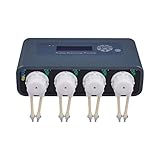
Jebao DP-4 Dosing Pump
- 4 channels at budget price
- LCD display with scheduling interface
- Reliable peristaltic mechanism




As an Amazon Associate we earn from qualifying purchases. Product prices and availability are accurate as of the date/time indicated.
Why Trust Our Picks
We evaluated dosing pumps across real reef systems over periods of 6–18 months, tracking actual dose accuracy (measured by titration testing before and after dosing periods), tubing wear rates, programming interface usability, and failure behavior. Dose accuracy drift over time — as peristaltic tubing stretches and ages — is a particular concern we investigated, since a pump that doses accurately for the first month but drifts significantly by month six is a problem that doesn’t show up in short-term reviews.
Individual Reviews
Neptune Systems DOS — Best Overall
Neptune’s DOS (Dosing and Fluid Management System) integrates seamlessly into the Apex controller ecosystem — which means your calcium and alkalinity doses can be tied to pH readings, scheduled around feeding times, and monitored through the Apex Fusion app from anywhere. The peristaltic mechanism is calibrated through the Apex interface, which walks you through measuring actual output volume to correct for tubing variation — a level of precision most standalone dosers don’t offer. Each DOS module handles two channels; multiple modules can be added for systems running three-part dosing or additional supplements like iodide or trace elements.
- Pros: Apex integration, software-guided calibration, expandable channels, remote monitoring via app, reliable long-term accuracy
- Cons: Requires Apex controller for full functionality; expensive; two-channel base requires an additional module for three-part dosing
GHL Doser 2.1 SA Standalone — Runner-Up
GHL is a German aquarium technology company whose ProfiLux controllers are widely regarded as the most sophisticated in the hobby — and the Doser 2.1 SA brings that engineering ethos to dosing at a standalone price. Four independent channels cover the full three-part dosing suite plus a fourth channel for trace elements, amino acids, or a carbon source like vodka dosing. The stepless dose volume adjustment allows for extremely fine-tuned incremental increases as your coral load grows — no jumping between fixed dose increments. It operates standalone without any controller requirement, making it accessible to reefers not in the GHL ecosystem.
- Pros: Four channels, standalone operation (no controller required), stepless adjustment, German engineering quality
- Cons: Interface is functional but not as intuitive as Neptune’s app-based setup; higher price than Asian-made alternatives
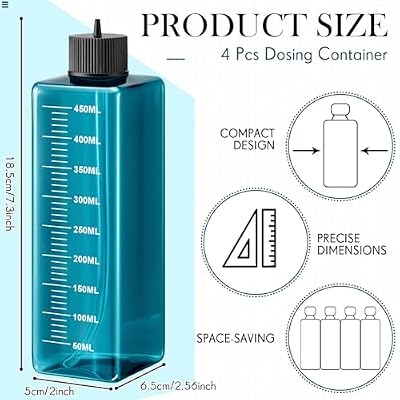
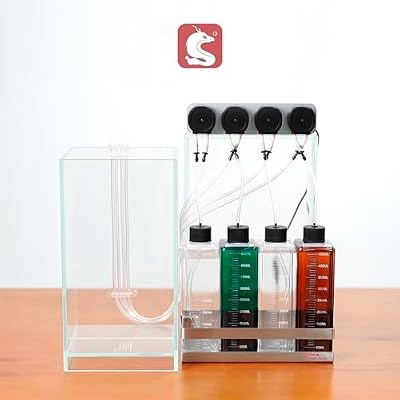
Jebao DP-4 Dosing Pump — Best Budget
Jebao occupies an interesting position in the reef hobby — their equipment is widely criticized in enthusiast forums for quality control inconsistency, yet many reefers have run their dosing pumps for years without issue. The DP-4 provides four channels, an LCD programming interface, and a peristaltic mechanism that is functionally adequate for two-part calcium and alkalinity dosing on tanks up to about 100 gallons. The key is calibration: measure the actual output volume monthly and adjust your schedules accordingly, since tubing stretches and flow rates drift more noticeably than in premium units. For a first dosing pump on a budget, it’s a reasonable starting point — just don’t trust the factory calibration blindly.
- Pros: Four channels, affordable, adequate accuracy when properly calibrated, widely available
- Cons: Quality control inconsistency; tubing wears faster than premium pumps; programming interface is rudimentary; no remote monitoring
Kamoer X4S WiFi Dosing Pump — Best for App Control Without Apex
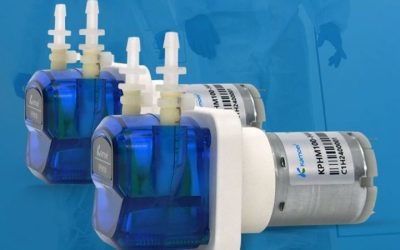
Kamoer’s X4S fills the gap between basic standalone dosers and full Apex integration — a four-channel peristaltic pump with WiFi connectivity and app control that doesn’t require any additional controller hardware. Dose schedules are managed through the Kamoer app, which sends push notifications if a reservoir runs low and allows remote dose adjustments. The peristaltic mechanism is noticeably more precise than Jebao’s at equivalent price points, and the tubing quality holds calibration better over time. A compelling choice for reefers who want app convenience without committing to the Neptune or GHL ecosystem.
- Pros: WiFi app control, four channels, low-reservoir alerts, better precision than basic budget pumps
- Cons: App has occasional connectivity issues; cloud-dependent for remote features; no integration with major reef controller platforms
Buyer’s Guide: Two-Part vs. Calcium Reactor vs. Kalkwasser
A dosing pump is most commonly used for two-part dosing — separately adding calcium chloride solution and sodium bicarbonate solution to maintain calcium and alkalinity independently. This is the most accessible method for most reefers: predictable chemistry, no CO2 equipment, and easy to dial in. A dosing pump handles the automation side — you still need to choose your two-part solutions (BRS two-part is the community standard) and calibrate doses based on regular water testing.
Calcium reactors are an alternative for high-demand systems — they dissolve calcium carbonate media using CO2-acidified water, releasing calcium and alkalinity simultaneously. They require CO2 cylinders, regulators, and pH monitoring but are more cost-effective per unit of calcium/alkalinity for heavily stocked SPS tanks. Dosing pumps are still useful alongside a calcium reactor for fine-tuning or supplementing magnesium and trace elements.
Kalkwasser (calcium hydroxide) dosing is often automated through the ATO system — dissolving kalk in the top-off reservoir provides calcium and alkalinity with every evaporation-replacement dose. Simple and cost-effective for low-to-moderate demand systems, but requires careful dosing to avoid pH spikes.
FAQ
How do I know how much two-part to dose?
Start by testing your baseline calcium and alkalinity, then test again 24 hours later without dosing to measure your tank’s daily consumption. Use that consumption figure — along with your target levels — to calculate starting dose volumes. Increase doses incrementally (no more than 10% per week) as coral growth increases demand.
How often should I calibrate my dosing pump?
Monthly calibration verification is recommended — measure actual output volume with a graduated cylinder rather than trusting the programmed rate. Peristaltic tubing stretches over time, causing flow rates to drift. Replace dosing tubing every 6–12 months regardless of apparent condition.
What’s the ideal dosing frequency?
More frequent, smaller doses are better than one large daily dose — they minimize parameter fluctuation throughout the day. Spreading the total daily dose across 12–24 micro-doses is ideal; most programmable dosers support this scheduling approach. Avoid dosing immediately after feeding, as it can interact with food particles in the water column.
Can I dose calcium and alkalinity at the same time?
Not into the same point in the water column simultaneously — mixing concentrated calcium chloride and bicarbonate solutions causes precipitation (calcium carbonate snow), wasting both supplements. Dose from separate inputs at opposite ends of the sump, or offset doses by at least an hour, or ensure strong flow mixes each dose before the next arrives.
Do I need a dosing pump for a FOWLR tank?
Generally no — fish-only systems don’t consume calcium and alkalinity at rates that require automated dosing. Regular water changes maintain adequate mineral levels for FOWLR tanks without dedicated dosing equipment. Dosing pumps become relevant when coral load is significant enough that water changes alone can’t keep up.
Final Verdict
For Apex users, the Neptune DOS is the natural extension of your existing control infrastructure — the calibration tools, app monitoring, and Apex integration make it the most intelligent dosing solution in the hobby. The GHL Doser 2.1 SA is the premium standalone choice for reefers who want four-channel European precision without a controller requirement. Budget-conscious reefers setting up their first dosing regimen will find the Jebao DP-4 adequate with careful calibration habits — just commit to monthly verification checks and don’t set it and forget it the way you might with higher-end hardware.
Related Guides
- Best Test Kit For Saltwater Aquarium 2026
- Aquarium Coral Frag Plug Disk Review
- Best Aquarium Kit Saltwater 2026
- Best Saltwater Aquarium With Sump 2026
Frequently Asked Questions
When does a reef tank actually need a dosing pump?
Once coral demand pulls alkalinity down more than about 0.5 dKH per day, manual dosing becomes impractical because a single large daily dose swings parameters. A peristaltic doser splits that same amount into many small shots across 24 hours, keeping alkalinity and calcium nearly flat, which is what stony corals respond to most.
Can I dose calcium and alkalinity from the same line?
Never mix them in one container or dose them at the same point. Concentrated calcium chloride and sodium carbonate react and precipitate as calcium carbonate, clouding the tank and wasting both. Use separate heads, separate reservoirs and separate injection points, and schedule them so the two doses are offset by at least 30 to 60 minutes.
How do I calculate the dose?
Test alkalinity at the same time on two consecutive days with no dosing to find daily consumption. Then use the supplement manufacturer’s figure for how much a given volume raises dKH in your water volume, and set the doser to deliver that per day split into eight or more shots. Retest after 48 hours and adjust in small increments.
Do I need to dose magnesium too?
Magnesium is consumed much more slowly than calcium and alkalinity, so most tanks top it up with water changes alone. It matters because magnesium keeps calcium and carbonate from precipitating out of solution; if it drifts below roughly 1250 ppm your alkalinity and calcium become hard to hold no matter how much you dose.
How accurate are dosing pumps and do they drift?
Peristaltic tubing compresses over time, so a head calibrated at 1.0 milliliters per second slowly under-delivers. Recalibrate every couple of months by running a set number of shots into a measuring cylinder, and replace the tubing annually. Also keep reservoirs capped, since evaporation concentrates the solution and changes the effective dose.

Quick Picks: Best Aquarium Wave Makers and Powerheads
Aquarium Air Pump Buying Guide for Noise in 2026: What Actually Matters