Last Updated: November 19, 2026
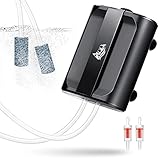
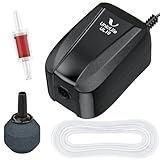
- Top Pick: NICREW Nano Silent Aquarium Air Pump, Black, for up to 10 Gallon Fish Tank
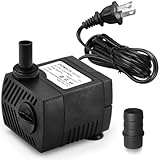
- Best Value: PULACO 95GPH 5W Mini Water Pump with 3.3 ft Tubing
- Premium Choice: DaToo DC 5V USB Water Pump For Fish Tank 3W Mini Submersible Water Pump With Tubing And Flow Adjustment Function Small Fountain Pump For Pet Fountain Aquarium Hydroponics Desktop Fountain 190L/H
A reliable pump is the quiet workhorse of any small aquarium, driving water movement, oxygenation, and circulation that keep fish healthy and water clear. For nano tanks, betta setups, desktop bowls, and shrimp jars, a mini aquarium pump delivers exactly the right amount of flow without overpowering the tank or hogging space. Choosing the correct one keeps your little ecosystem balanced and stable.
As an Amazon Associate I earn from qualifying purchases.
As an Amazon Associate we earn from qualifying purchases at no extra cost to you.




Prime
Best Seller
GROWNEER 550GPH Submersible Pump 30W Fountain Water Pump, 2000L/H, with 7.2ft High Lift, 3 Nozzles for Aquarium, Fish Tank, Pond, Hydroponics, Statuary, Pool

Prime
Editor's Pick
GROWNEER 2 Packs 550GPH Submersible Pump 30W Ultra Quiet Fountain Water Pump, 2000L/H, with 7.2ft High Lift, 3 Nozzles for Aquarium, Fish Tank, Pond, Hydroponics, Statuary


This 2026 guide to the best mini aquarium pump options covers air pumps, submersible water pumps, and compact circulation pumps suited to small tanks. We explain the difference between the pump types, how to size flow to your tank, and which quiet, energy-efficient models stand out for keeping nano aquariums thriving without noise or clutter.
| Product | Best For | Standout Feature | Rating |
|---|---|---|---|
| Tetra Whisper Mini Air Pump | Nano tank aeration | Very quiet dampened design | 4.6/5 |
| Hygger Mini Submersible Pump | Adjustable water circulation | Flow-rate control dial | 4.6/5 |
| VIVOSUN USB Nano Air Pump | Bettas and desktop tanks | USB-powered ultra-compact | 4.4/5 |
| AQQA Mini Wavemaker | Shrimp and planted nanos | Gentle circulation with magnet mount | 4.5/5 |
| Pawfly Aquarium Air Pump | Budget sponge filter use | Reliable low-cost airflow | 4.4/5 |
🛒 Best Price Today on Amazon
Prime members get fast, free shipping on everything above, plus member-only deals. New members get a 30-day free trial — cancel anytime.
Understanding Mini Aquarium Pump Types
The term mini aquarium pump covers two distinct jobs, so identifying which you need is the first step. An air pump sits outside the tank and pushes air through tubing to an airstone or sponge filter, boosting surface agitation and oxygen. A submersible water pump lives in the tank and moves water directly, powering circulation, filters, or small fountains. Our aeration versus circulation guide explains when each type solves your problem.
Sizing matters enormously in small tanks. Too much flow stresses delicate fish like bettas and blows shrimp around, while too little leaves dead spots where waste and debris settle. For water pumps, look for an adjustable flow rate so you can tune output to your tank. For air pumps, match the output to your airstone or sponge filter rather than overbuying. If you run a sponge filter, our sponge filter setup guide shows how pump strength affects filtration in nano tanks.
Tetra Whisper Mini Air Pump
The Tetra Whisper Mini is a benchmark for quiet aeration in small tanks. Its dampened housing suppresses the buzzing that plagues cheap air pumps, making it ideal for bedrooms and offices. Pros: genuinely quiet, reliable Tetra build, perfect output for nano airstones and small sponge filters. Cons: single fixed output and no flow control, so it is aeration-only. It pairs beautifully with a gentle sponge filter for the calm-water species in our betta care guide.
Hygger Mini Submersible Pump
When you need to move water rather than air, the Hygger mini submersible pump shines thanks to its flow-rate control dial. This lets you fine-tune circulation for everything from a trickle in a shrimp tank to firmer flow in a nano community. Pros: adjustable output, compact footprint, quiet submerged operation, versatile for filters or fountains. Cons: as a water pump it does not directly aerate, so pair it with surface agitation. Position it to eliminate dead spots identified in our tank circulation guide.
VIVOSUN USB Nano Air Pump
For the smallest desktop tanks and betta bowls, the VIVOSUN USB nano air pump is wonderfully convenient, drawing power from any USB port and taking up almost no space. Pros: ultra-compact, USB-powered for flexible placement, quiet, great emergency backup with a power bank during outages. Cons: modest output suited only to very small tanks and single airstones. It is a smart companion for the small setups in our desktop aquarium guide.
AQQA Mini Wavemaker
Planted and shrimp nano tanks benefit from gentle, even water movement, and the AQQA mini wavemaker delivers exactly that with a magnetic mount that grips the glass discreetly. Pros: soft distributed flow ideal for shrimp and plants, easy magnet placement, adjustable angle. Cons: not a filter, so it supplements rather than replaces filtration. Aim its flow to keep detritus suspended for your filter to capture, a technique covered in our planted nano maintenance guide.
Pawfly Aquarium Air Pump
On a tight budget, the Pawfly air pump provides dependable airflow for sponge filters and airstones at a very low price. Pros: affordable, adequate output for small-to-medium sponge filters, widely available. Cons: louder than premium models and lacks vibration dampening, so placement on a soft surface helps. It is a practical choice for a first shrimp tank or fry-rearing setup where a sponge filter does the heavy lifting.
NICREW Adjustable Mini Water Pump
Rounding out the list, the NICREW adjustable mini water pump offers strong value for driving small hang-on or internal filters, DIY builds, and nano circulation. Pros: adjustable flow, quiet, energy efficient, versatile mounting. Cons: basic packaging with minimal accessories, so you may need extra tubing. Its efficiency makes it a good long-running choice for always-on nano circulation.
Getting the Most From Your Mini Aquarium Pump
Whichever mini pump you choose, a few habits maximize its life and performance. For air pumps, install a check valve on the tubing to prevent water siphoning back into the pump during a power cut, and place the unit above the waterline or on a soft mat to reduce noise. For water pumps, clean the impeller and intake screen monthly to maintain flow and protect the motor. Match the flow to your livestock, keeping it gentle for bettas and shrimp, and your pump will quietly keep your nano tank oxygenated and circulating. Our nano tank maintenance schedule folds pump care into an easy routine.
How Much Flow Does a Small Tank Need
Flow is the first number to get right, because a pump that is too weak leaves dead spots and a pump that is too strong pushes small fish around the tank. For a submersible water pump, a useful starting point is a listed flow of about four to ten times the tank volume each hour. Start near the middle of the range, watch how the fish behave for a few days, and turn the flow down if they struggle to hold position or hide from the current. Air pumps are different, because they move air rather than water, so the maker tank range matters more than a single flow number. A gentle stream of fine bubbles that reaches the surface without churning the whole tank is usually enough for a small setup.
| Tank size | Water pump listed flow | Air pump guidance |
|---|---|---|
| 1 to 3 gallons | 10 to 30 gallons per hour | Smallest air pump, one small airstone, lowest setting |
| 5 gallons | 20 to 50 gallons per hour | Compact air pump rated for 5 gallons, one airstone or small sponge filter |
| 10 gallons | 40 to 100 gallons per hour | Air pump rated for 10 gallons, one airstone or one small sponge filter |
| 15 gallons | 60 to 150 gallons per hour | Air pump rated for 10 to 15 gallons, one or two small airstones |
| 20 gallons | 80 to 200 gallons per hour | Air pump rated for 20 gallons or a dual outlet model at a low setting |
Listed flow is a ceiling measured with no lift and no restriction, so head height, long tubing, elbows, and a dirty intake all reduce real flow. Bettas, long finned fish, shrimp, and fry usually do best near the low end of the range, while messy eaters and heavily stocked community tanks often need the middle or high end. Plants add another detail to watch, because leaves should sway gently rather than bend flat against the glass.
Compatibility Checklist Before You Buy
A mini pump can fail on a small detail, so check the whole chain before ordering. Start with the job itself and decide whether you need air for an airstone or sponge filter, or water movement from a submersible pump, because the two types do not swap. Next, match the tubing. Most small air pumps use standard airline tubing, while submersible pumps need tubing that fits the outlet nozzle snugly, so measure the outlet and the filter or ornament inlet rather than guessing. Check the power source as well, because some mini pumps run on a wall outlet, some run on USB power, and some need a separate adapter that may not be included.
Also confirm the tank fit. A submersible pump must sit fully underwater with the intake clear of sand and gravel, and an air pump should sit above the water line or use a check valve to stop back siphoning. For saltwater use, check the maker description for saltwater suitability, because not every mini pump is rated for it. Finally, look at what is in the box, including airstones, suction cups, check valves, and tubing, so you know what else to buy.
Setup and Care Routine
Set up a mini pump in the same order every time and the job stays simple. Place the tank equipment first, then fit the tubing, airstone, or sponge filter, and check every connection by hand before adding power. Put an air pump above the water line where possible, fit a check valve in the airline with the arrow pointing toward the tank, and leave a drip loop in the cord so water cannot run down into the outlet. For a submersible pump, place it fully underwater, keep the intake off fine sand, aim the outlet along the long wall of the tank, and start at the lowest flow setting.
Care is mostly a short routine repeated often. Rinse the intake sponge or guard in tank water during a water change, clear debris from the impeller area when flow drops, and replace a cracked airstone or stiff airline before it leaks air. Listen for a change in sound, because a new rattle or hum often means the intake is blocked, the pump has shifted against the glass, or the impeller needs cleaning. Unplug the pump before putting hands in the tank, and never run a submersible pump dry.
Common Mistakes to Avoid
The most common mistake is buying an oversized pump for a small tank and then fighting the current every day. A high flow number looks reassuring on a listing, but a betta or a shrimp tank needs gentle movement, not a jet. The second mistake is skipping the check valve on an air pump placed below the water line, which can let tank water siphon back into the pump and onto the stand when power stops. Wrong tubing is another frequent problem, because tubing that is too wide slips off, tubing that is too narrow chokes flow, and a kinked line can stall an airstone completely.
Other mistakes are easy to miss. Running a submersible pump partly out of the water can overheat it and shorten its life, while burying the intake in sand can jam the impeller in a day. Placing an air pump directly on a hollow stand can amplify vibration, so a soft pad underneath often helps. Finally, treating a pump as a filter is a mistake, because moving water does not remove waste on its own, and regular water changes and filter care still matter.
Who Should Skip a Mini Pump
A mini pump is the wrong tool for some setups, and a larger pump or a different filter is the better choice there. Skip a mini pump for tanks above about 20 gallons, because the flow and pressure are too small to circulate the whole volume well. Skip it for a canister filter setup as well, because the canister already provides circulation and filtration, and adding a small pump rarely improves the result. Large messy fish, turtles, and heavily stocked tanks also need stronger filtration and more flow than a mini pump can give.
A mini pump is also a poor fit when the tank needs a high lift, such as a sump return or a tall waterfall feature, because listed flow falls sharply with height. If the tank needs strong surface agitation for oxygen, a larger air pump or a dedicated filter outlet may serve better. In those cases, size the equipment to the tank rather than trying to stretch a mini pump beyond its design.
Buyer Questions
How can I make a mini pump quieter?
Place an air pump on a soft pad rather than directly on a hollow stand, keep it level, and check that tubing is not touching the glass or the stand. Replace a worn airstone, because a clogged stone can make a pump work harder and sound louder. For a submersible pump, clean the intake and impeller area, move the body away from the glass, and check that suction cups are holding firmly.
What happens during a power outage?
A mini pump stops with the power, so aeration and circulation pause until power returns. A check valve on an air pump helps stop tank water from siphoning back while power is off, and a battery powered air pump can provide short term aeration in an outage. After power returns, check that a submersible pump restarts, that the intake is still clear, and that the water level is high enough to cover it fully.
Can I use a mini pump in saltwater?
Some mini pumps are rated for saltwater and some are not, so check the maker description before use. Saltwater can corrode parts that are fine in freshwater, and a pump with metal parts that are not rated for saltwater may wear faster. Rinse saltwater equipment in fresh water during care, and replace airstones and tubing more often if they show wear.
Should I turn a mini pump off at night?
Most small tanks do best with the pump running all day and night, because fish and bacteria need steady oxygen and circulation. Turning an air pump off at night can drop oxygen levels and stall a sponge filter, while turning a submersible pump off can leave dead spots. If flow is too strong at night, turn it down rather than switching it off, and check the fish in the morning for signs of stress.
Frequently Asked Questions
Do I need an air pump or a water pump for my nano tank?
It depends on your goal: an air pump adds oxygen and drives sponge filters, while a water pump moves water for circulation and powers filters or fountains. Many nano keepers use an air pump with a sponge filter for gentle, effective filtration, then add a small water pump only if they need extra circulation to eliminate dead spots.
Will a mini pump be too strong for my betta?
Some mini water pumps can create too much current for a betta, which prefers calm water. Choose an air pump with a gentle airstone or a water pump with adjustable flow, and if the current still seems strong, baffle the output with sponge or reposition it toward the glass so your betta can swim comfortably.
Why is my mini aquarium air pump so loud?
Budget air pumps vibrate against hard surfaces, amplifying noise. Place the pump on a soft mat or hang it to isolate vibration, ensure the diaphragm is not worn, and consider a model with built-in dampening like the Tetra Whisper. A check valve and clean airstone also help the pump run smoothly and quietly.
Should I turn my aquarium pump off at night?
No, you should run your pump continuously to maintain constant oxygenation and circulation, since fish and beneficial bacteria need oxygen around the clock. In planted tanks, oxygen levels actually dip at night when plants stop photosynthesizing, making steady aeration even more important during dark hours rather than something to switch off.
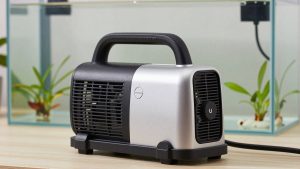
Air Pump vs Powerhead for Aquarium: Which Is Right for Your Home (2026)
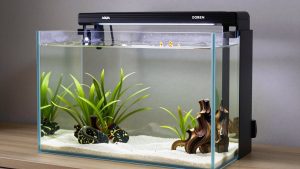
AQUA DAREN 10 Gallon Rimless Aquarium vs NICREW Nano Silent Aquarium Air Pump: Which Should You Buy?