Last Updated: October 9, 2026

TL;DR
Bottom line: An aquarium dosing pump automates daily additions of calcium, alkalinity, and magnesium so reef chemistry stays stable without daily manual top-ups. The Jebao DP-4 is the most popular entry-level pick — four channels, programmable via app, and reliable enough for most SPS tanks under 100 gallons. Manual dosing is fine for FOWLR; automation pays off the moment you keep stony corals.
As an Amazon Associate we earn from qualifying purchases at no extra cost to you.




Best Aquarium Dosing Pump for Auto-Dosing Reef Tanks (2026)
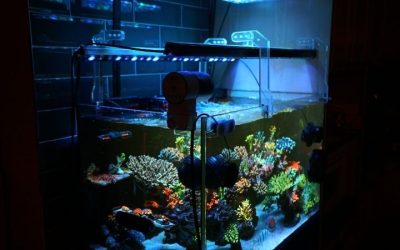
Running a reef tank without an aquarium dosing pump is a commitment to checking parameters and manually adding supplements every single day. For a soft-coral or FOWLR setup that is manageable. For a mature SPS tank where alkalinity swings of even 0.5 dKH cause bleaching events, manual dosing becomes the weak link in an otherwise dialled system.
A dosing pump removes that variable. Set your target dose, set your interval, and the machine handles delivery whether you are at work or sleeping. This guide covers how peristaltic dosing pumps work, what specs matter, the three units I recommend across different budget levels, and the setup mistakes that send new users back to manual dosing within a month.
🛒 Best Price Today on Amazon
Prime members get fast, free shipping on everything above, plus member-only deals. New members get a 30-day free trial — cancel anytime.
Start 30-Day Prime Free Trial →See Today’s Amazon DealsHow a dosing pump works
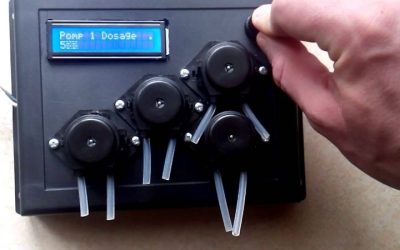
Most reef dosing pumps use a peristaltic mechanism — a rotating head squeezes a flexible tube in a repeating cycle, pushing a precise volume of liquid forward with each revolution. The pumps are calibrated in ml per minute and you program them to deliver a set volume at set intervals throughout the day.
Splitting your daily dose across six to twelve micro-doses (rather than one large dose) is the key practice. A tank running 200 ml of two-part alkalinity supplement daily benefits far more from eight 25 ml doses spread every three hours than a single morning dump. The chemistry stays flat instead of spiking.
Most modern units are peristaltic with silicone tubes rated for reef-safe chemicals. Some higher-end models use magnetic drive heads for greater longevity. Tube replacement every 12–18 months is routine maintenance regardless of head type.
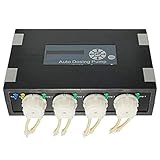
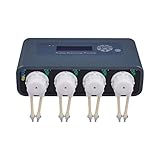
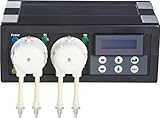
Top 3 aquarium dosing pumps compared




As an Amazon Associate we earn from qualifying purchases. Product prices and availability are accurate as of the date/time indicated.



As an Amazon Associate we earn from qualifying purchases. Product prices and availability are accurate as of the date/time indicated.


As an Amazon Associate we earn from qualifying purchases. Product prices and availability are accurate as of the date/time indicated.
Spec comparison table
| Feature | Entry (4-ch) | Mid (4-ch WiFi) | Advanced (8-ch) |
|---|---|---|---|
| Channels | 4 | 4 | 8 |
| Min dose | 1 ml | 0.5 ml | 0.5 ml |
| Accuracy | ±3% | ±2% | ±1.5% |
| App control | No | Yes (WiFi) | Yes (WiFi) |
| Tube type | Silicone | Silicone | Silicone / PharMed |
| Best for | Beginners / LPS | SPS 40–100 gal | Large SPS / multi-supplement |
What to dose and when
The standard reef two-part system doses equal parts of an alkalinity supplement (sodium bicarbonate-based) and a calcium supplement. Magnesium is typically dosed weekly or bi-weekly because it is consumed more slowly. Amino acids, carbon dosing (vodka method), and coral food are secondary additions many reefers automate on additional channels once the main chemistry is locked in.
Before programming your pump, run a baseline ICP or regular test panel across three consecutive days to understand your tank’s daily consumption rate. A 50-gallon mixed reef with fifteen SPS colonies may consume 80–120 ml of alkalinity supplement daily. A tank double that size with heavy SPS coverage can push 300 ml. Program for your actual consumption, then re-test weekly for the first month and adjust.
Avoid running dosing lines into high-flow areas. Place the outlet near a powerhead return or a low-flow zone with decent mixing. The supplement needs to dilute quickly before it contacts any coral directly — a concentrated alkalinity drip onto an SPS frag can cause localized precipitation and RTN.
Setup and calibration tips
Calibrate each channel before filling your reservoirs. Run distilled water through the tube for 60 seconds, measure the output volume, and enter the number into the pump’s calibration menu. Repeat whenever you replace a tube — peristaltic pumps drift slightly as tubes stretch with age.
Label your reservoirs clearly and store them away from light. Calcium and alkalinity supplements react if they make contact — keep the bottles separated and never mix nozzles. A simple color-coded zip tie on each tube costs nothing and prevents cross-contamination that can crash your chemistry overnight.
For related equipment that works alongside a dosing setup, see our guide to aquarium auto top-off systems — stable water volume is a prerequisite for accurate dosing concentrations. Also check our kalkwasser stirrer guide if you want to combine Kalk top-off with two-part dosing for maximum stability.
FAQ
Do I need an aquarium dosing pump for a freshwater planted tank?
Not typically. Freshwater planted tanks use liquid fertilizers that are dosed weekly in large volumes — a manual squirt bottle or a timer-driven single-channel pump works fine. Where a multi-channel peristaltic dosing pump genuinely earns its place is in reef systems where calcium, alkalinity, and magnesium all need independent daily micro-dosing.
How often should I calibrate a peristaltic dosing pump?
Calibrate at initial setup, whenever you replace tubing, and every three to four months as a routine check. Silicone tubing stretches progressively under load, which causes a peristaltic pump to deliver slightly less volume per revolution over time. A five-minute calibration check keeps dosing accurate and prevents slow parameter drift.
What is the best dosing pump for a 75-gallon reef?
A four-channel WiFi model with 0.5 ml minimum dosing resolution handles a 75-gallon SPS-dominant reef comfortably. You will use two channels for two-part and have two spare channels for amino acids or carbon dosing. Anything with per-channel flow calibration and app scheduling makes the weekly parameter-tweaking workflow much simpler.
Can a dosing pump replace a calcium reactor?
For most hobbyists running tanks under 150 gallons: yes, two-part dosing via a pump is simpler to set up and maintain than a calcium reactor. Calcium reactors become cost-effective when daily two-part consumption exceeds roughly 500 ml — at that point the ongoing cost of two-part liquid outpaces the CO2 and media cost of a reactor. Large SPS-dominant systems and propagation setups typically justify a reactor.
How do I stop a dosing pump from dripping between doses?
A small drip between programmed doses usually means the tube has developed a micro-crack or the pump head roller is not fully sealing the tube at rest. Replace the tubing first — it is the cheapest fix. If dripping continues, check that the tube is seated correctly in the head channel. Some pumps include a back-suck feature in the app that reverses the head slightly after each dose to create negative pressure in the line and eliminate drip.
Also see our overview of aquarium nitrate reactors for the full picture on reef chemistry management tools.
Frequently Asked Questions
What does an auto-doser do for a reef tank?
It adds small measured volumes of alkalinity, calcium, magnesium or trace elements throughout the day so corals experience a stable environment rather than a spike after each manual pour. Stability is the main benefit, and a doser splitting alkalinity across 24 additions holds dKH far steadier than one daily dose.
How many channels do I need?
Two channels cover a basic two-part calcium and alkalinity regime. Three or four adds magnesium, trace elements, or a nitrate and phosphate source for carbon dosing. Buy one more channel than you currently need, because adding a fourth later usually means purchasing an entire second unit.
How accurate are they and do I need to calibrate?
Peristaltic heads drift as the tubing compresses with use, so calibrate on setup and again every one to two months by dosing into a measuring cylinder. A head that has slipped ten percent on the alkalinity line will move your dKH noticeably. Replace the tubing at least annually.
Where should the dosing lines discharge?
Into high-flow areas of the sump, with calcium and alkalinity lines placed far apart or timed at least fifteen minutes apart, or they will precipitate into a chalky mess. Mount the pumps above the container level, fit a check valve or an anti-siphon loop, and never let a line siphon freely.
Can I use a doser on a freshwater planted tank?
Yes, and it works excellently for daily macro and micro fertilisers that high-tech tanks prefer split into small amounts. Dose macros and micros at different times of day so iron and phosphate do not react in concentrated form, and schedule dosing for the morning as the lights come on.
Ready to decide? Our #1 pick for 2026 is the Channels.
Live price & availability on Amazon.
Related Reviews & Guides

Aquarium Dosing Pump Calcium Magnesium
Red Sea Reefmat 500 Vs Nanomat Which Roller: Top Compared