Last Updated: October 21, 2026
For saltwater, filtration architecture and compatibility matter more than price per gallon. The best rimless aquarium for saltwater separates an all-in-one with integrated rear filtration from bare salt-capable glass tanks, so weigh architecture and livestock, since an all-in-one is not a complete reef kit, and a bare tank is not a filter system.
As an Amazon Associate we earn from qualifying purchases.
By David Nguyen
How to Choose a Rimless Aquarium for Saltwater
For a marine tank, verify saltwater compatibility, decide between an all-in-one and a bare tank, size to the specific livestock rather than reef as one category, and plan salinity and temperature stability. Architecture and species drive the choice, so read each tank’s filtration and compatibility first.
Verify Saltwater Compatibility
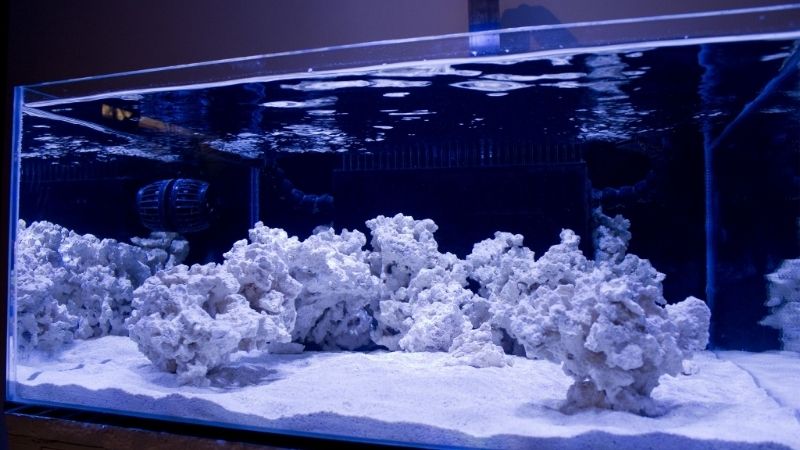
Confirm each tank is stated for saltwater, since compatibility is the maker’s call, not an assumption. AquaTop describes its HCA and HCC tanks as ideal for salt and freshwater systems, and Waterbox offers a saltwater all-in-one line, so use each maker’s wording rather than inferring marine use from looks.
Do not assume a freshwater-marketed rimless tank is fine for salt without checking. Salt water and equipment place their own demands on a system, so verify the stated compatibility for your specific model, because the safe move is to rely on the maker’s marine wording rather than guessing any tank will serve.
Decide AIO vs Bare Tank
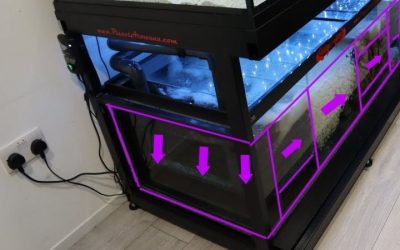
Decide between an all-in-one and a bare tank before comparing prices, since the architecture differs fundamentally. The Waterbox AIO 35.2 integrates a rear chamber with filter socks, carbon, ceramic rings, and return nozzles, while the AquaTop tanks are bare glass, so compare the systems rather than the sticker alone.
Recognize that the two paths carry very different added costs and effort. An all-in-one bundles filtration space into the tank, while a bare tank needs a separate filtration plan, so choose the architecture that suits your budget, because comparing an integrated system to bare glass on price per gallon misleads.
Size to Livestock, Not Reef as a Single Category
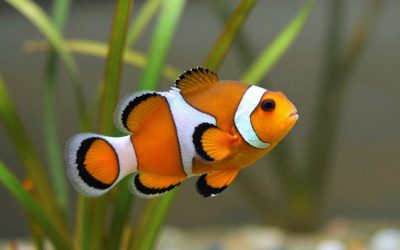
Size the tank to the specific livestock, since reef is not one uniform requirement. PetMD’s clownfish example uses at least 29 gallons, and the AIO 35.2 at 33 gallons fits that one case, but other marine species can need far more or less, so there is no universal reef gallon minimum to apply. Match to the species.
Plan around the animals you actually intend to keep rather than a generic reef label. Different fish, corals, and invertebrates have different space and stability needs, so define the livestock first, because a tank that suits one species example can be wrong for another, and reef covers a very wide range of demands.
Plan Salinity and Temperature Stability
Plan for stable salinity and temperature, since marine systems are sensitive to swings. PetMD’s clownfish example cites a specific gravity of 1.020 to 1.025 and 74 to 80 degrees Fahrenheit, but those figures are species-specific, so do not copy them to every coral or invertebrate without checking each one’s needs.
Budget the measurement and control gear that stability requires, such as a refractometer and a reliable heater. Because marine parameters must stay steady, the tank is only the start, so plan salinity testing and temperature control, since consistency protects a marine system as much as the tank does.
Top Picks
These four verified tanks range from a 33-gallon all-in-one to compact bare salt-capable shells, and their value cannot be ranked on price per gallon alone. The right pick depends on whether you want integrated filtration or a bare tank, and on the specific marine livestock you plan to keep. Plan around the species.
Waterbox AIO 35.2
The Waterbox AIO 35.2 offers the strongest saltwater architecture here, with integrated rear filtration. It is 33 gallons at 23.6 by 19.7 by 17.7 inches with 8 mm glass and a rear chamber holding socks, carbon, ceramic rings, and return nozzles, priced from around $560 as of 09/2026 for the system. Freight adds cost.
Its strength is that verified integrated filtration, which simplifies a marine setup’s plumbing. The catch is that a light, skimmer, wave pump, and heater are not verified as included in the base system, so it is not a complete reef kit, and freight can add cost, so plan the remaining equipment separately.
AquaTop HCA-26G
The AquaTop HCA-26G is a long bare saltwater-capable tank. It is 26.2 gallons at 43.3 by 11.81 by 11.81 inches with 8 mm glass at 91 percent clarity, priced around $250 as of 09/2026, and the maker states it is ideal for salt and freshwater systems, offering a long footprint. Filtration is a separate plan.
Its strength is that long footprint at a moderate price for a bare marine tank. The catch is that it includes no filtration, so a separate filter, flow, lid, and equipment plan is required, since a bare salt-capable tank is only the shell and needs a full life-support system designed around it. Plan full life support.
AquaTop HCA-18G
The AquaTop HCA-18G is a shallow nano reef shell. It is 18 gallons at 35.4 by 10.6 by 11 inches with 6 mm glass at 91 percent clarity, priced around $250 as of 09/2026, and the maker lists salt and freshwater use, giving a low-profile footprint for a compact marine layout. Plan livestock for the volume.
Its strength is that low, shallow profile, which suits a shallow reef aesthetic. The catch is the narrow 10.6-inch depth and modest 18-gallon volume, which limit livestock and stability margin, so it fits a carefully planned nano reef rather than an ambitious mixed system needing more water and depth. Plan more water.
AquaTop HCC-14
The AquaTop HCC-14 is a compact cube salt-capable shell. It is 11.33 gallons in a 13.78-inch cube with 5 mm glass, priced around $100 as of 09/2026, and the maker lists salt and freshwater use, offering the lowest sticker and smallest footprint in this saltwater shortlist. Life support is still extra.
Its strength is that low price and compact cube form. The catch is that a nano saltwater tank is not automatically beginner-friendly, since a small volume swings faster and demands tighter maintenance, and as a bare tank it needs separate life support, so treat it as a deliberate nano project rather than an easy start.
| Product | Best For | Key Spec | Watch Out For |
|---|---|---|---|
| Waterbox AIO 35.2 | Saltwater architecture | 33 gal; integrated rear filtration | Not a complete reef kit; freight |
| AquaTop HCA-26G | Long bare salt tank | 26.2 gal; 43.3×11.81 in; salt/fresh | Needs separate filtration |
| AquaTop HCA-18G | Shallow nano reef shell | 18 gal; 35.4×10.6 in; salt/fresh | 18 gal limits livestock |
| AquaTop HCC-14 | Compact cube shell | 11.33 gal; 13.78 in cube; salt/fresh | Nano needs tight maintenance |
Saltwater Rimless Aquarium FAQs
These questions come up when reefers choose a rimless saltwater tank. Each answer leads with the direct call, then the condition that changes it, so you can plan from your own marine livestock and architecture rather than assuming any rimless tank works for salt, or that an all-in-one includes everything you need.
Can any rimless aquarium be used for saltwater?
Do not assume so, since compatibility is stated by the maker. AquaTop explicitly lists its HCA and HCC tanks as ideal for salt and freshwater, so use each candidate’s manufacturer wording rather than inferring marine suitability, because a tank not stated for saltwater should not be treated as safe for it.
Check the specific model’s compatibility before buying for a reef. Salt water and its equipment place particular demands on a system, so rely on the maker’s marine statement for your exact tank, since verifying compatibility is safer than guessing that any rimless glass tank will handle a saltwater setup.
Is 33 gallons enough for a first saltwater tank?
It can suit some plans, since PetMD’s clownfish example uses at least 29 gallons and the AIO 35.2 is 33. That fits one species case, but it does not make 29 to 33 gallons a universal reef minimum, so size to the specific livestock you intend rather than a single example. Match the tank to the species.
Match the volume to your marine stocking, not a generic reef figure. Some species and coral systems need far more water for stability, so define what you plan to keep, because a 33-gallon tank that fits one example can be undersized for a more demanding or mixed marine community. Define your livestock first of all.
What salinity should I use?
It depends on the livestock, so use species-specific targets. PetMD’s clownfish example lists a specific gravity of 1.020 to 1.025 with change kept within about 0.001 per day, but coral and invertebrate targets can differ, so match salinity to each animal rather than applying one figure across the tank.
Measure salinity accurately and change it slowly, since marine life is sensitive to swings. A refractometer and gradual adjustments help maintain stability, so treat the clownfish numbers as one example and confirm your specific species’ needs, because steady, correct salinity matters as much as the tank you choose.
Does AIO mean everything is included?
No, an all-in-one refers to integrated filtration, not a complete kit. The AIO 35.2 verifies a built-in rear chamber with socks, carbon, ceramic rings, and nozzles, but lighting, a skimmer, and a wave pump are not established as included in the cited base system, so treat them as separate. Budget them separately.
Read the exact bundle before assuming inclusions, since all-in-one describes the filtration architecture. Unless the specific listing names a light, skimmer, or heater, budget those separately, because the integrated filtration simplifies plumbing but does not remove the need for the rest of a marine tank’s equipment.
Final Thoughts
Value is about architecture and compatibility, not price per gallon. The best rimless aquarium for saltwater is the verified tank whose filtration and compatibility fit your plan, so decide between an all-in-one and a bare tank, size to your livestock, and design salinity, temperature, lighting, and flow as one system.

Best Quiet Protein Skimmer for Living Room Tank Reviews
Best Reef LED Light for Beginners: Top Expert Buying Guide