Last Updated: October 21, 2026
Saltwater tanks vary widely, and a fish-only system may not need automated additive dosing at all. The best dosing pump for saltwater tanks is the one matched to your actual marine task, whether that is fine multi-part supplementation, a continuous feed, or an automated water change, so define the job before you count heads.
As an Amazon Associate we earn from qualifying purchases.
By David Nguyen
Match the Pump to the Marine Task
The right saltwater doser depends on the job you are automating, not on channel count alone. Micro-dosing a two-part supplement, feeding a reactor, and running an automated water change are different tasks with different duty cycles, so define the need first, then choose hardware built for it.
Define the Job: Additives, Feed, or Water Change
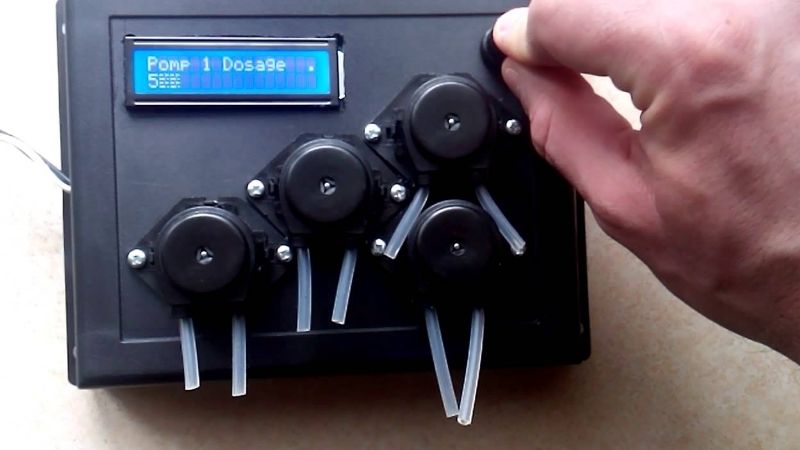
Start by naming the task, because it decides the whole choice. Intermittent additive dosing suits a scheduled multi-part routine, while a continuous feed or water change needs continuous-duty hardware, so a short-dose pump is the wrong tool for a job that runs steadily for long stretches at a time.
Once the task is clear, the shortlist narrows quickly to pumps built for it. A four-part additive routine points to a multi-head scheduled doser, a reactor feed or water change points to a continuous-duty single head, so let the job filter the field rather than starting from the number of channels a pump offers.
Daily-Dose Range Versus Continuous Flow
Saltwater pumps publish two very different kinds of range, and comparing them directly is a mistake. The ReefDose4 states a daily dose of 0.2 to 1000 mL per head, while the Versa lists a continuous flow from 6 microliters up to 200 mL per minute, so a daily-dose figure and a per-minute flow are not the same measure.
Read each spec as the task it describes rather than lining the numbers up side by side. A per-day range tells you additive capacity, a per-minute continuous range tells you feed capacity, so match the range type to your job rather than judging a scheduled doser against a continuous pump on raw numbers alone.
Channel Count Follows Your Additives
Heads follow the number of liquids you dose independently, not the tank. A two-part calcium and alkalinity routine needs two channels, a fuller reef regimen needs four, and a single continuous task needs one, so map your additives first and choose between two-head, four-head, and single-head pumps on that basis.
Cost per head guides value only once the task is fixed. The ReefDose4 lands near under $150 per channel, the Neptune DŌS around $225, and the Simplicity about $35, but those figures only compare fairly when the pumps suit the same job, so define the use before reading per-head cost as value on its own.
Fish-Only Tanks May Not Need Dosing
Not every saltwater tank needs a doser, since a fish-only system without corals may not consume additives to justify one. Automation earns its place when you run a supplement routine or a continuous task, so weigh whether your tank actually demands dosing before buying hardware it may rarely use in practice.
Judge the need by your livestock and routine, not by the fact that the tank holds saltwater. A busy reef with a multi-part regimen benefits clearly, while a fish-only display may do fine with occasional manual additions, so let the biological demand decide whether automated dosing is worth it on your system.
Best Dosing Pumps for Saltwater
These four verified pumps cover the main saltwater tasks, from fine multi-part reef dosing to continuous-duty feeding, and no single unit is best for every job. The right pick depends on the task you are automating, how many additives you run, and whether you already use a controller ecosystem like Apex.
Red Sea ReefDose4
The ReefDose4 suits a reefer running a precise multi-part additive routine across four liquids. It is reef-specific with four heads, a 0.2 to 1000 mL per day range per head at plus or minus 0.05 mL, priced around $449 as of 09/2026, near under $150 per channel, aimed squarely at scheduled multi-part supplementation.
Its strength is fine, repeatable scheduled dosing built for reef stability across several additives at once. The trade-off is price and an intermittent, additive focus, so it is not the tool for a continuous feed or water change, and it earns its cost when you genuinely dose several liquids precisely rather than one.
Simplicity 4-head
The Simplicity four-head fits a saltwater keeper who wants four channels for intermittent additive dosing without an app. It lists reef and marine use, four heads, a 1 to 9999 mL range, about 50 mL per minute, and onboard programming, priced near under $150 as of 09/2026, about $35 per channel here.
Its strength is affordable, self-contained four-liquid additive dosing that needs no controller ecosystem. The trade-off is a coarser minimum step and an intermittent-only focus, so confirm your smallest dose fits and keep it to scheduled additives, not continuous feeding or water-change duty, which it cannot handle.
EcoTech Versa
The Versa suits a saltwater owner whose task is continuous or high-range rather than multi-part additives. It is a single head running from 6 microliters per minute up to 200 mL per minute continuous at two percent or better, priced around $275 as of 09/2026, built for reactor feeds and automated water changes.
Its strength is a very wide range and continuous-duty capability that scheduled additive pumps lack. The trade-off is one head, so a four-part additive routine would need four units at over $1,100, making it a poor multi-part value but a strong pick for a single demanding continuous saltwater task.
Neptune DŌS QD
The Neptune DŌS QD fits a reefer already using an Apex who wants integrated two-channel dosing or water changes. It offers two heads with a 0.1 to 250 mL per minute range, ties into Apex and Trident automation, and covers a continuous-duty zone, priced around $450 as of 09/2026, near $225 per channel.
Its strength is deep Apex integration and automated water-change support, letting dosing respond to the wider system. The catch is that it requires an A2 or A3 Apex, so count that controller in the cost, and skip it unless you already run or plan the Apex ecosystem on your saltwater tank.
| Product | Best For | Key Spec | Watch Out For |
|---|---|---|---|
| ReefDose4 | Precise multi-part reef | 4 heads; 0.2–1000 mL/day; ±0.05 mL | Intermittent only; ~$449 |
| Simplicity 4-head | Budget four-liquid additives | 4 heads; ~50 mL/min; ~under $40/head | No continuous duty |
| EcoTech Versa | Continuous feed or water change | 1 head; 6 µL–200 mL/min | One head; costly x4 |
| Neptune DŌS QD | Apex-integrated dosing/AWC | 2 heads; 0.1–250 mL/min | Requires A2/A3 Apex |
Saltwater Dosing Pump FAQs
These questions come up when reefers match a doser to a saltwater tank. Each answer leads with the direct call, then the condition that changes it, so you can choose from your own marine task and additive count rather than assuming more channels, or a higher flow, automatically makes a pump better here.
How do I choose a saltwater dosing pump?
Start from the task, not the top-line numbers. Decide whether you are dosing multi-part additives, feeding a reactor, or running a water change, since each needs a different duty cycle. Once the job is clear, the field narrows to pumps built for it, and only then do channels and price matter.
After fixing the task, count the liquids you dose independently and check the range type matches. A scheduled additive routine wants a per-day dose range and enough heads, while a continuous job wants a per-minute continuous range, so align the pump’s stated capability with the work rather than the raw numbers.
Is there a single best saltwater dosing pump?
No, because the tasks are not comparable. A fine multi-part additive doser, a continuous-duty single head, and an Apex-integrated unit each win at a different job, so there is no universal best. The right choice depends on what you are automating and whether you run a controller ecosystem already.
Rank pumps within your task, not across all of them. Once you have defined the job, compare the units that suit it on range, channels, accuracy, and price, since a pump ideal for continuous feeding is the wrong tool for scheduled multi-part dosing, so the winner is always task-specific, never universal.
How many heads for a reef tank?
One head per additive you dose on its own schedule. A two-part routine needs two channels, a fuller reef regimen needs four, and a single continuous task needs one, so map your additives first and pick a two-head, four-head, or single-head pump to match that plan rather than the tank size.
If you expect to grow from two-part to a fuller regimen, buying four heads now can be cheaper than adding a pump later. Plan the additives you intend to run within the year, then size channels to that, since outgrowing a two-head unit on a busy reef is a common and avoidable expense on a growing system.
Does a fish-only saltwater tank need dosing?
Usually not. A fish-only system without corals may not consume calcium, alkalinity, or trace elements enough to justify automated dosing, so a pump can sit idle. Automation earns its place when you run a supplement routine or a continuous task, so weigh actual demand before buying hardware you may rarely use.
Let livestock and routine decide, not the water type. A reef with a multi-part regimen benefits clearly, while a fish-only display may do fine with occasional manual additions, so if you keep no additive-hungry corals, consider whether a doser adds real value before spending on one for your tank.
Final Thoughts
On a saltwater tank the pump follows the task, not the channel count, and no single unit is best across the marine jobs. The best dosing pump for saltwater tanks is the verified unit whose duty cycle and range match your work, whether additives, a continuous feed, or an Apex water change, so define the job.
Best Reef Tank Lights in 2026: Compared and Ranked
Best Kessil LED Light for Reef Tank: How to Pick by Size