Last Updated: October 21, 2026
The best rodi system for a nano reef tank is judged on where it fits and how small its batches are, not on chasing high output. A typical 5-gallon batch finishes in about 2.4 hours at 50 GPD or 1.6 at 75, so a compact chassis usually matters more than another 25 GPD.
As an Amazon Associate we earn from qualifying purchases.
By David Nguyen
How to Choose an RODI System for a Nano Reef Tank
A nano reef makes water in small amounts, so physical footprint and easy storage come first, then small-batch time and source-water fit. Confirm the unit fits where you will keep it, check that your feed pressure meets the rating, and match pretreatment to your tap rather than oversizing the whole build.
Storage Footprint Comes First
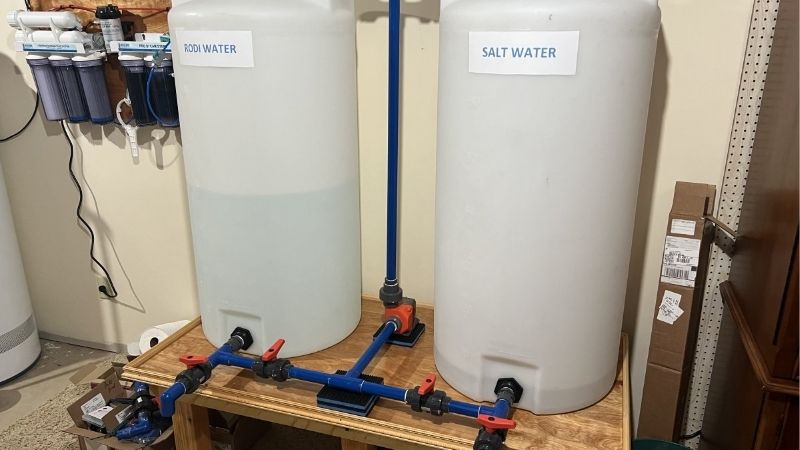
On a nano reef the limiting factor is usually where the unit lives, not its output, so measure the space before the output rating. A compact chassis such as the AquaticLife Twist-In at 12 by 4 by 13 inches slots onto a shelf or into a cabinet where a full four-canister rail simply will not fit.
Compactness and batch time are separate axes, so do not assume a smaller unit is slower or a bigger one faster. A tidy install also makes routine media swaps and drain routing easier, which matters when the system shares a small room with the display rather than sitting in a garage or utility space.
Small-Batch Time, Not Peak Output
A nano changes a few gallons at a time, so a 5-gallon batch is the honest yardstick: about 2.4 hours at 50 GPD and 1.6 hours at 75. That gap is a 50 percent higher rate for the 75, yet it trims only about 48 minutes off a small batch, so the extra output rarely earns its keep on a nano.
Because batches are small, a modest membrane keeps up easily and wastes less shelf space and money than an oversized one. Buy output for how much water you actually change in a sitting, and treat anything beyond a 75 GPD class as convenience rather than a requirement for a tank this size.
Source Water and Pretreatment
Reef water demands zero TDS, so pretreatment matched to your tap protects that result. Chloramine needs dual-carbon pretreatment, while low-chlorine water runs on lighter stages; on a reef the AquaFX Seahorse’s chloramine warning is condition-bound, so confirm your disinfectant before assuming any single build fits.
The recurring cost, meaning sediment, carbon, DI resin and a TDS meter to time swaps, is what you actually pay year after year on a reef. A nano’s small volumes stretch media life, but only if the pretreatment suits your water; the wrong carbon burns through DI resin quickly and quietly raises that bill.
Passive Operation and Pressure
A nano setup is often indoors near living space, so staying passive keeps it quiet and simple. Most of these units run without a pump above their rated minimum, and the IceCap RI75 needs no power at all, so a home with adequate pressure can avoid a booster and the motor noise it brings.
If your line runs soft, output sags and reject climbs, which matters more in a small room where a booster’s hum is noticeable. Measuring feed pressure first tells you whether you can stay passive; on a nano that quiet, pump-free operation is often worth more than squeezing out the last bit of speed.
Top Picks
For a nano reef the strongest choice depends on your space and tap rather than one winner, so the order below is conditional. Each row leads with the footprint or source water it suits and flags availability where it matters, so match a row to your own room and line instead of reading a fixed ranking.
| Product | Best For | Key Spec | Watch Out For |
|---|---|---|---|
| AquaticLife Twist-In 75 | Tight spaces, easy media swaps | 75 GPD, 12x4x13 in | Suggests 65 PSI; ~under $150 |
| IceCap RI75 | Passive, no power needed | 75 GPD, needs no electricity | Needs adequate pressure; ~under $200 |
| BRS 4 Stage Value Plus 75 | Low-chlorine water on a budget | 75 GPD, TDS+PSI+flush, 50 PSI | No chloramine carbon; ~under $250 |
| AquaFX Seahorse 50 | Small footprint, low output | 50 GPD compact build | Wait-list; chloramine caveat; ~under $90 |
AquaticLife Twist-In 75
For a nano reef where space is tight, the AquaticLife Twist-In 75 fits a 12 by 4 by 13 inch body and uses tool-less twist cartridges, around $125 as of 09/28/2026. At 75 GPD it clears a 5-gallon batch in about 1.6 hours, which is more than enough for the small changes a nano actually needs.
It suggests 65 PSI for full output, so soft plumbing may leave it short of its rating and push you toward a booster. Its cartridge format also ties you to its own replacements, so choose it for the compact size and simple servicing as much as for the output, which a nano will rarely stress.
IceCap RI75
When quiet, pump-free operation matters, the IceCap RI75 runs on house pressure alone and needs no electricity, around $175 as of 09/28/2026. On a nano kept in living space that means no motor hum at all, and its 75 GPD rating clears a 5-gallon batch in roughly 1.6 hours when fed adequate pressure.
The catch is that pressure: with no booster of its own, a soft line leaves it below rating and pushes reject water higher. It is also priced above the compact BRS and AquaticLife options, so you pay for the passive, silent design rather than for extra speed a nano would never use anyway.
BRS 4 Stage Value Plus 75
On low-chlorine water, the BRS 4 Stage Value Plus 75 covers a nano for around $225 as of 09/28/2026 and runs from 50 PSI, bundling a TDS meter, pressure gauge and flush valve. On a reef those gauges matter, since they show when the membrane or DI resin fades before your zero-TDS target slips.
Its four stages target low-chlorine supplies, so chloraminated tap wants the dual-carbon Premium Plus instead. It is also larger than the tidy Twist-In, so on a genuinely cramped nano the footprint may count against it even though the monitoring it includes is genuinely useful for reef water.
AquaFX Seahorse 50
For the smallest footprint and lightest output, the AquaFX Seahorse 50 is a compact 50 GPD build listed around $90 as of 09/28/2026. On a nano that changes only a few gallons, 50 GPD clears a 5-gallon batch in about 2.4 hours, which is perfectly workable for a small reef’s modest water demand.
Two caveats matter: it is frequently wait-listed, so treat it as a plan rather than a guaranteed purchase, and its chloramine handling is condition-bound, so confirm your disinfectant first. On chloraminated water a dual-carbon build is the safer route despite this unit’s appealing size and price.
Frequently Asked Questions
Nano reefers usually ask how small an output they can get away with, whether footprint or speed matters more, and how chloramine changes the pick. The answers below put hours and thresholds on each, so you can size a compact build around real 5-gallon batches instead of overbuying capacity.
Is 50 or 75 GPD Enough for a Nano Reef?
Both are plenty; the difference is under an hour. A 5-gallon batch takes about 2.4 hours at 50 GPD and 1.6 at 75, so even the smaller membrane keeps up with a nano’s modest changes. The 75 GPD tier mainly helps if you also top off frequently or plan a slightly larger tank later on.
Read the gap correctly: 75 GPD is a 50 percent higher rate yet saves only about 48 minutes on a fixed 5-gallon batch. On a nano that small saving rarely justifies a larger unit or a higher pressure requirement, so let footprint and source water settle the choice instead of chasing output.
Does a Nano Reef Really Need Its Own RODI?
For a reef, yes, because saltwater mixing needs zero-TDS starting water that tap cannot provide. A compact 50 to 75 GPD unit makes small batches on demand and stores easily, which is safer and cheaper over time than buying jugged RO/DI water for every change on an ongoing basis anyway.
The exception is a very occasional nano keeper near a reliable water store, where buying finished RO/DI can pencil out short term. Once changes become routine, though, even a small unit pays back through media life and convenience, especially if you capture the reject water for other household uses.
Will an RODI System Fit in a Nano Cabinet?
Often yes, if you check dimensions first. A compact chassis like the 12 by 4 by 13 inch Twist-In slots into many nano cabinets or onto a nearby shelf, whereas a full four-canister rail usually will not. Measuring the space before buying is the single best way to avoid an install headache later.
Remember the unit also needs drain and feed access, not just shelf area, so plan the plumbing path too. A tidy, well-placed install keeps routine media swaps easy and, near living space, keeps any drain trickle unobtrusive, which matters more on a nano than on a garage-based system.
Do I Need Dual Carbon for a Nano Reef?
Only if your tap has chloramine. Chloraminated municipal water needs dual-carbon pretreatment to protect the membrane and DI resin, while low-chlorine supplies run fine on lighter stages. Testing your water first tells you which build to buy and prevents burning through DI resin faster than a nano should.
If your disinfectant is uncertain, err toward the dual-carbon build, since a reef is unforgiving of stray TDS. The extra carbon costs a little more up front but keeps DI replacements predictable, which on a small system is a modest, easily managed part of ongoing reef maintenance.
Final Thoughts
For a nano reef tank, let footprint and a 5-gallon batch set the rodi system: about 2.4 hours at 50 GPD or 1.6 at 75, with a compact chassis often mattering more than extra output. Match pretreatment to your tap, keep the build passive where pressure allows, and confirm stock before counting on any wait-listed model.
Best Protein Skimmer Under 500 Dollars: Top Picks Guide
Protein Skimmer Break In Period What to Expect, Explained