Last Updated: September 25, 2026
A four-foot reef punishes weak lighting fast, with pale tips and stalled growth showing up weeks before you connect the dots. The best reef light for a 75 gallon tank is the one that pushes steady PAR across the whole footprint and lets you tune spectrum to the corals you keep, not the fixture with the biggest number on the box.
As an Amazon Associate we earn from qualifying purchases.
As an Amazon Associate we earn from qualifying purchases at no extra cost to you. Prices and availability are accurate as of the date shown and are subject to change.
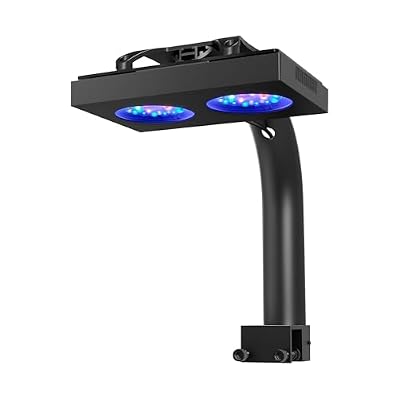
NICREW HyperReef 100 Gen 2 LED Reef Aquarium Light, 100W for LPS SPS Corals
Selected for "Best Reef Light for a 75 Gallon Tank: Proven Top 4 Picks": this listing is lighting (NICREW HyperReef 100 Gen 2 LED Reef Aquarium Light, 100W for LPS SPS C), matching the equipment this article covers.
View on Amazon
Hipargero Aquarium Lights-100 watt 5 Channels Sunrise Sunset Moonlight Reef Lights for Coral SPS LPS Saltwater Tank
Selected for "Best Reef Light for a 75 Gallon Tank: Proven Top 4 Picks": this listing is lighting (Hipargero Aquarium Lights-100 watt 5 Channels Sunrise Sunset Moonlight), matching the equipment this article covers.
View on Amazon
SMATFARM Aquarium Light- 140W Reef Light Wide Coverage Sunrise Sunset Moonlight Saltwater Lights for Coral with Master Slave Group Control & Timer & Screen
Selected for "Best Reef Light for a 75 Gallon Tank: Proven Top 4 Picks": this listing is lighting (SMATFARM Aquarium Light- 140W Reef Light Wide Coverage Sunrise Sunset ), matching the equipment this article covers.
View on Amazon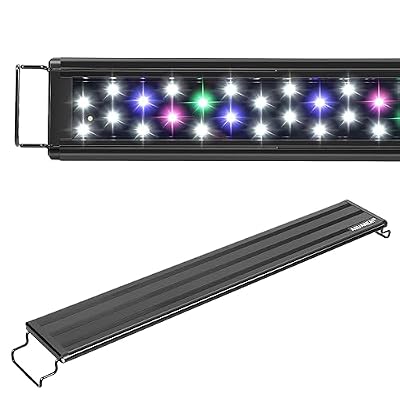
AQUANEAT LED Aquarium Light Full Spectrum for 48 Inch to 54 Inch Fish Tank Light Fresh Water
Selected for "Best Reef Light for a 75 Gallon Tank: Proven Top 4 Picks": this listing is lighting (AQUANEAT LED Aquarium Light Full Spectrum for 48 Inch to 54 Inch Fish ), matching the equipment this article covers.
View on AmazonBy David Nguyen
Quick answer: For most people in 2026, the best reef light for a 75 gallon tank is the EcoTech Radion XR30 G6 — our #1 rated choice. See the full ranked comparison, alternatives and buying advice below.
How to Choose Saltwater & Reef Gear
Reef lighting changes coral color and growth more than any other single upgrade, so the best reef light for a 75 gallon tank should be judged on coverage, spectrum control, and how it handles a 48-inch footprint. Settle these four criteria before you ever compare brands, wattages, or prices side by side.
PAR and Coverage
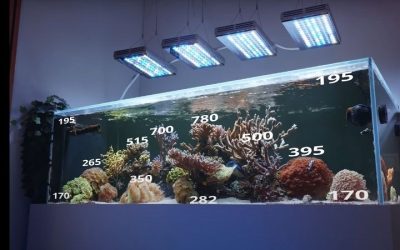
PAR measures the usable light corals actually photosynthesize with, and it falls off sharply with depth and distance from center. On a 20-inch-deep tank, softies sit happy near 50 to 100, LPS around 100 to 150, and SPS often want 200 to 350 at the coral, figures widely cited across the hobby rather than lab numbers we produced.
The trap is buying by wattage instead of measured PAR at your sandbed and rock line. One point-source fixture can read strong directly under the puck yet leave dim corners, so plan coverage for the full 48 inches and borrow or buy a PAR meter before you commit corals to a given spot. A quick meter check now prevents browning corals later.
Spectrum and Color Channels
Spectrum drives the blues that make corals fluoresce and the whites that let you judge the tank honestly. Fixtures with several independent color channels let you dial a blue-leaning reef look while still delivering enough usable light, and most reefers settle somewhere around 70 to 90 percent blue-weighted spectrum for color.
More channels mean finer control but also more ways to over-tune and shock coral. A viral coral-pop screenshot only holds up under that person’s exact intensity and depth, so treat online presets as starting points and change a single channel at a time over several days, never every slider in one evening.
Spread vs Point-Source and Fixture Count
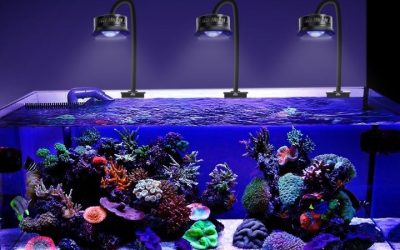
Point-source LEDs like Kessil throw a tight, shimmering beam that colors SPS beautifully but light only about two feet each, while spread fixtures such as Radion or ReefLED blanket a wider area with a flatter, softer field. A 48-inch tank usually needs two fixtures either way to stay even. Coverage, not wattage, is what fills those corners.
Stretching one fixture across a 75 saves money up front and costs you corners later, where shaded corals slowly brown out. Match fixture count to the footprint first: the best reef light for a 75 gallon tank is often a matched pair spaced to overlap, not one lone flagship straining to cover the glass.
Control, Cooling, and Total Cost
Modern reef lights run through an app or a dedicated controller for sunrise-to-sunset ramps, and quiet passive-cooled units suit a living-room display while fan-cooled models can hum in a bedroom. Read the noise and cooling spec closely if the tank shares the room where you sleep. A quiet fixture matters most in a bedroom or office build.
Total cost is more than the fixture: mounting arms, a separate controller on some brands, and a steady 24/7 electric draw all add up across a year. Fixtures also refresh often, so confirm you are buying the current generation with active firmware, check for UL or ETL marks, and run every plug through a GFCI.
Top Picks
These four fixtures each own a clear role, from a spread flagship down to a budget-friendly starter, so you can match the best reef light for a 75 gallon tank to both your corals and your wallet. Every pick below carries a real trade-off, stated plainly so nothing surprises you after checkout. Read each drawback as closely as the spec.
| Product | Best For | Key Spec | Watch Out For |
|---|---|---|---|
| EcoTech Radion XR30 G6 | Best Overall | Wide multi-channel spread, Mobius app | Premium price; budget a diffuser and mount |
| AI Hydra 32 HD | Best Value | HD optics, built-in wireless control | About 24 in coverage; a 48 in tank needs two |
| Kessil A360X (pair) | Best for SPS color | Dense point source, natural shimmer | Controller sold separately; tighter spread |
| Red Sea ReefLED 90 | Best for soft coral and beginners | Reef-tuned spectrum, ReefBeat app | Fewer color channels; roughly 24 in coverage |
EcoTech Radion XR30 G6
The Radion XR30 G6 is the do-everything pick, with a multi-color LED array and a wide lens that spreads even light across most of a 48-inch tank when centered or paired. Mobius scheduling is mature, and the flatter field suits mixed reefs that mingle SPS up high with LPS resting lower on the rock. That flexibility is why it tops the list.
The honest drawback is cost and setup: it is a premium fixture that performs best with its diffuser and a proper mount rather than hung bare. Budget for a mounting solution from the start, and since flagship fixtures cycle generations, confirm you are getting the current G6 with firmware still supported.
AI Hydra 32 HD
The Hydra 32 HD earns Best Value by folding HD optics and integrated wireless control into a compact body that needs no separate controller box. A pair covers a 75 evenly and lets you run independent zones, useful when one end holds light-hungry SPS and the other holds mellow softies. Zoning like that is hard with one central fixture.
The catch is coverage per unit: one Hydra 32 realistically lights about two feet, so a single fixture leaves a 48-inch tank patchy at the ends. Plan on two from day one, and note that fan cooling is present, so listen for it first if the tank lives in an otherwise silent room. Passive-cooled rivals trade some output for silence.
Kessil A360X (pair)
Kessil’s A360X is the SPS color specialist, using a dense point source that creates the glittery shimmer many reefers chase alongside strong central PAR for stony corals. A pair on a 48-inch tank, spaced and angled to overlap, delivers punchy color that flatter fixtures often struggle to match. Spacing and angle do most of that work.
Point-source light spotlights, though, so even coverage demands careful spacing and the Spectral Controller X adds cost for full scheduling. It rewards SPS-forward tanks most; softie keepers may find the raw intensity more than they need and should dial it well back during the acclimation weeks. Ease it up only as the polyps adjust.
Red Sea ReefLED 90
The ReefLED 90 is the friendliest entry, pairing a reef-tuned spectrum with simple ReefBeat scheduling and quiet operation that fits a display in a shared living space. It grows soft corals and LPS reliably and stays forgiving for newer reefers still learning to read their own tank. It is a genuinely low-stress place to start.
Its limitation is flexibility: fewer independent color channels than a Radion mean less fine spectral tuning, and each unit covers roughly two feet, so a 75 still wants a pair. Color-critical SPS chasers may find it basic, but for most mixed reefs it is plenty of light and genuinely easy to live with.
Frequently Asked Questions
A handful of questions come up constantly once people start shopping for the best reef light for a 75 gallon tank, and the answers hinge on your corals, tank depth, and how hands-on you want to be with tuning. These are the ones worth settling before you spend a dollar. Each answer ties back to your corals and depth.
How many fixtures do I need for a 75 gallon tank?
For a standard 48-inch-long 75, plan on two fixtures. Point-source and most spread LEDs cover about two feet each with usable PAR, so a single unit almost always leaves shaded corners where corals lose color, retract, and gradually slow their growth over the following weeks. Coverage sits at the heart of the best reef light for a 75 gallon tank.
You can occasionally stretch one very wide fixture across a shallow, softie-only tank, but the moment SPS goes in at the ends you will want that second unit. Two matched fixtures also add redundancy: if one needs service, the reef stays lit while you troubleshoot the other without an emergency. Redundancy quietly earns its keep on a big reef.
What PAR does a mixed reef actually need?
Commonly cited targets place softies near 50 to 100 PAR, LPS around 100 to 150, and SPS from roughly 200 to well past 300 at the coral itself, not at the water surface. These are hobby-consensus ranges, so measure with a meter rather than trusting any fixture’s advertised output figure. Meter readings beat any spec sheet here.
A mixed reef works through zoning: keep SPS high on the rock under the brightest spot and place softies lower or toward the shaded edges. That vertical map lets one pair of fixtures satisfy very different corals at once without cooking the sensitive ones or starving the demanding stony pieces. Zoning keeps every coral in its happy band.
Can I use just one fixture to save money?
One fixture is tempting on a budget, but across a 48-inch tank it usually trades even coverage for a bright center and dim ends. Corals parked in those shadows brown out, and you often spend the savings later replacing them or finally buying the second light you tried to skip. Staged buys keep the best reef light for a 75 gallon tank affordable.
If cash is tight, a smarter path is one strong fixture now over the main rock and a matched second unit added within a month or two. Watch Amazon windows like Prime Day or Black Friday for the pricier flagships, since those are among the few times big fixtures dip in a meaningful way. Those windows are worth the wait for flagships.
Are budget reef lights good enough for coral?
Budget fixtures can absolutely grow soft corals and many LPS, and brands like Nicrew or Popbloom light nano and starter reefs without draining a wallet. The gap shows up in spectrum control, evenness of coverage, and long-term color hold on the most demanding SPS pieces. The best reef light for a 75 gallon tank is judged over a year, not a day.
The real question is your livestock and your patience: forgiving corals under an affordable light do fine, while a color-critical SPS tank rewards more channels and cleaner optics. Weigh the whole 12-month picture, including any controller or bulb, before deciding the cheap option is actually cheaper.
Final Thoughts
Coverage first, spectrum control second, honest total cost third: get that order right and the best reef light for a 75 gallon tank becomes an easy call instead of a gamble. Match fixture count to the 48-inch footprint, zone corals by light demand, confirm UL or ETL safety and current firmware, and you will grow color you can genuinely see.
Ready to decide? Our #1 pick for 2026 is the EcoTech Radion XR30 G6.
Live price & availability on Amazon.
Related Reviews & Guides


Aquarium Hydrometer Salinity Refractometer
Best pH and ORP Monitor for a Reef Tank: Top Compared Guide