Last Updated: October 21, 2026
- Top Pick: MICROBE-LIFT Algaway 5.4 Algae Remover for Aquariums, Algaecide for Freshwater and Saltwater Tanks, Aquarium Algae Control and Fish Tank Cleaner, Safe for Fish and Plants, 8 Ounces (ALGAA08)
- Best Value: Tetra No More Algae Tablets for Aquariums, 8 Count
- Premium Choice: MICROBE-LIFT Special Blend Aquarium Water Care Treatment, Cleaner & Clarifier for Fresh and Saltwater Fish Tanks, Reduces Maintenance & Helps with Aquarium Algae Control and Odor, 4 Ounces (SBH04)
How to get rid of algae in fish tank water is a four step job in a fixed order: identify the type, cut the driver behind it, remove the existing growth by hand, then hold the change long enough to see a result. That last part is where most people give up, because it takes one to four weeks rather than a weekend.
As an Amazon Associate we earn from qualifying purchases.
As an Amazon Associate we earn from qualifying purchases at no extra cost to you.





By David Nguyen
Measure and Narrow Down the Driver
Removing algae without removing what feeds it produces the same growth on the same schedule. Anyone working out how to get rid of algae in fish tank water permanently starts by measuring three inputs and testing four numbers, because the driver is always one of those.
The Numbers to Record Before You Start
Count the daily photoperiod against a reference of six to eight hours, and check whether direct daylight reaches the glass at any point. Then test ammonia, nitrite, nitrate and temperature with a liquid kit rather than strips.
Nitrate above 40 ppm points to a nutrient surplus from feeding, stocking or missed water changes. Ammonia above 0 ppm in a tank under three months old is a nutrient source in its own right, and no lighting change will address it until the cycle finishes.
Record how much food goes in daily and how the plants are doing. Food consumed within one to two minutes is the benchmark, and stalled or melting plants mean the competition that normally suppresses algae has stopped working.
The Decision Tree: Type Points to Driver
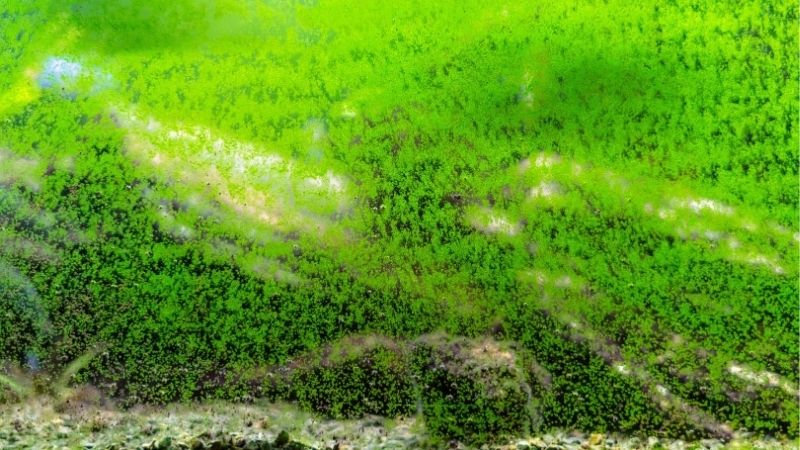
Green film on glass in a young tank is green dust and needs time plus a shorter photoperiod. Long green strands on plants are hair algae and point to nutrients outpacing plant growth. Dark tufts on hardscape are black beard, pointing to unstable CO2 and weak flow.
Brown dusty coating in a tank under three months is diatoms and fades as the tank matures. Slimy green sheets with a distinctive smell are a cyanobacteria film, which spreads fastest and needs the quickest response of any type here.
More than one type at once is common and means more than one driver is running. A tank with both excess light and excess nutrients grows film on the glass and strands on the plants simultaneously, and correcting only one leaves the other in place.
| What you see | Readings and inputs | Driver to correct | First action |
|---|---|---|---|
| Green film across the glass | Light over 8 hours, tank young | Photoperiod too long | Cut to 6 hours on a timer |
| Long green strands on plants | Nitrate above 40 ppm | Nutrient surplus, weak plant growth | Change 30-40%, trim, feed less |
| Dark tufts on hardscape and leaf edges | Flow low, CO2 inconsistent | Instability and dead spots | Improve flow, stabilise CO2 |
| Brown dusty coating, tank under 3 months | All four readings normal | Immature tank | Wipe glass, wait it out |
| Slimy sheets with a strong smell | Nitrate above 40 ppm, poor flow | Organic build-up, stagnant areas | Siphon out, improve circulation |
When Algae Is Not the Problem to Solve
Not every green surface is a problem worth solving. A light film on glass between weekly cleanings is normal in any lit tank and does not need correcting. Diatoms in a new tank are a maturation stage rather than a fault, and they fade over the first three months without intervention.
If fish are showing rapid gill movement, hanging at the surface or refusing food, deal with that first. Those signs point to water quality or oxygen rather than to algae, and they need the four readings and an air stone before any algae work begins.
Removing Algae Step by Step
These four steps are how to get rid of algae in fish tank water in practice, and they run in order. Skipping the first makes everything after it temporary, because the driver keeps running while you clean.
Step 1: Cut the Driver
Set the light to six hours on a timer and block any window putting direct sun on the glass. If nitrate is above 40 ppm, change 30-40% with temperature matched to within 1-2 °F (about 1 °C), vacuum substrate, and cut feeding to once daily.
For black beard and cyanobacteria specifically, flow is the driver rather than nutrients. Reposition the filter outflow to reach dead corners, and check turnover against a baseline of 4-6 times tank volume per hour for community stocking.
Step 2: Remove What Is Already There
Physical removal is the part of how to get rid of algae in fish tank water that nobody can skip. Scrape the glass, trim badly affected leaves rather than trying to clean them, and siphon loosened growth out during the water change. Hardscape can be removed and scrubbed outside the tank, which is far more effective than working underwater.
Manual removal matters because existing algae keeps producing spores and shading plants while the correction takes effect. It also gives you a clean baseline, so you can tell in a fortnight whether the growth is returning or not.
Cyanobacteria is the exception on technique. It lifts off in sheets and should be siphoned out whole rather than scrubbed, since breaking it up spreads fragments across the tank that establish new patches within days.
Step 3: Strengthen the Plants
Add fast-growing stems or floating plants if the tank is planted. They compete for exactly the nutrients the algae is using, and unlike any product they keep doing it continuously once established.
Match light intensity to the plants you actually have. Low-light species want roughly 15-30 µmol PAR at substrate level, medium 30-50. Strong light over slow-growing plants without CO2 is the configuration that grows algae most reliably.
Step 4: Tank Size, Placement and Fit
Moving a tank out of direct daylight is the cheapest permanent fix available and no equipment matches it. Two metres into the room changes the light budget more than any change of fixture or schedule will.
Depth decides what reaches the substrate. PAR falls through water, so a fixture delivering plenty at the surface may provide low-light levels at the bottom of a tank 18 in (46 cm) deep, leaving plants struggling while algae thrives higher up.
Measure before you order: fixture length against tank length, 4-6 in (10-15 cm) behind the tank for a hang-on-back filter, cabinet height for a canister, and stand capacity against roughly 10 lb/gallon (about 1 kg/L) filled.
What Never to Do When Fighting Algae
Three popular approaches to how to get rid of algae in fish tank water either fail outright or create a second problem. All three are widely recommended, which is why the same tanks keep producing the same growth month after month.
Never Reach for an Algaecide First
Killing a large volume of algae at once releases the nutrients those cells held and consumes oxygen as the die-off decomposes. In a warm, stocked tank that can produce an ammonia reading and a second outbreak within a fortnight.
Many of these products contain copper, which is lethal to shrimp and snails at very low concentrations. In a planted tank with any invertebrates the category is simply unavailable, regardless of what the label claims.
Never Cut Light to Almost Nothing
Dropping from eight hours to six helps. Dropping to two or three starves the plants that were competing for the same nutrients, and a tank with weak plants and minimal light usually ends up with more algae rather than less.
The replacement target: six to eight hours at an intensity your plants can actually use. A shorter day suppresses algae only while plants remain healthy enough to keep consuming the surplus.
Never Strip the Tank Down and Restart
Replacing substrate, boiling hardscape and scrubbing everything removes the biological filter along with the algae, and spores return on plants, hardscape and tap water within days. You end up cycling a tank again with the original driver untouched.
Rinsing filter media under the tap belongs in the same category. Chlorine and chloramine kill nitrifying bacteria on contact, and an ammonia spike is itself a nutrient source that feeds several algae types directly.
Preventing Algae From Returning
Prevention is a schedule and a position rather than a purchase, and it is the half of how to get rid of algae in fish tank water that actually lasts. Once the driver is corrected, holding it corrected is what separates a tank that clears in a month from one that cycles through outbreaks all year.
A Schedule That Holds
Run the light on a timer at six to eight hours, keep water changes at 20-30% weekly adjusted by measured nitrate, and clean glass during each change. Test nitrate before the change rather than after, since the pre-change figure shows whether the routine is keeping pace.
Summer needs a second look. Longer daylight, warmer rooms and holidays where someone else feeds the tank all push the drivers up at once, and a fortnight away with a generous feeder is a common start to an autumn algae problem.
Equipment That Degrades and How It Shows
LED fixtures lose PAR gradually while still looking bright, so a light that grew plants well in year one may leave them struggling by year three. Struggling plants mean lost competition, which means algae.
Timers get reset by power interruptions and lights run long without anyone noticing. Filter flow drops 30-50% as media loads and impellers wear, creating the dead spots where black beard and cyanobacteria establish first.
Test reagents expire and read low with age, which matters because nitrate is a primary input here. Every powered device beside water belongs on a GFCI outlet with a drip loop and a UL or ETL mark.
Early Signals Worth Watching
Green film appearing on the glass earlier each week is the clearest early signal, and it usually precedes anything on the plants by a fortnight. Nitrate creeping past 40 ppm between changes predicts the nutrient-driven types on a similar timescale.
Watch new plant growth as well. Pale or stunted new leaves mean the plants have stopped competing effectively, and that is the point to correct dosing or light before algae fills the space over the following weeks.
Frequently Asked Questions
These four come up most often once the light is on a timer, the water changes are done, and the tank still looks stubbornly green.
How long before the algae actually goes?
One to four weeks for most types after the driver is corrected. Cyanobacteria responds in one to two weeks, hair algae in two to four, and black beard is the slowest at three to four. Nothing here works in days.
Will algae eaters do the job for me?
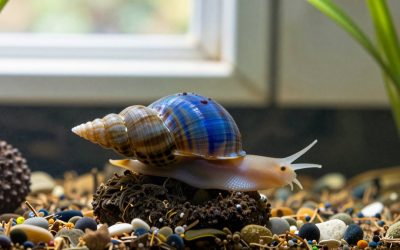
Only partly. Nerite snails and otocinclus handle green dust and diatoms, amano shrimp work on soft hair algae, and nothing reliably eats black beard or cyanobacteria. They also add bioload, which adds the nutrients you are trying to reduce.
Do I need to do a blackout?
Only for green water, where three to four days of complete darkness with the filter running is genuinely effective. For growth attached to surfaces, a blackout achieves little that a shorter photoperiod does not.
My tank is clean but algae keeps coming back. Why?
The driver is still running. Check whether the photoperiod crept back up, whether nitrate sits above 40 ppm before changes, and whether plants are actually growing. How to get rid of algae in fish tank water is always a question about the driver rather than the cleaning.
See More:
The Bottom Line on Removing Aquarium Algae
The short version of how to get rid of algae in fish tank water: identify the type, cut the driver behind it, remove the existing growth by hand, and hold the change for one to four weeks. Six hours of light on a timer, nitrate under 40 ppm, adequate flow into every corner and healthy fast-growing plants cover the large majority of cases. Skip the algaecide entirely if there are shrimp or snails in the tank, never strip the setup down, and never rinse filter media under the tap while doing it.
Platy Tank Mates: A Hard-Water Community Guide
Amano Shrimp Care Guide: The Ultimate Algae Eater for Your Tank