Last Updated: October 21, 2026
- What Cycling Actually Does
- Fishless Cycling: The Safe Method
- How to Cycle Faster and Safely
- Conditions That Speed or Stall the Cycle
- What to Do Once Cycled
- Reading the Cycling Curve in Detail
- Why You Should Never Skip the Cycle
- Maintaining Your Cycle After Setup
- Top-Rated Picks
- Frequently Asked Questions
- Conclusion
- Related Articles
- Related Guides
⚡ Key Takeaways
- When fish produce waste, it breaks down into ammonia, which is highly toxic.
- Fishless cycling is the recommended approach because no animals are harmed in the process.
- You cannot skip the cycle, but you can accelerate it considerably with the right techniques.
- When your tank is fully cycled, do a partial water change to bring nitrate down to a safe level, then add fish gradually.
Knowing how to cycle a fish tank is the difference between a thriving aquarium and a heartbreaking series of fish deaths. Cycling is the process of establishing the colonies of beneficial bacteria that convert toxic fish waste into safer compounds. Skipping it is the number one reason beginner fish die, yet it is entirely within your control. This guide explains both the safe fishless method and the faster techniques that can shorten the wait, so you can build a healthy, stable tank before a single fish goes in.
As an Amazon Associate we earn from qualifying purchases at no extra cost to you.




🛒 Best Price Today on Amazon
Prime members get fast, free shipping on everything above, plus member-only deals. New members get a 30-day free trial — cancel anytime.
Start 30-Day Prime Free Trial →See Today’s Amazon DealsWhat Cycling Actually Does
When fish produce waste, it breaks down into ammonia, which is highly toxic. Cycling grows two groups of bacteria: one that converts ammonia into nitrite, and another that converts nitrite into far safer nitrate. A tank is considered “cycled” when it can process ammonia all the way to nitrate quickly enough that fish are never exposed to toxic levels. This is the foundation that every other aspect of fishkeeping rests upon.
Fishless Cycling: The Safe Method
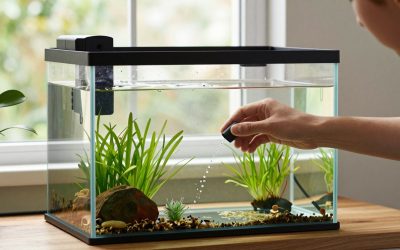
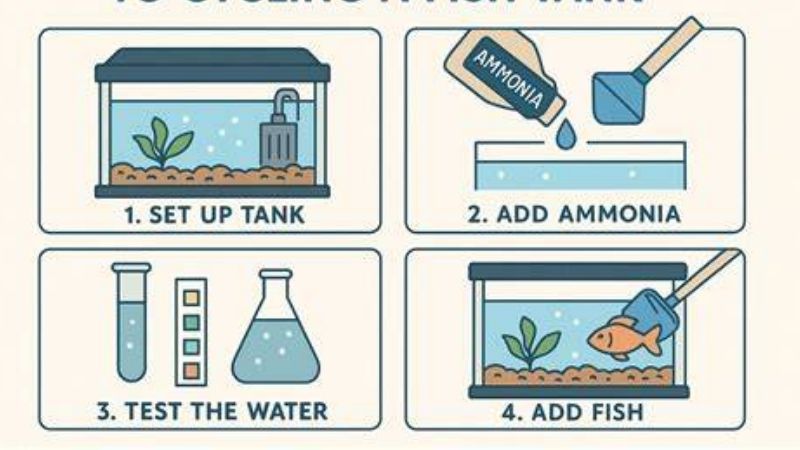
Fishless cycling is the recommended approach because no animals are harmed in the process. You add a source of ammonia to feed the bacteria and monitor the tank with a test kit until the cycle completes. It typically takes two to six weeks, but it lets you fully stock the tank once finished.
- Set up the tank completely. Install the filter, heater, and substrate, fill with dechlorinated water, and turn on the equipment.
- Raise the temperature. Set the heater to around 80 to 82 degrees Fahrenheit, since warmth speeds bacterial growth. Confirm with a reliable thermometer.
- Add an ammonia source. Dose pure ammonia to about 2 to 4 ppm, or use a small amount of fish food to decompose.
- Test daily. Track ammonia, nitrite, and nitrate with a liquid test kit.
- Watch the curve. Ammonia rises then falls, nitrite rises then falls, and nitrate accumulates.
- Confirm completion. When ammonia and nitrite both drop to zero within 24 hours of dosing and nitrate is present, the tank is cycled.
How to Cycle Faster and Safely
You cannot skip the cycle, but you can accelerate it considerably with the right techniques.
| Method | How It Helps | Time Saved |
|---|---|---|
| Seeded filter media | Transfers live bacteria from an established tank | Up to several weeks |
| Bottled bacteria | Adds nitrifying bacteria directly | 1–2 weeks |
| Higher temperature | Speeds bacterial reproduction | Several days |
| Good oxygenation | Bacteria need oxygen to thrive | Several days |
| Used substrate or decor | Carries established bacteria | Up to a week |
Seeding From an Established Tank
The single fastest method is borrowing a piece of filter media, a cup of gravel, or a sponge from a healthy, established aquarium. These already host thriving bacterial colonies that jump-start your new tank, sometimes cutting cycling time to a week or less.
Using Bottled Bacteria
Commercial bacterial starters add nitrifying bacteria directly to your tank. Quality varies, so choose a reputable product and keep it refrigerated and fresh. Combined with an ammonia source and warmth, it can meaningfully shorten the wait.
Conditions That Speed or Stall the Cycle
- Temperature: warmer water (78 to 82 F) accelerates the cycle; cold water slows it dramatically.
- Oxygen: nitrifying bacteria are aerobic, so good flow and surface agitation help. A wave maker or powerhead improves circulation and oxygenation.
- pH: a neutral to slightly alkaline pH supports faster bacterial growth; very acidic water can stall the cycle.
- Chlorine: never rinse media in chlorinated tap water, which kills the bacteria you are trying to grow.
What to Do Once Cycled
When your tank is fully cycled, do a partial water change to bring nitrate down to a safe level, then add fish gradually. Stocking slowly lets the bacterial colony scale up to handle the increasing waste load. Adding too many fish at once can overwhelm the biofilter and trigger a mini-cycle, exposing your new fish to toxins.
Signs Your Cycle Is Complete
- Ammonia consistently reads zero after dosing.
- Nitrite consistently reads zero.
- Nitrate is measurable and climbing.
- The tank processes a fresh dose of ammonia to zero within 24 hours.
Reading the Cycling Curve in Detail
Watching the cycle unfold through your test results is genuinely satisfying once you know the pattern. In the first week, ammonia climbs steadily as you dose it and nothing yet consumes it. Around days seven to ten, the first bacterial group establishes and ammonia begins to fall while nitrite starts to appear and rise. This nitrite phase is often the longest and most frustrating part, sometimes lasting two weeks or more as the second bacterial group catches up.
Eventually nitrite drops to zero, nitrate climbs, and the cycle completes. A common point of confusion is the so-called nitrite stall, where nitrite reads sky-high for what feels like forever. This is normal; the second bacterial group simply grows more slowly than the first. Resist the urge to intervene with large water changes that only delay the process. Keep dosing ammonia to feed the bacteria and let the biology finish its work.
Why You Should Never Skip the Cycle
It is tempting, especially for an excited new hobbyist, to add fish immediately and hope for the best. The result is almost always tragic. Without an established bacterial colony, ammonia accumulates to toxic levels within days, burning the fish’s gills and poisoning them. Even if they survive the ammonia, the subsequent nitrite spike delivers a second blow.
Fish that endure an uncycled tank rarely come through unharmed. The stress weakens their immune systems, leaving them vulnerable to disease for weeks afterward. There is simply no shortcut that replaces the bacterial colony. Cycling first is not optional caution; it is the fundamental requirement that separates a thriving tank from a string of dead fish. The few weeks of patience you invest up front save months of heartbreak later.
Maintaining Your Cycle After Setup
- Never rinse biological media under chlorinated tap water; use old tank water instead.
- Replace filter media gradually rather than all at once to preserve bacteria.
- Avoid leaving the filter off for more than an hour, which starves the colony of oxygen.
- Add new fish in small batches so the colony can scale up to the increased load.
- Be cautious with medications, especially antibacterials, which can crash the cycle.
A cycle you worked weeks to establish can be damaged in a single careless cleaning session. Protecting your bacterial colony is just as important as building it in the first place.
Top-Rated Picks


| Product | Brand |
|---|---|
| Aqueon Shrimp Pellets Sinking Food for Tropical Fish,… | Aqueon |
| API BOTTOM FEEDER PELLETS WITH SQUID Fish Food 1.3-Ou… | API |
| Tetra ShrimpWafers Complete Diet for Catfish and Loac… | Tetra |
| Hikari Tropical Sinking Wafers for Catfish, Loaches a… | Hikari |
| Ultra Fresh Bottom Feeder Fish Food, Sword Prawns, Na… | UltraFresh-ShrimpDelight |
Frequently Asked Questions
How long does it take to cycle a fish tank?
A standard fishless cycle takes two to six weeks. Seeding with established media or bottled bacteria, plus warm, oxygenated water, can shorten it to one to two weeks.
Can I cycle a tank with fish in it?
You can, but it is hard on the fish, which are exposed to toxic ammonia and nitrite. It requires daily water changes and is generally discouraged in favor of fishless cycling.
What ammonia level should I aim for when cycling?
Dose pure ammonia to around 2 to 4 ppm. This feeds the bacteria adequately without reaching levels that would inhibit their growth.
Does bottled bacteria really work?
Reputable, fresh products do help seed your tank and speed the cycle. Quality varies, so store it properly and pair it with an ammonia source and warm water for best results.
How do I know the cycle is finished?
The cycle is complete when a dose of ammonia is processed to zero ammonia and zero nitrite within 24 hours, with nitrate present. That confirms both bacterial groups are established.
Conclusion
Learning how to cycle a fish tank is the most valuable skill a new aquarist can acquire. Use the fishless method to protect your fish, accelerate the process with seeded media, bottled bacteria, and warm oxygenated water, and confirm completion with daily testing. Cycle first, stock slowly, and you will have built the stable biological foundation that keeps an aquarium healthy for years to come.
How to Test Aquarium Water Correctly (2026): Step-by-Step
Endler’s Livebearer Care Guide: A Colorful Nano Fish for Beginners