Last Updated: October 21, 2026
- Why Water Changes Are Essential
- The General Rule of Thumb
- Factors That Change Your Schedule
- Let Your Test Kit Decide
- How to Perform a Proper Water Change
- Can You Change Too Much Water?
- Understanding Old Tank Syndrome
- Matching Temperature and Chemistry
- Building a Sustainable Routine
- Frequently Asked Questions
- Conclusion
- Related Articles
- Related Guides
⚡ Key Takeaways


Editor's Pick
Seachem Stability Fish Tank Stabilizer – For Freshwater and Marine Aquariums, 16.9 Fl Oz (Pack of 1)


As an Amazon Associate we earn from qualifying purchases at no extra cost to you.




- A filter does an excellent job converting toxic ammonia and nitrite into nitrate, but nitrate has nowhere to go in a closed system.
- For most freshwater community tanks, a weekly water change of 20 to 30 percent is the gold standard.
- The more fish you keep, the more waste they produce, and the faster nitrate climbs.
- The most precise way to set your schedule is to follow your nitrate readings rather than a fixed calendar.
One of the most common questions new aquarists ask is how often should you change aquarium water. It is a deceptively simple question with an answer that depends on your tank size, stocking level, filtration, and whether the tank is planted. Water changes are the backbone of aquarium maintenance because they remove dissolved waste that filters cannot eliminate, replenish minerals, and dilute nitrate. Getting the frequency and volume right keeps your fish healthy without creating unnecessary stress for them or extra work for you.
Related: best 5-gallon fish tank kits.
🛒 Best Price Today on Amazon
Prime members get fast, free shipping on everything above, plus member-only deals. New members get a 30-day free trial — cancel anytime.
Why Water Changes Are Essential
A filter does an excellent job converting toxic ammonia and nitrite into nitrate, but nitrate has nowhere to go in a closed system. It accumulates continuously, and only a water change can physically remove it. Water changes also restore trace minerals and buffering capacity that fish and plants consume over time, helping keep pH and hardness stable. Skipping them leads to “old tank syndrome,” where parameters slowly drift until fish become chronically stressed.
The General Rule of Thumb
For most freshwater community tanks, a weekly water change of 20 to 30 percent is the gold standard. This schedule keeps nitrate in a safe range, replenishes minerals, and is gentle enough to avoid shocking your fish. From there, you adjust based on your specific setup.
| Tank Situation | Recommended Change | Frequency |
|---|---|---|
| Standard community tank | 20–30% | Weekly |
| Lightly stocked / planted | 15–25% | Every 1–2 weeks |
| Heavily stocked | 30–50% | Twice weekly |
| New / cycling tank | 10–25% | As needed for ammonia |
| Shrimp tank | 10–20% | Weekly, slowly |
| Reef aquarium | 10–20% | Weekly or biweekly |
Factors That Change Your Schedule
Stocking Density
The more fish you keep, the more waste they produce, and the faster nitrate climbs. A heavily stocked tank may need 50 percent changes twice a week, while a sparsely populated one can go longer between changes.
Tank Size
Larger volumes of water dilute waste more effectively, so big tanks need less frequent attention relative to their stocking. Small tanks and nano setups foul quickly and benefit from smaller, more frequent changes.
Live Plants
A well-planted tank consumes nitrate and other waste as fertilizer, which can dramatically reduce how often you need to change water. Some heavily planted tanks thrive on a change every two weeks.
Filtration
Strong biological and mechanical filtration processes waste faster, but no filter removes nitrate. Good flow keeps debris suspended so it can be filtered out, and a wave maker or powerhead helps eliminate stagnant zones in larger tanks.
Let Your Test Kit Decide
The most precise way to set your schedule is to follow your nitrate readings rather than a fixed calendar. Aim to keep nitrate below 20 ppm in freshwater community tanks and lower for sensitive species. When nitrate creeps toward that ceiling between changes, increase frequency or volume. A quality liquid test kit turns guesswork into a data-driven routine.
How to Perform a Proper Water Change
- Unplug the heater if the water level will drop below it to prevent cracking.
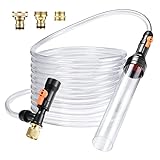
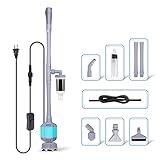
- Use a gravel vacuum to siphon out the planned percentage while cleaning the substrate.
- Prepare replacement water at a matching temperature to avoid thermal shock.
- Add a dechlorinator to neutralize chlorine and chloramine in tap water.
- Refill slowly, pouring against the glass or onto a plate to avoid stirring up the substrate.
- Restart equipment and confirm the temperature with a reliable thermometer.
Common Water Change Mistakes
- Forgetting to dechlorinate new water, which harms fish and bacteria
- Adding water that is much colder or warmer than the tank
- Changing too much at once, causing parameter shock
- Vacuuming the entire substrate aggressively in one session
- Never testing to verify the change is actually keeping nitrate down
Can You Change Too Much Water?
Yes. Massive changes of 80 to 90 percent can swing pH, temperature, and hardness sharply enough to stress or kill fish, especially in tanks where the water chemistry has drifted. If you have neglected a tank, correct it gradually with several moderate changes over a few days rather than one drastic one.
Understanding Old Tank Syndrome
Old tank syndrome is the silent consequence of neglecting water changes for months. Over time, nitrate climbs into the hundreds of ppm, and the steady consumption of minerals lowers the water’s buffering capacity until pH begins to crash. Fish living in this slowly degrading water often appear fine because the change is gradual, but they are chronically stressed and prone to disease.
The real danger appears when a well-meaning owner finally performs a large water change. The sudden shift from acidic, mineral-depleted old water to fresh tap water can shock fish so severely that they die, ironically right after the owner tries to help. This is why neglected tanks must be corrected with several small changes spread over days rather than one dramatic overhaul. Consistent moderate changes prevent the syndrome from ever developing.
Matching Temperature and Chemistry
One of the most overlooked aspects of a water change is matching the new water to the tank. A temperature difference of more than a couple of degrees can shock fish, especially smaller or more sensitive species. Always mix your replacement water to a similar temperature before adding it, checking with a thermometer rather than guessing by hand.
Chemistry matters too. If your tank water has drifted in pH or hardness, large infusions of differing tap water create swings that stress fish. For routine moderate changes this is rarely an issue, but it becomes important after periods of neglect or when your source water differs significantly from your established tank. The goal of any water change is to improve conditions without introducing a jarring shift.
Building a Sustainable Routine
- Pick a consistent day each week so water changes become an automatic habit.
- Keep your equipment, such as a siphon and buckets, ready and dedicated to aquarium use only.
- Pre-treat or pre-age replacement water so it is ready when you need it.
- Combine the change with light substrate vacuuming and glass cleaning to multitask.
- Log your nitrate readings to confirm your schedule is actually keeping levels down.
A routine that takes fifteen minutes a week prevents nearly every chronic water quality problem the hobby throws at you. Consistency beats intensity every time.
Frequently Asked Questions
Can I skip water changes if I have a good filter?
No. Filters convert ammonia to nitrate but cannot remove nitrate or replenish minerals. Only water changes accomplish those tasks, regardless of how powerful your filter is.
How much water should I change at once?
For routine maintenance, 20 to 30 percent is ideal. Larger changes are fine occasionally but should match temperature and be dechlorinated to avoid shocking your fish.
Is daily water changing ever necessary?
Yes, during a fish-in cycle or when treating an ammonia spike, small daily changes protect your fish until the biofilter catches up.
Do planted tanks need fewer water changes?
Often, yes. Plants absorb nitrate and other nutrients, so a heavily planted tank may stay healthy with smaller or less frequent changes. Always confirm with a test kit.
What happens if I never change the water?
Nitrate and other dissolved organics accumulate, pH and hardness drift, and fish suffer chronic stress and disease. This is known as old tank syndrome and is entirely preventable.
Should I clean the filter during a water change?
You can, but rinse biological media gently in the old tank water you just removed, never under the tap. This preserves the beneficial bacteria while still clearing trapped debris from the filter.
Is it better to do small frequent changes or large occasional ones?
Smaller, more frequent changes keep parameters more stable and are gentler on fish than large infrequent ones. A consistent weekly 20 to 30 percent change is far healthier than a big monthly overhaul.
Conclusion
For most aquariums, a weekly 20 to 30 percent water change is the reliable default, but the best schedule is the one your test kit confirms. Adjust for stocking, tank size, and plants, always match temperature, and never forget the dechlorinator. Consistent, moderate water changes are the simplest and most powerful tool you have for keeping your fish thriving.

How to Acclimate New Fish: Float and Drip Methods Explained
Are Aquarium Test Strips Worth It? An Honest Answer (2026)