Last Updated: October 21, 2026
- What Causes High Ammonia in an Aquarium
- How to Confirm You Have an Ammonia Problem
- Immediate Steps to Lower Ammonia Fast
- How to Keep Ammonia at Zero Long Term
- Products That Help Control Ammonia
- Understanding the Ammonia, Nitrite, and Nitrate Chain
- Mistakes That Make Ammonia Worse
- Temperature, pH, and Ammonia Toxicity
- Frequently Asked Questions
- Conclusion
- Related Articles
- Related Guides
⚡ Key Takeaways


As an Amazon Associate we earn from qualifying purchases at no extra cost to you.



- Ammonia spikes almost always trace back to a biological filter that cannot keep up with the waste load.
- The only reliable way to know your ammonia level is to test the water with a liquid reagent test kit, which is far more accurate than paper strips.
- When fish are at risk, you need fast relief.
- Lasting control comes from a healthy biological filter and a sensible bioload.
Learning how to lower ammonia in aquarium water is one of the most urgent skills any fishkeeper can develop, because ammonia is the single most common cause of sudden fish death in home aquariums. Ammonia (NH3/NH4+) is produced constantly from fish waste, uneaten food, and decaying plant matter. Even at concentrations as low as 0.25 ppm it begins to burn gills, damage organs, and stress fish, and anything above 1 ppm can be lethal within hours. The good news is that with the right combination of immediate action and long-term management, you can drive ammonia back down to the safe target of 0 ppm and keep it there.
🛒 Best Price Today on Amazon
Prime members get fast, free shipping on everything above, plus member-only deals. New members get a 30-day free trial — cancel anytime.
What Causes High Ammonia in an Aquarium
Ammonia spikes almost always trace back to a biological filter that cannot keep up with the waste load. In a fully cycled tank, beneficial bacteria convert ammonia into nitrite and then into far less toxic nitrate. When that bacterial colony is missing, damaged, or overwhelmed, ammonia accumulates. The most frequent triggers include:
- New tank syndrome — the tank has not finished cycling, so no bacteria exist to process waste.
- Overstocking — too many fish produce more waste than the filter can handle.
- Overfeeding — leftover food rots and releases ammonia directly.
- A dead fish or animal decaying unnoticed behind decor.
- Filter disruption — rinsing media in chlorinated tap water or replacing all media at once kills bacteria.
- Medications that suppress the nitrogen cycle’s bacteria.
How to Confirm You Have an Ammonia Problem
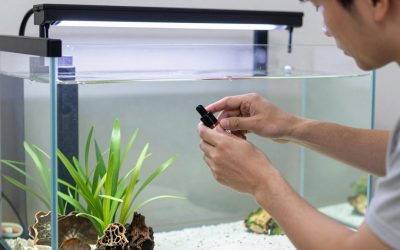
Never guess. The only reliable way to know your ammonia level is to test the water with a liquid reagent test kit, which is far more accurate than paper strips. A good aquarium water test kit measures ammonia, nitrite, nitrate, and pH so you can see the whole picture. Test daily during a crisis. Remember that ammonia toxicity rises sharply with higher pH and temperature, so a reading of 0.5 ppm at pH 8.2 is far more dangerous than the same reading at pH 6.8.
| Ammonia Level (ppm) | Risk to Fish | Action |
|---|---|---|
| 0 | Safe | Maintain routine |
| 0.25 – 0.5 | Mild stress, gill irritation | Water change + detoxifier |
| 0.5 – 1.0 | Moderate, organ stress | 50% water change now |
| 1.0 – 2.0 | High, lethargy and gasping | Daily large water changes |
| 2.0+ | Often fatal | Emergency action immediately |
Immediate Steps to Lower Ammonia Fast
When fish are at risk, you need fast relief. Take these steps in order:
- Perform a large water change. A 25-50% water change instantly dilutes ammonia. Always match temperature and dechlorinate the new water first. This is the fastest, safest way to cut ammonia in half.
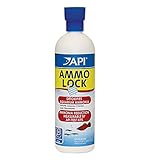
- Add a water conditioner that detoxifies ammonia. Products containing a binding agent convert toxic free ammonia into a non-toxic, bound form that fish can tolerate while your bacteria catch up. They do not remove ammonia, but they buy critical time.
- Stop feeding for 24-48 hours. Fish can safely go several days without food, and no new food means no new ammonia source.
- Remove visible waste and uneaten food with a gravel siphon, focusing on debris under decorations.
- Increase aeration. Ammonia stresses gills, so boosting dissolved oxygen with an air stone or by lowering the water line under the filter outflow helps fish breathe.
How to Keep Ammonia at Zero Long Term
Emergency fixes only treat symptoms. Lasting control comes from a healthy biological filter and a sensible bioload. Establish and protect your nitrogen cycle by never replacing all filter media at once, rinsing media only in old tank water or dechlorinated water, and adding fish gradually. Avoid overstocking by following the rough guideline of one inch of adult fish per gallon for small community fish, and adjust downward for messy species like goldfish.
Feeding discipline matters enormously. Feed only what your fish consume in two minutes, once or twice a day. A quality, less-polluting food reduces waste; comparing options in a fish food guide helps you pick formulas that fish digest efficiently. Strong water circulation also keeps debris suspended so the filter can capture it, and a properly sized aquarium wave maker eliminates the dead spots where waste settles and rots.
Products That Help Control Ammonia
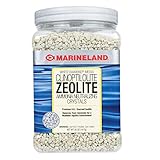
Beyond water changes, a few tools support ammonia management. Ammonia-removing filter media such as zeolite can be added to the filter to chemically adsorb ammonia, which is useful in emergencies but should not replace a healthy bacterial colony. Bottled nitrifying bacteria can jump-start or rebuild a cycle after a crash. Live plants are also natural ammonia consumers, since they absorb ammonia directly as a nitrogen source, making a planted tank more resilient against spikes.
Understanding the Ammonia, Nitrite, and Nitrate Chain
To truly control ammonia, it helps to understand where it goes once your biological filter is working. Ammonia is the first and most toxic link in the nitrogen cycle. Beneficial bacteria called Nitrosomonas consume ammonia and convert it into nitrite, which is still quite toxic. A second group of bacteria, Nitrobacter and Nitrospira, then convert nitrite into nitrate, which is far less harmful and removed through routine water changes. When you see an ammonia spike, it usually means this chain has been broken or has not yet formed. In a cycling tank, ammonia rises first, then falls as nitrite climbs, and finally both drop to zero as nitrate appears. Recognizing where your tank sits in this sequence tells you whether you are dealing with a new cycle, a crashed cycle, or simple overstocking. Testing for all three compounds together gives you the complete picture rather than a single misleading number, which is why a comprehensive liquid kit is so valuable during any ammonia event.
Mistakes That Make Ammonia Worse
Many well-meaning aquarists accidentally prolong an ammonia crisis. The most common error is replacing or deep-cleaning all filter media at once, which removes the very bacteria fighting the ammonia. Another is using untreated tap water for a water change, since chlorine kills nitrifying bacteria and resets your progress. Some hobbyists panic and stop feeding entirely for a week or scrub every surface, both of which can starve or strip the bacterial colony. Adding more fish during a spike piles on waste the filter cannot process, and dosing multiple chemicals at once can interact unpredictably. The calm, methodical approach of testing, partial water changes, detoxifiers, and patience almost always outperforms aggressive intervention. When in doubt, do less to the filter and more to dilute the water.
Temperature, pH, and Ammonia Toxicity
Because the toxic, un-ionized form of ammonia increases with warmth and alkalinity, monitoring conditions matters. During an ammonia emergency, do not chase a lower pH by dumping in chemicals, as rapid swings stress fish more than the ammonia itself. Instead, keep parameters stable and use water changes to dilute the problem. Tracking temperature with a reliable aquarium thermometer helps you understand toxicity risk and avoid overheating, which speeds bacterial death and oxygen depletion.
Frequently Asked Questions
How long does it take to lower ammonia in an aquarium?
A water change lowers ammonia immediately, cutting it roughly in proportion to the volume replaced. Lasting reduction to 0 ppm depends on your biological filter maturing, which can take two to six weeks in a new tank or a few days when rebuilding an established colony.
Will a water change remove all the ammonia?
No single water change removes all ammonia, but a 50% change removes about half. Repeated daily changes plus a maturing filter will bring levels to zero. Pair changes with an ammonia detoxifier for fish safety.
Can plants lower ammonia?
Yes. Live aquatic plants absorb ammonia as a nitrogen source, and fast-growing species like hornwort and floating plants are especially effective. They reduce but rarely eliminate ammonia on their own.
Is 0.25 ppm ammonia safe for fish?
It is not ideal. While many hardy fish tolerate brief exposure to 0.25 ppm, it causes ongoing stress and gill irritation. The target should always be 0 ppm in an established aquarium.
Why does my ammonia keep coming back?
Recurring ammonia means your filter cannot process the waste load. Common causes are overstocking, overfeeding, an undersized filter, or a cycle that never fully established. Address the root cause rather than relying on constant water changes.
Conclusion
Lowering ammonia comes down to two efforts working together: immediate dilution through water changes and detoxifiers to protect your fish right now, and long-term biological filtration plus disciplined feeding to keep ammonia at zero forever. Test regularly, react quickly to any reading above zero, and build a stable nitrogen cycle. Do that, and ammonia will stop being an emergency and become just another number you confirm is safe.
Water Sprite Care: Plant It or Float It?
Cardinal Tetra Care: Water, School Size and Feeding