Last Updated: October 21, 2026
- Why pH Matters and Why Stability Comes First
- Test Before You Adjust
- How to Lower Aquarium pH
- How to Raise Aquarium pH
- The Role of KH and Buffering
- Making Changes Safely
- Understanding the Daily pH Cycle
- Why Chasing the Perfect Number Backfires
- When You Should Not Adjust pH
- Frequently Asked Questions
- Conclusion
- Related Articles
- Related Guides
⚡ Key Takeaways


As an Amazon Associate we earn from qualifying purchases at no extra cost to you.



- pH influences how toxic ammonia becomes, how well fish absorb oxygen, and how comfortably they regulate their bodies.
- Begin by measuring your tap water and tank water with a reliable aquarium water test kit.
- If your water is too alkaline for your fish, you can lower pH gradually using natural and controlled methods:
- If your water is too acidic, raise pH gradually with these methods:
Understanding how to raise and lower aquarium pH is essential for keeping your fish healthy, because pH measures how acidic or alkaline your water is and directly affects nearly every biological process in the tank. The pH scale runs from 0 to 14, with 7 being neutral; below 7 is acidic and above 7 is alkaline. Most freshwater community fish thrive between 6.5 and 7.5, while many saltwater systems target 8.1 to 8.4. The most important lesson, however, is that stability matters more than hitting a perfect number. A steady pH that is slightly off is far safer than a “perfect” pH that swings up and down.
🛒 Best Price Today on Amazon
Prime members get fast, free shipping on everything above, plus member-only deals. New members get a 30-day free trial — cancel anytime.
Why pH Matters and Why Stability Comes First
pH influences how toxic ammonia becomes, how well fish absorb oxygen, and how comfortably they regulate their bodies. Fish evolved for specific ranges, so a betta from soft acidic water and an African cichlid from hard alkaline water have very different needs. That said, rapid pH changes are more dangerous than a steady imperfect reading. A swing of more than a few tenths in a short time causes pH shock, which can kill fish faster than the wrong target value ever would. Always change pH slowly, over days, never minutes.
Test Before You Adjust
Never chase a pH problem blindly. Begin by measuring your tap water and tank water with a reliable aquarium water test kit. Test at the same time of day, because pH naturally drifts between morning and evening as plants and fish exchange carbon dioxide. You should also test your carbonate hardness, or KH, since KH acts as a buffer that resists pH change. Low KH allows pH to swing easily, while high KH locks it in place and makes adjustment harder. Knowing your KH explains why your pH behaves the way it does.
| Fish Type | Ideal pH Range | Water Hardness |
|---|---|---|
| Betta | 6.5 – 7.5 | Soft to moderate |
| Neon Tetra | 6.0 – 7.0 | Soft |
| Guppy/Molly | 7.0 – 8.0 | Moderate to hard |
| African Cichlid | 7.8 – 8.6 | Hard |
| Goldfish | 7.0 – 8.0 | Moderate |
| Saltwater (reef) | 8.1 – 8.4 | Hard, buffered |
How to Lower Aquarium pH
If your water is too alkaline for your fish, you can lower pH gradually using natural and controlled methods:
- Add driftwood. Natural driftwood releases tannins that gently acidify water over time, a slow and safe method.
- Use Indian almond leaves or peat. Both release humic acids that lower pH naturally and benefit fish like bettas.
- Filter through peat moss. Placing peat in the filter softens and acidifies water steadily.
- Perform water changes with reverse osmosis (RO) water. Mixing in low-mineral RO water dilutes buffering minerals, allowing pH to settle lower.
- Inject CO2. In planted tanks, carbon dioxide lowers pH, though this is for advanced setups.
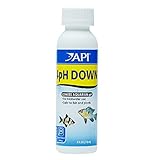
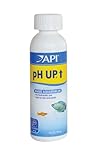
Avoid relying on liquid “pH down” chemicals as a permanent fix. They work briefly, but high KH quickly rebounds the pH, creating exactly the dangerous swings you want to prevent.
How to Raise Aquarium pH
If your water is too acidic, raise pH gradually with these methods:
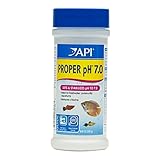
- Add crushed coral or aragonite. Placed in the substrate or filter, these slowly dissolve to raise both KH and pH, providing a stable long-term buffer.
- Use limestone or other carbonate rocks. They dissolve gradually to increase alkalinity.
- Add a small amount of baking soda (sodium bicarbonate) for a controlled, temporary boost, dosed carefully and slowly.
- Perform water changes with harder tap water if your source water has higher mineral content.
- Aerate the water to drive off excess CO2, which raises pH in tanks where carbon dioxide has built up.
The Role of KH and Buffering
Carbonate hardness is the hidden factor behind nearly every pH question. Think of KH as the water’s resistance to change. With high KH, your pH stays rock-solid but is hard to lower; with low KH, pH shifts easily but can crash suddenly if the buffer runs out. Before adjusting pH, decide whether you actually need to, because a stable pH within your fish’s tolerance rarely needs touching. If you do adjust, address KH first, since controlling the buffer gives you control over the pH it supports.
Making Changes Safely
Whatever method you choose, move slowly. Aim to shift pH by no more than 0.2 units per day, monitoring with frequent tests. Acclimate fish to new pH levels during water changes by adjusting the replacement water gradually rather than dumping in heavily treated water. Keep temperature stable throughout, since temperature swings compound the stress of pH changes; an aquarium thermometer helps you hold conditions steady. Good circulation also keeps pH uniform throughout the tank, and an aquarium wave maker prevents pockets of stagnant, CO2-rich water that create localized pH differences.
Understanding the Daily pH Cycle
Many aquarists are surprised to learn that pH is not a fixed number but a value that naturally rises and falls over the course of a day. This daily fluctuation is driven by carbon dioxide. During the day, plants and algae photosynthesize, consuming CO2 and causing pH to rise, sometimes by half a unit or more by late afternoon. At night, photosynthesis stops while plants, fish, and bacteria continue respiring and releasing CO2, which dissolves into the water as carbonic acid and pushes pH back down by morning. In a planted tank this swing can be quite noticeable. This is precisely why you should always test pH at the same time of day for consistent readings, and why a single measurement can be misleading. A tank with strong buffering from adequate KH dampens this swing and keeps fish comfortable, while a tank with very low KH may experience uncomfortably large daily shifts. Understanding this cycle prevents you from overreacting to a reading that is simply part of the normal rhythm of a living aquarium.
Why Chasing the Perfect Number Backfires
One of the most common beginner traps is obsessing over reaching a textbook pH and constantly dosing chemicals to get there. This almost always does more harm than good. Liquid pH-adjusting products work by neutralizing the carbonate buffer, but in water with meaningful KH the buffer quickly rebounds the pH, often within hours. The result is a sawtooth pattern of the pH being knocked down, springing back up, and being knocked down again, exactly the kind of instability that stresses and kills fish. Each swing taxes the fish far more than simply living at a stable value slightly outside the ideal range. Experienced aquarists know that a betta thriving at a steady 7.8 is far better off than one bounced between 6.5 and 7.5 by daily chemical dosing. If your source water has a stable pH that suits hardy, adaptable fish, the wisest approach is usually to select fish that match your water rather than fighting your water to match a particular fish. Save active pH manipulation for specialized cases like soft-water breeding projects or African cichlid setups where the difference genuinely matters.
When You Should Not Adjust pH
Often the best action is no action. If your fish are healthy, eating well, and showing good color, a pH that sits slightly outside the textbook ideal is usually fine, since most aquarium fish adapt to a stable value. Many seasoned aquarists deliberately keep fish that match their tap water’s natural pH to avoid constant tinkering. Healthy feeding supports this resilience, so offer a balanced, high-quality fish food and let stable conditions do the rest.
Frequently Asked Questions
What is the ideal pH for a freshwater aquarium?
Most freshwater community fish thrive between 6.5 and 7.5. However, the right value depends on your species, and a stable pH anywhere in a fish’s tolerance range is better than constantly adjusting toward a textbook ideal.
How do I lower pH naturally?
Driftwood, Indian almond leaves, peat moss, and reverse osmosis water all lower pH gently and naturally. These methods are safer than chemical pH-down products, which cause unstable swings in buffered water.
Why does my pH keep bouncing back after I adjust it?
High carbonate hardness (KH) buffers your water and resists change, so chemical adjustments rebound. To lower pH lastingly, you must reduce KH using RO water; to raise it stably, increase KH with crushed coral.
How fast can I safely change aquarium pH?
No more than about 0.2 units per day. Faster changes cause pH shock, which can be fatal. Patience and gradual adjustment over several days protect your fish.
Does pH affect ammonia toxicity?
Yes. Higher pH increases the proportion of toxic, un-ionized ammonia, making the same ammonia reading more dangerous in alkaline water. This is why maintaining zero ammonia is critical regardless of pH.
Conclusion
Managing aquarium pH is less about reaching a magic number and more about achieving stability within your fish’s natural range. Test your water and KH first, choose natural methods like driftwood to lower pH or crushed coral to raise it, and always make changes gradually. Most importantly, resist the urge to tinker with a stable, healthy tank. Steady conditions, not perfect ones, are what keep your fish thriving.
Related: Summer Heat: How to Keep Your Aquarium Cool (Chillers, Fans and Tips)
Aquarium pH Guide: How to Safely Raise and Lower pH
Red Tiger Lotus Care: Light, Planting and Common Problems