Last Updated: October 21, 2026
- Top Pick: Summer Heat [Blu-ray]
- Best Value: YoleShy Double Reflective Insulation 48 in X 10 FT RV Window Insulation for Summer Heat Reflective Window Film for Roof, Car, Garage Doors
- Premium Choice: Taiofan Portable Handheld Fan with Semiconductor Ice Cooling, [Instant Ice Relief], 4000mAh Rechargeable Mini Personal Fan, 5 Speeds, Quiet USB Travel Fan for Outdoor, Commuting, Summer Heat
As an Amazon Associate, we earn from qualifying purchases.
The July 2026 heatwave is pushing indoor temperatures up fast, and your fish tank is feeling every degree of it. When a room warms, an aquarium warms with it, and a tank that creeps past safe limits can stress or even kill your fish within hours. This guide shows you how to cool an aquarium safely, without shocking the very animals you are trying to protect.
As an Amazon Associate we earn from qualifying purchases at no extra cost to you.
![Summer Heat [Blu-ray]](https://m.media-amazon.com/images/I/411CM+VRfOL._SL160_.jpg)

![Taiofan Portable Handheld Fan with Semiconductor Ice Cooling, [Instant Ice Relief], 4000mAh Rechargeable Mini Personal Fan, 5 Speeds, Quiet USB Travel Fan for Outdoor, Commuting, Summer Heat](https://m.media-amazon.com/images/I/41oazuorjEL._SL160_.jpg)





Prime
Editor's Pick
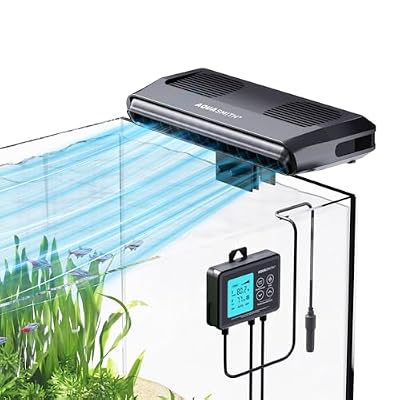
hygger Aquarium Chillers Fan, Quiet Fish Tank Cooling Fan Equipment with Adjustable Speed Controller, Suitable for Freshwater Saltwater Tanks(3-Fan Head)
Prime
Limited Time
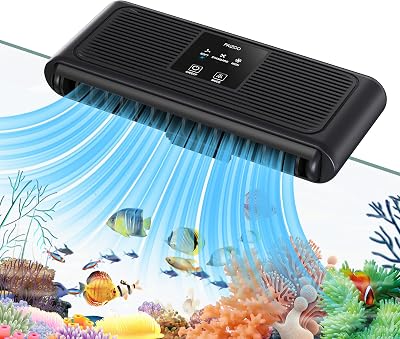
PAIZOO Aquarium Chiller Fan, Ultra-Quiet Fish Tank Cooling Fans, 3 Speed Modes Aquarium Cooler, Water Chiller for Axolotl Tank Accessories Freshwater Saltwater Tanks, 6.4W


🛒 Best Price Today on Amazon
Prime members get fast, free shipping on everything above, plus member-only deals. New members get a 30-day free trial — cancel anytime.
Why Summer Heat Is Dangerous for Your Aquarium
Warm water is the central problem, but the hidden danger is oxygen. As water temperature rises, its ability to hold dissolved oxygen drops sharply. So during a heatwave your fish need more oxygen while the water is able to supply less. That squeeze is what makes summer overheating so lethal, and it explains why fish often gasp at the surface on the hottest afternoons.
Heat also speeds up your fish’s metabolism, raises ammonia toxicity, and can crash beneficial bacteria if things swing too far. The goal of aquarium cooling is not just a lower number on the thermometer, it is a stable, oxygen-rich environment. Before we reach for gear, let’s set the targets so you know what “safe” actually means.
Safe Temperature Ranges by Fish Type
Most tropical community fish (tetras, guppies, mollies, most cichlids) are comfortable between roughly 74 and 80 degrees F. Trouble usually starts above 84 degrees F, and sustained temperatures above 86 degrees F are an emergency for tropicals. Goldfish and other coldwater species prefer 65 to 72 degrees F and suffer sooner as things climb. Shrimp and many nano species are even more sensitive, so watch them closely.
The single most important rule: change temperature gradually. A drop of more than 2 to 3 degrees F per hour can shock fish as badly as the heat itself. Cool slowly, measure often, and never dump ice water into the tank. Now let’s walk through the safe cooling methods, from gentlest to strongest.
How to Cool an Aquarium Safely: Step by Step
Start with the easy wins before you buy anything. First, turn off aquarium lights, especially heat-generating fixtures, during the hottest part of the day. Second, open the tank lid or hood to let heat escape. Third, if you run a heater, confirm it is off or set below the current water temperature so it is not fighting you. These free steps often buy a couple of degrees on their own.
Next, increase surface agitation to boost oxygen. Point a filter outlet toward the surface, add an air stone, or turn up your air pump. More movement at the surface means more gas exchange, which directly counters the oxygen crash described above. This step matters even if you cannot lower the temperature much, because oxygen is what keeps fish alive while the water is warm.
Method 1: Aquarium Cooling Fans (Evaporative Cooling)
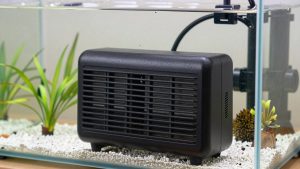
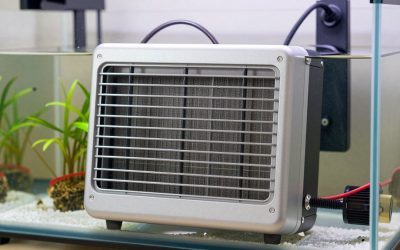
A clip-on aquarium fan blowing across the water surface is the most cost-effective cooling tool for most hobbyists. As water evaporates, it carries heat away, and a small fan can lower tank temperature by 2 to 4 degrees F. Fans are quiet, inexpensive, and use very little electricity. The trade-off is faster evaporation, so top off with dechlorinated water and keep an eye on your water level. Fans work best on open-top tanks and are ideal for the majority of summer heat problems.
Method 2: Aquarium Chillers (Active Cooling)
An aquarium chiller is a refrigeration unit plumbed into your system that actively pulls heat out of the water. Chillers give precise, thermostat-controlled temperatures regardless of room heat, which makes them essential for reef tanks, sensitive shrimp, coldwater setups, and large tanks that fans cannot keep up with. The downsides are cost, size, and the need to match the chiller to your tank volume and pump flow. If you keep demanding livestock or live somewhere with brutal summers, a chiller is the reliable long-term answer.
Method 3: Ice and Water Changes (Emergency Only)
In a true emergency, float a sealed bag or bottle of ice in the tank, never loose ice, and watch the thermometer so you do not drop temperature too fast. A partial water change with slightly cooler dechlorinated water can also help, done gradually. Treat these as short-term rescue measures while you set up a fan or chiller, not as a daily plan.
Chillers vs Fans: Which Cooling Method Is Right for You?
Fans are cheaper, quieter, and perfect for shaving off a few degrees on typical tropical tanks. Chillers cost more but deliver exact, hands-off temperature control for demanding systems. Many keepers start with a fan and only upgrade to a chiller if the fan cannot keep pace during peak heat. The comparison table below lays out the main summer cooling tools side by side so you can match the gear to your tank.
| Product | What it does | Best for |
|---|---|---|
| Aquarium Chiller | Actively refrigerates water to a set temperature regardless of room heat | Reef tanks, shrimp, coldwater species, and large or hot-climate setups |
| Clip-On Cooling Fan | Blows across the surface for evaporative cooling of 2 to 4 degrees F | Affordable everyday cooling on open-top tropical tanks |
| Air Pump & Air Stone | Adds surface agitation and oxygen to offset the summer oxygen crash | Every heated tank, especially when fish gasp at the surface |
| Digital Thermometer | Monitors water temperature continuously so you can react fast | Anyone tracking gradual cooling and avoiding temperature shock |
Summer Cooling Shopping List
Here is the core kit to keep your aquarium cool and your fish breathing easy through a heatwave. Start with monitoring and oxygen, then add active cooling as needed for your tank size and livestock.
- Aquarium chiller for precise, hands-off temperature control
- Clip-on cooling fan for affordable evaporative cooling
- Digital thermometer to track gradual, safe cooling
- Air pump to boost dissolved oxygen and surface movement
- Floating thermometer as a reliable backup temperature check
Frequently Asked Questions
What temperature is too hot for aquarium fish?
For tropical community fish, sustained temperatures above 86 degrees F are dangerous, and above 90 degrees F is often fatal. Coldwater fish like goldfish struggle much sooner, above about 78 degrees F. The exact limit depends on species, so know your fish and aim to keep tropicals in the 74 to 80 degrees F range.
Can I put ice directly in my aquarium to cool it?
No. Never add loose ice or ice water directly, because the sudden drop and any tap-water chlorine can shock or poison your fish. Instead float a sealed bottle of ice, watch the thermometer, and keep cooling to no more than 2 to 3 degrees F per hour.
Do aquarium cooling fans really work?
Yes. A fan blowing across the surface cools through evaporation and typically lowers temperature by 2 to 4 degrees F, which is enough for most tropical tanks during a heatwave. Just top off evaporated water with dechlorinated water to keep your levels stable.
Why are my fish gasping at the surface when it’s hot?
Warm water holds less oxygen, so a hot tank leaves fish short of breath and heading to the surface where oxygen is highest. Add an air pump or air stone, increase surface agitation, and cool the water gradually to relieve them.
Related Guides
Keep your setup healthy year-round with these related reads: aquarium temperature guide, choosing the right aquarium heater, boosting dissolved oxygen, safe water change basics, beginner fish care checklist, and emergency fish care.
Stay ahead of the July 2026 heatwave by monitoring daily, keeping oxygen high, and cooling slowly. With a fan or chiller, an air pump, and a reliable thermometer, your aquarium can ride out even the hottest week safely.
Related reading
- Why Is My Aquarium Water Green? Causes and How to Clear It
- Planted Aquarium for Beginners: Easy Plants and Setup Guide
- How to Raise and Lower Aquarium pH Safely
- How to Lower Nitrates in an Aquarium
Related guide: See our Best Aquarium Filters in 2026 for the top picks and buying advice.
Best 20 Gallon Aquarium Chiller 2026
How to Choose Aquarium LED Lighting: What Actually Matters