Last Updated: October 21, 2026
Choosing the right aquarium filter is the single most important decision you will make for the long-term health of your tank. Filtration is what keeps your water clear, removes toxic ammonia and nitrite, and houses the beneficial bacteria that turn a fish bowl into a stable, thriving ecosystem. But walk into any pet store or scroll through a marketplace and you will be met with dozens of options: hang-on-back units, canisters, sponge filters, internal power filters, and more. Which one is right for your setup depends on your tank size, the fish you keep, your budget, and how much maintenance you want to do. In this 2026 buyer’s guide, we break down the best aquarium filters across every category, from budget-friendly best-sellers to premium powerhouses, so you can match the right filter to your tank with confidence.
As an Amazon Associate we earn from qualifying purchases. Prices and availability are accurate as of the date/time indicated and are subject to change.
As an Amazon Associate we earn from qualifying purchases at no extra cost to you.





Prime
Editor's Pick
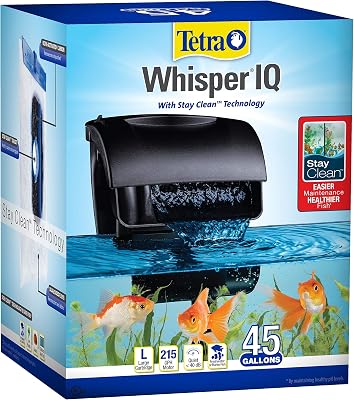
Marineland Bio-Wheel Penguin 200 GPH Power Aquarium Filter, Ultra-Quiet Hang-On-Back Fish Tank Filter with Multi-Stage Filtration for Aquariums Up to 40 Gallons

Prime
Limited Time
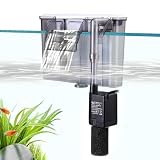
NICREW Slim Aquarium Filter, Quiet Fish Tank HOB Filters for up to 5 Gallon Aquariums, Adjustable Flow, 42 GPH, 3W

Quick answer: Our top pick in 2026 is the Fluval 07 Series (307/407) — Best Overall — see the full ranked comparison, alternatives and buying advice below.
🛒 Best Price Today on Amazon
Prime members get fast, free shipping on everything above, plus member-only deals. New members get a 30-day free trial — cancel anytime.
How We Chose the Best Aquarium Filter for Every Tank
Not all filtration is created equal, and the “best” aquarium filter for a 10-gallon betta tank is very different from the ideal choice for a 75-gallon planted community. We evaluated dozens of popular models against the three pillars of good filtration: mechanical (trapping debris and particles), chemical (removing dissolved impurities with media like activated carbon), and biological (cultivating the nitrifying bacteria that break down waste). We also weighed real-world factors that matter to hobbyists day to day, including flow rate, noise level, ease of maintenance, media flexibility, and long-term running cost.
Our top picks lean heavily on trusted, best-selling brands that have earned their reputation over years of hobby use: Fluval, AquaClear, Seachem, and Marineland. These are the names you will see recommended again and again in fishkeeping communities, and for good reason. If you are still setting up your first tank, our complete aquarium starter guide pairs perfectly with this article.
Understanding the Main Types of Aquarium Filter
Hang-on-Back (HOB) Filters
Hang-on-back filters are the most popular choice for beginners and casual hobbyists, and it is easy to see why. They hang on the rim at the back of the tank, are simple to install, and offer excellent access to media for cleaning. HOB filters like the AquaClear and Seachem Tidal deliver strong mechanical, chemical, and biological filtration in one compact unit. They suit tanks roughly in the 10 to 70-gallon range and strike a great balance between performance and price. For most freshwater community tanks, an HOB is all you will ever need.
Canister Filters
When you move up to larger tanks, heavily stocked setups, or aquascapes that demand crystal-clear water, a canister filter is the gold standard. These sealed units sit in your cabinet below the tank and push water through large volumes of media before returning it via a spray bar or lily pipe. Canisters like the Fluval 07 series offer enormous media capacity, whisper-quiet operation, and long intervals between cleanings. They cost more up front and take a little longer to maintain, but for tanks above 40 gallons they are hard to beat. Learn more in our canister filter setup walkthrough.
Sponge Filters
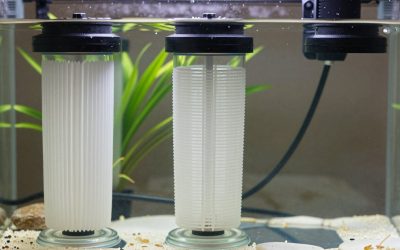
Sponge filters are the unsung heroes of the hobby. Driven by a simple air pump, they provide gentle, reliable biological filtration with zero risk of sucking up fry, shrimp, or delicate fins. They are the go-to choice for breeding tanks, shrimp tanks, hospital and quarantine tanks, and nano setups. They are also incredibly cheap to buy and run. What they lack in mechanical polish and chemical filtration, they make up for in dependability and safety.
Internal Filters
Internal power filters sit fully submerged inside the tank and are a solid option for smaller aquariums, turtle tanks, or setups where a HOB will not fit. They are affordable and easy to hide behind decor, though they take up in-tank space and can be slightly fiddlier to clean than a hang-on-back model.
Best Aquarium Filter Comparison Table
| Filter | Type | Tank size | Price range | Rating |
|---|---|---|---|---|
| Fluval 07 Series (307/407) — Best Overall | Canister | 40–100 gal | $$$ | 4.8 / 5 |
| AquaClear Power Filter (70/110) | Hang-on-Back | 20–110 gal | $$ | 4.7 / 5 |
| Seachem Tidal 55/75 | Hang-on-Back | 30–75 gal | $$ | 4.6 / 5 |
| Marineland Penguin Pro (350) | Hang-on-Back | 20–75 gal | $ | 4.5 / 5 |
| Aquarium Co-Op / Generic Sponge Filter | Sponge (air-driven) | 5–40 gal | $ | 4.6 / 5 |
Our Top Aquarium Filter Picks Explained
1. Fluval 07 Series — Best Overall Aquarium Filter
The Fluval 307 and 407 canister filters top our list because they combine massive media capacity, quiet performance, and thoughtful design at a price that undercuts many rivals. The redesigned motor is remarkably quiet, the pump-primer takes the fuss out of restarting after a clean, and the multi-basket layout lets you customize your mechanical, chemical, and biological stages exactly how you like. For any tank from 40 gallons upward, this is the aquarium filter we recommend first. It is a genuine buy-it-for-life piece of equipment.
2. AquaClear Power Filter — Best HOB for Media Flexibility
The AquaClear has been a hobbyist favorite for decades. Its oversized media basket holds far more filtration material than most competing HOBs, and the adjustable flow control lets you dial in exactly the current your fish enjoy. Because you choose your own media, it is endlessly customizable. It runs quietly and reliably for years, making it the smart pick for anyone who wants HOB convenience with canister-like media volume.
3. Seachem Tidal 55/75 — Best Feature-Rich HOB
Seachem’s Tidal series brings a self-priming pump, a surface skimmer, a maintenance-reminder gauge, and a huge media basket to the hang-on-back category. It is arguably the most refined HOB on the market and a fantastic choice for planted and community tanks that want top-tier water clarity without a full canister. Explore pairing it with the right media in our filter media buying guide.
4. Marineland Penguin Pro — Best Budget HOB
If you want a dependable, no-nonsense filter that just works, the Marineland Penguin Pro delivers three-stage filtration and a rotating BIO-Wheel for extra biological surface area, all at a wallet-friendly price. It is a superb entry point for new hobbyists.
5. Sponge Filter — Best for Fry, Shrimp, and Quarantine
For breeding, shrimp keeping, quarantine, and nano tanks, a quality sponge filter driven by an air pump is unbeatable value and totally safe for the smallest inhabitants. Every serious hobbyist should keep a couple on hand. See our shrimp tank essentials list for a full nano setup.
How to Match an Aquarium Filter to Your Tank Size
A reliable rule of thumb is to choose a filter rated to turn over your tank volume four to six times per hour. A 40-gallon tank, for example, wants a filter moving roughly 160 to 240 gallons per hour. For lightly stocked tanks you can aim toward the lower end; for messy fish like goldfish or cichlids, oversize your filtration and lean toward the higher end. When in doubt, buy a filter rated for a tank larger than yours. Over-filtration is rarely a problem, while under-filtration leads to cloudy water and stressed fish.
Frequently Asked Questions
HOB vs canister filter — which aquarium filter should I choose?
For tanks up to about 55 gallons, a quality hang-on-back filter like the AquaClear or Seachem Tidal offers excellent filtration with easy maintenance and a lower price. Once you go above 55 to 75 gallons, keep heavy waste producers, or want the cleanest possible water for an aquascape, a canister filter like the Fluval 07 series is the better investment thanks to its far greater media capacity and quieter operation.
What is the best aquarium filter for beginners?
Beginners are usually best served by a hang-on-back filter. They are inexpensive, simple to install, and give you clear visual access to the media so you can see when it needs rinsing. The AquaClear and Marineland Penguin Pro are both beginner-friendly, forgiving, and widely available, making either an excellent first filter.
When should I use a sponge filter?
Sponge filters shine in situations where gentle flow and fry-safe, shrimp-safe operation matter most: breeding tanks, shrimp tanks, quarantine and hospital tanks, and small nano aquariums. They provide superb biological filtration at very low cost. Many hobbyists also run a sponge filter alongside a HOB or canister as a bacteria-seeding backup for setting up new tanks quickly.
How often should I change my aquarium filter media?
Never replace all your media at once, as this removes your beneficial bacteria colony and can trigger a mini-cycle. Instead, rinse mechanical media (sponges and floss) in old tank water every two to four weeks when flow drops, and replace it only when it is falling apart. Chemical media like activated carbon is typically swapped every three to four weeks. Biological media should almost never be replaced; simply give it a gentle rinse in tank water to keep it clear while preserving your bacteria.
More Guides You May Like
- Summer Heat: How to Keep Your Aquarium Cool (Chillers, Fans and Tips)
- Amazon Prime Day 2026: Best Deals & Top Picks
- Best Beginner Fish: Top Hardy Species for New Aquarists
- Why Is My Aquarium Water Green? Causes and How to Clear It
- How Often to Feed Fish: The Right Schedule and Portions
- Betta Fish Care: The Complete Beginner’s Guide
Canister Filter vs Hang on Back Filter: Which Is Right for Your Home (2026)
Common Mistakes When Buying a Canister Filter: Best-Rated