Last Updated: October 21, 2026
- What Is the Nitrogen Cycle?
- The Three Stages of the Cycle
- How Long Does Cycling Take?
- Fishless vs. Fish-In Cycling
- Reading a Cycle in Action
- Keeping the Cycle Stable
- Where the Bacteria Actually Live
- Common Cycling Problems and Solutions
- Why the Cycle Never Truly Ends
- Top-Rated Picks
- Frequently Asked Questions
- Conclusion
- Related Articles
⚡ Key Takeaways
- In a closed aquarium, fish constantly produce waste, and uneaten food and decaying plants add to the load.
- Fish excrete it through their gills and waste, and it also forms as organic matter decomposes.
- Establishing a full bacterial colony from scratch typically takes two to six weeks.
- Whichever method you choose, daily testing with a quality liquid test kit is essential to track the cycle's progress.
Understanding the aquarium nitrogen cycle is the single most important concept for any new fishkeeper to master. It explains why fish mysteriously die in brand-new tanks, why patience matters so much in the first weeks, and how an established aquarium keeps its inhabitants alive. The nitrogen cycle is a natural biological process in which colonies of beneficial bacteria convert deadly fish waste into progressively less harmful compounds. Once you grasp how it works, almost every other piece of aquarium care falls into place.
As an Amazon Associate we earn from qualifying purchases at no extra cost to you.




Related: best 5-gallon fish tank kits.
🛒 Best Price Today on Amazon
Prime members get fast, free shipping on everything above, plus member-only deals. New members get a 30-day free trial — cancel anytime.
Start 30-Day Prime Free Trial →See Today’s Amazon DealsWhat Is the Nitrogen Cycle?
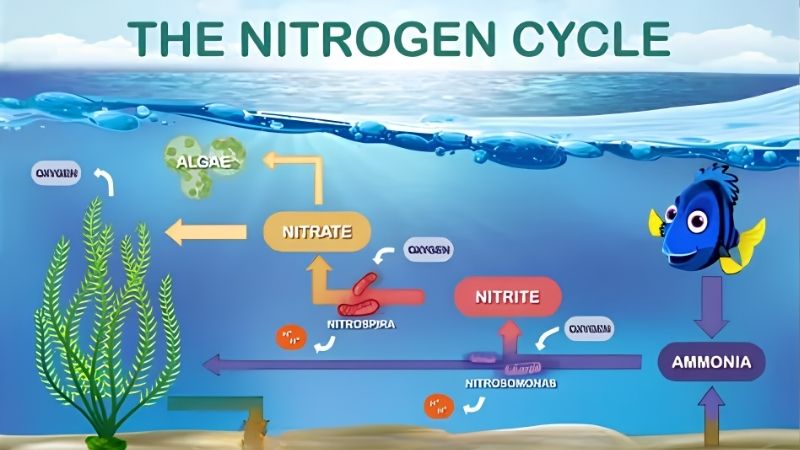
In a closed aquarium, fish constantly produce waste, and uneaten food and decaying plants add to the load. All of this organic material breaks down into ammonia, which is extremely toxic to fish. The nitrogen cycle is the process by which two groups of beneficial bacteria transform that ammonia first into nitrite and then into nitrate, a far safer compound that you remove through water changes.
The Three Stages of the Cycle
| Stage | Compound | Toxicity | Safe Level |
|---|---|---|---|
| 1. Ammonia | NH3/NH4 | Highly toxic | 0 ppm |
| 2. Nitrite | NO2 | Highly toxic | 0 ppm |
| 3. Nitrate | NO3 | Low toxicity | Under 20–40 ppm |
Stage 1: Ammonia
Everything begins with ammonia. Fish excrete it through their gills and waste, and it also forms as organic matter decomposes. Even small amounts burn gills and damage tissue. In a new tank, ammonia is the first compound you will see rise on your test kit.
Stage 2: Nitrite
A group of bacteria called Nitrosomonas colonizes your filter and consumes ammonia, converting it into nitrite. Unfortunately nitrite is also highly toxic; it interferes with a fish’s ability to carry oxygen in the blood, causing what hobbyists call brown blood disease. As these bacteria multiply, ammonia falls and nitrite rises.
Stage 3: Nitrate
A second group of bacteria, Nitrobacter and Nitrospira, then converts nitrite into nitrate. Nitrate is far less harmful and only causes problems at elevated concentrations. You manage it through regular water changes and live plants. When both ammonia and nitrite read zero while nitrate is present, your tank is “cycled.”
How Long Does Cycling Take?
Establishing a full bacterial colony from scratch typically takes two to six weeks. The exact timeline depends on temperature, pH, and how much ammonia is available to feed the bacteria. Warmer water and a neutral to slightly alkaline pH speed the process, while cold water slows it dramatically. A reliable thermometer helps you keep conditions in the optimal range for bacterial growth.
Fishless vs. Fish-In Cycling
- Fishless cycling uses a bottle of pure ammonia to feed bacteria with no livestock at risk. It is the most humane and controllable method, and it lets you fully stock once complete.
- Fish-in cycling relies on hardy fish to produce ammonia, but it subjects them to toxic conditions and requires daily water changes to keep them alive. It is far harder on the fish and is generally discouraged.
Whichever method you choose, daily testing with a quality liquid test kit is essential to track the cycle’s progress.
Reading a Cycle in Action
As the cycle proceeds, your test results follow a predictable pattern. First ammonia spikes and then begins to fall as Nitrosomonas establish. Next nitrite climbs and eventually drops as the second bacterial group takes hold. Finally, nitrate accumulates while ammonia and nitrite stabilize at zero. Seeing that classic curve unfold confirms your biofilter is working.
Tips to Speed Up the Cycle
- Seed the tank with media, gravel, or a sponge from an established aquarium.
- Keep the water warm, around 78 to 82 degrees Fahrenheit during cycling.
- Maintain good oxygenation, since nitrifying bacteria need oxygen.
- Avoid antibacterial medications, which can stall or crash the cycle.
- Provide plenty of surface area with porous biological media.
Keeping the Cycle Stable
Once established, the bacterial colony must be protected. Never rinse biological media under chlorinated tap water, never let the filter sit unpowered for more than an hour, and avoid sudden huge increases in stocking. Good circulation supports the colony by delivering oxygen and waste to the filter, and a wave maker can eliminate dead spots in larger tanks.
Where the Bacteria Actually Live
A common misconception is that beneficial bacteria float freely in the water. In reality, the vast majority colonize surfaces, with your filter media hosting the largest population by far. The porous sponges, ceramic rings, and bio-media in your filter provide enormous surface area for bacteria to attach and oxygenated water flowing past to feed them. Substrate, decor, and even the glass hold smaller colonies.
This is why filter maintenance is so critical. Replacing all your filter media at once, or rinsing it under chlorinated tap water, can wipe out the bulk of your nitrifying colony and trigger a dangerous mini-cycle. Always rinse media gently in old tank water and replace it in stages so the bacteria have time to recolonize new surfaces. Understanding where the bacteria live turns abstract advice into practical habits.
Common Cycling Problems and Solutions
Even careful aquarists run into cycling hiccups. The most frequent is a cycle that seems stuck, with ammonia or nitrite refusing to drop. Cold water is the usual culprit, since nitrifying bacteria slow dramatically below 70 degrees Fahrenheit. Low pH is another, because the bacteria struggle in very acidic conditions and can stall entirely below a pH of around 6.5.
Lack of oxygen also impedes the process, as these bacteria are aerobic and need well-circulated, oxygen-rich water. Finally, accidentally killing the colony with medications, especially antibacterial treatments, or with chlorinated water resets the whole effort. When a cycle stalls, work through these factors one at a time. Correct the temperature, check the pH, ensure good aeration, and avoid medications, and the cycle almost always resumes.
Why the Cycle Never Truly Ends
Once established, the nitrogen cycle runs perpetually. Your fish produce ammonia around the clock, and the bacterial colonies process it continuously, sizing themselves to match the available food supply. This dynamic balance is why suddenly adding many new fish causes a temporary spike, the existing colony needs days to grow large enough to handle the increased load.
The single compound the cycle cannot eliminate is nitrate, its end product. That is the one piece you must remove yourself through water changes and live plants. Viewing your role as simply managing the cycle’s output, rather than doing the work the bacteria handle, clarifies what good maintenance really involves.
Top-Rated Picks


| Product | Brand |
|---|---|
| Herture 40-50 Gallon Fish Tank Stand, Aquarium Stand … | Herture |
| Herture 20-29 Gallon Fish Tank Stand, Aquarium Stand … | Herture |
| Coralife BioCube Aquarium Fish Tank Wood Stand For 32… | Coralife |
| Bestier 20-29-37 Gallon Fish Tank Stand with Power Ou… | Bestier |
| MAHANCRIS 20 Gallon Fish Tank Stand, Aquarium Stand w… | MAHANCRIS |
Frequently Asked Questions
How do I know when my tank is cycled?
Your tank is cycled when ammonia and nitrite both read zero and nitrate is present after dosing or feeding. At that point the bacteria are processing waste fast enough to keep fish safe.
Can I add fish during the cycle?
It is far better to wait. Adding fish before cycling exposes them to toxic ammonia and nitrite. Fishless cycling avoids this risk entirely.
Why did my cycle stall?
Common causes include water that is too cold, a pH that is too low, lack of oxygen, or accidentally killing the bacteria with medication or chlorinated water. Correct the condition and the cycle will resume.
Does the nitrogen cycle ever stop?
No. In a healthy tank the cycle runs continuously as bacteria process the ammonia your fish produce around the clock. Your job is simply to remove the accumulated nitrate.
Can plants replace part of the cycle?
Plants absorb ammonia and nitrate directly, which supplements the bacterial cycle and helps keep parameters low, but they do not eliminate the need for a healthy biofilter.
Conclusion
The aquarium nitrogen cycle is the invisible engine that keeps your fish alive, turning toxic ammonia into manageable nitrate through the work of beneficial bacteria. Cycle your tank before adding fish, test your water throughout the process, and protect your bacterial colony once it is established. Master this one concept and you will have built the foundation for a healthy, long-lasting aquarium.
Tropical Fish Care Basics: Heater, Temperature and 12 Easy Species
How to Cycle a New Fish Tank (Fast and Safe)