Last Updated: September 25, 2026
Betta fish hiding all day is a symptom rather than a behaviour quirk, and it has a small number of measurable causes. Before changing anything in the tank, take six readings, because temperature and water quality explain the large majority of cases on their own. Guessing costs days you need not lose.
As an Amazon Associate we earn from qualifying purchases.
As an Amazon Associate we earn from qualifying purchases at no extra cost to you. Prices and availability are accurate as of the date shown and are subject to change.

Aquarium Decorations Rock,Stackable Fish Tank Decor Cave, Ceramic Shelters
Selected for "Betta Fish Hiding All Day: Causes, Checks and How to Fix It": this listing is tanks (Aquarium Decorations Rock,Stackable Fish Tank Decor Cave, Ceramic Shel), matching the equipment this article covers.
View on Amazon
Penn Plax Pro Balance 7-Day Betta Blocks Fish Food, Each Block is 0.75" Long x 0.5" Wide x 0.25" thic
Selected for "Betta Fish Hiding All Day: Causes, Checks and How to Fix It": this listing is fish food (Penn Plax Pro Balance 7-Day Betta Blocks Fish Food, Each Block is 0.75), matching the equipment this article covers.
View on Amazon
Aquarium Floating Betta Fish Skins, Betta or Shrimp Feeder, Cave and Hammock, Small Fish Feeding Rings, Aquarium Hiding Feeding Decorative Accessories (Wood Color)
Selected for "Betta Fish Hiding All Day: Causes, Checks and How to Fix It": this listing is aquarium equipment (Aquarium Floating Betta Fish Skins, Betta or Shrimp Feeder, Cave and H), matching the equipment this article covers.
View on Amazon
Swirge Betta Broken Barrel Decor Fish Tank Accessories, Resin Fish Hide Cave Aquarium Decoration Fish Tank Toys Hole Accessories (Small)
Selected for "Betta Fish Hiding All Day: Causes, Checks and How to Fix It": this listing is tanks (Swirge Betta Broken Barrel Decor Fish Tank Accessories, Resin Fish Hid), matching the equipment this article covers.
View on AmazonBy David Nguyen
Take Six Readings Before Changing Anything
A betta fish hiding all day is telling you something about its environment, and guessing which thing wastes days. Four water readings plus temperature and light hours separate the common causes in about fifteen minutes with a liquid test kit. Take the readings before touching anything.
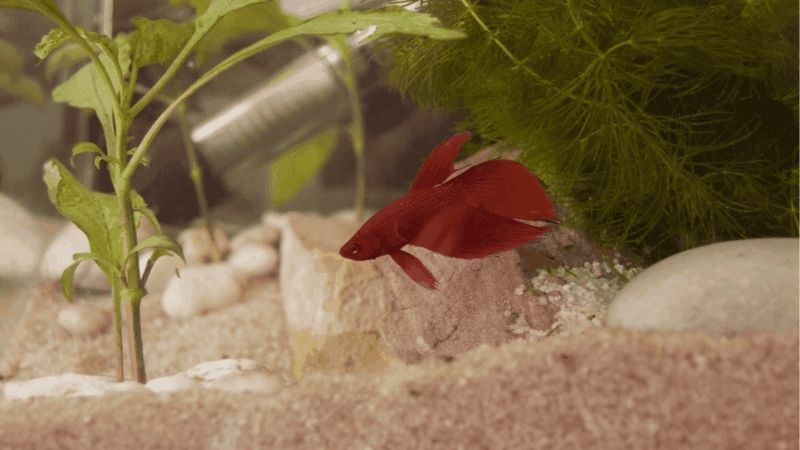
The Six Numbers to Read Before Changing Anything
Test ammonia, nitrite, nitrate and temperature first. Ammonia and nitrite should both read 0 ppm, nitrate under 40 ppm, and temperature inside 78-82 F (25-28 C). Anything outside those is the cause until proven otherwise, and correcting it comes before anything else. Correct one thing at a time.
The fifth number is light hours. More than eight hours a day in a tank with little cover leaves a fish nowhere comfortable, and bettas are naturally found in shaded, plant-heavy water rather than in open brightly lit spaces without any shelter. Cover changes this behaviour quickly.
The sixth is flow. Watch whether the fish holds position against current or shelters behind hardscape near the outflow, since long finnage tires quickly and a filter rated well above the tank pushes a betta into whatever corner is calmest. Watch where the fish actually chooses to sit.
Matching the Symptom to a Cause
Use the table below to pair what you see with the reading that usually accompanies it. Work down the rows in order rather than guessing, because the first three causes are far more common than the last two and take minutes rather than weeks to correct. Work down the rows in order.
| What you see | Reading alongside it | Most likely cause | First action |
|---|---|---|---|
| Hiding, clamped fins, still | Temperature under 76 F (24 C) | Too cold | Check heater, raise 2 F per day |
| Hiding, gasping, ragged fins | Ammonia over 0.25 ppm | Water quality | Change 30 percent, test daily |
| Sheltering behind decor near filter | Parameters normal | Flow too strong | Baffle the outflow with sponge |
| Hiding in a bright, bare tank | Light 9 h or more | No cover, too much light | Add plants, cut light to 6-8 h |
| Hiding after new tankmates | Parameters normal | Stress or aggression | Watch closely, separate if needed |
| Hiding with white spots or fuzz | Any, often after a temperature drop | Illness | Test water, identify before dosing |
When Hiding Is Normal Behaviour
Bettas rest, and they rest in cover. A fish that hides for part of the day but comes out to feed, holds its fins open and keeps its colour is behaving normally, particularly in the first week after a move when everything in the tank is unfamiliar. Give a new fish a full week to settle.
Age changes activity too. Older fish above roughly three years spend considerably more time resting on leaves and in caves, which looks like decline but is ordinary for the species. The concern is hiding combined with clamped fins, faded colour or refusing food. Duration and posture matter most.
Fixes in Order
Change one thing at a time and give it several days. When people report a betta fish hiding all day after a week of adjustments, the usual reason is that heater, filter and layout were all changed together, leaving no way to tell what helped. Change one variable at a time, then wait.
Step 1: Correct Temperature First
If the tank reads below 76 F (24 C), that is the answer until proven otherwise. Fit a heater sized at 3-5 watts per gallon for a 10 F (5.5 C) room gap, and verify with an independent thermometer rather than the dial printed on the unit. Heater dials commonly read several degrees out.
Raise no faster than about 2 F (1 C) per day toward 80 F (27 C). A sudden shift is its own stressor, and the fish typically becomes visibly more active within two or three days of reaching the correct range rather than immediately on arrival. Gradual change is always safer for the fish.
Step 2: Fix Water Quality
Ammonia above 0.25 ppm or any nitrite at all calls for an immediate 30 percent change with water matched to within 1-2 F (about 1 C), repeated daily until both read zero. Do not clean the filter at the same time, since that removes the bacteria fixing it. Water changes, not filter cleans.
If readings keep rising, the tank is not fully cycled. Test daily, feed less, and consider seeding the filter with media from an established tank, which commonly cuts the remaining cycling time by weeks compared with waiting for a colony to build alone. Seeded media saves several weeks here.
Step 3: Reduce Flow and Add Cover
Baffle any outflow the fish is avoiding, using a sponge over the outlet or a cut plastic bottle to spread the current along the glass. A betta should be able to hold position anywhere in the tank without visibly swimming to stay put. That is the practical test for whether flow is too strong.
Then add cover. Broad-leaved plants near the surface, floating plants and a cave or two give the fish somewhere to rest, and paradoxically a tank with more hiding places usually produces a fish that spends more time visible rather than less. Security is what produces a bolder fish.
Tank Size, Placement and Fit
A 5-gallon (19 L) tank holds only 4-4.5 gallons (15-17 L) of real water, which swings in temperature and ammonia faster than a routine can correct. If the tank sits below that, the volume is a contributing cause regardless of what the readings say today. Volume is a contributing factor here.
Placement matters as much. Keep the tank away from windows, vents, doors and busy walkways, since constant movement past the glass keeps a fish in cover. Measure the real numbers before you order: shelf length against tank length, heater length against water depth. Both take a minute to check.
What Never to Do While a Betta Is Hiding
Three responses are common and all three make things worse. Each feels like taking action, which is the problem: a stressed fish needs stable conditions for a fortnight far more than it needs a series of interventions across a weekend. A betta fish hiding all day needs stability.
Never Medicate Before Testing
Most hiding traces to temperature or water quality, and dosing a treatment adds a chemical stressor without addressing either. Several medications and algaecides also contain copper, which is lethal to shrimp and snails at concentrations well below what fish tolerate. Read every label before dosing.
Test first, identify second, treat third. If symptoms cannot be explained by ammonia, nitrite, nitrate or temperature, that is the point to consult an aquatic vet or an experienced local fish store rather than working through the shelf at a general pet shop. Identify the cause before treating it.
Never Do a Full Water Change to Reset the Tank
A 100 percent change swings temperature, pH and hardness at once, and a fish already sheltering responds by hiding harder. It also removes the bacterial colony’s working environment, so the ammonia problem you were trying to solve returns within a few days. Large changes solve nothing here.
Change 20-30 percent instead, matched to within 1-2 F (about 1 C), repeated daily while readings are high. Steady conditions do more for recovery than any single large intervention, and they keep the readings interpretable when you test again tomorrow. Small changes stay measurable.
Never Remove the Hiding Places
Taking out caves and plants to force a fish into the open does the opposite. Without cover the fish has no way to feel secure, so it presses into a corner or behind the filter instead, and stress rises rather than falls over the following days. Removing the cover reliably backfires.
Add cover rather than removing it, and give the tank a fortnight. Most bettas explore more once they have somewhere to retreat to, which is why heavily planted tanks tend to produce visibly bolder fish than bare ones with a single ornament. Add more cover first, then wait it out.
Preventing a Repeat: Routine, Equipment and Early Signs
Recovery usually takes one to two weeks once the cause is corrected. Preventing a repeat is a matter of routine rather than equipment, and most cases of a betta fish hiding all day never recur once temperature and water quality are held steadily. Routine is what prevents a repeat.
The Routine That Keeps It From Returning
Change 20-30 percent weekly, adjusted to measured nitrate, matching temperature within 1-2 F (about 1 C) and dosing dechlorinator for the full volume. Rinse filter media in old tank water only, never under the tap, which kills the colony outright. Squeeze media in a bucket instead.
Feed two or three pellets twice daily with one fasting day weekly, and test monthly once the tank is settled. Replace test reagents roughly annually, since expired bottles read low and hide exactly the ammonia readings that cause this behaviour. Replace test reagents about once a year.
Equipment That Prevents the Common Causes
A correctly sized heater and an independent thermometer between them remove the most frequent cause entirely. A timer holding the light to 6-8 hours removes another, and a sponge filter or a baffled outflow removes the third without any ongoing cost. Three cheap fixes cover most cases.
Run every cord as a drip loop below the socket and use a GFCI outlet for anything near water. Check heater accuracy weekly and filter flow monthly, because both drift gradually and both push a tank back toward the conditions that started the problem. Drift is gradual and easy to miss.
Early Signs Worth Watching
Watch fins and colour rather than position alone. Clamped fins, faded colour or horizontal stress stripes alongside hiding indicate a real problem, while a fish resting in a cave with fins open and full colour is simply resting where it prefers to be. Posture and colour separate the two.
Watch feeding response too. A betta that still comes out for food is far less concerning than one that ignores it, and two consecutive days of refusing food in correct water and temperature is the point at which outside advice becomes worthwhile. Feeding response is a good indicator.
Frequently Asked Questions
These come up in the first weeks after someone notices the behaviour, usually once temperature and water have been checked and the fish is still spending most of its time out of sight in one corner of the tank. Most betta fish hiding all day questions come down to temperature, cover and time.
Is a betta fish hiding all day always a problem?
Not always. Resting in cover is normal, particularly in the first week after a move and in fish over three years old. The concern is hiding combined with clamped fins, faded colour, refusing food, or any reading outside the normal ranges. Context decides this, not the hiding by itself.
How long does it take for a betta to settle in?
Usually three to seven days in a correctly heated, cycled tank. During that period expect hiding, pale colour and reduced appetite. If the behaviour continues past two weeks with all readings correct, look at flow, light hours and available cover next. Two weeks is the usual limit.
Could my betta be hiding because of its reflection?
It can contribute. Strong room lighting against dark glass produces a mirror effect, prompting either constant flaring or withdrawal. Reducing background glare, adding plant cover and keeping light to 6-8 hours a day usually resolves that within a week or two. Glare is easy to overlook.
Should I add tankmates so it feels less alone?
No. Bettas are territorial and solitary, and adding company to a stressed fish increases the pressure on it. If the fish is already hiding, fix temperature, water and cover first, and treat any tankmate decision as a separate question for later. Company is not comfort for this species.
See More:
Conclusion
A betta fish hiding all day almost always resolves into one of four causes: cold water below 76 F (24 C), ammonia or nitrite above zero, flow that is too strong, or a bright tank with nowhere to shelter. Six readings separate them quickly. or a bright tank with nowhere to shelter. Six readings separate them in minutes.
Fix temperature first, then water quality, then flow and cover, changing one thing at a time and allowing several days between adjustments. Add hiding places rather than removing them, and expect a visibly bolder fish within one to two weeks of the cause being corrected. Patience is part of the fix.
Platy Fish Care: Tank Setup, Diet and Breeding
Digital Ph Meter vs Liquid Test Kit: Which Is Right for Your Home (2026)