Last Updated: October 17, 2026
Altum angelfish (Pterophyllum altum) are demanding, mostly wild-caught South American cichlids that need a very tall tank, warm, soft, acidic water, stable conditions and a calm community, which makes them a species for experienced keepers rather than beginners. Seriously Fish rates the species as difficult, and nearly every care source agrees that the common angelfish (Pterophyllum scalare) is a much easier choice if you only want the classic angelfish look.
Quick answer: Our top pick in 2026 is the Origin — our #1 rated choice. See the full ranked comparison, alternatives and buying advice below.
Altum Angelfish at a Glance
| Feature | Altum angelfish (Pterophyllum altum) |
|---|---|
| Origin | Upper Negro drainage in Brazil and the Orinoco basin in Colombia and Venezuela, including the Inirida and Atabapo rivers (FishBase) |
| Body length | About 18 cm (7 in) total length per Seriously Fish and FishBase |
| Height with fins | Hobbyist guides report roughly 30 to 40 cm (12 to 16 in) from fin tip to fin tip; FishBase lists about 20 cm in height, so figures vary |
| Temperature | Seriously Fish: 28 to 32 C (82 to 90 F); FishBase: 27 to 31 C; other guides give about 24 to 31 C, with 26 to 29 C often suggested |
| pH | About 4.8 to 6.2 (Seriously Fish, FishBase); some guides give 4.5 to 6.5, and captive-bred fish are reported to tolerate somewhat higher pH |
| Hardness | 0 to 5 dGH (Seriously Fish); FishBase gives 1 to 5 dH. Very soft |
| Minimum tank | Seriously Fish gives no figure; retail guides suggest at least 55 to 75 US gallons, and a Dutch guide advises 180 cm long by 70 cm tall |
| Diet | Predatory; live foods preferred, frozen foods and pellets once weaned |
| Lifespan | Not documented by Seriously Fish or FishBase; some retail guides claim 10 years or more, which is unverified |
| Difficulty | Difficult; wild-caught, stress-prone, not for beginners |
| IUCN status | Least Concern (FishBase) |
Altum vs Common Angelfish (P. scalare)
Altum and common angelfish belong to the same genus but they are different species with very different needs. Common angelfish are widely bred, tolerate a wider range of water, and are often tank-bred in many colour forms. Seriously Fish lists P. scalare at 6.0 to 7.4 pH, 0 to 15 dGH and 24 to 30 C, and describes it as omnivorous and accepting prepared foods. Altum angelfish come from soft, acidic rivers, have a taller body, and are more sensitive to water quality.
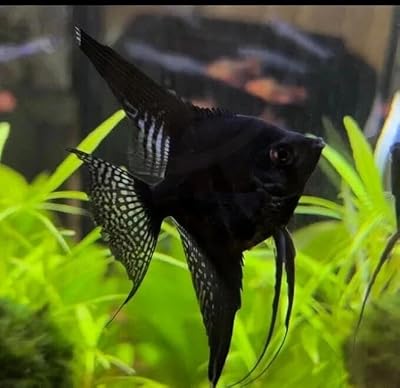
3-Pack Black Angelfish 2–2.5” Body – Live Freshwater Aquarium Fish – Elegant Long-Fin Variety – Peaceful Community Fish – Graceful Centerpiece for Planted Tanks – Hardy & Captivating for Aquascapes
Included for 'Altum Angelfish Care: Water, Tank Size and Diet' because the listing specifies 2.5” Body and Live Freshwater Aquarium Fish, details this guide uses to compare options.
View on Amazon
Santboz 6-Pack Angelfish – 2 Black, 2 Gold, 2 Koi (1.5–2 Inch) – Live Freshwater Aquarium Fish – Colorful Mixed Variety Pack – Peaceful Community Cichlids – Elegant Long-Fin Angels for Planted Tanks
Included for 'Altum Angelfish Care: Water, Tank Size and Diet' because the listing specifies 2 Black and 2 Gold, details this guide uses to compare options.
View on Amazon
Santboz Starfire Red Angelfish Live Fish Freshwater Fish Aquarium 1-1.5 Inch. Brilliant Color Elegant Finnage Peaceful Community Tropical Cichlid Graceful
Included for 'Altum Angelfish Care: Water, Tank Size and Diet' as a relevant option in this category; details come from the product listing.
View on Amazon
Red Cap Albino Angelfish Live Freshwater Aquarium Fish – Peaceful Tropical Community Fish for Planted Tanks, Aquascapes & Home Aquariums
Included for 'Altum Angelfish Care: Water, Tank Size and Diet' because the listing specifies Peaceful Tropical Community Fish for Planted Tanks and Aquascapes & Home Aquariums, details this guide uses to compare options.
View on Amazon| Factor | Common angelfish (P. scalare) | Altum angelfish (P. altum) |
|---|---|---|
| Availability | Widely tank-bred | Mostly wild-caught imports |
| pH | About 6.0 to 7.4 | About 4.8 to 6.2 |
| Hardness | 0 to 15 dGH | 0 to 5 dGH |
| Temperature | 24 to 30 C | Warmer, commonly 27 to 29 C or higher |
| Height in tank | Seriously Fish minimum tank of 100 x 40 x 50 cm (about 200 litres) | Needs much more depth; guides suggest 60 cm or more of water |
| Feeding | Accepts flake, pellet, frozen | Wild fish may refuse prepared food at first |
| Beginner suitability | Reasonable | Not recommended |
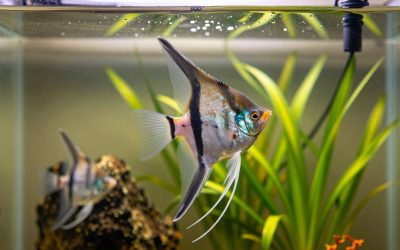
Hobbyists often identify altums by their very tall bodies, long fins and a pronounced concave forehead profile, but these features vary, and individual identification can be difficult. Always ask a reputable seller about the exact species and origin before buying.
Tank Size and Height
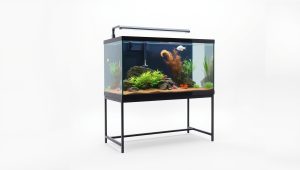
Height is the dimension that matters most. A fully grown altum is much taller than it is long when the dorsal and anal fins are included, so a standard 20-inch-high tank leaves little room. Seriously Fish does not give a tank size. Recommendations from other sources differ: one retail guide gives a minimum of 55 gallons with 75 or more preferred and at least 24 inches of height, while a Dutch species guide suggests a minimum length of 180 cm, height of 70 cm and water depth of at least 60 cm. Lower figures appear in some retail sources but look too small for adults; some keepers report that even a two-foot-tall tank is probably not tall enough.
A practical conclusion is that the tank should be tall, long enough for a group to swim and turn, and deeper than a typical 55 gallon. Young fish may look fine in smaller tanks, but they grow, so plan for the adult size from the start. Cover the tank because angelfish can jump when startled.
Water Parameters
Altums come from very soft, acidic water, and parameters that suit common angelfish may not suit them. Seriously Fish gives pH 4.8 to 6.2, 0 to 5 dGH and a warm range of 28 to 32 C. FishBase agrees on pH and gives 27 to 31 C. A Dutch species guide cites a conductivity of roughly 150 to 200 microsiemens, pH 5.0 to 6.5 and 1 to 5 dH. Most tap water is too hard and alkaline, so an RO or very soft water source is commonly required. RO water is usually remineralised lightly or blended with tap water to keep it stable.
- Stability matters more than perfection. Keepers report that altums dislike pH swings; avoid large sudden water changes with mismatched water.
- Zero ammonia and nitrite, low nitrate. One retail guide suggests keeping nitrate below 10 ppm; the main species profiles give no figure.
- Warm but not hot without need. The range in sources is wide (24 to 32 C), so choose a stable temperature within the range the seller has been keeping the fish at, commonly in the high 20s C.
- Gentle flow. Use filtration that moves water without a strong current, such as a large sponge filter or a canister with a diffused outlet.
- Test often. Soft water has very little buffering capacity, so pH can crash without warning.
Wild-Caught vs Tank-Bred
Seriously Fish states that most altum angelfish in trade are wild-caught, which contributes to feeding difficulty and stress-related illness. Captive breeding is rare and challenging. One keeper on a discus forum explained that fish from very acidic, low-bacteria water can be prone to bacterial infections in their first months in captivity; that is anecdotal but consistent with other reports. A Dutch species guide says captive-bred fish tolerate a somewhat wider pH range but are still demanding.
| Source of fish | Advantages | Risks |
|---|---|---|
| Wild-caught | Typical in trade; true to wild form | Shipping stress, refusal of food, parasites and infections, need for very soft water |
| Tank-bred | Often accept flake and frozen foods; may adapt more easily | Scarce and expensive; still demanding and may be hybrid or misidentified |
If possible, ask a specialist seller about origin, how long the fish have been in their care and whether they feed on prepared foods. A new arrival should be quarantined in a bare or sparsely planted tank with the right water parameters for several weeks. Medicating is a decision to make with advice from an experienced keeper or an aquatic vet, because stressed wild fish can react badly to medication and to sudden water changes.
Diet and Feeding
Altums are predatory, carnivorous cichlids. A Dutch species guide recommends high-protein pellets supplemented with foods such as artemia, daphnia, bloodworms and mysis. Seriously Fish notes that wild-caught fish are challenging feeders that need regular live foods, can later be weaned onto frozen food once settled, and that tank-bred fish may accept flake. Weaning can take time.
- Start with live foods such as brine shrimp or daphnia. Reason: a fish that is not eating is stressed and likely to decline.
- Mix in frozen foods that are thawed and offered in the same way.
- Introduce a small pellet alongside, soaked beforehand to soften.
- Feed small amounts that are eaten within a couple of minutes, and remove leftovers. Reason: soft water has little tolerance for waste.
- Watch condition: a hollow belly, stringy white faeces or hiding can signal illness.
Tank Mates
Altums are predatory cichlids that are peaceful toward larger fish and can be outcompeted at feeding time, so tank mates should be calm and too large to fit in the altum’s mouth. Seriously Fish warns that neon tetras, guppies and pygmy rasboras are at risk because anything that fits in the mouth is fair game. It also notes they coexist with other peaceful, larger fish and can be kept with discus, which have similar water needs.
| Tank mate | Compatibility | Reason |
|---|---|---|
| Cardinal tetras, rummy-nose tetras | Often kept, but some risk | Soft-water species that keepers commonly suggest; however Seriously Fish says anything that fits in an altum’s mouth is fair game, so small or juvenile fish may be eaten |
| Corydoras from soft-water habitats | Good | Bottom dwellers; share water preferences |
| Discus | Good with care | Similar parameters; competition for food can be an issue |
| Apistogramma | Risky | Territorial during spawning, which may stress altums; reports vary |
| Neon tetras, guppies, small rasboras | Avoid | Named by Seriously Fish as at risk of being eaten; guppies also prefer harder water |
| Barbs, fin nippers, boisterous fish | Avoid | Stress and nipped fins |
| Hard-water livebearers and rift lake cichlids | Avoid | Incompatible water chemistry |
A Dutch species guide suggests keeping a group of at least five or six if the tank is large enough. A tall tank with driftwood, roots and tall plants provides vertical cover and a natural look. Seriously Fish advises a densely planted, well-covered tank with floating and broad-leaved plants to dim the light.
Setup Checklist
| Item | Suggestion | Reason |
|---|---|---|
| Tank | Tall and long, with a secure lid | Adult height and jumping risk |
| Water | RO or very soft water, tested often | Matches wild habitat |
| Heater | Reliable, with a spare thermometer | Warm water; failure causes stress quickly |
| Filter | Gentle but well-sized | Clean water without strong flow |
| Decor | Driftwood, roots, tall plants | Cover and soft, tea-stained water |
| Lighting | Subdued | Reduces nervousness |
| Quarantine | Separate tank for new fish | Wild fish may carry parasites |
Health, Difficulty and When to Get Help
Altums are not forgiving. They may stop eating, develop fin rot, gill or skin parasites, or bacterial infections when water quality drops or when they are newly imported. Seriously Fish rates them as difficult and notes stress-related health problems. If a fish shows clamped fins, rapid breathing, white faeces, loss of appetite for several days or visible spots, test the water first, correct any problems gently and contact an experienced keeper, a specialist retailer or an aquatic vet. Do not guess at medications, because many treatments are harsh on sensitive wild fish and some interact with water parameters.
Think carefully about whether you can meet the commitment. A long-lived fish that needs a large tank, specialist water and a diet of live foods is a serious responsibility. If you are unsure, common angelfish provide a similar look with much less risk.
Frequently Asked Questions
What is the difference between altum and regular angelfish?
Altums are a separate species that grows taller, comes from soft, acidic South American rivers and is usually wild-caught. Regular angelfish (P. scalare) are widely tank-bred and tolerate a broader range of water. Altums are considered difficult, while common angelfish are suitable for many aquarists.
How big of a tank does an altum angelfish need?
Sources vary, but they agree that height matters. Seriously Fish gives no figure. Retail guidance starts at 55 to 75 gallons with at least 24 inches of height, while a Dutch species guide recommends roughly 180 cm long and 70 cm tall for adults. Choose the tallest, longest tank you can accommodate.
What pH do altum angelfish need?
Seriously Fish and FishBase both give about 4.8 to 6.2. Water should also be very soft, at roughly 0 to 5 dGH. Most tap water needs treatment, and stability is more important than chasing an exact number.
Are altum angelfish good for beginners?
No. They are rated as difficult due to wild-caught origin, sensitivity to water quality, feeding challenges and stress. A beginner who likes the look is better off with common angelfish or another peaceful cichlid.
Can altum angelfish live with other fish?
They can live with peaceful soft-water fish that are too large to be swallowed and not aggressive. Avoid small fish such as neon tetras and guppies, fin nippers and hard-water species. Cardinal tetras, rummy-nose tetras and soft-water corydoras are common suggestions from keepers.
How long do altum angelfish live?
Seriously Fish and FishBase give no lifespan, and the 10 to 15 years claimed by some retail guides is unverified. Healthy long-term survival depends heavily on water quality and on getting through the first stressful months after import.
Why won’t my new altum eat?
Wild-caught fish often refuse prepared food at first and may accept only live foods. Offer small amounts of live or thawed frozen food, keep the tank quiet and the water parameters stable, and wean to other foods gradually. If the fish refuses all food for several days, seek help from an experienced keeper or aquatic vet.
Ready to decide? Our #1 pick for 2026 is the Origin.
Live price & availability on Amazon.
Related Reviews & Guides

Female Betta Fish: Differences, Sorority Tanks and Care
Why Is My Fish Gasping at the Surface? Causes and Fixes