Last Updated: October 21, 2026
- Top Pick: Enlightenment and the Gasping City: Mongolian Buddhism at a Time of Environmental Disarray
- Best Value: Freshwater Aquarium: What to Check Next: A Troubleshooting Field Guide That Starts With What You See
- Premium Choice: What's Wrong With My Aquarium?: A Beginner's Troubleshooting Guide to Cloudy Water, Algae, Fish Stress, Cycling Problems, Filters and Water Quality
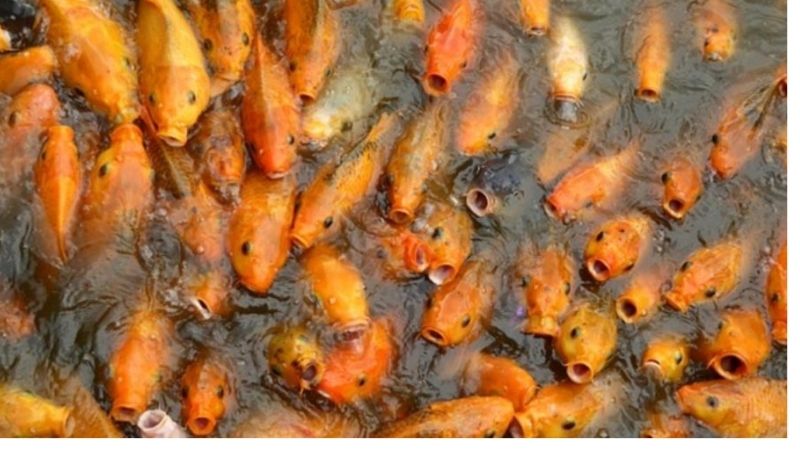
Fish gasping at surface means one of exactly two things: there is not enough oxygen dissolved in the water, or the gills cannot make use of the oxygen that is already there. Both are urgent, both have causes you can measure, and the first move is a test kit and an air stone rather than a bottle of anything.
As an Amazon Associate we earn from qualifying purchases.
As an Amazon Associate we earn from qualifying purchases at no extra cost to you.



By David Nguyen
A Supply Problem or an Uptake Problem
Surface breathing is a response rather than a behaviour, and fish gasping at surface level are doing something deliberate. The layer immediately below the surface holds the most dissolved oxygen in the tank, so they are working with what is available. Finding out why takes four readings and a thermometer.
Test These Four Numbers Immediately
Test ammonia, nitrite, nitrate and temperature with a liquid kit, in that order. Ammonia above 0.25 ppm or nitrite above 0 ppm explains the behaviour on its own, because both damage or disable the gills’ ability to take up oxygen.
Temperature is the other half. Warm water holds less dissolved oxygen, and the effect is steep: water at 84 °F (29 °C) carries noticeably less than the same water at 76 °F (24 °C), while fish metabolism and oxygen demand both rise as it warms.
Add a fifth observation that is not a number: whether the water surface is moving. A still surface limits gas exchange regardless of how much aeration equipment sits below it, and this is the single most common overlooked factor in the entire problem.
The Biology: Two Different Failures That Look Identical
Low dissolved oxygen is a supply problem. Oxygen enters at the surface, so gas exchange depends on surface agitation and surface area rather than on tank volume. Heat, high stocking, dense bloom and a sealed lid all reduce what is available.
The second failure is uptake. Ammonia burns gill tissue, and nitrite binds to the blood pigment that carries oxygen, converting it to a form that cannot release oxygen to tissue. In both cases the water can be fully oxygenated while the fish suffocates.
Distinguishing them matters because the responses differ. A supply problem responds to aeration and cooling within minutes. An uptake problem needs a water change to reduce the compound causing it, and aeration alone will not resolve it.
The two also combine, which is the dangerous case. A warm tank in an incomplete cycle has reduced oxygen in the water and impaired gills at the same time, and that pairing accounts for most losses during the first summer of a new setup.
Normal Ranges Against Action Thresholds
The table pairs each pattern with its likely cause and first action. Take the readings before consulting it, because the behaviour looks identical across every row and only the numbers separate them.
| What you observe | Readings | Most likely cause | First action |
|---|---|---|---|
| All fish at surface, hot weather | Temp above 82 °F (28 °C), ammonia 0 | Low dissolved oxygen from heat | Increase surface agitation, cool gradually |
| All fish at surface, tank under 3 months | Ammonia or nitrite above 0 | Cycle incomplete, gill impairment | Change 50%, add aeration |
| Gasping before dawn only | Dense algae bloom or heavy planting | Overnight oxygen depletion | Run air stone through the night |
| Started after filter cleaning | Ammonia above 0.25 ppm | Biological filter disrupted | Change 50%, do not clean media again |
| One fish only, others normal | All four readings normal | Not a water quality issue | Observe, seek professional advice |
What This Means in a Real Tank
Oxygen availability is set by surface area, temperature and stocking rather than by tank capacity. Two tanks holding identical volumes can differ substantially in how much oxygen they actually carry, which explains why fish gasping at surface appears in some setups and never in others.
Tank Size, Placement and Fit
Surface area beats volume for gas exchange, which is why fish gasping at surface appears in some tank shapes far more than others. A long, shallow 20 gallon (76 L) tank exchanges gas faster than a tall 20 gallon of the same capacity, because oxygen enters across the top rather than throughout the water column.
Placement drives temperature, which drives oxygen. A tank in direct sun or against a radiator runs warmer than the room, and a tank in a conservatory or a west-facing room can climb several degrees on a summer afternoon without anything failing.
Measure before you order: heater length against water depth, air pump position above the waterline or with a check valve fitted, and 4-6 in (10-15 cm) behind the tank for a hang-on-back filter. Check stand capacity against roughly 10 lb/gallon (about 1 kg/L) filled.
How This Differs Across 10, 20 and 55 Gallon Tanks
Small tanks heat and cool faster, so a 10 gallon (38 L) tank tracks room temperature closely through a hot day while a 55 gallon (208 L) tank lags behind it. The smaller tank reaches the danger zone hours earlier.
Stocking density is the other axis. A 10 gallon tank at the limit of its bioload has less oxygen headroom than a lightly stocked 55 gallon, so the same temperature rise produces surface breathing in one and no visible change in the other.
Filter turnover contributes indirectly through surface movement. A baseline of 4-6 times tank volume per hour for community stocking, or 8-10 times for goldfish and cichlids, matters here mainly for how the outflow disturbs the surface rather than for filtration itself.
How Species, Season and Stocking Change the Picture
Some species breathe at the surface normally. Bettas, gouramis and corydoras all take air deliberately, and a corydoras darting up and returning to the substrate is doing what it evolved to do rather than signalling a problem.
Cool-water species show distress earlier in heat. Goldfish and white cloud mountain minnows are uncomfortable above roughly 75 °F (24 °C), while many tropical community fish are fine to 82 °F (28 °C), so the same tank temperature means different things.
Body shape matters as well. Heavily modified fancy goldfish, long-finned bettas and other selectively bred forms have less swimming efficiency and lower tolerance for low oxygen than their wild-type equivalents, so they show the behaviour sooner in the same water.
Summer is when this arrives in volume. July and August bring the highest room temperatures of the year across the northern hemisphere, and heat waves combined with power interruptions during storm season, which runs roughly June to November in much of North America, produce both halves of the problem at once.
Common Mistakes and Myths to Retire
Three responses to fish gasping at surface either waste the short window available or make the situation actively worse. Each is a reasonable-sounding instinct, and each ignores what the readings are saying.
Myth: More Filtration Means More Oxygen
Filtration and aeration are different jobs. A canister filter with the outflow below the surface can move enormous volumes of water while barely disturbing the surface at all, and gas exchange happens at that surface rather than inside the housing.
The replacement action: aim the outflow to break the surface, or add an air stone. A simple air pump does more for dissolved oxygen than upgrading a filter, and it costs a fraction as much.
Myth: Cooling the Tank Quickly Is the Answer
Heat genuinely reduces dissolved oxygen, but dropping temperature fast creates a second problem. A change greater than about 2 °F (1 °C) in a short period stresses fish that are already compromised, which is the opposite of what a struggling tank needs.
Cool gradually instead: float a sealed container of cold water, increase surface agitation, aim a fan across the surface, and open the lid. Evaporative cooling from a fan is effective and inherently gradual, though it raises top-off volume noticeably.
Myth: Surface Breathing Means the Fish Is Sick
Fish gasping at surface is an environmental signal in the large majority of cases, which is why the four readings come before any consideration of illness. Treating a healthy fish for disease while ammonia sits at 1 ppm helps nothing.
Where every reading is clean, temperature is correct, the surface is moving and only one fish is affected, that is the point to consult an aquatic veterinarian or an experienced fish store. Describe what you observe rather than guessing at a diagnosis.
Preventing It Long Term
Nearly every case of fish gasping at surface is preventable with surface movement, temperature control and a stocking level the tank can actually support. None of the three requires expensive equipment, and all three need attention before summer rather than during it.
What to Do on a Schedule
Keep water changes at 20-30% weekly adjusted by measured nitrate, and test ammonia and nitrite weekly for the first three months then monthly. Both readings are the difference between a supply problem and an uptake problem when something goes wrong.
Check surface movement every time you look at the tank. Outflows shift, lily pipes get repositioned, and water level drops through evaporation until a hang-on-back outflow no longer breaks the surface properly, which happens quietly over weeks.
Stock to the tank rather than to the shop’s advice. Every additional fish adds oxygen demand continuously, and a tank stocked to its limit in mild weather has no headroom left when the room warms in July.
Gear That Degrades and How It Shows Up
Air pump diaphragms stiffen with age and air stones clog progressively, producing larger bubbles and less flow. The decline is gradual enough that most people do not notice until a hot day exposes it, so replace stones annually and test pumps before summer.
Heaters fail in two directions, and failing in the on position is the dangerous one because it cooks a tank while nobody is watching. Budget units commonly drift ±2-4 °F (±1-2 °C), so keep a separate thermometer and check it rather than the dial.
Filters lose 30-50% of rated flow as media loads and impellers wear, which reduces surface disturbance along with everything else. Every powered device beside water belongs on a GFCI outlet with a drip loop and a UL or ETL mark.
The Twelve-Month Running Cost
Budget for replacement air stones, an air pump that will last a few years, mechanical media, test reagents and continuous power for filter, heater and aeration. A battery-operated air pump is a modest one-off cost that covers power interruptions.
A clip-on fan for summer is inexpensive and effective, with one recurring consequence worth planning for: evaporative cooling increases top-off volume substantially, and topping off with tap water instead of pure water concentrates minerals over a season.
Set that against the alternative. A dedicated aquarium chiller costs several times more to buy and runs continuously through the warm months, which makes it a reasonable choice for a cool-water or reef tank and hard to justify for a tropical community setup.
Frequently Asked Questions
These five come up most often in the first hour after someone walks in and finds the whole tank hanging at the top.
What should I do in the first five minutes?
Increase surface agitation immediately, by aiming the filter outflow up or adding an air stone, then test ammonia and nitrite. Aeration is safe in every scenario, costs nothing to try, and buys time while you find out which cause you are dealing with.
Is my corydoras gasping or just breathing air?
Corydoras surface deliberately to gulp air and return to the substrate, and that is normal. Concern begins when the trips become constant, when the fish stays at the surface, or when other species in the tank start doing the same thing.
Can too many plants cause it overnight?
Yes. Plants produce oxygen in light and consume it in darkness, so a densely planted or heavily bloomed tank can dip low before dawn. An air stone running overnight resolves it without affecting the plants during the day.
Does adding an air stone lower CO2 in a planted tank?
It does drive off some dissolved CO2, which matters in injected high-tech setups. In that situation run aeration at night when CO2 injection is off, which is also when oxygen falls lowest, so the timing works in your favour.
How hot is too hot for a tropical community tank?
Most tropical community species are comfortable to about 82 °F (28 °C) and show stress above 84 °F (29 °C). Goldfish and other cool-water species are uncomfortable well below that, so match the ceiling to the species rather than to a general figure.
The Bottom Line on Surface Breathing
Fish gasping at surface is a supply problem or an uptake problem, and four readings separate them. Add surface agitation immediately because it is safe in every case, then test ammonia and nitrite, then check temperature against your species range. Ammonia above 0.25 ppm or any nitrite means a 50% water change now. Heat above 82 °F (28 °C) means cooling gradually with a fan and an open lid rather than dropping temperature fast. Only when every number is clean and one fish is affected does this become a question for a professional.
Do I Need a Heater for Shrimp? An Honest Answer (2026)
Axolotl Care Guide: Temperature, Diet, Lifespan and Tank Mates