Last Updated: October 17, 2026
- Axolotl Quick Facts
- Why an Axolotl Is Not a Fish
- Temperature: The Make-or-Break Factor
- Tank Size and Layout
- Substrate Safety
- Filtration and Flow
- Feeding an Axolotl
- Weekly Maintenance Schedule
- Tank Mates: Why Most Are a Bad Idea
- Handling
- Common Problems
- Common Mistakes
- Who Axolotls Suit
- Setting Up a New Axolotl Tank: Order of Steps
- Frequently Asked Questions
An axolotl is not a fish but a fully aquatic salamander (Ambystoma mexicanum) that needs cool water around 60 to 64 F (16 to 18 C), a tank of at least 20 gallons long with a gentle filter, a soft or bare bottom, and a meaty diet, and it lives alone because tank mates usually end badly for one or both animals. With good care axolotls commonly live around 10 to 15 years, so they are a long commitment and are not a beginner “fish tank” pet.
Quick answer: Our top pick in 2026 is the Animal type — our #1 rated choice. See the full ranked comparison, alternatives and buying advice below.
Axolotl Quick Facts
| Trait | Typical value |
|---|---|
| Animal type | Amphibian (neotenic salamander), not a fish |
| Adult size | Commonly 9 to 12 inches (23 to 30 cm), sometimes a little more |
| Minimum tank | 20 gallons long for one adult is a widely cited floor; many keepers prefer 29 to 40 gallons |
| Temperature | 60 to 64 F (16 to 18 C) ideal; up to about 68 F (20 C) tolerated; stress rises above about 72 F (22 C) |
| pH | About 6.5 to 8.0 |
| Diet | Carnivore: earthworms, nightcrawlers, sinking salamander or axolotl pellets, occasional bloodworm |
| Lifespan | About 10 to 15 years in captivity (some sources say 10 or more) |
| Temperament | Docile but will eat anything that fits in its mouth |
| Care level | Intermediate; cold water and ammonia sensitivity are the main challenges |
Why an Axolotl Is Not a Fish
Although people search for “axolotl fish”, the animal is an amphibian. It keeps its external feathery gills and stays aquatic for life, a trait called neoteny, instead of changing into a land-living salamander. Wild axolotls come from the high-altitude lake system around Mexico City and are critically endangered in the wild, while captive-bred animals are widely kept. That origin explains the need for cool, clean water and the sensitivity to heat and ammonia. Before buying, check local laws: axolotls are restricted or banned in some US states and other regions, and the species is listed in CITES Appendix II, which regulates international trade rather than domestic ownership. Sources disagree on the exact state-by-state rules and the laws change: California is widely reported as banning them, while other states are reported as requiring permits or are described inconsistently. Check with your state or local wildlife agency before buying.

Invert Aquatics Soft Pellets for Axolotls - Moist Sinking Diet for Axolotl, Newts, Salamanders & Other Small Amphibians (3 oz (85g))
Included for 'Axolotl Care Guide: Temperature, Diet, Lifespan and Tank Mates' because the listing specifies Moist Sinking Diet for Axolotl and Newts, details this guide uses to compare options.
View on Amazon
Invert Aquatics Axolotl Big Bites - Fast Sinking, Soft Pellet Daily Diet for Axolotls, Newts, Salamanders & Other Amphibians (3 oz (85g))
Included for 'Axolotl Care Guide: Temperature, Diet, Lifespan and Tank Mates' because the listing specifies Fast Sinking and Soft Pellet Daily Diet for Axolotls, details this guide uses to compare options.
View on Amazon
Aquatic Foods Inc. Axolotl Food, 1/4" Soft Moist Sinking Pellets, Rangen's Salmon Meal Pellets for Adult Axolotl. Also Shrimp, Snails, Crabs, Bottom Fish, All Tropical Fish...12oz Small Jar
Included for 'Axolotl Care Guide: Temperature, Diet, Lifespan and Tank Mates' because the listing specifies 1/4" Soft Moist Sinking Pellets and Rangen's Salmon Meal Pellets for Adult Axolotl. Also Shrimp, details this guide uses to compare options.
View on Amazon
Aquatic Foods Inc. Axolotl Food, 1/8" Soft Moist Sinking Pellets, Rangen's Salmon Meal Pellets for Small Axolotl. Also Shrimp, Snails, Crabs, Bottom Fish, All Tropical Fish...11oz Small Jar
Included for 'Axolotl Care Guide: Temperature, Diet, Lifespan and Tank Mates' because the listing specifies 1/8" Soft Moist Sinking Pellets and Rangen's Salmon Meal Pellets for Small Axolotl. Also Shrimp, details this guide uses to compare options.
View on AmazonTemperature: The Make-or-Break Factor
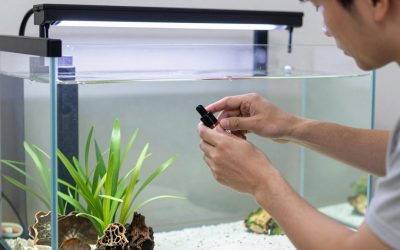
Most guides give 60 to 64 F (16 to 18 C) as the target, with 60 to 68 F (16 to 20 C) as an acceptable range. Above about 72 F (22 C), axolotls become stressed, stop eating and develop fungal infections, and sustained heat above that can be fatal. Do not use a heater. In a warm climate you may need a fan across the water surface, a room that stays cool or an aquarium chiller. Place the tank away from windows and electronics, and watch temperature during summer with a thermometer.
| Water temperature | Effect | Action |
|---|---|---|
| 60 to 64 F (16 to 18 C) | Ideal | Maintain |
| 65 to 68 F (18 to 20 C) | Within the 60 to 68 F range many sources give, but at the warm end | Monitor, add cooling if climbing |
| 69 to 72 F (21 to 22 C) | Stress, reduced appetite | Cool quickly with fan or chiller |
| Above 72 F (22 C) | Health risk, fungus, gill curling | Emergency cooling and veterinary advice if signs persist |
Tank Size and Layout
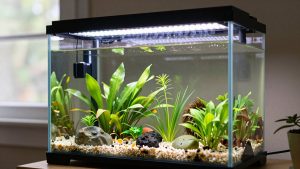
A 20-gallon long tank (about 30 by 12 by 12 inches) is a common minimum for one adult. Some axolotl specialists argue that this is too small and prefer a 29-gallon or 40-gallon breeder, which gives a larger floor area and more stable water. One veterinary clinic page also suggests adding at least 10 more gallons for each additional animal. Floor area matters more than height, because axolotls walk along the bottom and only occasionally rise to gulp air. A tight lid or mesh top stops jumping, and a water level of 12 to 18 inches avoids the need for deep swimming but still gives room.
- Hides: a smooth ceramic cave or pipe, because axolotls dislike bright light.
- Plants: hardy, cold-tolerant plants such as java fern, anubias and anacharis; or silk plants. Avoid sharp plastic.
- Lighting: low light; axolotls have no eyelids.
- Cycle first: the tank must be fully cycled before the animal goes in.
Substrate Safety
Axolotls suck food in with a gulping motion and often swallow substrate with it. Gravel is a well-known impaction risk, and hobby guides cite particles from about 2 mm up to roughly 20 mm as small enough to be swallowed during feeding. Safer options are a bare bottom, fine sand with grains small enough to pass through the gut, or very large smooth stones too big to swallow, typically larger than the animal’s head. Some keepers use a bare bottom until the animal is about 6 inches (15 cm) long before introducing sand. Rough decor and glass-edged items can scrape the delicate skin.
| Substrate | Safety | Notes |
|---|---|---|
| Bare bottom | Safest | Easy cleaning; slippery, so provide grip with a few flat stones |
| Fine aquarium sand | Generally accepted | Use a thin layer; avoid sharp or coarse sand |
| Small to medium gravel | Unsafe | Impaction risk |
| Large smooth river rock | Acceptable | Must be too large to swallow |
Filtration and Flow
Axolotls dislike strong current, which stresses them and can cause gills to curl forward. Use a sponge filter or a filter with an adjustable outflow baffled against the glass. Water must be very clean because axolotls are sensitive to ammonia, nitrite and chlorine. Test for zero ammonia and nitrite, and keep nitrate low. Dechlorinate all tap water. Avoid medications that contain harsh chemicals unless advised by an exotic-animal veterinarian.
Feeding an Axolotl
Axolotls are carnivores that detect food by smell and movement. Earthworms and nightcrawlers are a common staple, supported by good sinking salamander or axolotl pellets and the occasional bloodworm, blackworm or shrimp. Juveniles eat daily, while adults are often fed every two to three days. Do not feed feeder fish, which carry parasites, or mammal meat. Remove uneaten food within a few hours.
| Life stage | Typical feeding |
|---|---|
| Hatchling | Live baby brine shrimp, daphnia, then blackworms several times daily |
| Juvenile | Chopped worms and pellets daily |
| Adult | One to three worms or equivalent every two to three days |
Weekly Maintenance Schedule
| Frequency | Task |
|---|---|
| Daily | Check temperature, animal behaviour and gills, remove uneaten food |
| Weekly | Change 20 to 30 percent of the water with temperature-matched dechlorinated water |
| Weekly | Test ammonia, nitrite and nitrate; spot-clean waste |
| Monthly | Rinse the filter media in tank water, trim plants, inspect equipment |
| Summer or heatwaves | Monitor temperature several times daily, use fans or a chiller |
Tank Mates: Why Most Are a Bad Idea
Axolotls are best kept alone or with another axolotl of similar size. They will eat anything that fits in their mouths, and many fish nip at the feathery gills, causing infections and stress. Cold-water temperatures also rarely suit tropical fish. Even same-size axolotls can bite each other, especially juveniles competing for food, and a missing limb or gill may regrow, but repeated injuries are a welfare problem.
| Category | Examples | Why |
|---|---|---|
| Possible with caution | Another axolotl of equal size, large mystery snails (sometimes eaten or ignored) | Needs room and supervision; snails can be swallowed or nip gills |
| Risky | White cloud mountain minnows, small shrimp | Minnows may nip, shrimp are eaten |
| Avoid | Goldfish, bettas, tropical fish, crayfish, turtles, other amphibians | Nipping, predation, mismatched temperature or disease transfer |
Handling
Axolotls have delicate, permeable skin and a protective slime coat. Handling should be minimal. When a move is essential, use a soft, fine-mesh net or a container, not bare dry hands, and keep the animal in water. Avoid lifting by the body and never handle with hand lotions or chemicals on your skin. Wet hands that have been washed without soap are less harmful, but any handling is stressful. Wash hands before and after touching the water, since amphibians can carry bacteria.
Common Problems
| Symptom | Likely cause | What to do |
|---|---|---|
| Gills curled forward | Strong flow, poor water quality or heat | Reduce flow, test water, cool the tank |
| Floating, unable to submerge | Gas from overfeeding, constipation, impaction or stress | Check temperature and parameters; consult an exotic vet if it persists |
| White fuzz on gills or skin | Fungal infection, often from heat or injury | Cool water, improve cleanliness, veterinary guidance |
| Refusing food | Warm water, stress, new setup, illness | Check temperature, ammonia, and give time |
| Red, irritated skin or limbs | Ammonia burn or infection | Immediate water change and testing; veterinary advice |
| Sudden death | Heat, ammonia spike or chemical exposure | Review conditions before adding another animal |
Axolotls are exotic pets, and an exotic or amphibian-experienced vet should be consulted for persistent symptoms.
Common Mistakes
- Keeping the tank in a warm room without cooling.
- Using gravel as substrate.
- Strong filter flow or air stones that buffet the animal.
- Adding fish, because “they will be fine”.
- Skipping the nitrogen cycle.
- Expecting a short-lived, low-effort pet when the lifespan is over a decade.
Who Axolotls Suit
Axolotls suit keepers who live in a cool climate or can run a chiller, who enjoy watching a calm, quiet animal and who accept minimal handling. They do not suit people wanting an interactive pet or a colourful community tank, or anyone unable to guarantee a long-term home and legal ownership. Because they live for many years and are endangered in the wild, keepers should buy from responsible captive breeders and never release any animal into local waters.
Setting Up a New Axolotl Tank: Order of Steps
- Choose a cool spot away from sunlight, and confirm you can hold the water under about 68 F (20 C) all year, with a plan for summer.
- Set up the tank with a bare bottom or fine sand, smooth hides and a baffled, gentle filter.
- Fill with dechlorinated water and cycle the tank until ammonia and nitrite read zero and nitrate appears. This typically takes several weeks.
- Check temperature and parameters for a few days before the animal arrives.
- Float the transport bag briefly to match temperature, then release the animal gently without pouring in shop water.
- Offer food after a day or two, starting with small worms.
Keepers who skip the cycle often see ammonia burns in the first weeks, which is one of the most common causes of early losses. Buying from a reputable captive breeder also reduces the risk of disease and genetic problems. Because the species is critically endangered in its native lakes, captive-bred animals should never be released into the wild.
Colour morphs
Axolotls are sold in several morphs, including wild-type (dark brown or olive), leucistic (pale pink with dark eyes), albino (golden or white with pink eyes), melanoid (dark) and others. Care requirements are identical across morphs. Subdued lighting and shade from plants suit all morphs.
Frequently Asked Questions
Is an axolotl a fish?
No. It is an amphibian, a type of salamander that keeps its larval features such as external gills throughout adulthood. It breathes through gills, skin and sometimes gulps air at the surface.
What temperature should an axolotl tank be?
Aim for 60 to 64 F (16 to 18 C), with up to about 68 F (20 C) acceptable. Above roughly 72 F (22 C) the animal becomes stressed and prone to illness. A heater is not needed.
How long do axolotls live?
Typically about 10 to 15 years in captivity. Cool, clean water and a suitable diet are the main factors in reaching that age.
Can axolotls live with fish?
Generally not. Fish may nip the gills, and axolotls will eat small fish. Most tropical species also need warmer water than axolotls tolerate, so the combination fails on temperature alone.
What tank size does an axolotl need?
A 20-gallon long is often cited as the minimum for one adult, while many keepers favour 29 to 40 gallons for easier water stability. Long and wide matters more than tall.
What should I feed an axolotl?
Earthworms or nightcrawlers are a staple, supplemented with sinking salamander or axolotl pellets and the occasional bloodworm. Avoid feeder fish because of parasite risk.
Can I touch my axolotl?
Avoid it where possible. Their skin is delicate and easily damaged, and handling causes stress. If you must move one, use a soft net or a container filled with tank water.
Ready to decide? Our #1 pick for 2026 is the Animal type.
Live price & availability on Amazon.
Related Reviews & Guides
Best Aquarium Water Conditioner for Tap Water: Buyer Guide
Types of Koi Fish: Varieties, Colors and Patterns Explained