Last Updated: October 21, 2026
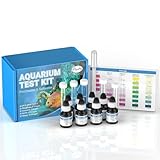
- Top Pick: AAwipes 8-in-1 Aquarium Test Kit for Fish Tanks – Quick & Accurate Water Testing Strips for Aquariums & Ponds. Tests pH, Ammonia, Alkalinity, Hardness, Chlorine, etc. (K02-50)
- Best Value: Palinoia 8-in-1 Aquarium Water Test Strips, 60 Count
- Premium Choice: kactoily Digital Aquarium Water Tester with App Alerts
Ideal aquarium water parameters are a set of ranges rather than a single correct number, and stability inside a range beats hitting a textbook figure. This guide gives the working target for each parameter, the reading that requires action on the day, and how the ranges shift by species and by tank type.
As an Amazon Associate we earn from qualifying purchases.
As an Amazon Associate we earn from qualifying purchases at no extra cost to you.


By David Nguyen
What the Ideal Aquarium Water Parameters Are
Six readings describe a freshwater tank, and three of them are non-negotiable while the other three depend on what lives in it. Knowing which is which prevents the most common mistake, which is chasing a number that never needed changing in the first place.
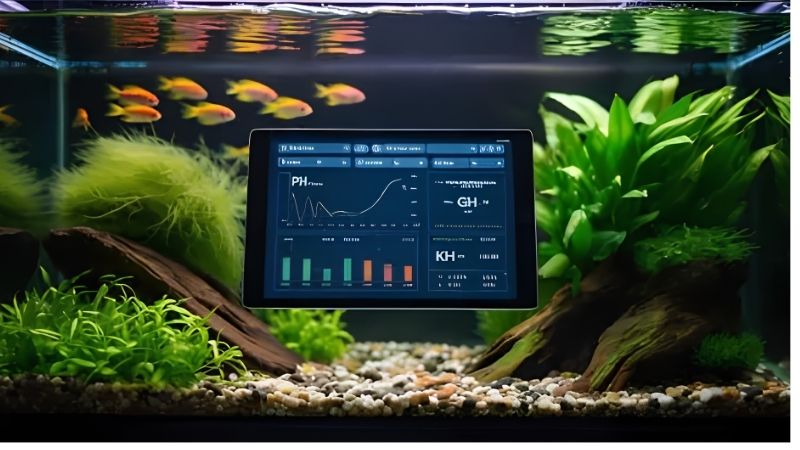
The three readings with fixed targets
Ammonia and nitrite both read 0 ppm in any cycled tank, with no acceptable range above that. Ammonia over 0.25 ppm or any nitrite at all means acting the same day, since both damage gill and skin tissue well before any behaviour visibly changes.
Nitrate is the third and the only one with a working range. Keep it under 20 ppm for planted tanks, shrimp and fry, and under 40 ppm for a general community, with the trend between changes mattering considerably more than any single reading.
Temperature belongs with them because it governs everything else. Tropical communities hold at 76 to 80 °F (24 to 27 °C), and daily drift within that band should stay under 2 °F (about 1 °C) between morning and night.
The three readings that depend on stocking
The remaining three describe the water itself rather than the waste in it, and there is no universal correct value for any of them. What matters is choosing a range for the stocking and then holding the tank inside it consistently.
pH matters less as an absolute value than most guides suggest. Most community fish live comfortably anywhere from 6.5 to 7.8 provided the figure holds steady, and a stable 7.8 is better for them than a 7.0 achieved with daily chemical adjustment.
General hardness measures the calcium and magnesium fish and shrimp need, quoted in dGH or ppm, where 1 dGH is about 17.9 ppm. Carbonate hardness is separate and acts as the buffer that stops pH falling, which is the distinction most often confused.
Total dissolved solids matters mainly for shrimp, since it tracks the overall mineral content the animal osmoregulates against. For most fish it is a secondary reading, useful for spotting slow drift rather than as a target in its own right.
How to read the table
The target column describes where a healthy tank sits from day to day, while the action column is the point at which observing stops and doing something starts. The two are not the same thing, and confusing them causes a great deal of unnecessary intervention.
Every figure assumes a liquid test kit with reagents still in date. Strips are acceptable for a rough check and lose accuracy quickly once opened, particularly at the low ammonia and nitrite readings where the precision matters most.
| Parameter | Target | Action threshold | How to measure |
|---|---|---|---|
| Ammonia | 0 ppm | Above 0.25 ppm | Liquid kit, weekly |
| Nitrite | 0 ppm | Any reading above 0 | Liquid kit, weekly |
| Nitrate | Under 20-40 ppm | Above 40 ppm | Liquid kit, shake bottle 2 hard |
| Temperature | 76-80 °F (24-27 °C) | Drift over 2 °F (1 °C) daily | Separate thermometer, daily |
| pH | 6.5-7.8, stable | Moving over 0.3 units a day | Liquid kit, monthly |
| GH | 4-12 dGH (72-215 ppm) | Outside the species range | Titration kit, monthly |
| KH | 3-8 dKH (54-143 ppm) | Below 3 dKH (54 ppm) | Titration kit, monthly |
Applying the Ideal Aquarium Water Parameters to a Real Tank
The table above is a starting point rather than a prescription to be followed exactly. Ideal aquarium water parameters shift with the animals in the tank, the plants growing in it, and where the tank physically sits in the house.
Tank size, placement and fit
Two physical factors change what a reading means without changing the reading itself. Both are decided before the tank is filled, and neither can be adjusted afterwards without emptying it out again.
Measure the stand top, the gap behind the tank and the water line against the heater before buying equipment, since none of it adjusts once the tank is full. Placement then decides how far temperature drifts, which drags every other reading with it.
Volume decides how quickly parameters move rather than what they should be. The same waste in 10 gallons (38 L) produces roughly twice the concentration it does in 20 gallons (76 L), so smaller tanks need testing more often rather than different targets.
How the ranges change by species
Nothing in the fixed group moves between tanks, and everything in the second group does. Choosing which end of each range to aim for is really a decision about stocking rather than about water chemistry.
This is where published profiles are worth reading and worth treating with some caution, since most fish sold today were bred in water quite unlike the wild habitat those profiles describe.
Soft water species such as many tetras and apistogramma do best around 6.0 to 7.0 with GH under 8 dGH (143 ppm). Rift lake cichlids need the opposite, at 7.8 to 8.6 with high hardness instead, which is why mixing the two groups rarely works.
Shrimp are the most specific. Neocaridina want GH 6 to 8 dGH (107 to 143 ppm) with KH 2 to 5 dKH, while caridina prefer much softer water at GH 4 to 6 dGH and KH close to zero, along with a correspondingly lower pH reading.
Choose fish to suit the water rather than the reverse. Testing the tap before stocking is cheaper and far more stable than adjusting every refill for the life of the tank, and it removes much the largest recurring source of parameter swings.
How planted and shrimp tanks differ
Two setups depart from the general community figures enough to be worth treating separately, and in opposite directions. One adds a predictable daily movement, while the other narrows the acceptable band considerably.
Planted tanks with CO2 injection show a daily pH swing of half a unit or more as CO2 accumulates during the photoperiod and disperses overnight. That pattern is expected rather than a fault, and a drop checker holding green corresponds to roughly 30 ppm.
Shrimp tanks trade a lower nitrate ceiling for tighter hardness control. Keep nitrate under 20 ppm, avoid any product containing copper, and change 10 to 20 percent weekly so that dissolved solids move gently rather than in steps.
Ideal Aquarium Water Parameters: Myths Worth Discarding
Three beliefs about these readings cause more harm than any actual measurement does, and each of them replaces stability with a number that was never the problem.
Myth: there is one correct pH
Fish adapt to a wide range and struggle with movement within it. Chasing 7.0 with buffers in water that naturally sits at 7.6 produces a daily swing, and that swing does far more damage than the original figure would ever have done.
Myth: test strips are good enough
Strips are convenient, cheap and sold alongside every starter kit, which is why this one persists rather than because anyone has compared the two side by side over a period of months.
Strips drift quickly once the container has been opened in a humid room and are least accurate exactly where precision matters, at low ammonia and nitrite. A liquid kit is the reference instrument for any reading you intend to act on.
Myth: perfect parameters prevent disease
Stable parameters reduce stress and support immune function, which is worth a great deal, and they are not a guarantee. Where fish behave abnormally in water that tests correctly, that is the point to consult an aquatic vet rather than adding treatments.
Keeping the Numbers Where They Belong
Holding ideal aquarium water parameters steady over a year is mostly a matter of routine, and of noticing slow drift in the background before it becomes a reading worth acting on.
The testing routine
Testing has two different jobs: catching a problem quickly, and spotting a slow trend before it becomes one. Those jobs need different intervals, which is why not every parameter belongs on the weekly testing list.
Test ammonia, nitrite and nitrate weekly, immediately before the water change so the result reflects the peak the fish actually lived in. Check pH, GH and KH monthly, and after any change to the water source or to the stocking level.
Write the numbers down. A single reading says very little while three consecutive ones show a trend, and the trend is what tells you whether the routine still matches the tank or has quietly fallen behind it somewhere.
What drifts and why
Two of the six readings move on their own between water changes, in opposite directions, and neither movement is a fault in the equipment. Both are worth understanding, because both of them are corrected by the same routine.
Carbonate hardness falls over time because nitrification consumes it, and once KH drops below about 3 dKH (54 ppm) pH becomes unstable and can fall sharply. Weekly water changes replace that buffer, which is one of their less obvious functions.
Evaporation works the other way. Topping up replaces water without minerals, so dissolved solids concentrate in what remains, and winter accelerates this once indoor heating dries the air and the water line starts falling faster than usual.
What the monitoring costs
Keeping track of six readings sounds expensive and is not, since three of them only need checking monthly. The recurring cost is reagents, and the recurring risk is using them past the point they still work.
A liquid master kit plus separate GH and KH tests covers everything in the table, and reagents expire whether used or not. Note the purchase date on the box, since an out-of-date kit reads low at exactly the point where accuracy matters most.
The nitrate reagent is the one that fails first in practice. Its second bottle needs vigorous shaking for 30 seconds or more, and an under-shaken test reads low, which quietly turns a rising plateau into an apparently stable one.
Frequently Asked Questions
These come up once someone has bought a full test kit and is trying to work out which of the six readings actually deserve attention every week.
What are the ideal aquarium water parameters for a beginner tank?
Ammonia 0 ppm, nitrite 0 ppm, nitrate under 40 ppm, temperature 76 to 80 °F (24 to 27 °C), and a pH anywhere between 6.5 and 7.8 that holds steady. Choose fish that suit the tap water rather than adjusting the water.
Should I adjust pH to match a species profile?
Usually not. Most commercially bred fish are raised in water quite unlike their wild habitat and tolerate a stable local figure well. Adjusting introduces swings, and swings cause more harm than a pH sitting slightly outside a published range.
How often should parameters be tested?
Ammonia, nitrite and nitrate weekly in an established tank, and daily during cycling or after any problem. pH, GH and KH monthly is enough unless the tank holds shrimp, or unless the water supply has changed recently.
What does low KH mean for my tank?
Below about 3 dKH (54 ppm) the water has little buffering left, so pH can fall quickly and unpredictably. Regular water changes normally restore it, and persistently low readings suggest the tap itself is very soft.
See More:
Using the Ranges
Ideal aquarium water parameters split into three fixed targets and three that follow the stocking: ammonia and nitrite at 0 ppm, nitrate under 20 to 40 ppm, temperature at 76 to 80 °F (24 to 27 °C), and pH, GH and KH chosen to match the fish.
Test the tap before stocking, pick species that suit what comes out of it, and treat stability as the goal. A steady reading slightly outside a published range beats a perfect one that moves every single time something is added to the water.
Swordtail Fish Care: Space, Water and Population Control
Zebra Danio Tank Mates: Match Speed and Temperature