Last Updated: October 4, 2026
- Top Pick: Rummy Nose Tetra Live Fish Pack – Peaceful Freshwater Schooling Fish for Planted Tanks, Community Aquariums & Aquascapes
- Best Value: Rummy Nose Tetra Live Fish Pack – Peaceful Freshwater Schooling Fish for Planted Tanks, Community Aquariums & Aquascapes (10)
- Premium Choice: Rummy Nose Tetra Live Fish Pack – Peaceful Freshwater Schooling Fish for Planted Tanks, Community Aquariums & Aquascapes (20)
Rummy-Nose Tetra Care: Stable Water and Schooling
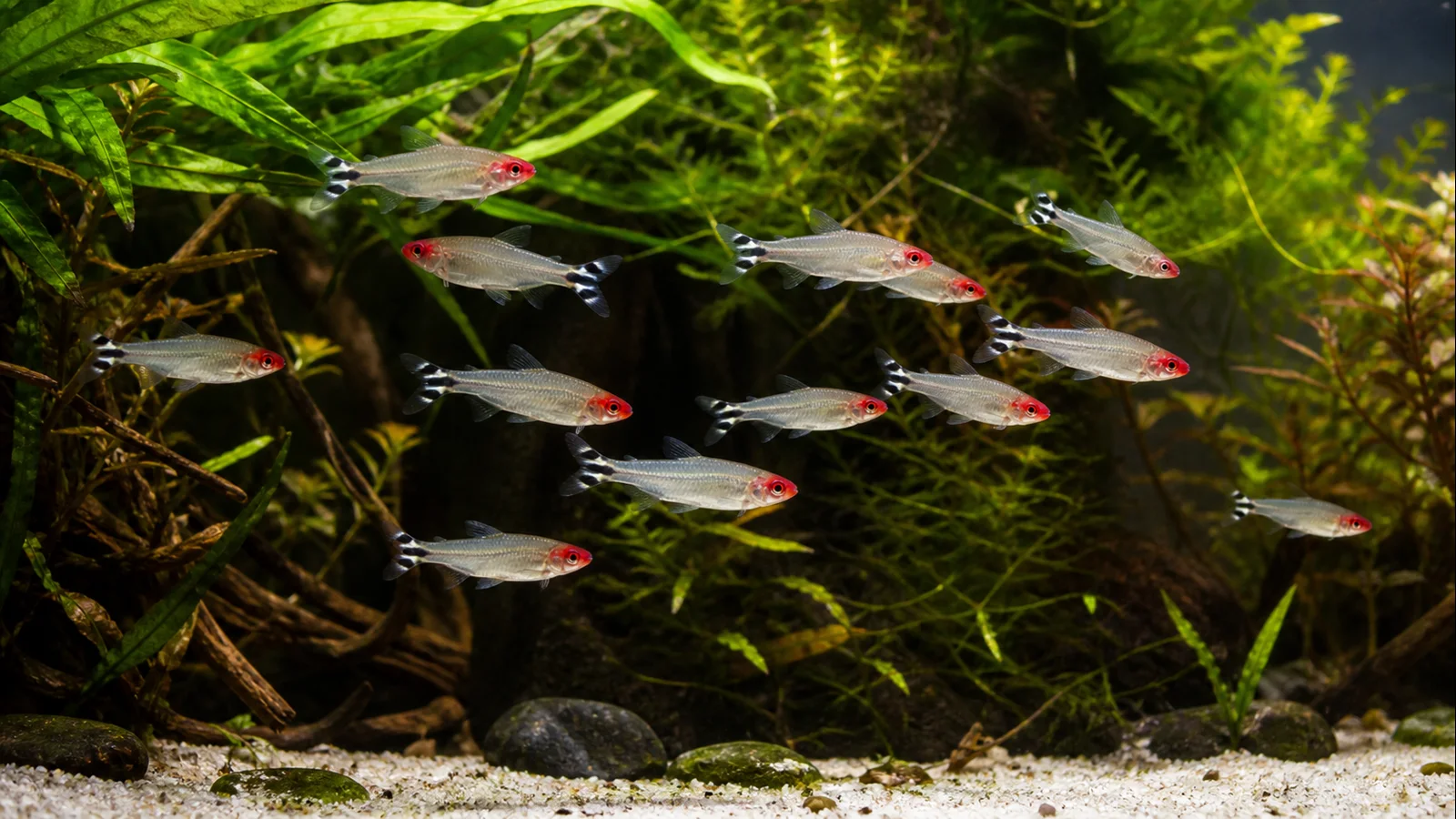
“Rummy-nose tetra” is a visual description shared by several fish, not a complete identification. The red face and striped tail may belong to Hemigrammus bleheri, Hemigrammus rhodostomus or Petitella georgiae in older trade usage. Recent taxonomic treatments can shift combinations, so identify the stock and verify current accepted names before applying a care sheet.
Compare the stable FishBase records for Petitella bleheri, Petitella rhodostoma, and Petitella georgiae, then ask the supplier which scientific name and source they use. This is not pedantry: locality, adult pattern and published environmental data differ. When the seller cannot identify the fish, use conservative overlapping care and avoid breeding or conservation claims tied to one species.
As an Amazon Associate we earn from qualifying purchases at no extra cost to you.


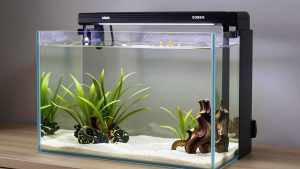
Editorial illustration; not evidence for species identification.
Identification before parameters
In H. bleheri, red commonly extends farther behind the gill area than in lookalikes, but stress and lighting can obscure the boundary. Tail-bar patterns and body markings help, yet photographs and shop strain variation make single-feature diagnosis unreliable. A reputable supplier’s import or breeding record is stronger than color on arrival.
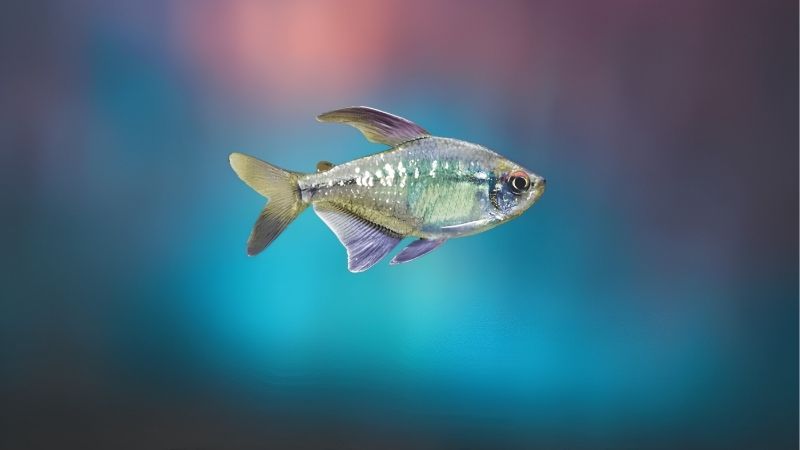
Do not confuse these fish with neon or cardinal tetras simply because all are small South American schooling characins. Our neon tetra guide illustrates how a familiar family-level resemblance can conceal distinct temperature and husbandry considerations.
Record the name used at purchase, breeder conditions and date. If taxonomic databases later update a genus, update the record rather than assuming the animal changed. Taxonomy is a classification tool; welfare still depends on the individual stock’s history and observable needs.
A tank that rewards coordinated swimming
A long mature aquarium around 75–110 litres/20–29 US gallons is a responsible starting point for a substantial school, with larger footprints preferred for communities. Rummy-nose tetras are famous for coordinated movement and use horizontal length. A tall narrow tank may contain adequate nominal volume while offering a poor route.
Keep roughly ten to twelve or more if the tank’s adult capacity permits. A group near the minimum may school, but a larger group often distributes social attention and looks more secure. Do not achieve group size by overcrowding; filtration, oxygen, companions and maintenance all set the ceiling.
Plant and furnish the ends and rear, leaving a generous middle lane. Wood and plant thickets provide retreat without dividing the whole school. Use a fitted lid and a protected intake. Moderate flow can support movement and oxygenation, but include calmer places and ensure fish are not permanently swimming to hold position.
Mature warm water, not reactive chemistry
These fishes are associated with warm, frequently soft and acidic South American waters. Depending on confirmed identity and source, a conservative captive band often falls around 24–28°C/75–82°F, with mildly acidic to near-neutral pH used for general maintenance. Species-specific Seriously Fish knowledge-base searches can provide referenced synthesis.
Reported habitat endpoints must be caveated. They describe places or collected records, not safe instructions to swing a glass aquarium through the full range. Captive-bred stock may have been raised in more mineralized conditions. Ask for holding water values, then choose the stable overlap you can prepare consistently.
Ammonia and nitrite must be undetectable. Keep nitrate and organics controlled through sensible stocking, feeding, filtration and partial water changes. Though written for reef systems, our guide to maintaining water parameters explains the transferable discipline of testing trends and avoiding abrupt corrections; ignore reef-specific chemistry targets for a freshwater tetra tank.
Use a thermostat heater plus an independent thermometer. Ensure surface agitation without converting the aquarium into a torrent. Warm water holds less oxygen, so crowding and filter failure deserve immediate attention.
Acclimation is a measured event
Rummy-nose tetras have a reputation for showing stress after transport, but that should lead to careful preparation rather than superstition. Set up a cycled quarantine aquarium with matching temperature, appropriate chemistry, cover and dedicated equipment. Follow the site’s quarantine process.
Compare transport water with quarantine water. Select an acclimation approach based on actual temperature, pH and hardness differences and time in transit. An endlessly prolonged drip is not automatically safer once a shipping bag has been opened; seek supplier or aquatic-professional guidance for long-shipped fish.
Dim lights, minimize chasing and offer a small familiar food only after fish settle. Test ammonia during quarantine because a new group can challenge a small biofilter. Do not medicate healthy arrivals without diagnosis. Observation, isolation and equipment hygiene are the core goals.
Read red color with context
The red nose can become less intense during sleep, transport or stress, but it is not a calibrated water-quality meter. Evaluate it alongside breathing, school cohesion, posture, appetite and measurements. A pale yet normally behaving fish after lights-on is different from a whole school suddenly pale and gasping.
If the group changes abruptly, check temperature, ammonia, nitrite, filter flow and oxygenation before changing chemistry. Correct only an identified problem, gradually where the situation permits. Persistent wasting, sores, balance loss or rapid respiration requires an aquatic veterinarian or qualified fish-health professional. No color chart can diagnose a pathogen.
Feeding a fast-moving school evenly
Use quality fine flakes or microgranules as the complete base and rotate appropriately sized frozen or cultured foods such as daphnia, cyclops and brine shrimp. Food must fit the mouth and remain available in midwater long enough to be eaten. Thaw frozen food safely and avoid wild-collected live foods from contaminated water.
Distribute a modest ration along the school route once or twice daily. Watch the rear and edges for shy individuals. In a community, feed in multiple zones so upper-water competitors do not intercept everything. Remove leftovers rather than adding scavengers to solve overfeeding.
A thin fish may be excluded, ill or parasitized; more food alone can worsen water. Document which individual eats, its feces and social position. Professional diagnosis should precede medication, and any treatment must use actual water volume rather than tank-label capacity.
Community boundaries
Choose peaceful companions with overlapping warm-water chemistry, modest mouths and a feeding style that leaves room for the school. Suitable bottom species still require their own group, substrate and oxygen conditions. Avoid large cichlids, habitual fin nippers and cold-water fish.
Additions can alter school position and confidence even without overt attack. Observe the aquarium at meals and after lights transition. If one species forces the tetras into a corner or prevents feeding, separate rather than waiting for a theoretical compatibility promise to become true.
Keep changes smaller than the system
Conduct regular partial water changes based on measured load, usually weekly in a normal community. Match replacement temperature and chemistry, condition municipal water, and siphon debris without dismantling every habitat surface. Clean reusable filter media only when needed for flow, preserving beneficial biological communities.
Each day, count fish and scan respiration, red coloration in context, fins and appetite. Each month, inspect the heater, lid, impeller and intake. Log results because gradual nitrate rise or weight loss is easy to miss.
Plan maintenance around the school’s swimming route. Approach slowly, leave one refuge zone untouched and return moved wood or plants only when safe to do so. A repeatable routine reduces avoidable chasing and makes an unusual failure to regroup easier to recognize as a meaningful change.
Responsible rummy-nose tetra care begins with admitting uncertainty about the common name. Once identity and source are recorded, success rests on a mature long tank, repeatable warm water, gradual acclimation and a proper school. Health signs that remain abnormal after measured husbandry correction belong with an aquatic veterinarian, not an improvised dose.
Related Reviews & Guides
How to Choose an Aquarium Light: Complete Buying Guide (2026)
Is Aquarium Uv Sterilizer Worth It? An Honest Answer (2026)