Last Updated: October 21, 2026
- Watch: How to Maintain Water Parameters in a Nano Reef Tank — Video Review
- Salinity and Specific Gravity
- Automating Top-Off to Prevent Swings
- Alkalinity, Calcium, and Magnesium
- Nitrate, Phosphate, and Organic Waste
- Trace Elements
- Tips for Long-Term Stability
- Frequently Asked Questions
- Conclusion
- Related Articles
- Related Guides
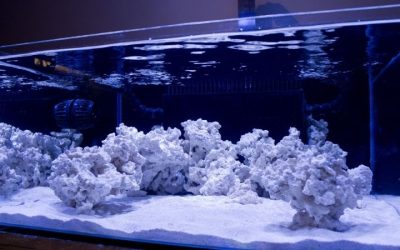
Nano reef tanks are unforgiving. With water volumes typically between 5 and 30 gallons, even small mistakes in dosing, evaporation, or salinity swing water chemistry fast, sometimes within hours instead of days. Corals and inverts that thrive in a stable 75-gallon system can crash in a nano tank if parameters drift even slightly outside their comfort zone.
The good news is that maintaining stable water parameters in a nano reef isn’t complicated once you understand which numbers matter most and how to test and adjust them consistently. This guide covers the core parameters, the tools that make monitoring easier, and the habits that separate a thriving nano reef from a stressed one.
As an Amazon Associate we earn from qualifying purchases at no extra cost to you.





⚡ Save on Your Next PC — Amazon Prime
Prime members get fast free shipping on the systems above, plus early access to Prime Day & Black Friday PC deals. New members get a 30-day free trial.
Watch: How to Maintain Water Parameters in a Nano Reef Tank — Video Review
Salinity and Specific Gravity
Salinity is the foundation of a stable reef tank. Most reef species do best between 1.025 and 1.026 specific gravity (roughly 34-35 ppt), and swings larger than 0.001 in a single day can stress fish and corals. Because nano tanks evaporate fast relative to their volume, salinity is also the parameter most likely to drift without you noticing.
- Check salinity daily with a refractometer or a reliable digital tool like the Boxtech Aquarium Hydrometer, which is easier for beginners to read accurately than a swing-arm hydrometer.
- Top off evaporated water with fresh RO/DI water only, never saltwater, since salt doesn’t evaporate.
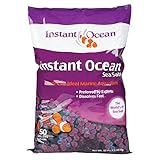
- Use a consistent salt mix, such as Instant Ocean Sea Salt, so your baseline readings stay predictable batch to batch.
Automating Top-Off to Prevent Swings
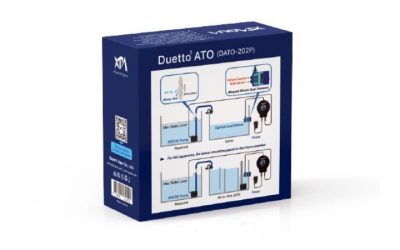
Manual top-off is the number one cause of salinity spikes in nano tanks. Miss a day or two and evaporation concentrates salt in the remaining water; overcorrect and you dilute it. An auto top-off (ATO) system removes the guesswork by maintaining a constant water level automatically.
- A unit like the ATET Auto Top Off System uses an optical or float sensor to trigger a pump only when needed, keeping salinity variance under 0.001 in most nano setups.
- Always pair an ATO with a reservoir large enough to prevent runaway dosing if the sensor sticks, and check the reservoir weekly.
- Position the sensor away from flow turbulence so it doesn’t false-trigger and overfill the tank.
Alkalinity, Calcium, and Magnesium
These three parameters form the “big three” that stony corals pull from the water to build skeleton. Target ranges are alkalinity 7-9 dKH, calcium 380-450 ppm, and magnesium 1250-1350 ppm. In a nano tank with even modest coral growth, alkalinity can drop noticeably within days if left unsupplemented.
- Test alkalinity twice weekly at minimum; it’s the most volatile of the three and the first indicator of a tank falling behind on demand.
- A two-part supplement such as Coralife Nano Reef Part A and B is formulated in concentrations sized for small water volumes, making precise dosing easier than diluting a large-tank product.
- Dose in small daily amounts rather than one large weekly dose to avoid spiking calcium or alkalinity, which can cause precipitation in a nano volume.
Nitrate, Phosphate, and Organic Waste
Because nano tanks have less water to dilute waste, ammonia and nitrate can climb quickly after feeding or a missed water change. Target nitrate under 10 ppm and phosphate under 0.1 ppm for most mixed reefs, though some SPS-dominant tanks run even lower.
- Test nitrate and phosphate weekly, and immediately after any noticeable increase in feeding or bioload.
- A biological waste-reducing product like DrTim’s Waste-Away Reef helps break down excess organics and supports the bacteria that process nitrogenous waste, which is especially useful in tanks under 20 gallons where waste concentrates fast.
- Avoid overfeeding; in a nano tank, a single overfed meal can measurably raise ammonia within hours.
Trace Elements
Beyond the big three, corals consume trace elements like iodine, iron, manganese, and strontium, which regular water changes only partially replace. Depletion shows up as pale coloration or slowed polyp extension long before it registers as a testable deficiency.
- Use a dedicated trace element blend like Brightwell Aquatics NanoCode A, dosed according to bioload rather than tank size alone.
- Don’t dose trace elements and a two-part supplement on the same schedule without checking for interactions; stagger doses by a few hours.
- Increase trace dosing gradually if you notice coral pigmentation fading, rather than making a large single adjustment.
Tips for Long-Term Stability
- Perform a 10-15% water change weekly rather than a larger monthly change; smaller, frequent changes keep parameters steadier in low-volume systems.
- Keep a simple log of salinity, alkalinity, and nitrate readings. Trends over two to three weeks reveal problems faster than any single reading.
- Calibrate your refractometer or hydrometer against a known reference solution every few months, since drift in the tool itself causes false readings.
- Introduce new corals or fish slowly and test water quality before and after, since a nano tank’s small buffer capacity means new additions affect chemistry faster than in larger systems.
Frequently Asked Questions
How often should I test water parameters in a nano reef?
Check salinity daily, alkalinity two to three times weekly, and nitrate, phosphate, calcium, and magnesium weekly. Nano tanks change faster than larger systems, so more frequent testing catches problems before they affect livestock.
Why does my nano tank’s salinity keep rising?
Rising salinity almost always means evaporation is outpacing top-off. Water evaporates but salt stays behind, so replacing only what’s lost with fresh RO/DI water is essential. An auto top-off system resolves this more reliably than manual top-off.
Can I use the same dosing routine as a larger reef tank?
Not exactly. Use products formulated or scaled for small volumes and dose in smaller, more frequent increments. A dosing amount safe for a 75-gallon tank can swing a 10-gallon nano tank’s alkalinity or calcium far outside target range.
What’s the biggest mistake nano reef keepers make with water parameters?
Inconsistent monitoring. Skipping a few days of testing in a small tank lets problems compound quickly, since there’s little water volume to buffer mistakes. Consistency matters more than any single product or gadget.
Conclusion
Stable water parameters in a nano reef come down to consistency: testing on a fixed schedule, dosing in small increments, and automating what you can, especially top-off. With the right tools and a routine you actually stick to, a nano reef can be just as stable and rewarding as a much larger system.

Aquarium Powerhead Surface Skimmer Nano Review
How to Adjust Protein Skimmer Bubbles (2026): Step-by-Step