Last Updated: October 21, 2026
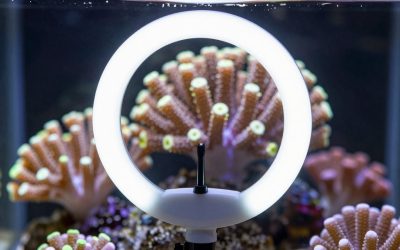
Soft corals are forgiving, which is exactly why so many people overbuy light for them and run it too hard. The best reef led light for soft corals is the lowest fixture that still covers your footprint at moderate, controllable output, because more watts and higher PAR rarely improve a softie tank and often stress it.
As an Amazon Associate we earn from qualifying purchases.
By David Nguyen
How to Choose Reef Lighting for Soft Corals
Soft-coral lighting is about sufficiency, not maximum output. Aim for coral-specific PAR, match published coverage to your footprint, favor fine control, and weigh heat, fan noise, and power draw. Softies thrive across a wide range, so the goal is enough light delivered gently, not the strongest fixture that fits.
Use Coral-Specific Needs, Not Maximum PAR
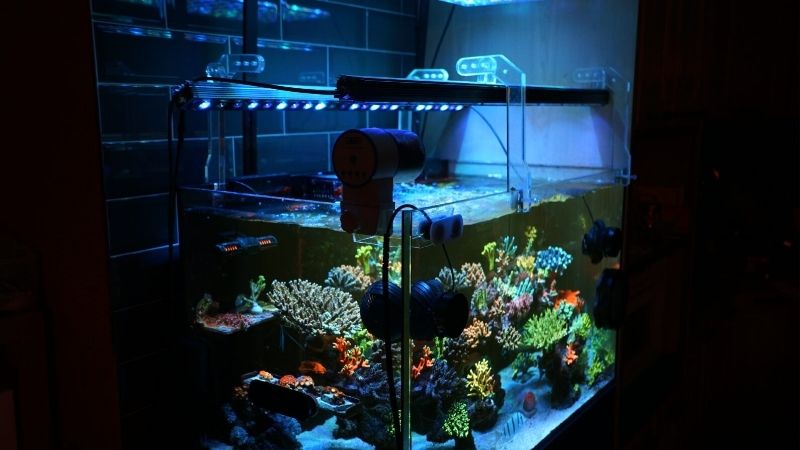
Soft corals generally sit around a 75-150 PAR reference range, though placement and species still decide, so chasing SPS-level intensity wastes money and can bleach a zoa garden. A modest fixture set mid-range usually grows softies better than a powerful light run near its ceiling over corals that never needed it.
Let the coral’s response set the final number rather than a chart. Toadstools, mushrooms, and many leathers color up under moderate light and will retract or brown under too much, so treat the 75-150 band as a planning reference, start low, and step up only if growth stalls at the lower setting.
Match Published Coverage to Footprint
Coverage figures are coral-type specific, so read them carefully. The Kessil A160WE lists a 24-by-24-inch soft-coral footprint that narrows to 18-by-18 inches for a mixed reef, and the A80 shows 18-by-18 soft versus 12-by-12 mixed, which shows a single fixture covers a larger area for softies than for demanding corals.
Size to the softie footprint you actually have. A 30 W Maxspect MJ-L230 targets an 11.75-to-19.5-inch nano span, so it lights a small softie tank cleanly while leaving a wider tank underserved. Map your length and width against the published soft-coral coverage before assuming one puck reaches every corner.
Choose Fine Intensity Control
Because softies want moderate light, the ability to dial output down matters more than a high ceiling. The AI Prime 16HD offers app-based dimming across its up-to-24-by-24-inch spread, letting you run a low, steady photoperiod rather than pushing a fixture hard just because it can go brighter than a softie needs.
Control also protects color. Many soft corals show their best tones at gentler intensity, so a fixture you can ramp and hold at a low setting outperforms a stronger uncontrolled light. Reef brands revise controllers and firmware often, so confirm the current generation so the dimming features you pay for actually work.
Consider Heat, Fan Noise, and Long-Term Power Use
Softie tanks often live in bedrooms and offices, so running character counts. The fanless Kessil A80 stays silent at 15 W, while fixtures with active cooling add a low hum, which matters over years of daily use even if it is easy to overlook during a quick showroom comparison of two lights.
Power adds up quietly too. At 8 hours a day of full rated power, the A80 works out to about 43.8 kWh a year, the MJ-L230 to 87.6, the A160WE to 116.8, and the Prime 16HD to 172.3, though real use is lower with ramping and dimming, and these figures are examples rather than bills.
Top Reef LED Lights for Soft Corals
Softies span a wide light range, so the right fixture is defined by footprint and control rather than raw power. The four below cover nano to mid-size soft-coral tanks, and the best fit is whichever matches your soft-coral coverage while letting you run gentle, steady output that keeps color without wasted watts.
| Product | Best For | Key Spec | Watch Out For |
|---|---|---|---|
| Kessil A160WE | Best all-round for a soft-coral footprint | 40 W; 24×24 in soft-coral coverage | Mixed-reef coverage drops to 18×18 in |
| Kessil A80 | Silent small softie nano | 15 W; 18×18 in soft; fanless | 12×12 in mixed; not for large tanks |
| Maxspect MJ-L230 | Simple nano coverage | 30 W; 11.75-19.5 in tank span; arm included | Passive cooling; nano scope only |
| AI Prime 16HD | Fine dimming over a wider tank | 59 W; up to 24×24 in spread | Mount extra; 55W vs 59W spec conflict |
Kessil A160WE – Best All-Round for a Soft-Coral Footprint
Within its published soft-coral footprint, the A160WE is the strongest all-round pick here. Kessil rates it at 40 W with a 24-by-24-inch soft-coral coverage figure, giving a shimmery point-source spread over a moderate softie tank. It sits around $289 as of 09/2026, in the mid-premium tier for a single puck.
The upside is broad soft-coral coverage with easy manual intensity and color control for gentle running. The trade-off is that its coverage tightens to 18-by-18 inches for a mixed reef, so its 24-inch figure applies to softies specifically, and a single point source can leave edge falloff on a longer tank layout.
Kessil A80 – Silent Small Softie Nano
The A80 is the pick for a quiet, small soft-coral nano. It uses 15 W, covers an 18-by-18-inch soft-coral area, and is fanless, which suits a desktop or bedroom tank. At around $149 as of 09/2026, with a mini gooseneck near $29, it is a compact, low-draw way to light a softie pico or nano.
Silence and low power use are the real strengths, and at roughly 43.8 kWh a year at full output it is easy on running costs. The limits are scope: its mixed-reef footprint shrinks to 12-by-12 inches and it is not meant for larger or demanding tanks, so keep it to a genuinely small softie plan.
Maxspect MJ-L230 – Simple Nano Coverage
The MJ-L230 fits a soft-coral keeper who wants coverage without an app. It draws 30 W, targets an 11.75-to-19.5-inch tank span, and includes a mounting arm, so the roughly $125 price as of 09/2026 is close to the installed cost with basic 6, 10, or 12-hour inline timing built in.
Passive cooling keeps it silent, and the included arm makes it a tidy plug-and-play softie light. The catch is scope and control: it is nano-class only, and its simple timer offers less fine acclimation than app fixtures, so a keeper who wants slow ramping for light-sensitive softies may prefer a dimmable option.
AI Prime 16HD – Fine Dimming Over a Wider Tank
The Prime 16HD suits a softie keeper who wants gentle, dialed-down output over a slightly larger footprint. It lists up to a 24-by-24-inch spread on a 59 W technical spec and runs around $275 at Bulk Reef Supply, with a flex arm near under $50, and its app makes low steady settings easy to hold.
The strength is control: you can run it well below its ceiling, which is exactly what soft corals want. The cautions are that the official copy shows both 55 W and 59 W, the arm is extra, and at 172.3 kWh a year at full power it is the thirstiest here, so a dialed-back setting also trims running cost.
Frequently Asked Questions
Soft-coral keepers tend to circle the same doubts about power and coverage. Each answer starts with the direct call, then adds the condition that shifts it, so you can size a fixture to your own nano or mid-size softie tank rather than defaulting to the brightest light that will physically fit above it.
How Much Light Do Soft Corals Really Need?
Less than most people assume. Soft corals plan around a 75-150 PAR reference range, though species and placement move it, so a mid-output fixture set gently is usually plenty. Pushing SPS-level intensity onto a softie tank tends to cause retraction and browning rather than better growth over time.
Start low and read the corals. Zoas, mushrooms, and leathers show their best color at moderate light, so run the fixture below its ceiling and step up only if growth stalls. Treat the band as a planning reference and confirm at coral height with a meter rather than trusting a single chart figure.
Is a Lower-Wattage Light More Efficient for Softies?
Not automatically, because efficiency depends on light delivered, not watts alone. A 15 W A80 and a 40 W A160WE cover different footprints, so comparing them by wattage or area-per-watt without matching output data is misleading. Size to your soft-coral coverage first, then compare running cost second.
Where power does matter is the yearly bill. At 8 hours daily and full output the A80 runs about 43.8 kWh while the Prime 16HD runs 172.3, but real use drops with dimming and ramping. Those are rated-power examples, so use them to compare ballpark draw rather than as a guaranteed cost.
Can One Fixture Cover a Whole Softie Tank?
Only if its published soft-coral coverage matches your footprint. The A160WE lists 24-by-24 inches for softies while the MJ-L230 targets an 11.75-to-19.5-inch span, so map your length and width against the coral-specific figure rather than the largest quoted spread, which may be for a different coral type.
On longer tanks, a single point source can leave dim corners. If your footprint exceeds one fixture’s soft-coral coverage, plan for two units or a wider-spread light instead of stretching one puck, and verify the edges with a meter, since softies at the corners will lean and stretch toward brighter zones over time.
Do Soft Corals Need App Control?
It helps but is not essential. A timer-based MJ-L230 runs a steady softie photoperiod without a phone, which many keepers prefer. App control mainly buys slow ramping and easy dimming, which is useful if you keep light-sensitive softies or want to hold output well below a fixture’s maximum for better color.
If you choose an app light like the Prime 16HD, confirm it is the current generation with active support, since the dimming features live in that software. For a simple softie tank, though, a quiet fixture set to a modest fixed schedule often delivers everything the corals need without any extra complexity.
Final Thoughts
Map your tank’s length and width against each fixture’s published soft-coral coverage, then plan to run whatever you choose below its ceiling. The best reef led light for soft corals is the lowest-output unit that still covers your footprint with room to dim, so let the corals’ color guide the final setting.

How to Choose a Protein Skimmer: Complete Buying Guide (2026)
6 Best LED Lights For Reef Aquarium 2026