Last Updated: October 4, 2026
- Top Pick: Swimming Creatures™ 6 Black Neon Tetra Live Freshwater Aquarium Fish – Peaceful Schooling Community Fish – Hyphessobrycon herbertaxelrodi
- Best Value: Aquarium Plants Discounts 4 Black Neon Tetra 3/4" to 1-1/2" – Freshwater Live Tropical Fish
- Premium Choice: Swimming Creatures™ 12 Black Neon Tetra Live Freshwater Aquarium Fish – Peaceful Schooling Community Fish – Hyphessobrycon herbertaxelrodi
Black Neon Tetra Care: A Hardy Community Setup
The black neon tetra is not a dark color morph of the neon tetra. It is Hyphessobrycon herbertaxelrodi, marked by a bright upper stripe over a dark lateral band and a reddish eye. Treating the names as interchangeable can lead to sloppy assumptions about size, habitat and community design.
Confirm the taxon through FishBase and GBIF. Then compare the appearance and needs with the site’s neon tetra care guide. Accurate naming is the first care action, particularly when a retailer keeps several striped characins together.
As an Amazon Associate we earn from qualifying purchases at no extra cost to you.


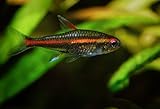


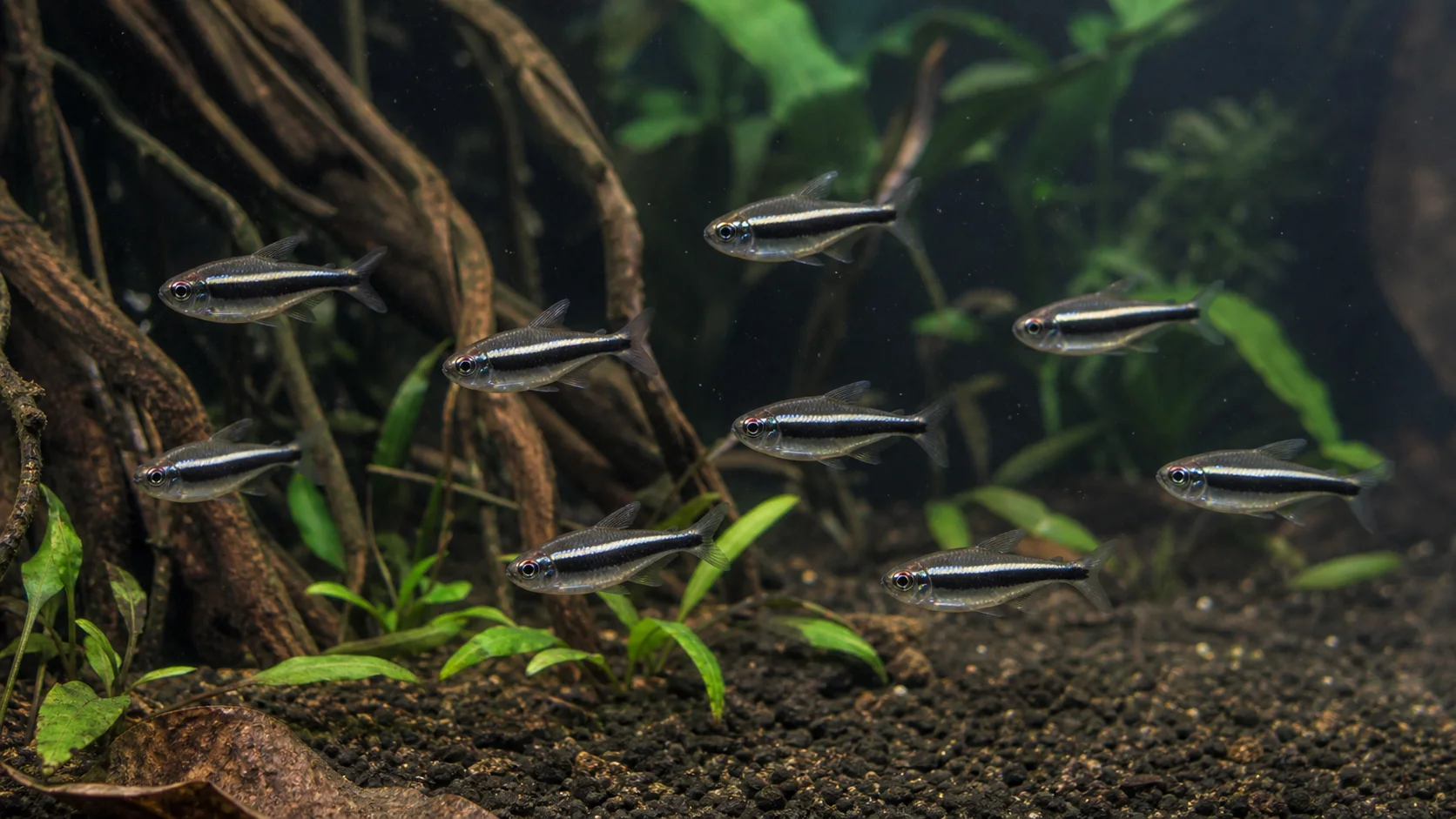
Editorial illustration; not evidence for species identification.
Build around the adult school
Black neons commonly reach around 3.5–4 cm/1.4–1.6 inches, depending on source and condition. A long aquarium near 75 litres/20 US gallons offers a useful starting footprint for a school and restrained community. Larger volumes allow more companions and buffer mistakes, while a tall narrow design does not replace horizontal swimming length.
Keep at least eight to ten, preferably more when adult capacity allows. A “minimum six” should not become a target if there is room for a more secure school. Conversely, do not crowd a small aquarium merely to reach a number. Schooling welfare and water-quality welfare must be solved together.
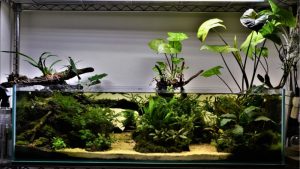
Plant the perimeter and preserve an open central path. Tall stems, wood and shaded edges give the group choices; a fitted lid protects startled jumpers. A dark background can reduce visual exposure. Avoid sharp décor and ensure every cave or gap is wide enough for a fish to leave.
This species appears in beginner-friendly fish discussions because it can adapt well, but resilience is not permission for an immature filter. Ammonia and nitrite must remain undetectable after a proper cycle.
Choose the stable middle of reported water
Natural-history sources associate black neon tetras with South American freshwater and warm conditions. Captive references often work around 23–27°C/73–81°F, with mildly acidic to near-neutral pH and soft-to-moderate hardness. The Seriously Fish knowledge base can be searched for referenced species details, while OATA care information provides a trade-body welfare baseline.
Those ranges need interpretation. A broad occurrence range is not a mandate to expose captive fish to both endpoints. Captive-bred fish may be adapted to the breeder’s mineral content. Ask for actual holding values, test your supply, and use a stable overlap you can repeat at every water change.
Avoid chemicals that repeatedly force pH up or down. If source water truly conflicts with the species, develop a measured preparation method with an experienced aquatic professional. Match replacement water temperature and use a reliable heater with a separate thermometer.
Filtration: distribute flow and oxygen
Select a filter for the aquarium’s real biomass, not the tetra label. Media, maintenance state and head height affect delivered flow. Our filter selection guide compares practical options. Protect intakes and arrange the outlet to ripple the surface while leaving lower-velocity refuge.
The fish should cross the current voluntarily, not be pinned behind plants. Debris should not accumulate across every sheltered area. If these goals conflict, change outlet direction, add a spray bar or reposition hardscape before buying a more powerful unit.
Control nitrate and dissolved waste through stocking, measured feeding, plant care and regular partial changes. A clear tank can still contain harmful dissolved compounds, so sight and smell do not replace testing.
Distinguish schooling motion from distress
Black neons may spread out when secure and tighten formation after a disturbance. Short chases and position changes occur within groups. Concern begins when one fish remains isolated, cannot feed, clamps fins, breathes rapidly or is repeatedly targeted. Check water and temperature as well as social structure.
Suitable companions share temperature and chemistry, lack a tetra-sized mouth and do not dominate food. Calm small corydoras or similar bottom dwellers may fit only in tanks that meet their own group and substrate needs. Small rasboras and other tetras can work, but one large black-neon school is often better than several incomplete groups.
Avoid predators, long-finned slow fish vulnerable to investigation, and notorious fin nippers. “Community fish” is marketing shorthand, not a promise. Compare adult size, activity, swimming zone and diet before purchase.
Quarantine additions in a cycled separate system with dedicated equipment. Introduce one planned group at a time so the biofilter and resident behavior can be monitored. Never pour store water into the display merely because the fish came from a clean-looking tank.
Feed for body condition, not excitement
A quality fine flake or microgranule can anchor the diet. Rotate suitable frozen or cultured live foods such as small daphnia, cyclops and brine shrimp. Portions must fit the mouth and should descend through midwater. Avoid collecting live foods from waters exposed to pollution or pesticides.
Feed a modest amount once or twice daily, distributing it along the school. Watch individual swallowing. Fast companions may eat everything at the surface, while excess falls behind plants unseen. Adjust delivery rather than simply increasing the total.
A rounded belly after feeding differs from persistent swelling; a slender fish may be excluded or ill. Do not diagnose either from a photograph. Test water, document appetite and feces, and seek an aquatic veterinarian or qualified fish-health professional for persistent wasting, lesions, abnormal swimming or rapid breathing. General guidance cannot responsibly prescribe medication or dosing.
Plan the first two weeks
Prepare a cycled quarantine tank before collection, using subdued cover and water close to the seller’s measured conditions. Dim the light on arrival and choose acclimation from the actual temperature and chemistry difference rather than following one fixed duration. Very long transport adds complications, so ask the supplier or an aquatic professional for shipment-specific handling advice.
During the first week, offer familiar fine food, remove leftovers and record which fish eat. Keep nets, siphons and towels dedicated to quarantine. A healthy-looking group still benefits from an observation period because transport can conceal gradual problems. Move the school only when behavior, appetite and water tests are consistently normal.
After transfer, do not immediately fill the display with additional species. Give the biofilter and the black neons time to settle, then judge the open swimming room at adult scale. A staged community makes behavioral changes easier to attribute and reduces the temptation to solve every quiet area with another purchase.
A maintenance loop that protects stability
Daily, count the school, verify equipment and scan feeding response, respiration and fins. Fish color varies with illumination and stress, so interpret fading beside behavior and measured conditions. A whole-group change deserves immediate water and equipment checks.
Weekly, perform a partial water change appropriate to actual nitrate, stocking and feeding. Condition municipal water and closely match temperature. Vacuum accessible debris while preserving established surfaces. Rinse mechanical media when flow declines and follow manufacturer directions for biological media.
Monthly, inspect lid gaps, the heater, thermometer, intake and impeller. Trim plants in stages so open routes and refuge remain. Reassess adult stocking if juveniles have grown or companions were added.
Do not release unwanted black neon tetras outdoors. Rehome through responsible aquarists or a willing retailer. Captive fish can carry organisms, and release can harm both the fish and local ecosystems.
Black neon tetra care is robust when “hardy” describes the result of good planning rather than an excuse for shortcuts. Provide a mature long tank, a real school, repeatable warm water, distributed fine food and companions screened at adult scale. When deterioration continues after environmental problems are corrected, hand the case to an aquatic-health professional instead of experimenting.
Related Reviews & Guides

6 Best Aquarium Water Chillers 2026
Best Transparent Fish Pond With Observation Window: Reliable