Last Updated: October 9, 2026
- Top Pick: Neat&Tidy Ember Tetra (Pack of 10 Fish) – Live Fish for Aquarium Exotic Freshwater
- Best Value: Ember Tetra – Mastering Their Care for Beginners and Advanced Aquarists: Creating the Ideal Aquarium Environment for Healthy Ember Tetras
- Premium Choice: Ember Tetra Live Fish (Pack of 20 Fish) – Aquarium Exotic Freshwater Live Fish
Ember Tetra Care: Schooling, Feeding and Tank Setup
An ember tetra is small enough to vanish behind a leaf, but that does not make any small container a home. The fish gains confidence from companions, the school needs horizontal room, and tiny volumes give mistakes nowhere to go. Good ember tetra care pairs micro-scale feeding with full-scale attention to cycling and water stability.
The species is Hyphessobrycon amandae, a Brazilian characin named in the late twentieth century. FishBase and GBIF provide taxonomy, size and distribution context. Those records describe the species and its occurrences; they do not certify a retailer’s stock or turn every wild measurement into an aquarium target.
As an Amazon Associate we earn from qualifying purchases at no extra cost to you.


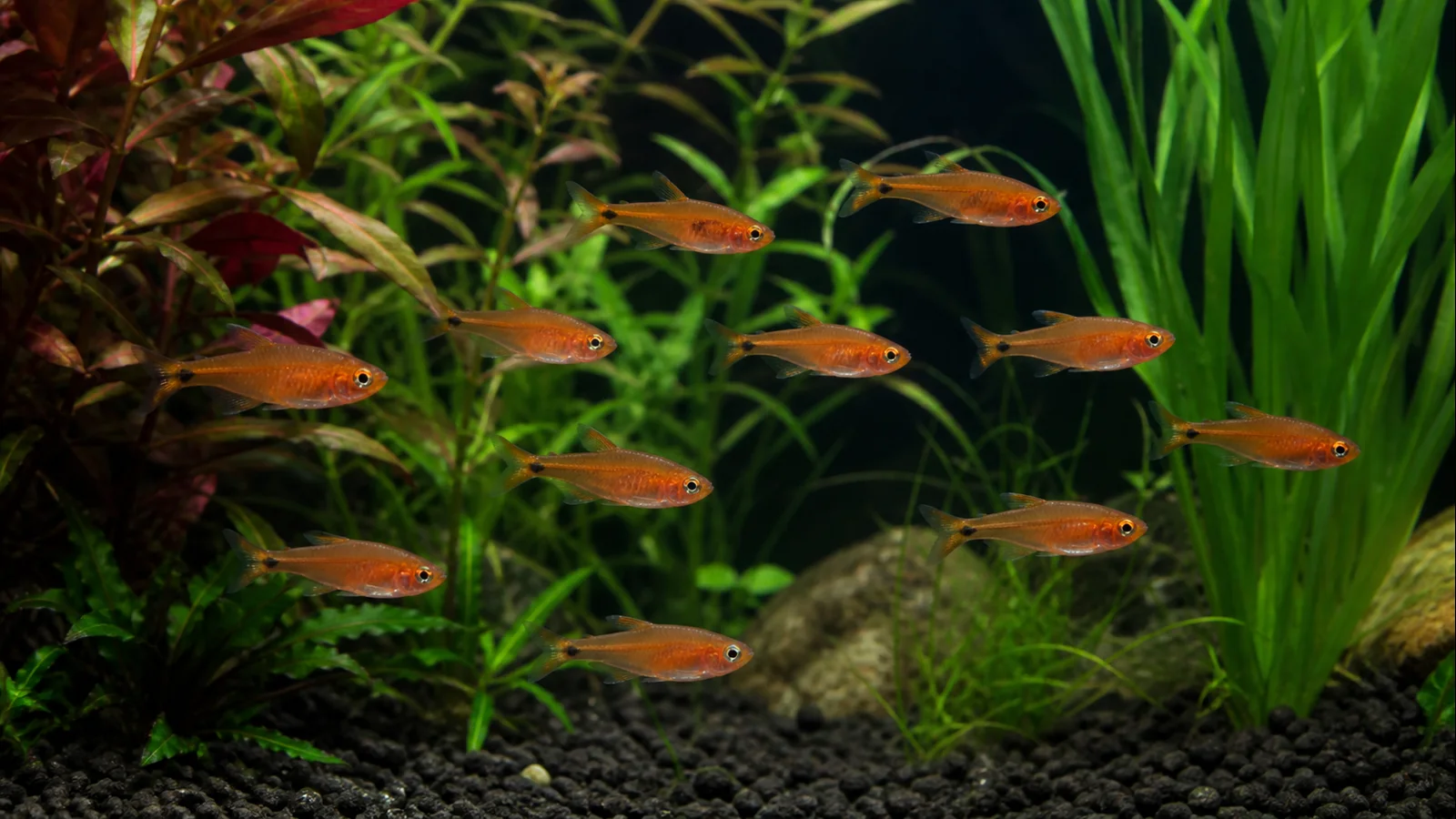
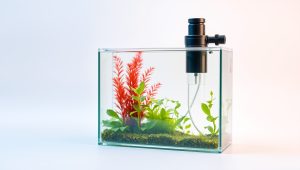
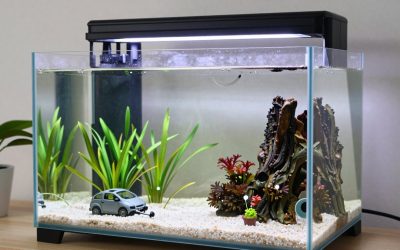
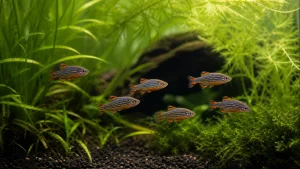
Editorial illustration; not evidence for species identification.
Give the school a stable footprint
A long, mature aquarium of roughly 45–60 litres/12–16 US gallons is a practical species-focused starting point, with more capacity needed for companions. A larger tank is easier to stabilize and permits a fuller school. Do not substitute height for length; ember tetras use midwater routes across the aquarium.
Keep at least ten to twelve when space and filtration allow. A larger single school generally looks and behaves better than several undersized microfish groups. Loose exploration is normal in a secure aquarium. Sudden tight schooling can indicate novelty or alarm, while permanent hiding suggests excessive light, inadequate group size, intimidating neighbors or a health problem.
Cycle the tank without fish and verify performance using tests. The fishless cycle guide covers the process. Ammonia and nitrite should be undetectable after stocking, and nitrate should be controlled through appropriate biomass, careful feeding, healthy plants and partial changes. The RSPCA fish advice reinforces preparation as a welfare obligation.
Make cover and visibility coexist
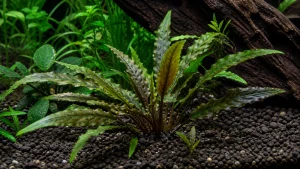
Plant the sides and rear, using fine stems, mosses, wood and leaves to create shade, while leaving an open school lane and feeding patch. Our low-light aquarium plant list provides options that do not require an intensely lit high-tech layout. A dark background and subdued light transition can reduce exposure.
Botanical litter and tinted water can echo parts of the species’ natural setting, but they are optional. Use only aquarium-safe materials from known sources. Never assume outdoor leaves are pesticide-free or harmless, and never let decaying organics replace water-quality management.
Protect the filter intake and diffuse strong output. Ember tetras should be able to hover and forage without being swept across the tank, yet the water still needs oxygen exchange and circulation. Add a fitted lid, especially around cable gaps.
Select a repeatable water range
References commonly report warm water around 24–28°C/75–82°F for the species, often with soft, acidic habitat context. Seriously Fish offers specialist synthesis. Treat any broad published pH or hardness span cautiously: it may combine wild localities and aquarium observations rather than define an “ideal.”
Ask how the fish were bred and held. Captive-bred embers accustomed to moderate local water may benefit more from a slow, stable transition than from an abrupt effort to reproduce extreme softness. Test source and tank water, choose a sustainable overlap, and avoid repeated pH-correcting chemicals.
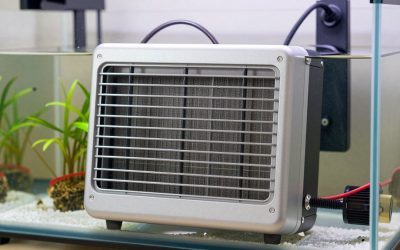
Use a reliable heater where needed and verify it with a separate thermometer. Match replacement water closely during maintenance. Temperature stability does not mean ignoring overheating; warm water holds less oxygen, so surface movement and conservative stocking remain important.
Feed the mouth, not the package label
An ember tetra may chase a food particle that it cannot swallow. Crush quality flake finely or choose true microgranules, then rotate small safe foods such as cyclops, fine daphnia and newly hatched brine shrimp as appropriate. A complete formulated staple supplies consistency; variety supports behavior and appetite.
Offer tiny portions once or twice daily. Spread food across the school rather than dropping a lump. Watch several individuals swallow, especially pale or subordinate fish. In a community, fast surface feeders can consume the ration while embers wait below, so use multiple feeding locations or a slow-sinking component.
Food disappearing from view is not proof that it was eaten. It may be trapped in moss or filter foam. Inspect feeding pockets and siphon residue. Excess feeding in a nano aquarium quickly becomes a water-quality problem.
Weight loss, a hollow belly or refusal to eat has multiple possible causes. Do not respond with a guessed antiparasitic dose or larger ration. Review food access, aggression, temperature and test results, then seek an aquatic veterinarian or qualified fish-health professional if the change persists.
Community choices at microfish scale
Suitable companions must have small mouths, calm behavior, compatible warm-water chemistry and restrained feeding competition. Tiny peaceful bottom dwellers may fit only if their required group, substrate and floor area also fit. Shrimp offspring can be eaten even by very small fish.
Avoid large fish, fin nippers and boisterous species. The beginner fish guide helps compare needs, but never combine species from a label alone. Adult dimensions, temperature and swimming zone matter more than how small both look in a store.
Add one planned group at a time through quarantine. New stock can introduce pathogens, and a sudden biomass increase can exceed the filter’s established capacity. Observe whether the original ember school changes its feeding or territory after every addition.
Reproduction without accidental crowding
Ember tetras scatter eggs and may eat eggs or fry. A planted mature tank can occasionally produce survivors. Intentional breeding needs separate cycled space, tiny first foods, frequent careful maintenance and homes for juveniles. Do not strip the display of cover merely to maximize egg collection unless a complete welfare plan exists.
If fry appear unexpectedly, confirm that they are ember tetras before changing the whole feeding routine. Powdered food can pollute a compact aquarium when added by guesswork. Observe where young gather, deliver minute suitable portions there, and test water more frequently. Move juveniles only to a cycled container with guarded filtration; a breeding box hanging in the display is temporary containment, not automatic grow-out capacity.
Never release surplus fish or aquarium water containing eggs into natural waterways. Contact responsible retailers or aquarist networks before breeding, not after capacity is exhausted.
Observe by rhythm
Daily, count the school during feeding and note color, respiration, body condition and position. Ember color varies with lighting, substrate, diet and stress; paleness alone is not a diagnosis. Several fish gasping, clamping fins or abruptly hiding demands immediate equipment and water checks.
Weekly, test core parameters and complete a partial change suited to measured nitrate and waste. Condition tap water, match temperature and gently vacuum open areas. Trim plants in sections, retaining multiple refuge zones. Clean filter material when flow declines, protecting biological media from chlorine and drying.
Monthly, inspect the heater, intake guard, lid and hidden debris behind hardscape. Compare notes to detect slow weight changes. Reassess school size and adult stocking as plants and any juveniles grow.
Use the school’s recovery after routine maintenance as another welfare check. Healthy embers may retreat while hands are in the tank, but they should resume coordinated exploration and feeding. Prolonged scattering suggests that the disturbance, layout change or water replacement deserves review before the next maintenance session.
An ember tetra aquarium should make small behavior easy to see: a school crossing shade, each fish reaching appropriately tiny food, and relaxed exploration after disturbance passes. Stable warm water and a mature biofilter matter more than achieving a romantic blackwater number. If measured husbandry corrections do not reverse decline, professional aquatic-health assessment is the next step, not unsupported treatment.
Related Reviews & Guides

Best All in One Saltwater Tank for Soft Corals: Top Proven
How to Set Up an Aquarium Heater (2026): Step-by-Step