Last Updated: October 21, 2026
- Angelfish Tank Size at a Glance
- Why Height Matters More Than Gallons
- Single Angelfish: Is a 20-Gallon Tall Enough?
- A Pair of Angelfish
- A Group of Six Angelfish
- Growth Timeline: Juvenile to Adult
- Water Conditions and Stocking for the Tank Size
- Decision Table: Pick the Tank Based on Your Plan
- Common Tank Size Mistakes
- Signs the Tank Is Too Small
- Planning an Upgrade Path
- Frequently Asked Questions
Sources vary on the minimum: retail-style guides commonly accept a 20-gallon high or a 29-gallon tall tank for a single angelfish, while Seriously Fish recommends a tank of at least about 100 x 40 x 50 cm (roughly 200 litres, or 55 gallons) for the species, so a 55-gallon tank is the safer target for a pair or small group, because adults grow about 6 inches long in the body and reach around 8 inches or more from fin tip to fin tip. Height matters as much as volume: a long, shallow tank that holds the same number of gallons is a poor fit for these tall-finned cichlids.
Angelfish (Pterophyllum scalare) are sold as small, disc-shaped juveniles that look easy to house, which is why undersized tanks are the most common mistake. The numbers below come from species references and aquarium guides, and they are minimums for reasonable welfare, not targets. More space, especially more height, makes angelfish easier to keep.
Angelfish Tank Size at a Glance
| Setup | Suggested minimum | Notes |
|---|---|---|
| One adult angelfish | Commonly cited: 20-gallon high or 29-gallon tall (at least ~16 to 18 inches high); Seriously Fish suggests about 200 litres | Sources vary; Aquarium Co-Op describes a 20-gallon high as good for fin extension in a breeding tank; larger is easier on water quality |
| One pair (adult) | 29 to 40 gallons is a commonly suggested range (not from a single authoritative source); 55 gallons gives more margin | Pairs can become territorial, especially when breeding; extra space and cover help |
| Four adults with community fish | 29 gallons is stated as the limit in one guide, but 55 gallons is more comfortable | Aquarium Co-Op says no more than four adults with other tankmates in a 29-gallon |
| Group of five or six juveniles | 55 gallons or more | Some fish may need rehoming as they mature and pair off |
| Larger group of adults | Seriously Fish gives about 100 x 40 x 50 cm (about 200 litres, roughly 55 gallons) as the recommended tank for the species, with a height of at least 50 cm | Bigger is better for adults with community fish |
| Altum angelfish (a different species, Pterophyllum altum) | Considerably larger tank | Grows to roughly 7 inches in body and 10 to 13 inches tall, per Aquarium Co-Op |
Why Height Matters More Than Gallons
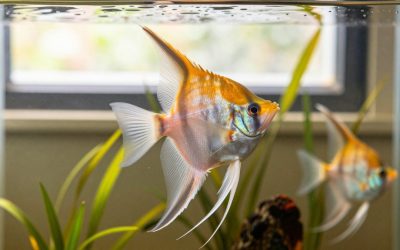
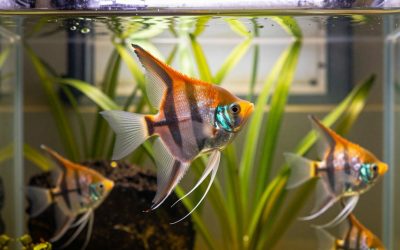
Angelfish are laterally compressed, with long dorsal and anal fins. Seriously Fish notes that the body reaches about 15 cm, and the fish can measure 20 cm or more in height. Aquarium Co-Op lists up to about 8 inches including fins. A fish with that outline needs vertical room to swim and to extend its fins fully. FishBase describes the body as deep and disc-like, with fins that grow longer toward the rear.
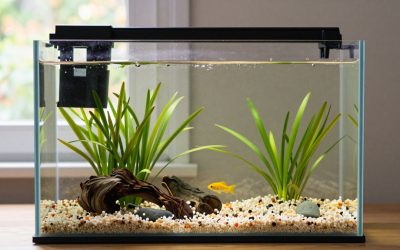
A standard 20-gallon long is about 12 inches tall, which is too low for an adult. A 20-gallon high or 29-gallon tank (about 18 inches tall) offers more height. For long-term keeping, taller tanks of 55 gallons or more, often 20 inches tall, are a safer match. Seriously Fish recommends a tank at least 50 cm tall for adults, which is nearly 20 inches.
Low tanks also encourage fin damage. Tall fins can catch on decor, and cramped fish can nip each other. If the tank is shallow, the fish may hover near the surface or the bottom with fins clamped.
Single Angelfish: Is a 20-Gallon Tall Enough?
For one angelfish, a 20-gallon high or 29-gallon tall tank is widely cited by retail-style guides as a workable minimum, although Seriously Fish recommends a larger tank of about 200 litres for the species. Aquarium Co-Op describes a 20-gallon high as a good breeding tank with room for fins to extend. A 20-gallon leaves little margin. A single adult in a tank this small has no space to retreat from tankmates, and water quality drops faster than in a larger tank.
- Choose a high version, not a long one.
- Stock lightly. A single angelfish plus a few peaceful companions is about the limit.
- Expect to upgrade if you want to add more fish.
Angelfish are social cichlids and, according to Seriously Fish, are best kept in small groups instead of alone, so a single fish in a small tank is a compromise, not the ideal.
A Pair of Angelfish
Angelfish naturally pair off. Once a pair forms, they claim territory and may become aggressive toward tankmates, particularly when spawning. A 29-gallon tank is a commonly suggested floor, but a 40-gallon breeder or a 55-gallon tank gives room for the pair and tankmates to keep apart. Planted decor, vertical plants and wood help break lines of sight.
Breeding adds pressure. Aquarium Co-Op mentions a 20-gallon high as a good breeding tank because of its height, which suits a dedicated pair with no other fish. In a community, a breeding pair in a small tank can harass other fish.
A Group of Six Angelfish
Seriously Fish suggests starting with a group of six juveniles if breeding is the aim, since a pair is sure to form, and Aquarium Co-Op says a 55-gallon can accommodate five or six juveniles initially. This is a juvenile number, not an adult number. As they mature, they become territorial and some will need to be moved.
- Plan for six juveniles to become one or two pairs plus extras that need another tank.
- Do not keep a full group of adults in a 55 gallon with many other fish.
- If you want a long-term group of adults, aim for a larger tank, such as 75 gallons or more, with tall decor and cover.
Growth Timeline: Juvenile to Adult
Angelfish are sold small and grow steadily. Exact rates depend on diet, water quality and tank size. The stages below describe the general pattern that keepers report.
| Stage | Typical size | Housing note |
|---|---|---|
| Fry and small juveniles (store size) | About 1 to 2 inches | Can live temporarily in a smaller tank, but they outgrow it within months |
| Half-grown | About 3 to 4 inches including fins | Need height and room; start to show aggression |
| Adult | About 6 inches body, up to roughly 8 inches or more with fins | Needs a tall tank with swimming space |
| Lifespan | Aquarium Co-Op cites 8 to 12 years with good care | A commitment to a tank that fits an adult |
Because of that growth, buying a tank that fits juveniles is a false economy. A small tank leads to stunted growth, poor water quality and stress. Buy for the adult size from the start.
Water Conditions and Stocking for the Tank Size
Seriously Fish gives a temperature range of roughly 24 to 30 C (75 to 86 F) and a pH of about 6.0 to 7.4, while Aquarium Co-Op lists a warmer preference of 78 to 86 F and pH of 6.0 to 8.0. Stable, clean water matters more than a precise number. Regular water changes and a filter sized for the tank are important, since angelfish produce a fair bit of waste as they grow.
Tankmates matter too. Angelfish are generally peaceful but may eat very small fish such as neon tetras, according to Seriously Fish, and may squabble with their own kind. Pick tankmates that are too big to eat and not fin-nippers.
Decision Table: Pick the Tank Based on Your Plan
| Pick this if you want | Choose | Why |
|---|---|---|
| One angelfish and a few small peaceful fish | 29 gallons or a 20-gallon high with light stocking | Minimum height and some swimming room |
| A bonded pair | 40-gallon breeder or taller 55 gallons | Space to hold territory |
| A group that may pair up | 55 gallons or larger | Room for several juveniles and rehoming options |
| A community with other cichlids or active fish | 75 gallons or larger | Buffers aggression and waste |
| A shallow or long tank only | Think twice about angelfish | Fins and posture need height |
Common Tank Size Mistakes
- Using a long, low tank. Gallons alone do not tell you whether the fish can stand upright.
- Buying juveniles for a juvenile tank. They outgrow it in months.
- Keeping a group in a small tank. Aggression rises without space.
- Relying on inch-per-gallon rules. Body shape, waste and behavior matter more than length.
- Overstocking with tetras. Small tetras may become food as angelfish grow.
Signs the Tank Is Too Small
| Symptom | Possible cause | What to do |
|---|---|---|
| Fins clamped or torn | Cramped space or nipping | Move to a taller tank, add cover, review tankmates |
| One fish constantly chased | Territory limits | Add cover and break up lines of sight, or separate the fish |
| Frequent ammonia or nitrate spikes | Too many fish for volume | Increase water changes, reduce stock, upsize |
| Hovering near the surface or bottom | Lack of vertical room or stress | Check water quality, tank height, and temperature |
| Stunted growth | Small tank and poor water | Upgrade the tank and review feeding |
If fish show signs of disease, such as white spots, ragged fins that do not heal, or loss of appetite, test the water first and consult an aquatic vet if it continues. Medications should follow the product label and may harm plants and invertebrates.
Planning an Upgrade Path
Many keepers start with juveniles in a modest tank and move up later. That can work if the upgrade is planned from day one. Set a date to move the fish when they reach roughly half their adult size, and keep the larger tank cycled and ready before they need it. Moving a stressed, fast-growing angelfish into an uncycled tank trades one problem for another.
Weekly water changes matter more as the fish grow. Angelfish are messy eaters, and a tank that looked clean with small juveniles can show rising nitrate within months. Test regularly, and treat a persistent rise as a sign that either the stocking or the tank size needs to change. If space or budget cannot support an adult-sized tank, it is more honest to choose a smaller species than to keep angelfish in conditions that shorten their lives.
Frequently Asked Questions
Can one angelfish live in a 10-gallon tank?
A 10-gallon tank is too small for an adult, both in volume and in height. Juveniles can live there briefly, but they quickly outgrow it. Retail-style guides usually give a 20-gallon high as the minimum for a single adult, while Seriously Fish recommends about 200 litres for the species.
How many angelfish can I keep in a 55-gallon tank?
Aquarium Co-Op suggests a 55-gallon can start with five or six juveniles. As they mature, territorial behavior increases, and some may need to be moved. For adults in a community, plan for fewer, such as a pair plus tankmates.
Do angelfish need a tall tank?
Yes. Seriously Fish notes adults can reach 20 cm or more in height, and recommends a tank at least 50 cm tall. A tall tank lets the fins extend and reduces damage.
Can angelfish live in a 20-gallon long?
A standard 20-gallon long is not tall enough for an adult. A 20-gallon high is the usual compromise. Anything shorter risks fin damage and stress.
How big do angelfish get and how long do they live?
Standard angelfish reach around 6 inches in body length and about 8 inches including fins, according to Aquarium Co-Op, and some references report up to 15 cm body length. With good care, they can live roughly 8 to 12 years.
Can I keep angelfish with other fish in a 29-gallon tank?
One guide says no more than four adult angelfish with other tankmates in a 29-gallon, but that is a ceiling, not a recommendation. Fewer angelfish and peaceful, appropriately sized tankmates are easier on the water and the fish.
How Often to Feed Goldfish: A Step by Step Feeding Plan
Brown Algae in New Aquarium Tanks: Diatoms and Patience