Last Updated: October 17, 2026
- Angelfish Facts That Drive Compatibility
- Why Angelfish Eat Some Tank Mates and Chase Others
- Compatibility Table
- Pick X If… A Decision Table
- How Tank Size Changes the Answer
- Spawning and Pair Aggression
- Keeping Angelfish with Other Angelfish
- Troubleshooting Tank Mate Problems
- Water and Care Considerations When Mixing Fish
- Introducing New Tank Mates Safely
- Frequently Asked Questions
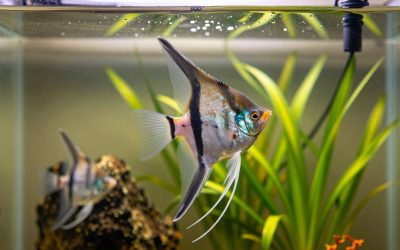
The best angelfish tank mates are medium-sized, peaceful fish that cannot fit in an angelfish’s mouth and do not nip fins: corydoras, larger tetras such as Congo tetras, peaceful gouramis, bristlenose plecos and similar species work in a big, tall tank, while small tetras and rasboras (Seriously Fish warns that angelfish may eat small fish such as tetras), fin-nippers such as tiger barbs, and aggressive cichlids are poor choices. Angelfish (Pterophyllum scalare) are cichlids, so size, tank volume and breeding behaviour all change how well any pairing works.
Quick answer: Our top pick in 2026 is the Adult size — our #1 rated choice. See the full ranked comparison, alternatives and buying advice below.
Angelfish Facts That Drive Compatibility
| Fact | Detail | Why it matters |
|---|---|---|
| Adult size | Seriously Fish gives about 15 cm body length and 20 cm or more in height | Needs a tall tank; small fish look like food |
| Minimum tank | Seriously Fish lists a base of 100 x 40 x 50 cm, about 200 litres | Space limits aggression and gives mates room |
| Temperament | Generally peaceful, may squabble with their own kind; “some aggression should be expected from time to time” | Behaviour shifts when they pair up and spawn |
| Temperature | 24-30 C (75-86 F) | Tank mates must tolerate similar warmth |
| pH | 6.0-7.4 | Avoid fish needing hard, alkaline water |
| Diet | Omnivore that eats small fish when it can | Anything small enough to swallow is at risk |
Why Angelfish Eat Some Tank Mates and Chase Others
Angelfish look gentle, but they are predatory cichlids. Seriously Fish notes they may eat smaller companions such as tetras. A juvenile may ignore tiny fish for months; as it grows, the mouth gets big enough to take a neon-sized fish, and the group dynamic changes. Keepers commonly report that fish which shared a tank peacefully for a long time can suddenly become targets once an angelfish pair forms and defends a spawning site. This is why a compatibility list is never a guarantee, and why tank size matters so much.

Angelfish tank mates: 15 Great Angelfish Tank Mates
Included for 'Angelfish Tank Mates: Compatible, Risky and Avoid Fish' as a relevant option in this category; details come from the product listing.
View on Amazon
Santboz 6-Pack Angelfish – 2 Black, 2 Gold, 2 Koi (1.5–2 Inch) – Live Freshwater Aquarium Fish – Colorful Mixed Variety Pack – Peaceful Community Cichlids – Elegant Long-Fin Angels for Planted Tanks
Included for 'Angelfish Tank Mates: Compatible, Risky and Avoid Fish' because the listing specifies 2 Black and 2 Gold, details this guide uses to compare options.
View on Amazon
2 Pack Angelfish Discus Breeding Slate, Fish Breeding Spawning Slate Spawning Surface for Aquarium Fish Egg Laying
Included for 'Angelfish Tank Mates: Compatible, Risky and Avoid Fish' as a relevant option in this category; details come from the product listing.
View on Amazon
ANGELFISH HANDBOOK: A Complete Guide to Angelfish Care, Breeding Techniques, Tank Mates, Nutrition, Tank Setup, Health and Optimal Aquarium Maintenance
Included for 'Angelfish Tank Mates: Compatible, Risky and Avoid Fish' because the listing specifies Breeding Techniques and Tank Mates, details this guide uses to compare options.
View on AmazonFins are the second issue. Angelfish have long, trailing fins and slow, graceful swimming, which can invite nipping from fast, boisterous fish. Tiger barbs and serpae tetras are consistently listed by retailers as fin-nippers to avoid. Opinion on black skirt tetras is split, with some sources calling them safe and others calling them nippers, so treat them as a risky choice rather than a recommendation.
Compatibility Table
| Tank mate | Rating | Notes |
|---|---|---|
| Corydoras (bronze, sterbai, julii and similar) | Good | Bottom dwellers too big to swallow; choose species that tolerate warm water (sterbai is a common pick) and keep in a group of six or more |
| Bristlenose pleco | Good | Armoured and largely ignored; but sometimes reported to rasp the angelfish’s slime coat, so watch for this |
| Harlequin rasboras and other small rasboras | Risky | Peaceful, but harlequins stay around 4.5 cm (Seriously Fish), small enough for a grown angelfish to eat; some keepers report success in large tanks, but there is no guarantee |
| Congo tetras | Good with room | Reach about 8 cm (Seriously Fish) and tolerate 23-28 C; peaceful, but they are active and need a big tank and a group |
| Lemon and rummy-nose tetras | Risky | Only about 4 to 5 cm as adults (Seriously Fish), so within snack size for a full-grown angelfish; often listed as compatible by retailers, but treat as a gamble. Rummy-nose also prefer cooler, softer water (about 23-26 C) and dislike boisterous tank mates |
| Pearl gourami | Good with room | Seriously Fish calls it one of the most peaceful gouramis, to about 12 cm; males can be territorial with each other |
| Dwarf and honey gouramis | Often fine, with caution | Shares mid-water; keep one male dwarf gourami; give a larger, planted tank |
| Mollies | Risky | Prefer harder, sometimes brackish-leaning water; fry get eaten; lively and sometimes pushy |
| Betta | Risky to avoid | Long fins attract attention; the betta may be stressed or attacked; temperature preferences overlap but temperaments often clash |
| Neon, cardinal, ember and glowlight tetras | Avoid for adults, risky with juveniles | Around 4 cm or less as adults; adult angelfish may eat them, though a few guides list them as compatible |
| Guppies and fancy-tail livebearers | Avoid | Small, slow-finned and colourful; likely to be eaten or nipped |
| Tiger barbs, serpae tetras | Avoid | Fin nippers |
| Oscars, jewel cichlids, other large aggressive cichlids | Avoid | Too aggressive for angelfish |
| Cherry shrimp and other small shrimp | Avoid | Considered food by adult angelfish |
Pick X If… A Decision Table
| Pick this if… | Choice |
|---|---|
| You want a calm bottom layer | A group of corydoras |
| You want a school in the middle of the tank that is least likely to be eaten | Congo tetras kept in a decent-sized group in a large tank; smaller tetras and rasboras carry predation risk |
| You want a centrepiece besides the angelfish | A single pearl gourami in a larger tank |
| You want algae-grazing help | A bristlenose plecostomus, remembering it does not “fix” an algae problem on its own |
| You want to breed angelfish | Give the pair their own tank; do not rely on community mates |
| You already own neon tetras | Keep them in a separate tank or choose a different top-level shoal |
How Tank Size Changes the Answer
Tank size is the difference between a peaceful community and a stressed one. Seriously Fish gives about 200 litres as the minimum for angelfish, with 50 cm of height. Retail and keeper guides commonly suggest roughly 120 litres for juveniles in the short term and 200 litres or more for an adult pair with a school and corydoras. A bigger footprint lets other fish stay out of the way of territorial behaviour. Height matters because angelfish are tall; a shallow tank can cramp them and bend fins.
If your tank is smaller than that, do not stack the community. Angelfish can be kept as a pair or small group with only a few small, peaceful companions, but the tank may simply be too small for the adult fish. Welfare comes first: do not buy angelfish for a tank that cannot house them as adults.
Spawning and Pair Aggression
Angelfish form pairs, then choose a vertical surface such as a broad leaf, pipe or filter tube, and guard the eggs. Seriously Fish describes strong parental care, with parents guarding eggs and fry, though they may eat them if poorly fed. During that period, the pair may chase anything that approaches the nest. Keepers report that pair bonding can trigger real aggression even toward fish that were fine for months.
Ways to reduce the damage include:
- Offer lots of cover with tall plants, driftwood and sight-blockers so other fish can escape the pair’s line of sight.
- Use a long tank with distinct territories rather than a single open space.
- Provide spawning surfaces away from the main community area, or remove the eggs after laying.
- Be ready with a spare tank or divider for rehoming or separating fish if chasing becomes constant.
Cories and plecos on the bottom tend to be left alone, but if the pair chooses a spot near the bottom they may be harassed too.
Keeping Angelfish with Other Angelfish
Several angelfish together can squabble as a hierarchy forms, and pairs may bully others. Keepers often start with a group of juveniles and let pairs develop, then plan to separate pairs or rehome extras. A single angelfish in a community is a viable choice for some keepers, though the fish may do better with its own kind in a large tank.
Troubleshooting Tank Mate Problems
| Symptom | Likely cause | Fix |
|---|---|---|
| Tetras disappearing | Angelfish have grown large enough to eat them | Avoid adding more small fish; consider larger-bodied tank mates such as Congo tetras |
| Ragged angelfish fins | Nipping by barbs or tetras, or fin rot | Remove nippers; test water; treat any infection according to a vet or reliable aquarium reference |
| One angelfish hiding and thin | Bullied by a pair or by a tank mate | Add cover, rearrange decor, separate the bully |
| Chasing near a leaf or pipe | Spawning territory | Add cover; consider a separate breeding tank |
| Gourami and angelfish clashing mid-water | Overlapping territory in a crowded tank | Add plants and sightlines, or choose a different species |
| Plecos rasping angelfish sides | Slime coat grazing, reported occasionally | Remove the pleco and offer vegetable foods |
Water and Care Considerations When Mixing Fish
Choose fish whose temperature range overlaps with angelfish at about 24-30 C. Many tetras, rasboras and corydoras do well at the cooler end of that band (rummy-nose tetras, for example, are listed at about 23-26 C), so setting the heater around the mid 20s C keeps most companions comfortable. Keep pH and hardness in the soft to moderate range. Feeding a mix of flakes or small pellets and frozen foods supports all of them, and avoid overfeeding because an overloaded tank adds stress and disease risk. Quarantine new fish for a few weeks before adding them, since angelfish are often bred in large volumes and can carry parasites. For illness, consult an aquatic vet or a reliable reference rather than guessing at medication, and use medicines with care around scaleless fish such as some plecos and loaches.
Introducing New Tank Mates Safely
Order of introduction affects how settled the tank feels. Many keepers add the smaller schooling fish and bottom dwellers first, let them establish for a few weeks, and add angelfish while still young so they grow up alongside the group. Adding a half-grown or adult angelfish to an established community can trigger chasing, because the newcomer has to find a place in the pecking order. Rearranging decor before adding a new fish can reset territory lines and reduce early squabbles. Feed generously at the start so no fish is pushed away from food, and watch the first week closely for hiding, torn fins or constant chasing. If one fish is clearly being targeted, a temporary divider or spare tank gives time to reassess rather than hoping the problem fades. Bear in mind that angelfish sold cheaply as juveniles may be several centimetres across within months, so the plan should always be made for the adult, not the fish in the shop. Angelfish also dislike strong currents, so pairing them with fish that need turbulent, fast-flowing water usually means one of the two is uncomfortable.
Frequently Asked Questions
Can angelfish live with neon tetras?
It is risky. Neon tetras are small, and Seriously Fish warns that angelfish may eat small fish such as tetras, though a few guides list them as compatible. Juvenile angelfish may ignore them for a while, but long-term success is not reliable.
Can angelfish live with bettas?
Usually it is not a good idea. Bettas have long fins and a territorial temper, and angelfish may nip or chase them, or the betta may stress the angelfish. Both prefer warm water, but their temperaments rarely suit a shared tank.
What is the best bottom fish for angelfish?
Corydoras are the most commonly recommended, kept in groups of six or more. Bristlenose plecos are also frequently used, with the caveat that some keepers report slime-coat grazing.
How many angelfish can live in a tank?
That depends on volume. Seriously Fish recommends at least about 200 litres for angelfish, and more space is needed for a group. Pairs form, so keepers should plan for separation if they get aggressive.
Do angelfish eat shrimp?
Adult angelfish will usually eat small shrimp such as cherry shrimp. Shrimp are better left out or kept in a separate tank.
Can angelfish live with gouramis?
Many keepers report success with pearl, honey and dwarf gouramis in larger, planted tanks. Keep only one male dwarf gourami and give plenty of space, because both fish occupy the mid-water zone.
Will angelfish nip other fish?
Not usually, but they chase fish that approach their nest, and they may harass slow or timid tank mates. The bigger risk is predation on small fish rather than fin damage.
Ready to decide? Our #1 pick for 2026 is the Adult size.
Live price & availability on Amazon.
Related Reviews & Guides



6 Best Large Aquarium Fish Tanks With Stand 2026
6 Best Big Fish Tanks With Stand 2026