Last Updated: October 4, 2026
- Start with a two-date stocking plan
- The compatibility balance sheet
- Closest chemistry matches
- Schooling-fish options
- Bottom residents: avoid the leftover-food fallacy
- Do not combine with platys
- Manage social pressure inside the platy group
- Food distribution and waste control
- Introduce with an exit route already running
- Sources
- Related Guides
- Top Pick: PLATY FISH HANDBOOK: The owner's guide to platy fish care, breeding, health, behavior, choosing healthy platy, tank mates, nutrition, and lots more.
- Best Value: Complete Guide to Platy Fish: Comprehensive Guide on Platy Fish Pet Health care, Aquarium set up, Breeding, Tank mates, Feeding and lots more
- Premium Choice: 5-Pack Platy Bumble Bee Live Fish Freshwater Community Aquarium Yellow Black Color Active Livebearer Species Swimming Display Ideal Setup for Medium Large Home Aquariums Planted Tank Systems
Platy Tank Mates: A Hard-Water Community Guide
Platys earn their beginner-friendly reputation through adaptability and visible social behavior, not because they can share water with anything sold nearby. Their preferred mineral-rich freshwater excludes many soft-water fish, while their livebearing creates a delayed stocking problem: a community that looks spacious on day one may be crowded after several broods. The best platy tank mates fit today’s chemistry and tomorrow’s population.
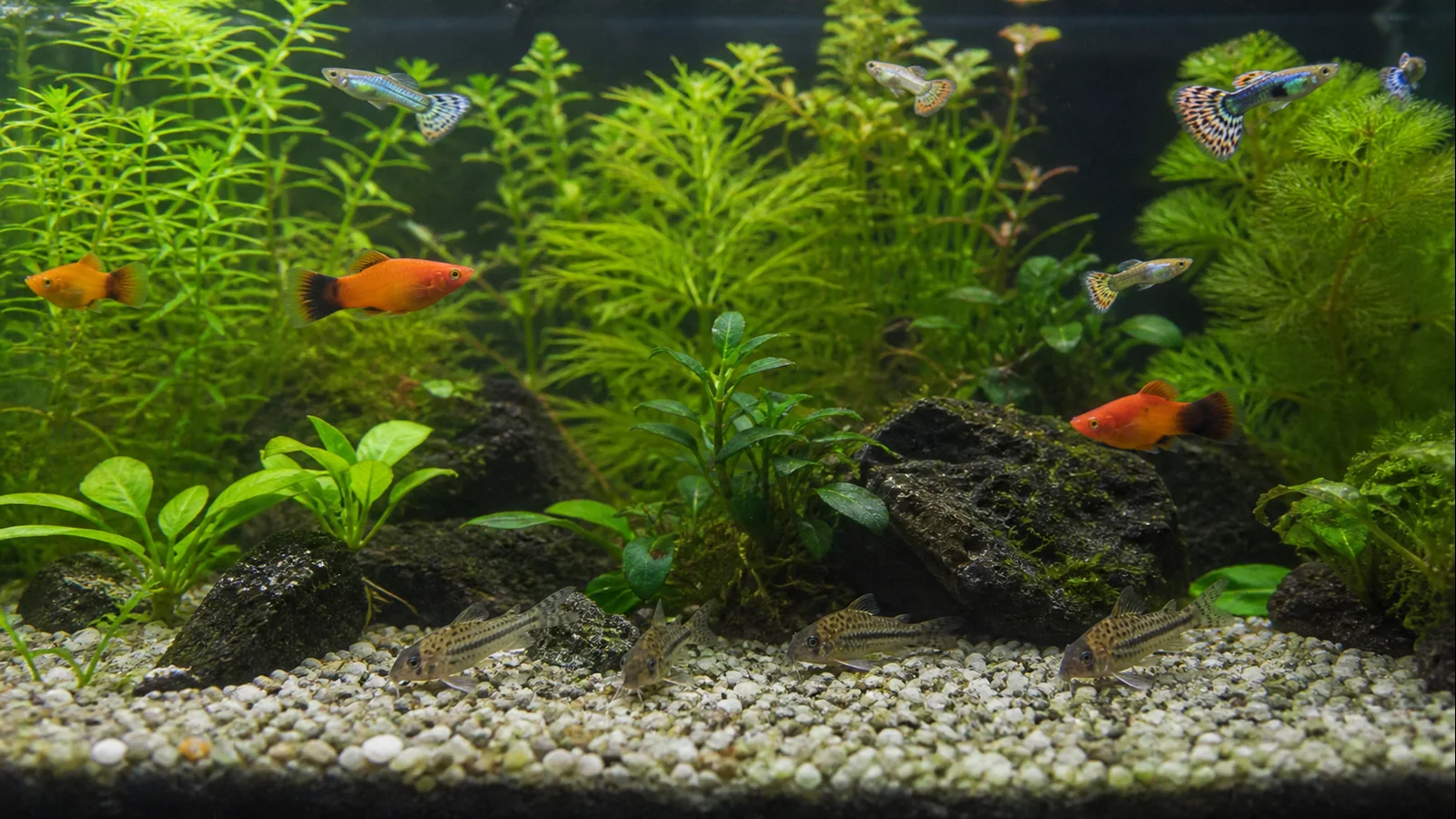
Editorial illustration; not evidence for species identification.
As an Amazon Associate we earn from qualifying purchases at no extra cost to you.



Start with a two-date stocking plan
Build one list for the fish present now and another for the likely population in six months. Female Xiphophorus maculatus can produce live young and may store sperm, so births can continue after males are absent. Fry survival depends on cover, adult feeding and predation, but cannot be predicted exactly. Decide in advance whether juveniles will remain, move to a cycled grow-out tank, or be rehomed.
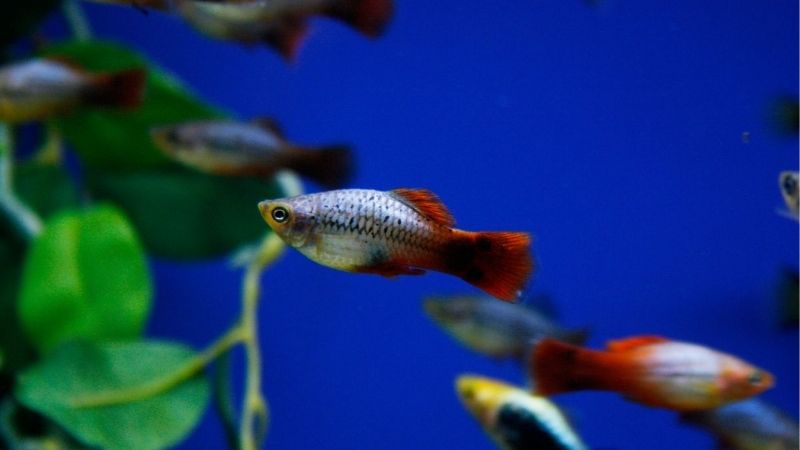
FishBase documents platy identity, size and environmental records. GBIF adds taxonomic and distribution context. Domestic strains differ from wild populations, so use those sources to anchor identity rather than copying a wild range into a captive aquarium. Confirm stock history and husbandry in our platy care guide.
Most domestic platys do well in stable, moderately hard to hard freshwater with buffering capacity and a moderate tropical temperature. Published ranges vary. Select conditions supported for the actual stock, test GH and KH, and avoid sudden adjustment. The candidate species must share a comfortable central overlap, not merely touch the platy range at an endpoint.
The compatibility balance sheet
For every group, record both resources consumed and social risks added.
| Category | Platy baseline | Companion question |
|---|---|---|
| Temperature | Moderate tropical, selected for stock | Can it thrive there continuously? |
| Adult size | Small, sturdy livebearer | Could either adult swallow or overwhelm the other? |
| Zone | Upper and middle levels | Is there enough separate usable space? |
| Temperament | Social, with courtship pressure | Will chasing or fin interest increase? |
| Feeding | Quick omnivore and grazer | Can slower fish reach correct food? |
| Chemistry | Mineral-rich, buffered freshwater | Do measured GH, KH and pH align? |
| Population | Fry possible | Can filtration and rehoming absorb growth? |
An aquarium can pass the species tests yet fail the capacity column. A second livebearer group may double reproductive uncertainty and feeding competition.
Closest chemistry matches
Guppies
Guppies commonly overlap with platys in hard, alkaline freshwater and accept similar foods. Fancy fins and smaller bodies make some strains vulnerable to persistent attention. Both species reproduce prolifically, so mixed sexes require a credible population plan. Review the guppy fish care guide and maintain each species’ social needs rather than expecting a mixed handful to substitute.
Mollies
Mollies often appreciate similar mineral levels, but many become larger and heavier-bodied. Sailfins need far more room than a standard platy. Mollies also benefit from a varied diet with a substantial plant-associated component and can dominate feeding. Do not add salt routinely; compatible freshwater husbandry should be based on measured minerals, not a myth that all mollies are brackish fish.
Swordtails
Swordtails are related and may share chemistry, but are faster, longer and more forceful. Males can pursue, and the combined livebearer population can escalate quickly. Use a long tank and observe whether platys lose access to calm areas. Hybridization concerns can arise among Xiphophorus species; avoid casually breeding or distributing uncertain crosses.
Schooling-fish options
Some hard-water-tolerant rasboras or rainbowfish may work, but exact species selection is essential. Rainbowfish often need larger schools, longer tanks and more food; small juveniles hide adult demands. Many tetras originate from softer water and are poor choices despite their peaceful label. If a referenced captive profile supports chemistry overlap, also compare adult mouth size and temperature.
Zebra danios can match platy robustness but may prefer cooler management and move much faster. At a suitable central temperature in a long aquarium, the pairing may be possible; in a short warm tank, danios can monopolize the surface and food. Compatibility changes with the chosen operating point.
Bottom residents: avoid the leftover-food fallacy
A specifically identified Corydoras species may occupy the floor, provided its temperature and chemistry overlap. Many Corydoras prefer softer water than platys, and some have different thermal limits. Maintain a proper group on smooth substrate and feed a complete sinking diet. They cannot live on flakes that escape the platys.
A bristlenose-type pleco may suit a larger tank with wood, hides and adequate oxygen, but it produces significant waste. It should receive species-appropriate food and cannot be counted as filtration. Unknown common plecos are excluded because adult size may exceed the aquarium.
Snails usually tolerate harder water well and benefit from shell minerals, although species vary. Population explosions indicate excess available food. Do not acquire fish solely to eat snails; many “solutions” have incompatible social and space needs.
Do not combine with platys
- Soft, acidic-water specialists: pH alone does not reveal the mineral mismatch.
- Bettas and other slow, long-finned fish: platy activity and fin investigation can keep them stressed.
- Large predators: a nonaggressive label does not change adult gape.
- Tiny shy microfish: they may lose every feeding contest.
- Coldwater species: permanent temperature compromise narrows welfare margins.
- Aggressive cichlids: territory and predation risks exceed the platy’s defenses.
- Unidentified juveniles or “algae eaters”: adult size and behavior cannot be planned.
Manage social pressure inside the platy group
Male platys may pursue females. Keeping more females per male can distribute courtship, but it also creates more potential pregnancies and never guarantees that an individual is safe. Dense peripheral planting and wood provide breaks, while an open central lane supports normal swimming. A fish continuously hiding at the filter, missing meals or showing damaged fins needs intervention.
All-male groups avoid fry but can display and chase. All-female groups may still produce young after purchase. Watch the group rather than relying on a fixed ratio. The beginner fish overview can help if reproduction or mineral requirements make platys a poor match for the available tank.
Food distribution and waste control
Offer a complete omnivorous staple plus varied appropriate foods, including plant-associated material. Spread small portions over the upper level so subordinate platys and schooling companions can feed. Deliver sinking items to bottom fish separately and verify consumption. Feeding after dimming lights can help some nocturnal species, but inspect for leftovers the next day.
Do not increase total food every time fry appear. Growing juveniles need nutrition, yet uneaten particles drive ammonia and oxygen problems. Increase maintenance and filtration capacity in step with biomass, or move fish to prepared housing. Ammonia and nitrite should remain undetectable on a reliable test.
Introduce with an exit route already running
Quarantine newcomers in a cycled aquarium matched to the display’s chemistry. Observe respiration, appetite and body condition before introduction. Add full social groups only when the tank can support them; purchasing three schooling fish because capacity is tight creates another welfare deficit.
Maintain a second cycled tank, a secure divider for aggression, or a confirmed suitable adopter. A divider does not stop shared-water disease. Separate for repeated chasing, fin damage, blocked food, persistent hiding, predatory interest or inability to maintain parameters appropriate to both species. Respond to population growth before nitrate and behavior reveal chronic crowding. Never release excess fish outdoors.
The RSPCA keeping-fish advice provides general environment and stocking principles. Persistent rapid breathing, sores, swelling, wasting, loss of balance or unexplained decline warrants a qualified aquatic veterinarian. Check water immediately, but do not guess at salt or medication doses. Aquatic professionals can audit husbandry; veterinary diagnosis and treatment are a separate boundary.
Sources
- FishBase southern platyfish summary — identity, size and reported environments.
- GBIF Xiphophorus maculatus search — taxonomy and occurrence context.
- Seriously Fish knowledge base — captive-care profiles for candidates.
- RSPCA advice on keeping fish — welfare, environment and stocking baseline.
Ready to decide? Our #1 pick for 2026 is the Temperature.
Live price & availability on Amazon.
Related Reviews & Guides

Honey Gourami Tank Mates: Calm Community Choices

5 Best Betta Tank Decor (2026)