Last Updated: October 21, 2026
🛒 Best Price Today on Amazon
Prime members get fast, free shipping on everything above, plus member-only deals. New members get a 30-day free trial — cancel anytime.
Guppy Fish Care: Easy, Colorful, and Rewarding
Guppies are the world’s most popular freshwater fish—and for good reason. They’re hardy, bred in a rainbow of colors and tail shapes, and suitable for community tanks as small as 5 gallons. Yet even these forgiving fish need clean water, proper nutrition, and a stable environment to truly flourish. This guide highlights the essential products every guppy keeper needs, from food to filtration, so your fish stay bright, healthy, and breeding happily.
As an Amazon Associate we earn from qualifying purchases at no extra cost to you.




1. Aqueon QuietFlow LED PRO Aquarium Filter
Guppies need gentle filtration—strong currents stress them and can damage delicate fins. The Aqueon QuietFlow LED PRO uses a multi-stage filtration system (mechanical, chemical, biological) in a whisper-quiet hang-on-back design. Its self-priming pump starts automatically after maintenance. The integrated LED indicator flashes when the cartridge needs changing, making upkeep foolproof for beginners. Perfect for tanks from 5 to 55 gallons.
2. Fluval Bug Bites Tropical Fish Food
Guppies are omnivores that benefit from varied diets. Fluval Bug Bites are formulated with black soldier fly larvae as the primary protein source, delivering the amino acids guppies need for vibrant color and fin development. The micro-granule size is ideal for guppies’ small mouths. Supplement with occasional frozen or freeze-dried brine shrimp and daphnia for a diet that mirrors what guppies eat in the wild.
3. Nicrew Classic LED Aquarium Light
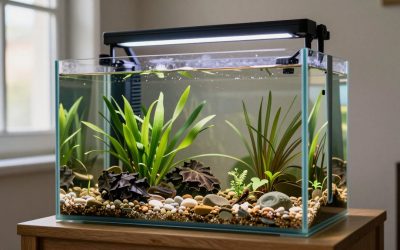
Good lighting brings out guppies’ iridescent colors and supports live plants that provide hiding spots for fry. The Nicrew Classic LED delivers a balanced white and blue spectrum, with an extendable bracket fitting tanks 18–72 inches wide. It runs cool, consumes minimal energy, and provides enough PAR for low-to-medium-light plants like java fern, anubias, and hornwort—all great companions for a guppy tank.
Guppy Fish Care Buying Guide
- Tank size: 10 gallons minimum for a trio; guppies breed prolifically, so plan for fry.
- Water parameters: pH 6.8–7.8, temperature 72–82°F, hardness 8–12 dGH.
- Male-to-female ratio: 1 male to 2–3 females to reduce harassment stress.
- Breeding control: Dense plants or a breeder box protect fry from being eaten.
- Water changes: 20–30% weekly; guppies tolerate a range but do best in clean water.
- Disease watch: White ich spots and fin rot are common; treat early with aquarium salt and appropriate medications.
Guppy Tank Setup and Water Parameters
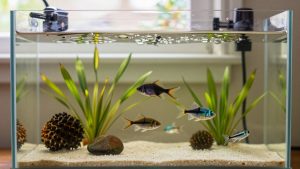
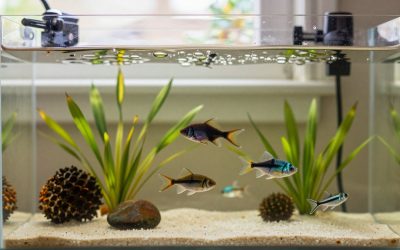
Guppies are hardy, adaptable fish, but they thrive when their basic needs are met consistently. A group of guppies is comfortable in a 10-gallon or larger tank, which provides the stable water conditions that small tanks struggle to maintain. Guppies prefer water between 72 and 82°F (22–28°C), so a heater is recommended in most homes, along with a gentle filter that keeps the water clean without creating a strong current that tires out their flowing fins. They favor slightly alkaline, moderately hard water, which reflects the conditions of their native range.
Because guppies are active and produce a steady bioload, regular partial water changes of around 25 percent weekly keep ammonia and nitrate in check. Live or silk plants offer cover that reduces stress and gives fry places to hide. A secure lid is worthwhile, as guppies can occasionally jump. Cycling the tank before adding fish is essential; introducing guppies to an uncycled tank exposes them to ammonia spikes that cause stress and illness. With stable warmth, clean water, and gentle flow, guppies stay colorful, active, and long-lived.
Guppy Behavior, Tank Mates, and Breeding
Guppies are peaceful, social fish that do best in groups and mix well with other calm community species such as neon tetras, corydoras catfish, platies, and snails. Keeping more females than males reduces the constant chasing that males direct at females, which lowers stress in the group. Avoid housing guppies with fin-nippers like some barbs or with large, aggressive fish that may view them as food. Their gentle nature makes them ideal first fish for a community aquarium.
One of the most striking traits of guppies is how readily they breed; they are livebearers that give birth to free-swimming fry rather than laying eggs. In a mixed-sex tank, expect new fry regularly. Adult guppies, including the parents, will eat fry, so dense plants like java moss or a dedicated breeding area help more babies survive if you want them to. If you prefer to limit the population, keeping a single sex is the simplest approach. Feeding a varied diet of quality flake supplemented with occasional frozen or live foods supports vibrant color and healthy fry.
Related Guides
- Best Hexagonal Fish Tank Stand 2026
- Best Smallest Tank For Betta Fish 2026
- Endler's Livebearer Care Guide: A Colorful Nano Fish for Beginners
- Best Fish Aquarium Chiller 2026
- Best 55-Gallon Fish Tank Stand 2026
Frequently Asked Questions
How many guppies can I keep together?
Guppies are social and do best in groups of at least three to five. A 10-gallon tank comfortably houses a small group, with more space needed as the population grows from breeding.
Do guppies need a heater?
In most homes, yes. Guppies prefer stable water between 72 and 82°F, and a heater prevents the temperature swings that stress them. Stable warmth keeps them active and colorful.
What fish can live with guppies?
Peaceful community fish like neon tetras, platies, corydoras catfish, and snails make good tank mates. Avoid fin-nippers and large aggressive fish that may harass or eat guppies.
Why do my guppies keep having babies?
Guppies are prolific livebearers, and a mixed-sex group will breed readily. To limit the population, keep only one sex, since females can store sperm and produce several batches from a single mating.
What should I feed my guppies?
A quality flake food forms a good staple, supplemented with occasional frozen or live foods like brine shrimp and bloodworms. A varied diet supports bright color and healthy fry growth.
How long do guppies live?
With good water quality, stable warmth, and a varied diet, guppies typically live around one to two years. Avoiding overcrowding and temperature swings helps them reach the upper end of that range.
Can guppies live in an unheated tank?
Only in rooms that stay consistently warm within their preferred range. In most homes the temperature drops or fluctuates too much overnight, so a heater is the safest way to keep guppies stable and active.
How many guppies can I keep per gallon?
A common starting guideline is roughly one guppy per two gallons in a cycled, filtered tank, adjusting down if the population grows from breeding. Light stocking keeps water quality stable and the fish healthy.
Final Thoughts
Guppy fish care is beginner-friendly without being boring. With the right filter to keep water gentle and clean, quality food to maximize color, and good lighting to showcase their beauty, guppies become a living art installation in any room. Start small, learn the basics, and before long you’ll have a thriving colony of these vibrant little fish breeding successfully in your home aquarium.
How to Reseal an Aquarium Step by Step: Top Expert Guide
Signs Aquarium Is Cycled: The Test That Actually Proves It