Last Updated: October 4, 2026
- Top Pick: Swimming Creatures™ Mixed Endler's Livebearer (Poecilia wingei) Live Tropical Freshwater Aquarium Fish (12 Pack)
- Best Value: Trio 1 Male 2 Female + 1 Fry/Juvenile Black Bar True Class P Endler's Livebearer + Small Free Fast Growing Plant with Every Order! Freshwater Live Fish Very Hardy Perfect for Beginners & Experts
- Premium Choice: Secrets of Endler Guppies – A Complete Guide for Beginners and Advanced Keepers : Care, Breeding, and Color Mastery Made Simple
🛒 Best Price Today on Amazon
Prime members get fast, free shipping on everything above, plus member-only deals. New members get a 30-day free trial — cancel anytime.
Top Endler Livebearer Care Colorful Nano Picks for 2026
Here are our current top endler livebearer care colorful nano picks, compared on real Amazon owner reviews, price, and features. Live prices update below.
As an Amazon Associate we earn from qualifying purchases at no extra cost to you.


If you want a splash of living color in a small tank, the Endler’s livebearer is hard to beat. These tiny, dazzling fish flash metallic greens, oranges, and electric reds, and they are remarkably easy to keep. Closely related to the common guppy, Endler’s are hardy, active, and famously prolific breeders, making them a fantastic choice for beginners and nano-tank enthusiasts alike. This guide walks you through tank setup, water parameters, feeding, breeding, and tank mates so you can get the most out of these colorful little gems.
What Are Endler’s Livebearers?
Endler’s livebearers (Poecilia wingei) are a small livebearing fish originally from Venezuela. Males rarely exceed about an inch in length, while females are slightly larger and less colorful. As livebearers, females give birth to free-swimming young rather than laying eggs, much like guppies and platies.
Endler’s are closely related to guppies and can interbreed with them, which is why dedicated keepers often house pure Endler’s separately to preserve their distinct color strains. Their small size, vivid patterning, and constant activity make them one of the most rewarding nano fish you can keep.
Tank Size and Setup
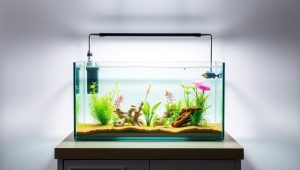
Because they are so small, Endler’s can thrive in modest tanks. A 10-gallon aquarium comfortably houses a small colony, while a 5-gallon can work for a tiny group. Their small size makes them ideal candidates for a planted nano setup, as described in our nano aquarium setup guide. For a first build, our 10 gallon aquarium setup guide covers the essentials.
Endler’s love planted tanks. Live plants provide cover, grazing surfaces for biofilm, and crucial hiding spots for fry. Hardy, fast-growing plants are perfect; see our guides to hornwort and Java moss, both of which give baby Endler’s somewhere to hide. A gentle filter is best, since these small fish are not strong swimmers and can struggle against heavy flow.
Water Parameters
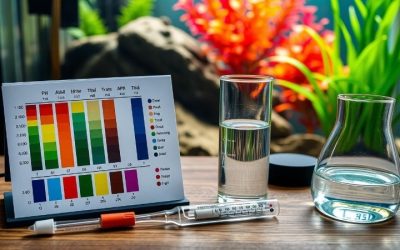
Endler’s are hardy and adaptable, but they do best in stable, slightly hard, alkaline water, reflecting their natural environment. Always cycle the tank fully before adding fish.
| Parameter | Recommended Range |
|---|---|
| Temperature | 72-80°F |
| pH | 7.0-8.0 |
| Hardness | Moderately hard to hard |
| Ammonia / Nitrite | 0 ppm |
| Nitrate | Below 20-40 ppm |
Because Endler’s prefer harder, alkaline water, it helps to understand your tap water chemistry. Our water hardness guide and pH guide explain how to measure and gently adjust these values. A small, reliable heater keeps the temperature stable within their preferred range.
Diet and Feeding
Endler’s are easygoing omnivores with hearty appetites for their size. A varied diet keeps their colors vivid and their immune systems strong.
- High-quality flake or micro-pellet as a daily staple
- Frozen or live foods like baby brine shrimp, daphnia, and microworms
- Crushed flakes or specialized fry food for the young
- Occasional blanched vegetables and access to natural biofilm and algae
Feed small amounts once or twice a day, only what they finish in a couple of minutes. Overfeeding is a leading cause of poor water quality in small tanks, which can quickly lead to cloudy water and stress.
Breeding Endler’s
Endler’s are extremely prolific breeders. If you keep males and females together, you will almost certainly get fry, often a new batch every few weeks. Females can deliver groups of live young repeatedly, and the babies are large enough to start eating finely crushed food right away.
The main challenge is not getting them to breed, but managing the population. In a densely planted tank, some fry will survive on their own by hiding in the plants. To raise more, you can use a breeding box or a separate grow-out tank. Our livebearer breeding tank setup walks through a dedicated approach, and our overview of breeding boxes and fry separators covers the gear. To avoid an exploding colony, many keepers house a single-sex group, or plan to rehome or trade extras.
Tank Mates and Temperament
Endler’s are peaceful, social nano fish that do best in groups. Keep several together rather than a single specimen. They make excellent additions to peaceful community and nano tanks, pairing well with other small, gentle species and invertebrates like amano shrimp.
Avoid large or aggressive fish that may see tiny Endler’s, or their fry, as a snack. Even peaceful tank mates will often eat fry, so heavy planting is the best way to protect babies. Before adding any new species, check temperament and parameter overlap with our fish compatibility guide, and always acclimate new fish slowly.
Appearance, Color Strains, and Sexing
Part of what makes Endler’s so collectible is their stunning variety. Wild-type and line-bred strains display an incredible range of metallic patterns, with names like “black bar,” “tiger,” “peacock,” and “lime green” describing the markings on the males. These iridescent colors shift and shimmer as the fish move through the light, which is why a small group looks far more impressive than its size suggests.
Sexing Endler’s is easy once they mature. Males are smaller, slimmer, and intensely colorful, with a modified anal fin called a gonopodium used for breeding. Females are larger, rounder, and far plainer, usually a silvery or olive color with little of the male’s flash. If you want to control breeding, keeping a male-only group gives you all the color without a population explosion, since the males are the showy ones anyway.
Good color and finnage come from both genetics and care. A varied diet, stable water, and low stress help males develop their fullest coloration. Crowded, dirty, or unstable tanks tend to produce duller, less active fish, so the same conditions that keep them healthy also keep them looking their best.
Frequently Asked Questions
Are Endler’s livebearers good for beginners?
Yes. They are hardy, adaptable, peaceful, and easy to feed, which makes them one of the best beginner nano fish. Their main demand is stable, cycled water and a tank that can handle their fast breeding.
How big do Endler’s get?
They stay tiny. Males typically reach about an inch, and females are a bit larger. Their small adult size is what makes them so well suited to nano and planted aquariums.
Will Endler’s breed with guppies?
Yes, Endler’s and guppies are closely related and will interbreed. If you want to keep a pure Endler’s strain, house them separately from guppies to prevent hybridization.
How do I stop Endler’s from overpopulating?
Keep a single-sex group, provide tank mates that naturally thin out fry, or plan to rehome and trade extras. In a community tank with predators and dense plants, the population often self-regulates.
What water do Endler’s prefer?
They favor stable, slightly hard, alkaline water around 72 to 80°F with a pH of roughly 7.0 to 8.0. Avoid very soft, acidic water for the best long-term health and color.
Related Reviews & Guides

How to Do a Fish Tank Water Change: The Full Step-by-Step
6 Best Fish Tank Aquariums With Stand 2026