Last Updated: October 4, 2026
- Top Pick: Pawfly Aquarium Fish Breeding Box Acrylic Hatchery Incubator Tank with Suction Cups Medium Isolation Box for Baby Fish Shrimp Betta and Guppy
- Best Value: Pawfly Aquarium Fish Breeding Box Acrylic Hatchery Incubator Tank with Suction Cups Small Isolation Box for Baby Small Fish Shrimp and Betta
- Premium Choice: Fluval Multi-Chamber Holding and Breeding Box, Medium

Raising fish fry successfully is one of the most rewarding — and most challenging — parts of the freshwater aquarium hobby. The biggest threat to newborn fish isn’t disease or water quality: it’s their own parents and tankmates. A quality aquarium breeding box or fry separator gives vulnerable fry a protected space within the main tank, maintaining identical water conditions while keeping them safe from predation. This guide covers the best breeding boxes and fry separators available on Amazon for hobbyists at every level.
🛒 Best Price Today on Amazon
Prime members get fast, free shipping on everything above, plus member-only deals. New members get a 30-day free trial — cancel anytime.
As an Amazon Associate we earn from qualifying purchases at no extra cost to you.
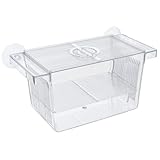


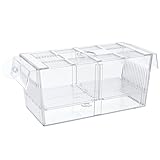
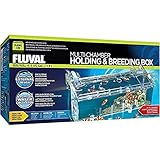
Quick Picks: Best Aquarium Breeding Boxes and Fry Separators
Why Trust Our Breeding Box Recommendations
We evaluated breeding boxes across the critical criteria that matter most to fish keepers: water circulation quality (stagnant water inside a breeding box is a fry killer), visibility for monitoring, ease of assembly and cleaning, internal volume for brood size, and structural integrity during long-term use. We also considered species-specific suitability — boxes designed for livebearers like guppies and mollies have different requirements than those used for egg-scattering or mouthbrooder species.
The most important technical factor we assessed was how effectively each box maintains water parameter parity with the main tank. Temperature, pH, and oxygenation inside a breeding box must match the main tank or stress and mortality rates in fry increase significantly. Products that use tank flow or mesh panels to achieve this naturally rank highest in our evaluation.
In-Depth Reviews
1. Fluval Hang-On Breeding Box — Best Overall
Fluval’s Hang-On Breeding Box is engineered with a fundamental advantage over in-tank floating boxes: it hangs on the outside of the aquarium rim and draws water directly from the main tank through a small inlet pipe. This means the water inside the breeding box is constantly refreshed with main-tank water — the same temperature, same oxygenation, same chemistry — without any manual effort. Fry experience virtually identical conditions to the main tank, which is critical for their survival and development.
The box includes an internal divider that creates two chambers — a lower birthing chamber and an upper nursery. For livebearers, the mother gives birth in the upper section and fry drop through a small gap into the protected lower chamber away from the mother. The clear walls provide excellent visibility on all sides, and the unit disassembles cleanly for rinsing between uses. This is the most professional-grade breeding solution at a mid-range price point.
- Pros: Constant water exchange with main tank, two-chamber design for livebearers, excellent visibility, easy cleaning
- Cons: Requires fitting over tank rim — may not suit all tank styles; limited interior volume for very large broods
2. ZISS Aqua Floating Fry Box BL-2 — Runner-Up
ZISS Aqua is a respected Korean manufacturer known for quality aquarium accessories, and their BL-2 floating fry box is among the most thoughtfully designed floating breeding containers available. The standout feature is the fine micro-mesh panel construction on all sides — fine enough to contain even newly-hatched fry that are only a few millimeters long, but open enough to allow continuous water flow through the box when there’s any current in the tank.
The BL-2 is larger than most competing floating boxes, accommodating substantial broods from prolific species like guppies, endlers, or platies. The modular design allows stacking an additional compartment on top, effectively doubling the volume for particularly large or mixed-age broods. The included suction cup and float mechanism keeps it stable even when the tank filter creates surface movement. Cleanup is straightforward — the mesh panels pop out for thorough rinsing.
- Pros: Micro-mesh for tiny fry, large capacity, stackable modules, stable float design
- Cons: Mesh can trap fine debris and requires regular cleaning; takes up significant surface area in smaller tanks
3. Capetsma Fish Breeding Box — Best Budget
For hobbyists who want a functional, no-frills breeding box for occasional use, the Capetsma Isolation Box is a reliable entry-level option. It mounts to the inside glass via suction cups and features slotted side panels that allow water exchange through tank circulation. The compact footprint makes it suitable for tanks as small as 10 gallons, and the transparent walls allow observation without disturbing the fish inside.
The box is sized for small to medium livebearers and can also be used as an isolation box for injured or recovering fish, or for acclimating new arrivals. The slot design means it’s most effective in tanks with moderate flow — stagnant tanks may not circulate water through the box adequately. At its price point, it’s an excellent first breeding box for new hobbyists experimenting with livebearer breeding before investing in a premium setup.
- Pros: Low price, suction cup mount, transparent walls, multi-purpose use
- Cons: Water circulation depends on tank flow; limited volume; slotted panels not fine enough for tiny fry species
Buyer’s Guide: Choosing the Right Breeding Box for Your Setup
Match box type to species: Livebearers (guppies, mollies, platies, swordtails) need a two-chamber design that separates the mother from the fry at birth. Egg-scatterers (tetras, danios, rasboras) need a mesh-bottom box where eggs fall through away from the parents. Mouthbrooders typically don’t need a breeding box — they manage fry protection themselves and benefit more from a separate breeding tank.
Water circulation is non-negotiable: Fry are highly sensitive to oxygen depletion and ammonia spikes. A breeding box with poor water exchange can develop lethal conditions within hours. Always choose a box with active water exchange (hang-on flow design) or fine mesh panels in a well-circulated tank. Add a small air stone if water movement seems insufficient.
Mesh size vs. fry size: Newly hatched fry from small species like endlers or neon tetras can be as small as 3–4mm and will escape through coarse slots. For these species, use micro-mesh boxes like the ZISS BL-2 or add a fine mesh insert to standard boxes. For larger livebearer fry (guppies, mollies), standard slotted designs are adequate.
Duration of use: Move fry to the main tank or a dedicated grow-out tank as soon as they’re large enough not to be eaten by adult fish (usually when they reach 1–1.5cm, or about 3–4 weeks old for livebearers). Extended time in a breeding box stunts growth due to limited swim space and feeding competition.
Feeding in a breeding box: Fry need frequent small feedings — 3–5 times daily is ideal. Use fine powdered fry food, freshly hatched baby brine shrimp, or microworms. Remove uneaten food promptly as it degrades water quality rapidly in the confined space of a breeding box.
Frequently Asked Questions
When should I put a pregnant fish in a breeding box? For livebearers, watch for the “gravid spot” (dark patch near the anal fin) darkening and the belly becoming very boxy and squared. Move her 24–48 hours before expected birth to minimize stress from confinement. Leaving her in too early causes unnecessary stress.
How long can a breeding box be used before cleaning? Clean the breeding box after every brood is moved out. Rinse with hot water (no soap or chemicals) and allow to dry or soak in a dilute aquarium-safe solution. Regular cleaning prevents biofilm and pathogen buildup between uses.
Can I use a breeding box in a saltwater tank? Yes — quality breeding boxes are material-safe for both freshwater and marine environments. Ensure mesh sizes and flow dynamics suit the species. Clownfish and some gobies are commonly bred in reef tanks using appropriate setups.
What’s the survival rate for fry in a breeding box vs. open tank? Survival rates in a breeding box are dramatically higher for most species — in a community tank without protection, 90%+ of fry may be eaten within hours of birth. A proper breeding box can raise survival rates to 80–95% for the initial critical weeks.
Final Verdict
The Fluval Hang-On Breeding Box is the most complete solution for serious livebearer breeders — the constant water exchange mechanism eliminates the biggest risk factor in fry rearing and the two-chamber design simplifies the birth process. For those who need higher capacity and micro-fry-safe mesh, the ZISS Aqua BL-2 offers modular volume and excellent water flow at a reasonable cost. And for beginners wanting to try livebearer breeding without a significant investment, the Capetsma Isolation Box provides a functional starting point. Any of these three will dramatically improve your fry survival rate compared to leaving newborns in the open tank.
Related Reviews & Guides


11 Best Aquarium Driftwoods for Natural Tank Decor
Best Quiet Aquarium Air Pump for Bedroom: Buyer’s Guide