Last Updated: October 4, 2026
- Top Pick: PLATY FISH HANDBOOK: The Ultimate Guide To Everything You Need To Know About Platy Fish's Health Care, Maintenance, Tank Setup, Breeding, Understanding, Habitat, Behaviour And Much More.
- Best Value: My First Fish Tank: The Complete Freshwater Aquarium Beginner’s Guide: Step-by-Step Setup, Water Chemistry Made Simple, and Easy Fish Care to Build a Thriving Tank
- Premium Choice: AQUANEAT Fish Tank, 1 Gallon Betta Fish Tank, Small Aquarium Kit with LED Light and Water Filter Pump
Platy Fish Care: Tank Setup, Diet and Breeding
The most important platy decision happens before choosing a color. Will the aquarium hold one sex, a mixed group whose offspring have confirmed homes, or a community in which some fry may survive? Platies are accessible fish, but “beginner friendly” should never mean disposable. Their rapid reproduction can turn an appropriate aquarium into a crowded one while the keeper is still learning water maintenance.
The common platy is generally Xiphophorus maculatus, although ornamental strains and hybrids complicate labels. Check the accepted species context through FishBase and GBIF. Wild distribution data describe natural populations; bright red, wagtail or tuxedo shop strains are domesticated captive fish and should be managed according to their rearing history as well as species biology.
As an Amazon Associate we earn from qualifying purchases at no extra cost to you.






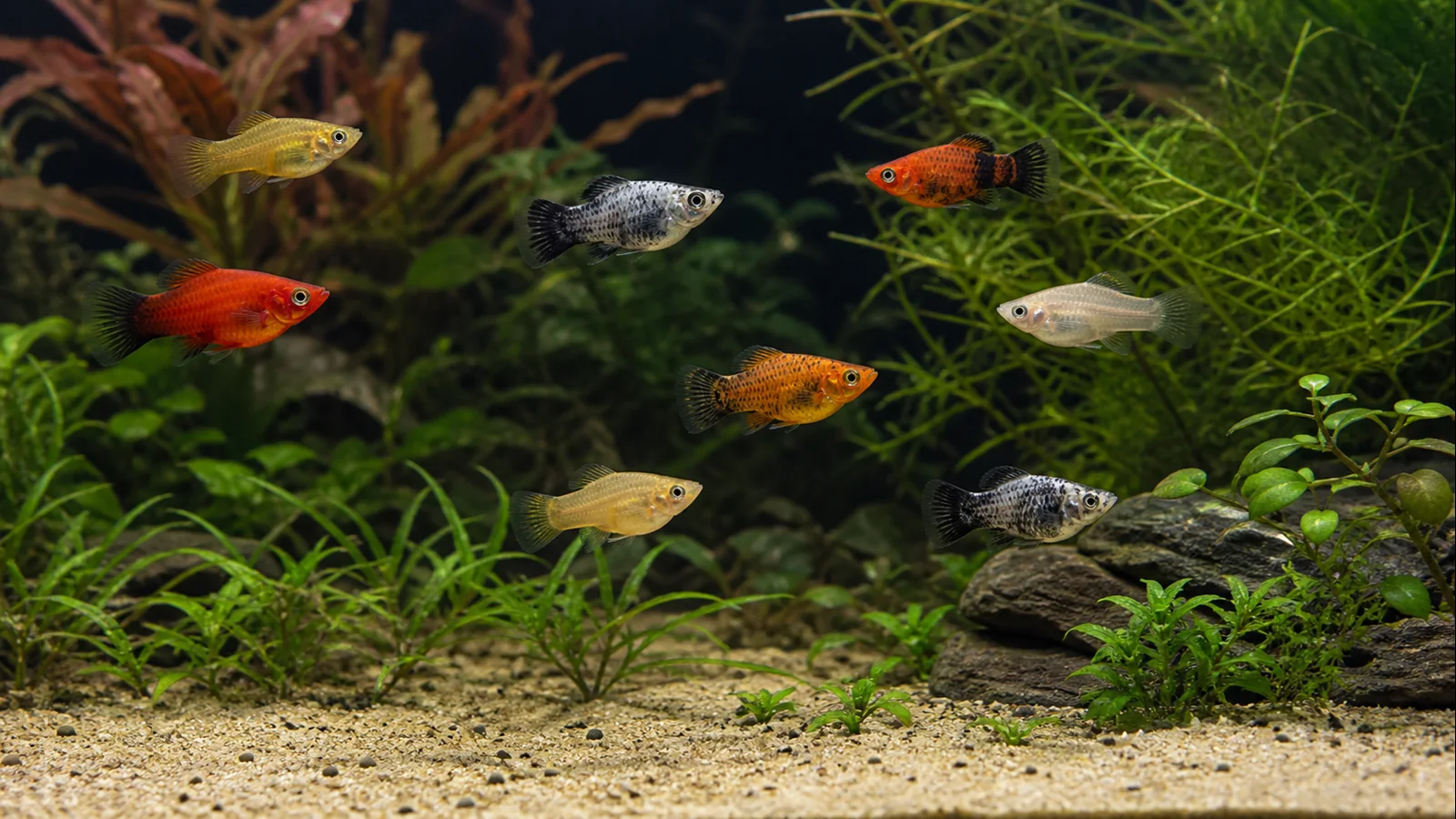
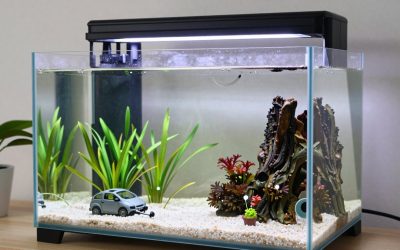
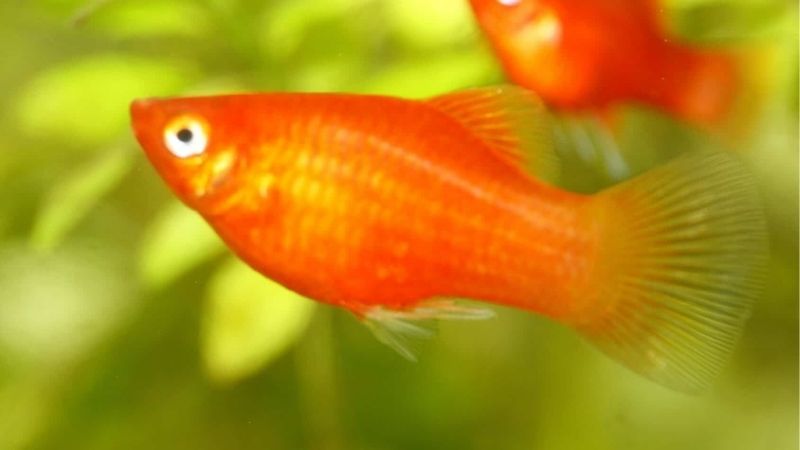
Editorial illustration; not evidence for species identification.
The setup in one decision tree
First, test the source water. If it is moderately hard and stable, a platy community is a natural fit. If it is extremely soft, do not continually add unmeasured minerals or chase values; ask an experienced aquatic professional whether a consistent remineralization method is practical. If household water fluctuates because of a softener or seasonal supply, identify a repeatable source before stocking.
Second, decide on reproduction. For no intentional fry, keep a verified single-sex group, understanding that females can arrive already carrying stored sperm. For mixed sexes, provide more females than males to spread persistent courtship and establish a realistic rehoming plan. If breeding is a deliberate project, use additional cycled grow-out capacity rather than a small plastic trap as permanent housing.
Third, calculate adult stocking, not the shop-day load. A long tank around 75 litres/20 US gallons gives a small group useful swimming room and greater dilution than a desktop aquarium. More fish, mixed sexes or tank mates call for more volume and filtration. Our beginner fish overview helps compare that commitment with other species.
Water: minerals and consistency
Platies naturally occur in warm freshwater habitats, but a field range is not an instruction to swing a captive aquarium between extremes. A broadly practical captive window is roughly 22–26°C/72–79°F, neutral to moderately alkaline pH, and measurable general hardness. The Seriously Fish platy profile provides specialist husbandry context, while the OATA care resources give an industry welfare baseline. Confirm the breeder’s conditions and acclimate to the stable portion your home can maintain.
Use a heater where room temperatures vary, plus a separate thermometer. Filter flow should exchange and oxygenate the aquarium without making every fish swim against a jet. Ammonia and nitrite should be undetectable. Nitrate should be controlled at a level consistent with animal welfare through appropriate stocking, feeding and partial changes, rather than hidden by additives.
Establish the biofilter before stocking through a fishless aquarium cycle. Adding bottled bacteria does not remove the need to test. Each new adult and every growing fry adds ammonia production, so a once-cycled aquarium is not infinitely cycled for any future load.
Furnish for movement and respite
Create a broad open lane because platies are active throughout the day. Dense stem plants, wood and robust rooted plants around the sides give females and subordinate fish visual breaks from courtship. Intake guards protect small fry, while a lid closes jumping gaps near cables and filter returns. Surface agitation should remain unobstructed even if floating plants are used.
Substrate color is a preference, but choose material that can be cleaned and does not unpredictably alter chemistry. Avoid sharp decorations and cramped caves where a pursued fish can be trapped. A beautiful aquascape fails if it prevents you from counting fish or siphoning accumulating waste.
Social behavior and sex recognition
Male platies have a modified, narrow anal fin called a gonopodium; mature females usually retain a fan-shaped anal fin and may grow larger. Body shape and a dark “gravid spot” alone are less reliable, especially among dark-colored strains. Verify sex from several observations instead of making a stocking plan from one hurried shop inspection.
Platies are social, but they do not school tightly like tetras. Keep a small group rather than a solitary display animal. Male attention can become relentless in confined spaces, which is why mixed groups commonly use a female-biased ratio. Ratios reduce risk; they do not guarantee peace. Add cover, monitor individuals and be ready to separate a harasser or exhausted fish.
Suitable companions must share the mineral-rich water preference, temperature and lively feeding style. Other peaceful livebearers can overlap, but they also multiply and increase bioload. Review the different adult size and strain needs in our guppy care guide. Soft-water specialists should not be forced into hard water merely because both labels say “community.”
Feeding beyond flakes
Use a reputable complete flake or appropriately sized granule as the base, then rotate small frozen or live invertebrate foods and vegetable-rich options made for omnivorous livebearers. Platies browse surfaces and benefit from dietary variety, but they are not a substitute for algae control or aquarium cleaning. Blanched produce can foul water if left too long; offer only a clean, small portion and remove the remains.
Feed what the group finishes promptly, commonly once or twice per day, modifying the amount for juveniles, temperature and body condition. Scatter food so slower females can eat away from assertive males. A rounded belly immediately after feeding is not proof of pregnancy, and persistent swelling, pineconing, isolation or abnormal feces should not be diagnosed from appearance alone.
Never respond to an unexplained symptom with extra salt, antibiotics or internet dosing. Platies’ tolerance of minerals does not make arbitrary aquarium salt a universal cure. Test the environment, isolate when biosecurity requires it, document the signs and contact an aquatic veterinarian or qualified fish-health professional for diagnosis and treatment decisions.
Population control before birth
Platies are livebearers: young are born free-swimming rather than laid as external eggs. A female purchased from a mixed system may produce multiple broods after separation. Gestation estimates vary with strain, temperature and condition, so calendar promises are less useful than preparing permanent capacity.
Choose one ethical route. A single-sex display limits future births but requires careful identification. A managed breeding group needs cycled grow-out tanks, food, maintenance time and confirmed adopters or retailer agreements. A planted community may allow only some fry to persist, but deliberately relying on adults to consume offspring is not precise population management and should not lead to overcrowding.
Do not release surplus platies into drains, ponds or waterways. Rehome them through responsible local networks, surrender them to a willing store, or seek professional humane guidance if no placement exists. Never breed another generation while the current one lacks a destination.
Weekly operating plan
Every day, count adults, check feeding response and look for sustained chasing, clamped fins, heavy breathing or a fish resting away from the group. Every week, test key water values and complete a partial water change appropriate to the actual nitrate and debris load. Match temperature, condition tap water correctly and avoid sudden hardness shifts.
Clean mechanical media when flow falls, using removed tank water where appropriate so biological surfaces are not exposed to untreated chlorinated water. Trim plants to preserve swim space and inspect intake sponges for trapped waste. Record births and removals; memory consistently underestimates a growing livebearer population.
Monthly, reassess whether the tank still fits the fish at adult size. Increasing maintenance cannot fully compensate for inadequate physical room or constant harassment. Upgrade, separate or rehome early rather than waiting for water quality or behavior to collapse.
Good platy fish care is a capacity plan with fins. Stable hard-to-moderate water, open swimming room, vegetable-inclusive variety and attentive social management make the species rewarding. The defining welfare skill is anticipating offspring and refusing to treat crowding as inevitable. For injury, abnormal births, wasting or persistent behavioral change, move beyond general care advice and obtain aquatic-veterinary or experienced professional assessment.
Related Reviews & Guides

How to Calibrate Aquarium Heater Thermostat (2026): Step-by-Step
Best 20 Gallon Fish Tank Kit: Best Proven Compared Buyer Guide