Last Updated: September 25, 2026
Aquarium temperature for tropical fish is usually quoted as a single number, which hides the two things that actually matter: the overlap between the species you keep and how little the reading moves from day to day. Stability protects fish far more reliably than hitting any particular figure on the thermometer.
As an Amazon Associate we earn from qualifying purchases.
As an Amazon Associate we earn from qualifying purchases at no extra cost to you. Prices and availability are accurate as of the date shown and are subject to change.

PAIZOO Aquarium Thermometer Digital, Highly Accurate Fish Tank Thermometer
Selected for "Aquarium Temperature for Tropical Fish: Ranges and Care": this listing is tanks (PAIZOO Aquarium Thermometer Digital, Highly Accurate Fish Tank Thermom), matching the equipment this article covers.
View on Amazon
Inkbird ITC-308S Aquarium Heating and Cooling Dual Stage Temperature Controller Freshwater Saltwater Aquarium Tropical Fish Ornamental Shrimp
Selected for "Aquarium Temperature for Tropical Fish: Ranges and Care": this listing is testing and monitoring (Inkbird ITC-308S Aquarium Heating and Cooling Dual Stage Temperature C), matching the equipment this article covers.
View on Amazon
SunGrow Betta Fish Tank Thermometer Stick On, Aquarium Temperature Sticker Strip, 5.2 x 0.7 Inches, Green & Blue Temperature Indicator, Amphibian and Reptile Thermometer Sticker, Black, 3 Pcs
Selected for "Aquarium Temperature for Tropical Fish: Ranges and Care": this listing is tanks (SunGrow Betta Fish Tank Thermometer Stick On, Aquarium Temperature Sti), matching the equipment this article covers.
View on Amazon
AQUANEAT Aquarium Thermometer, Fish Tank Thermometer, Digital Temperature Test, with Large LCD Display (1 Pack)
Selected for "Aquarium Temperature for Tropical Fish: Ranges and Care": this listing is tanks (AQUANEAT Aquarium Thermometer, Fish Tank Thermometer, Digital Temperat), matching the equipment this article covers.
View on AmazonBy David Nguyen
The Ranges and the Numbers Behind Them
Setting the aquarium temperature for tropical fish begins with a band rather than a point. Most community species are comfortable across several degrees, so the practical task is finding the overlap between everything in the tank and then holding that figure steady week after week.
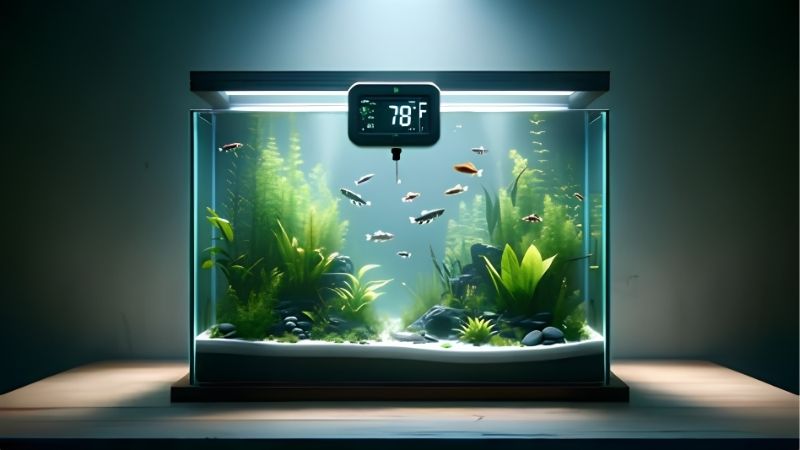
The decisive numbers for a community tank
The general community band is 76–80 °F (24–27 °C), and most widely kept species sit quite comfortably somewhere inside it. Picking a value in the middle of that band, rather than at either edge, leaves room for the small daily variation that every tank experiences without any harm.
The aquarium temperature for tropical fish is not one figure. Discus want the warm end at 82–86 °F (28–30 °C), while white cloud mountain minnows are subtropical and prefer 64–72 °F (18–22 °C), so the two cannot share a tank however carefully the heater has been set up and adjusted.
The third number to know is the swing limit. Aim to keep daily variation under about 2 °F (1 °C), and change temperature deliberately no faster than 1–2 °F (0.5–1 °C) per hour. Rapid movement stresses fish far more than a perfectly steady reading a degree away from the textbook figure.
Why temperature matters biologically
Fish are ectothermic, so their metabolism tracks the water around them. Warmer water speeds digestion, growth and oxygen demand, while cooler water slows all three, which is why feeding rates should follow the thermometer rather than a fixed schedule during any prolonged cold spell.
Dissolved oxygen works directly against that rising demand. Warm water holds less oxygen than cool water, so a tank at 84 °F (29 °C) supplies less oxygen precisely when the fish need more, and that combination is behind most summer incidents in otherwise well-maintained aquariums.
Temperature also changes how dangerous ammonia is. The proportion of total ammonia present as the more toxic un-ionised form rises with both temperature and pH, so the same test reading is more dangerous in a warm, alkaline tank than it is in a cooler, softer one at identical numbers.
Normal ranges against thresholds that need action
Inside the 76–80 °F (24–27 °C) band with a stable reading, no action is needed at all beyond routine checks. Fish using the whole tank, feeding normally and showing no rapid gill movement is a far better indicator of comfort than any single figure the thermometer happens to display.
Act once the tank passes 82 °F (28 °C) with fish gathered at the surface, drops below 72 °F (22 °C) for tropical species, or swings more than about 2 °F (1 °C) in a day. Each of those points to equipment, placement or the room rather than to something the fish will simply adapt to.
| Group | Typical range | Notes | Action threshold |
|---|---|---|---|
| General community | 76–80 °F (24–27 °C) | Tetras, rasboras, corydoras | Above 82 °F (28 °C) |
| Betta | 78–80 °F (26–27 °C) | Poor swimmer, dislikes current | Below 75 °F (24 °C) |
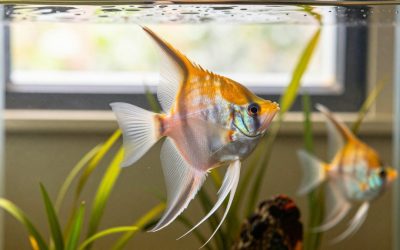
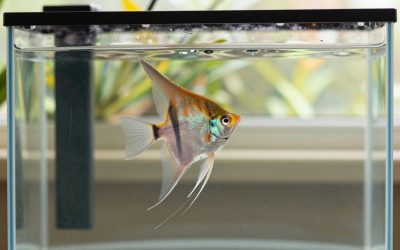
| Angelfish | 78–84 °F (26–29 °C) | Warm end of community range | Below 76 °F (24 °C) |
| Discus | 82–86 °F (28–30 °C) | Needs heavy filtration and oxygen | Below 80 °F (27 °C) |
| Subtropical species | 64–72 °F (18–22 °C) | White clouds, some danios | Above 76 °F (24 °C) |
What This Looks Like in a Real Tank
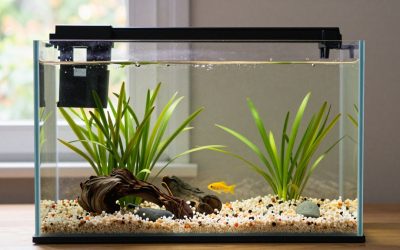
Holding the right aquarium temperature for tropical fish is far easier in some tanks than in others, and volume is the main reason why. A large body of water resists change while a small one follows the room, which makes nano tanks considerably less forgiving than their size suggests.
Tank size, placement and physical fit
Placement decides how hard the equipment will have to work. A tank beside a draughty window, an external door or a radiator experiences swings that no heater setting can smooth out, and moving it a few feet into a sheltered part of the room is often the single most effective fix.
Weight limits where it can go. A full tank runs near 10 lb per gallon (about 1 kg per L), so a 55 gallon (208 L) setup passes 600 lb (272 kg) and needs a purpose-built stand. Measure the space and the stand with a tape before ordering anything, and keep the tank out of direct sun.
How stability changes across 10, 20 and 55 gallon tanks
A 10 gallon (38 L) tank holds only about 8 gallons (30 L) of water, which represents very little thermal mass. Room changes, afternoon sun and even the lights move it quickly, so nano tanks need a lid, a sheltered position and a thermometer that is genuinely read every single day.
A 55 gallon (208 L) tank holding roughly 47 gallons (178 L) absorbs that same disturbance with a much smaller change. That extra volume buys you time rather than immunity, since a long tank brings a problem of its own: heat from a single unit at one end may not reach the far end evenly at all.
Choosing an overlap range for a mixed community
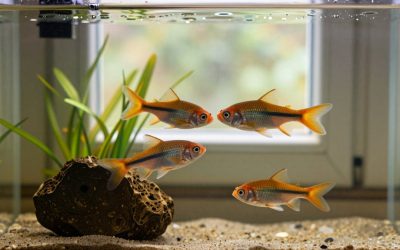
Stock the tank around one shared band rather than fitting a heater and simply hoping. Tetras, rasboras, corydoras and most common livebearers overlap comfortably at 76–79 °F (24–26 °C), which makes that a sensible target for any general community tank without unusual requirements.
Where ranges do not overlap, the answer is different stocking rather than a compromise setting. Keeping a subtropical species at 78 °F (26 °C) shortens its life quietly, and keeping discus at 78 °F (26 °C) suppresses appetite and immunity without producing anything obvious at first.
Check compatibility before buying the fish rather than afterwards. The temperature requirement of a species is as fixed as its adult size, and a mismatch discovered after the fish are home usually ends with either a second tank or with an animal kept permanently outside its range.
Myths That Cause Avoidable Losses
Three beliefs about aquarium temperature for tropical fish circulate widely, and each one leads to a decision that looks harmless and really is not. Replacing them with the mechanism makes the correct action obvious in almost every situation that a home aquarium actually presents.
The myth that warmer water is always better
Raising the temperature does speed up metabolism and growth, and it is used deliberately in short medicated treatments for some parasites. What it also does is reduce dissolved oxygen and shorten lifespan, so running a community tank permanently at 84 °F (29 °C) is a poor trade in the end.
The practical rule is to stay inside the species band and reasonably near its middle. If temperature is being raised as a treatment, increase surface agitation at the same time, watch for fish at the surface, and return to the normal range once the course of treatment has finished.
The myth that tropical fish need exactly 78 degrees
The figure of 78 °F (26 °C) is a reasonable default rather than a requirement, and treating it as a fixed target leads people to chase small deviations with adjustments that create larger swings. A steady 77 °F (25 °C) is better for the fish than a corrected 78 °F reached twice a day.
Adjust the dial slowly if it needs adjusting at all, and then leave it alone for several days before judging the result. Most tanks that read a degree away from the intended figure are perfectly healthy, and the intervention causes more disturbance than the original difference did.
The myth that a heater alone guarantees stability
A heater can add heat but it cannot remove any of it, which is why summer causes more temperature incidents than winter does in a great many households. Direct sunlight, a hot room and the lights themselves all push a tank upward, and the heater simply switches off and lets it happen.
Stability comes from the room and from the layout just as much as from the equipment. A lid, a position away from windows and radiators, adequate circulation and a thermometer that is read daily all do more for a steady reading than any upgrade to the heater sitting inside the tank.
Keeping Temperature Steady Through the Year
Maintaining the aquarium temperature for tropical fish is a seasonal task rather than a one-time setting, because the very same tank faces opposite problems in January and in July. Both directions are manageable, but they need different responses and different things to be watched.
What to check, and how often
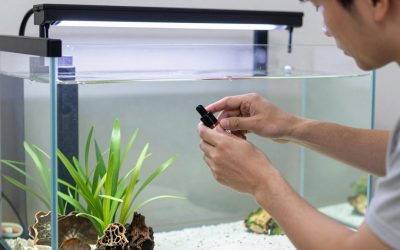
Read the thermometer during the daily feed and then record the figure weekly, since a slow divergence between the dial and the thermometer is the earliest sign of a drifting thermostat. Place the thermometer at the opposite end of the tank from the heater so the reading is a fair one.
Match the water change temperature to the tank within 1–2 °F (0.5–1 °C), and acclimatise new fish slowly by floating and then mixing water over a period rather than releasing them straight in. A sudden change of several degrees is one of the most common causes of early losses in new fish.
Managing summer heat and winter cold
In hot weather the two priorities are oxygen and evaporation. Increase surface agitation, remove or prop the lid to allow evaporative cooling, run a fan across the surface, and reduce feeding, because a tank above 84 °F (29 °C) holds noticeably less oxygen than the fish are used to.
In winter the risks reverse completely. Heated rooms dry the air and accelerate evaporation, dropping the level enough within a fortnight to leave equipment partly exposed, while an unheated room at 60 °F (15.5 °C) can outrun a heater that was sized during a mild autumn afternoon.
The twelve month cost of doing this properly
The recurring items here are modest: one or two thermometers, replacement suction cups, dechlorinator and a liquid test kit with in-date reagents. Test strips drift quickly once they are opened in a humid room, and an expired reagent is a well-known source of falsely reassuring readings.
Plan for a spare heater on larger tanks, since a failure in midwinter leaves no time at all to shop around, and a chilled 55 gallon (208 L) tank cools slowly enough to be saved but not indefinitely. Prices move constantly, so check them at the time of purchase rather than from memory.
Frequently Asked Questions
These questions come up repeatedly once people stop treating the reading as one single fixed number, because the practical aquarium temperature for tropical fish depends entirely on which species share the tank, and on how much the room itself moves across a day and across a season.
What temperature should a general community tank run at?
Somewhere around 76–80 °F (24–27 °C), with 77–78 °F (25–26 °C) a sensible middle figure for tetras, rasboras, corydoras and livebearers. Choose one figure inside that band and then hold it steadily rather than adjusting towards a different target every time you read the thermometer.
How much daily variation is acceptable?
Under about 2 °F (1 °C) across the whole day is comfortable for the great majority of community species. Larger daily swings usually point to room conditions, direct sunlight or a badly positioned tank rather than to any heater fault, so look at placement before changing any equipment.
What do I do during a heatwave?
Increase surface agitation, prop the lid open to allow evaporative cooling, run a fan across the water surface, and feed only lightly. Avoid dropping the temperature quickly, since a fast fall stresses fish as much as a fast rise, and keep topping up the water that evaporates away.
Can tropical and coldwater fish share a tank?
Generally no, because the two ranges do not overlap usefully. Subtropical species such as white cloud mountain minnows want 64–72 °F (18–22 °C) while most tropical community fish want 76–80 °F (24–27 °C), and any compromise setting simply keeps one group permanently outside its range.
Does temperature affect how much I should feed?
Yes, it does. Fish digest more slowly in cooler water, so feeding should be reduced during any prolonged cold period and uneaten food removed. In warm water the appetite rises, but so does oxygen demand and waste production, so heavier feeding needs correspondingly stronger filtration to match it.
See More:
Conclusion
For most community setups the aquarium temperature for tropical fish sits within 76–80 °F (24–27 °C), with 77–78 °F (25–26 °C) as a reliable default. Stock only species whose ranges overlap, then hold one figure steadily rather than adjusting towards a textbook number every few days.
Watch the swing rather more closely than the value: keep daily movement under about 2 °F (1 °C), change temperature no faster than 1–2 °F (0.5–1 °C) per hour, and treat summer heat as the more dangerous direction because warm water carries less oxygen exactly when fish need more.
Dwarf Aquarium Lily Care: Bulbs, Pads and Root Feeding Rules
Male vs Female Angelfish: How to Tell Them Apart