Last Updated: October 21, 2026
- Top Pick: Seachem Prime -500 ml/ 17 fl. oz.
- Best Value: MICROBE-LIFT Nite-Out II Aquarium Bacteria for Start-up, Instantly Cycle Aquariums, Add Fish on Day 1, Rapid Ammonia and Nitrite Reducer for Freshwater & Saltwater Fish Tank, 8 Ounces (NITEH08)
- Premium Choice: MICROBE-LIFT Nite-Out II Aquarium Bacteria for Start-up, Instantly Cycle Aquariums, Add Fish on Day 1, Rapid Ammonia and Nitrite Reducer for Freshwater & Saltwater Fish Tank, 16 Ounces (NITEH16)
Safe nitrite level in aquarium water is zero, with no tolerance band beneath it. Nitrite is the middle step of the nitrogen cycle and it interferes with oxygen transport in the blood, so fish can suffocate in water that looks perfectly clear. This guide covers the chemistry, the thresholds and the fixes.
As an Amazon Associate we earn from qualifying purchases.
As an Amazon Associate we earn from qualifying purchases at no extra cost to you.


By David Nguyen
Why Nitrite Suffocates Fish in Clear Water
Nitrite sits between ammonia and nitrate, produced by one group of bacteria and consumed by another. A safe nitrite level in aquarium water depends entirely on whether that second group has caught up, which is why nitrite peaks weeks after a tank is first filled.
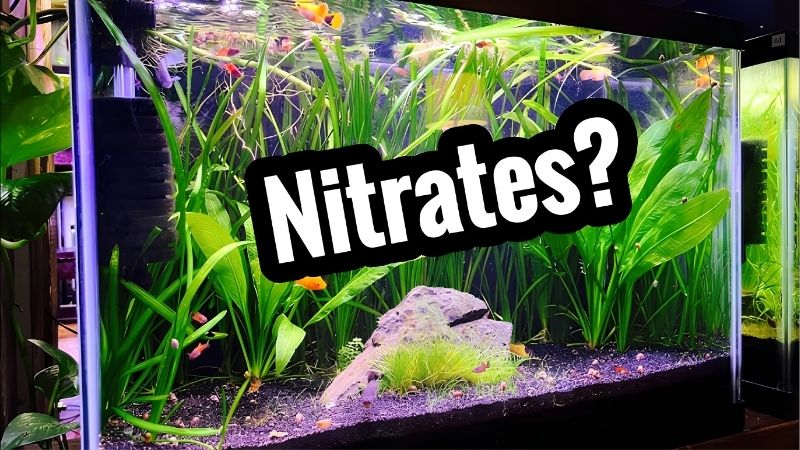
The Target Is Zero, and Any Reading Means Act Today
In an established freshwater tank the reading should be 0 ppm on a liquid test kit. Unlike nitrate, there is no comfortable range: nitrite is not a byproduct you manage at a low level, it is a signal that one half of your filtration is not working.
Treat any detectable reading as an action threshold. At 0.25 ppm you change water the same day and stop feeding for twenty-four hours. Between 0.5 and 1 ppm, fish commonly show rapid gill movement and surface breathing even with an air stone running.
Above 1 ppm, losses become likely, and readings of 2-5 ppm are routine in tanks stocked before cycling finished. Record the value in ppm alongside ammonia, nitrate and temperature, since nitrite almost never rises alone and the pattern tells you which stage failed.
The Biology: Why Clear Water Can Still Suffocate Fish
Nitrite crosses the gills and binds to the blood pigment that normally carries oxygen, converting it to a form that cannot release oxygen to tissue. Blood turns brown, and the fish shows every symptom of suffocation while dissolved oxygen in the tank reads normal.
Chloride competes with nitrite for the same uptake pathway at the gill, which is why hard water with existing chloride content offers some protection and very soft water offers less. This is a mechanism, not a treatment, and it does nothing about the underlying cause.
Nitrite-consuming bacteria also grow more slowly than the ammonia-consuming group, and they are more sensitive to low temperature and low oxygen. That lag is the reason the nitrite phase of a new tank feels endless compared with the ammonia phase before it.
Temperature drives the whole timeline. Holding the tank around 78-80 °F (26-27 °C) during cycling speeds bacterial growth noticeably, while a cold room in winter can stretch the same process from four weeks to eight without anything else changing.
Reading Ranges Against Action Thresholds
The table pairs each reading with the likely cause and the first move. Read it beside your ammonia result, because nitrite falling while ammonia rises means something very different from both climbing together.
| Nitrite reading | What it means | What fish show | What to do first |
|---|---|---|---|
| 0 ppm | Second bacterial stage keeping pace | Nothing unusual | Normal weekly maintenance |
| 0.25 ppm | Filter disrupted or stock added too fast | Faster gill movement | Change 25-50%, skip one feeding |
| 0.5-1.0 ppm | Cycle incomplete or media replaced | Surface breathing, appetite loss | Change 50%, add aeration, retest in 12 hours |
| 1.0-2.0 ppm | Serious lag between the two stages | Lethargy, hanging near outflow | Repeat 50% changes daily |
| Above 2.0 ppm | Typical of stocking before cycling finished | Losses likely within a day | Change 50% now, stop feeding |
What This Means in a Real Tank
The chemistry never changes but the timeline does. Reaching a safe nitrite level in aquarium conditions happens faster in some tanks than others, and volume, temperature and stocking rate account for most of the difference between a two-week phase and a two-month one.
Tank Size, Placement and Fit
Volume is dilution. A 5 gallon (19 L) tank concentrates the same waste four times more than a 20 gallon (76 L) tank, so nitrite climbs faster and higher in nano setups. Larger volumes are more forgiving during the phase when the second bacterial group is still building.
Work from real water volume. A 20 gallon (76 L) tank holds roughly 17-18 gallons (64-68 L) after substrate, hardscape and the surface gap, which matters when you calculate a 50% change under pressure.
Placement decides what your filter can do. Measure before you order: 4-6 in (10-15 cm) of clearance behind the tank for a hang-on-back unit, cabinet height for a canister, and stand capacity against roughly 10 lb/gallon (about 1 kg/L) of filled weight.
How This Differs Across 10, 20 and 55 Gallon Tanks
A 10 gallon (38 L) tank can move from 0 to 1 ppm nitrite in a day after a filter cleaning. In a 55 gallon (208 L) tank the same disruption often produces a reading of 0.25 ppm that resolves before anyone notices.
Turnover follows volume. A baseline of 4-6 times tank volume per hour suits community stocking, with 8-10 times for goldfish and cichlids. Printed GPH is measured with no media in the housing and drops 30-50% in service, so size from the loaded figure.
Surface area matters as much as volume during a nitrite phase, because the bacteria consuming nitrite need oxygen. A long, shallow 20 gallon has an advantage over a tall 20 gallon with the same capacity, which is worth knowing before you buy.
How Species and Bioload Change the Picture
High-waste fish push both stages harder. Goldfish and larger cichlids generate more ammonia per unit of body weight than small tetras, so their tanks spend longer in the nitrite phase and need larger, more frequent water changes throughout it.
Sensitivity varies too. Shrimp, snails and scaleless fish such as corydoras react earlier than hardy livebearers, and invertebrate losses often precede any visible change in the fish. Treat a dead shrimp during cycling as a reading, not an accident.
Stocking pace matters more than final stocking level. Adding six fish at once to a freshly cycled tank produces an ammonia load the colony has never handled, and nitrite follows two or three days later. Add livestock in small groups spaced two to three weeks apart.
Summer travel is a recurring trigger worth planning around. Holiday feeding by someone unfamiliar with the tank, or an auto-feeder set too generously, drives an ammonia surge that arrives back as nitrite days later, usually just as you get home.
Common Mistakes and Myths to Retire
Three ideas keep readings high longer than necessary and delay a safe nitrite level in aquarium water by weeks. Each one sounds reasonable, and each one either delays the fix or replaces it with something that treats the symptom while the cause continues.
Myth: Nitrite Is Less Dangerous Than Ammonia
Nitrite is not the mild middle step people assume. It disables oxygen transport at concentrations well under 1 ppm, and unlike ammonia its toxicity does not fall away as pH drops, so a soft acidic tank gets no reprieve from it at all.
The replacement number: act at any detectable reading, exactly as you would with ammonia. The two compounds need the same response, and in a tank that stalls mid-cycle nitrite is usually the one that lasts longer and does more damage.
Myth: Adding Salt Fixes a Nitrite Problem
Chloride does compete with nitrite at the gill, which is real chemistry rather than folklore. What it does not do is remove nitrite, restore the missing bacteria or address whatever disrupted the filter, so the reading stays exactly where it was.
It also carries costs that get skipped in the retelling. Many aquarium plants respond badly to sustained salt, as do several catfish species, and raising salinity in a soft-water tank adds another parameter to stabilise while you are already dealing with a stalled cycle.
Myth: A Nitrite Spike Means Starting the Tank Over
A spike is the cycle working, not failing. Nitrite appearing means the first bacterial group is converting ammonia successfully and the second group has not yet caught up. Tearing the tank down discards the colony that has already established.
The replacement action: keep the filter running, change water to hold the reading down, feed lightly, and wait. Reaching a safe nitrite level in aquarium water is a matter of weeks, and restarting resets that clock to zero for no benefit.
Keeping Nitrite at Zero Long Term
Once the second bacterial stage is established, a safe nitrite level in aquarium water holds itself unless something disturbs it. Nearly every later reading above zero traces to a specific event, which makes this the easiest of the three nitrogen numbers to keep clean.
What to Do on a Schedule
Test nitrite weekly through the first three months, then monthly once the tank is stable. Test again within a week of adding fish, replacing filter media, treating the tank for anything, or returning from more than a few days away.
Keep changes at a baseline of 20-30% weekly, adjusted by measured nitrate, and match new water to within 1-2 °F (about 1 °C). Feed what is eaten in one to two minutes, because uneaten food is the ammonia source that becomes tomorrow’s nitrite.
Clean mechanical media on a rotation rather than all at once. Rinsing the floss one month and the sponge the next keeps a working colony in the housing at all times, and it costs nothing beyond a little planning during the weekly water change.
Gear That Degrades and How It Shows Up
Nitrite-consuming bacteria need oxygen and flow, so anything reducing either shows up as a reading. Clogged media, a worn impeller, or a hang-on-back filter that lost prime after a power cut all cut flow quietly before any noise or visible change appears.
Storm season across much of North America runs from roughly June to November, and a filter stopped for several hours starves that colony. A battery-powered air pump is a modest precaution, and restarting a filter that sat still for a day can push stagnant water back into the tank.
Test reagents expire, and a kit reading low is worse than no kit at all here. Strips drift quickly once the tube is opened in a humid room. Heaters drift too, and cold water slows the nitrite stage more than the ammonia stage.
The Twelve-Month Running Cost
Plan for replacement mechanical media, dechlorinator, test reagents and continuous power for filter and heater. Filters taking loose media let you rinse or replace only the mechanical layer while the colonised biological media stays in place, which protects both the budget and the bacteria.
Cartridge-based filters work against you on both counts. Discarding the whole cartridge monthly removes the nitrite-consuming colony along with the floss, and the recurring mini-cycles that follow are the most common cause of nitrite in a tank that has run for years.
Frequently Asked Questions
These five questions come up most often during the nitrite phase, when readings are high and the temptation to intervene is strongest.
How long does the nitrite phase last?
In a fishless cycle, nitrite typically appears in week one or two and clears somewhere between weeks three and eight. The endpoint is specific: after dosing ammonia to 2-4 ppm, both ammonia and nitrite read zero twenty-four hours later with nitrate present.
Can I speed it up safely?
Yes, within limits. Seeded media from an established tank, steady temperature around 78-80 °F (26-27 °C), strong aeration and a consistent ammonia source all help. Nothing produces an instant cycle, and products claiming to should be read as a shortening, not a skip.
My ammonia is zero but nitrite is high. What happened?
That is the normal middle of a cycle. The first bacterial group is working and the second is still building. Hold the reading down with water changes, keep feeding light, and expect nitrite to fall over the following one to three weeks.
Do water changes slow the cycle down?
Not meaningfully. The bacteria live on surfaces, not in the water column, so changing water removes the compounds rather than the colony. Protecting fish is worth far more than any theoretical delay, which is why a safe nitrite level in aquarium water always takes priority.
Why did nitrite return in an old tank?
Look for a specific event in the preceding week: media replaced or rinsed under the tap, a filter left off, new fish added in quantity, or the tank treated with something that affects bacteria. Old tanks do not spontaneously lose their colony.
The Bottom Line on Nitrite in Freshwater Tanks
The safe nitrite level in aquarium water is zero, tested with a liquid kit and read beside ammonia rather than on its own. Any detectable reading is an instruction to change water that day, cut feeding and add aeration, because nitrite blocks oxygen transport in water that looks completely clean. Do not restart the tank over a spike, do not treat salt as a fix, and protect the slower second bacterial group by rinsing media in tank water and keeping the filter powered through outages.
Axolotl Tank Setup Guide: Everything You Need for a Happy Axolotl
Tetra Whisper vs Aqueon Quietflow Filters: Top Compared Pick