Last Updated: October 9, 2026
Ich medications are not interchangeable, because their active chemistries and livestock restrictions differ in ways that matter. The best medication for ich in aquarium treatment is the one matched to your fish, invertebrates, and setup, dosed for the full course, since each product carries meaningful restrictions and none is safe for every tank.
As an Amazon Associate we earn from qualifying purchases.
By David Nguyen
Quick answer: For most people in 2026, the best medication for ich in aquarium is the Hikari Ich-X — our #1 rated choice. See the full ranked comparison, alternatives and buying advice below.
How to Choose an Ich Medication
Choosing safely means treating the full course, managing filtration and aeration, respecting livestock restrictions, and recognizing that active ingredients differ. These four points matter because ich has a life cycle you must outlast, and because a medication safe for one tank can harm the invertebrates or scaleless fish in another.
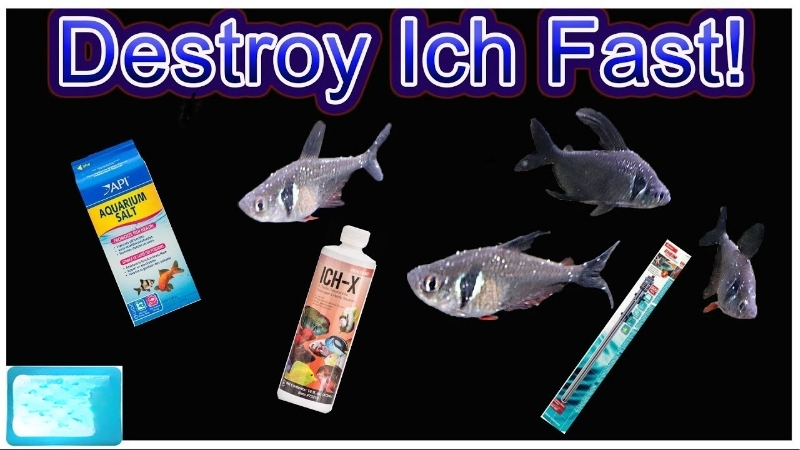
Treat the Full Course
Ich has a life cycle, and medications act on the free-swimming stage, so stopping early leaves parasites to re-emerge. This is why spots gone does not mean stop immediately, and why labels specify continuing treatment beyond the visible symptoms to catch later stages.
Hikari Ich-X directs daily dosing with roughly a one-third water change, continuing three symptom-free days, while Seachem ParaGuard suggests around fourteen days for freshwater ich. Follow the full schedule for your product rather than stopping when the fish look clear, since that is exactly when a course is often abandoned too soon.
Manage Filtration and Aeration
Chemical filtration such as activated carbon removes medication from the water, so it must come out when the label directs, or the treatment will be stripped away. At the same time, treatments and warmer water lower oxygen, so strong aeration protects the fish through the course.
So remove carbon before dosing where instructed, keep mechanical and biological filtration running, and boost surface agitation. API’s schedule pairs dosing with a repeat after 48 hours and a 25% water change after another 48 hours, which shows how filtration, water changes, and dosing work together rather than in isolation.
Respect Livestock Restrictions
This is where the medications diverge most, because fish-safe does not mean shrimp-safe. API warns about invertebrates and scaleless fish, ParaGuard directs removing invertebrates, and Ich-X has conditioner incompatibilities, so the safe choice depends entirely on what lives in the tank.
Read the invertebrate and scaleless-fish warnings before dosing anything, since a wrong choice can wipe out shrimp, snails, or sensitive species. When in doubt, treat affected fish in a separate quarantine tank rather than dosing a display that houses invertebrates or delicate scaleless species.
Active Ingredients Differ
The actives are genuinely different, so all ich meds are not the same chemical, and that shapes both effectiveness and restrictions. API Super Ick Cure uses malachite green oxalate, Ich-X combines formaldehyde, methanol, and malachite green chloride, and ParaGuard uses proprietary aldehydes with malachite green but no formaldehyde or methanol.
Because the chemistries differ, do not mix medications hoping to boost results, since combining actives can be dangerous. Match the active ingredient to your tolerance and setup, choosing the formalin-free option if you prefer to avoid formaldehyde, and never assume two products can be layered safely.
Top Options
Three medications plus a quarantine approach cover the realistic choices, and there is no single overall winner because each carries meaningful restrictions. Prices are relative and current as of 09/2026, and because course schedules differ, the nominal bottle coverage is not comparable as a cost-per-cure figure.
| Option | Best For | Active / Dose | Watch Out For |
|---|---|---|---|
| Hikari Ich-X | Structured daily quarantine treatment | Formaldehyde/methanol/malachite; 5 mL/10 gal | Conditioner incompatibilities |
| API Super Ick Cure | Simple two-dose schedule | Malachite green oxalate; 5 mL/5 gal | Warns inverts and scaleless fish |
| Seachem ParaGuard | Formalin-free option | Aldehydes + malachite; 5 mL/10 gal | Remove invertebrates before dosing |
| Treat in quarantine | Invertebrate or sensitive tanks | No in-tank medication | Requires a separate hospital tank |
Hikari Ich-X – Best Structured Daily Quarantine Treatment
Ich-X suits a structured daily treatment, combining formaldehyde under 5%, methanol under 2%, and malachite green chloride under 0.1%, dosed at 5 mL per 10 gallons daily with roughly a one-third water change, around $15 to under $20 for 16 oz as of 09/2026. Its clear daily rhythm works well in a quarantine tank.
Continue for three symptom-free days rather than stopping when spots vanish, and note it has conditioner incompatibilities to check before combining products. Because it contains formaldehyde, handle it carefully and treat in quarantine when invertebrates or sensitive scaleless species are involved.
API Super Ick Cure – Best Simple Two-Dose Schedule
API Super Ick Cure is the simplest schedule, using malachite green oxalate under 0.1% per its current SDS, dosed at 5 mL per 5 gallons, repeated after 48 hours, with a 25% water change after another 48 hours, around $5 for 4 oz as of 09/2026. The minimal dosing appeals to keepers who want fewer steps.
Its label warns about invertebrates and scaleless fish, so it is not for shrimp tanks or sensitive species without quarantine. Follow the two-dose timing and the water change exactly, and do not stop at the first sign of improvement, since the parasite’s life cycle can outlast a single visible clearing.
Seachem ParaGuard – Best Formalin-Free Option
ParaGuard is the choice for avoiding formaldehyde, using proprietary aldehydes at 10% by weight with malachite green and no formaldehyde or methanol, dosed at 5 mL per 10 gallons daily, around $10 for 250 mL as of 09/2026. Seachem suggests roughly fourteen days for freshwater ich.
It directs removing invertebrates before dosing, so shrimp and snails must come out or be treated elsewhere. Choose it when you prefer a formalin-free active and can commit to the longer daily course, and as with the others, complete the full schedule rather than stopping when symptoms fade.
Treat in Quarantine – Best for Invertebrate or Sensitive Tanks
When your display houses invertebrates or sensitive scaleless fish, the safest option is not an in-tank medication at all, but moving affected fish to a separate quarantine tank to treat. Every medication here restricts invertebrates or warns about scaleless species, so quarantine sidesteps the incompatibility entirely.
This approach needs a dedicated hospital tank with its own filtration and aeration, set up before illness strikes ideally. It lets you dose an appropriate medication fully without risking shrimp, snails, or plants in the display, and it keeps the main tank medication-free while the fish recover elsewhere.
Frequently Asked Questions
Ich-treatment questions focus on continuing after spots disappear, activated carbon, invertebrates, and mixing medications. Each answer leads with the direct call, then the safety detail that changes it for your particular livestock and setup, since these products are not interchangeable.
Do I Continue After the Spots Disappear?
Yes, because ich has a life cycle and medications act on the free-swimming stage, so visible spots vanishing does not mean the parasite is gone. Stopping immediately risks a rebound, which is why labels direct continuing treatment beyond symptoms, such as Ich-X’s three symptom-free days.
Follow the full course for your product, whether that is a set number of symptom-free days or ParaGuard’s roughly fourteen-day suggestion for freshwater ich. Ending early is a common mistake, so treat the disappearance of spots as a milestone in the course, not the signal to stop dosing.
Do I Remove Activated Carbon?
Yes, because activated carbon adsorbs medication out of the water and will strip the treatment before it can work. Remove carbon from the filter before dosing when the label directs, while keeping mechanical and biological filtration running so the tank stays stable through the course.
Return the carbon after treatment to help clear residual medication, along with the directed water changes. Leaving carbon in during dosing is a frequent reason a treatment seems to fail, so check your product’s instructions and pull the carbon before you start the schedule. Keeping the biological filter running while the carbon is out preserves your cycle, so the tank stays stable through the treatment window.
Are Ich Medications Safe for Invertebrates?
Generally no, because these actives carry invertebrate and scaleless-fish warnings, so fish-safe does not mean shrimp-safe. API warns about invertebrates and scaleless fish, ParaGuard directs removing invertebrates, and each product’s restrictions must be read before dosing a tank with shrimp or snails.
If your display houses invertebrates, the safe path is to treat affected fish in a separate quarantine tank rather than dosing the community. That protects the inverts while letting you complete a full medication course, which is why a hospital tank is valuable for shrimp and snail keepers.
Can I Mix Ich Medications?
No, do not mix medications, because the actives differ and combining them can be dangerous to fish. API uses malachite green oxalate, Ich-X uses formaldehyde with malachite green chloride, and ParaGuard uses aldehydes, so layering them stacks different chemistries with unpredictable, potentially toxic results.
Choose one product and complete its full course rather than combining or switching mid-treatment. If a treatment is not working, review whether you removed carbon, dosed correctly, and completed the schedule, rather than adding a second medication on top of the first. Sticking to one product also makes it easier to judge whether it worked, since you are not guessing which active caused a reaction.
Final Thoughts
The best medication for ich in aquarium care depends on your livestock and setup, so Ich-X suits structured daily treatment, API offers a simple two-dose schedule, ParaGuard is the formalin-free choice, and quarantine is safest for invertebrate tanks. There is no universally safe pick, so treat the full course beyond visible spots, remove carbon and keep aeration up, respect invertebrate and scaleless restrictions, and never mix medications.
As an Amazon Associate we earn from qualifying purchases at no extra cost to you. Prices and availability are accurate as of the date shown and are subject to change.
Ready to decide? Our #1 pick for 2026 is the Hikari Ich-X.
Live price & availability on Amazon.
Related Reviews & Guides


How Often to Feed Betta Fish: Amounts by Age and Tank Size
6 Best Aquarium Fish Tank Dividers 2026