Last Updated: September 25, 2026
Signs of a healthy betta fish are specific enough to check in about two minutes a week. Fin posture, colour intensity, gill movement, body shape viewed from above and the speed of the feeding response together tell you more than any single symptom ever will on its own. Together they take about two minutes to run through.
As an Amazon Associate we earn from qualifying purchases.
As an Amazon Associate we earn from qualifying purchases at no extra cost to you. Prices and availability are accurate as of the date shown and are subject to change.

No Fishing Funny Fish Tank Decor Funny Aquarium Signs
Selected for "Signs of a Healthy Betta Fish and What to Check Each Week": this listing is tanks (No Fishing Funny Fish Tank Decor Funny Aquarium Signs), matching the equipment this article covers.
View on Amazon
Estiyond Vintage Betta Fish Aluminum Metal Sign,Warning Sign Pet Gift,This Property Is Protected By Highly Trained Sign Funny Tin Signs 12X8 Inch, black-19
Selected for "Signs of a Healthy Betta Fish and What to Check Each Week": this listing is aquarium equipment (Estiyond Vintage Betta Fish Aluminum Metal Sign,Warning Sign Pet Gift,), matching the equipment this article covers.
View on Amazon
Freedom Charlie Kirk Sign for Fish Tank or Betta Fish Tank Turning Point USA Decor for Aquarium MAGA Fish Tank Trump Fish Tank Decor
Selected for "Signs of a Healthy Betta Fish and What to Check Each Week": this listing is tanks (Freedom Charlie Kirk Sign for Fish Tank or Betta Fish Tank Turning Poi), matching the equipment this article covers.
View on Amazon
Betta Fish Metal Sign 8x12 Inch for Aquarium Room Wall Decor
Selected for "Signs of a Healthy Betta Fish and What to Check Each Week": this listing is aquarium equipment (Betta Fish Metal Sign 8x12 Inch for Aquarium Room Wall Decor), matching the equipment this article covers.
View on AmazonBy David Nguyen
Quick answer: Our top pick in 2026 is the Fin posture — our #1 rated choice. See the full ranked comparison, alternatives and buying advice below.
What Health Looks Like and What Sits Behind It
The signs of a healthy betta fish are outward evidence of conditions you can measure. A fish held at 78-82 F (25-28 C) in water reading 0 ppm ammonia and 0 ppm nitrite looks different from one that is not, and the visible signs follow the readings rather than the other way around.
The Deciding Numbers Behind Visible Health
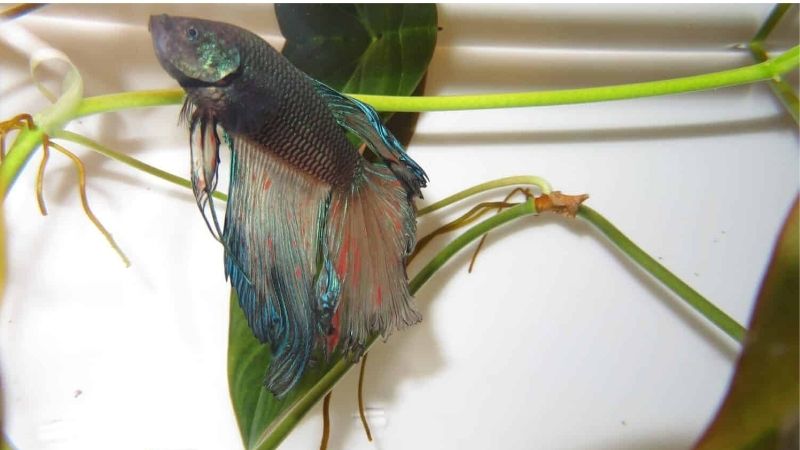
Four water numbers underpin everything visible. Ammonia and nitrite should read 0 ppm, nitrate under 40 ppm, and temperature between 78-82 F (25-28 C), because a fish outside those ranges shows fin and colour changes within days rather than weeks. Test the water before judging appearance.
Two more numbers matter for interpretation. An adult betta reaches 2.5-3 in (6-7.5 cm) including fins and lives three to five years, so an older fish resting more is behaving normally. Age changes what healthy looks like, which is why baselines matter more than absolutes. Record what normal looks like early.
Feeding response is the third measurable. A healthy fish reaches food within a few seconds and clears two or three pellets inside one to two minutes. Anything slower than that, sustained across two days, is worth pairing with a water test rather than watching further. Response speed is the useful measure.
Fins, Colour and Body Shape
Healthy fins are held open and spread, moving continuously rather than pressed against the body. Clamped fins are among the earliest visible signs of trouble, and they appear with cold water, ammonia exposure and illness alike, which is why the test kit comes before any diagnosis.
Colour should be even and saturated, with no horizontal stress stripes running along the flank. Viewed from above, the body is gently rounded without bulging, and scales lie flat against it. Scales standing out from the body is a serious sign requiring immediate testing. Check from above once a week.
Normal Appearance Versus Action Thresholds
The table below pairs each visible sign with what it means and what to do. Read the healthy column as a baseline for your particular fish, then check weekly against that baseline rather than against a generic description written for a different individual. Your own baseline beats any list.
| What to check | Healthy | Concerning | First action |
|---|---|---|---|
| Fin posture | Open, spread, moving | Clamped against the body | Test water, check temperature |
| Colour | Even and saturated | Faded, horizontal stress stripes | Test ammonia and nitrite |
| Gill movement | Steady, both gills together | Rapid, or one gill held open | Test water, check flow and oxygen |
| Body from above | Gently rounded, scales flat | Bulging, sunken, or scales raised | Fast 24-48 h, then reassess |
| Feeding response | Reaches food within seconds | Ignores food two days running | Test water and temperature |
| Waste output | Dark, formed, regular | Stringy white, or none for days | Fast a day, offer frozen daphnia |
Checking Health in a Real Tank
Reading the signs of a healthy betta fish depends on being able to see the fish properly and on knowing what its normal looks like. Both are affected by the tank itself, which is why the setup shapes how early you notice anything going wrong. Visibility is part of husbandry rather than decoration.
Tank Size, Placement and Fit
A 5-gallon (19 L) tank holds roughly 4-4.5 gallons (15-17 L) of real water and swings faster than a 10-gallon (38 L) one, so visible signs appear sooner in the smaller tank. That is a reason to check more often rather than a reason to panic. Small volumes simply move faster in both directions.
Placement decides visibility as much as temperature. Keep the tank out of direct sun and away from vents, and light it well enough to see colour properly. Measure the real numbers before you order: shelf length against tank length, heater length against water depth. Both take a minute to check.
Establishing a Baseline for Your Fish
Health is a comparison rather than an absolute, and the comparison that matters is against the same fish a month earlier. A betta that has always been pale is different from one that faded across three weeks, and only a written record will tell the two of them apart with any confidence.
Individual bettas differ in colour, activity and resting habits, so a generic description is less useful than your own record. Spend two minutes once a week looking at fins, colour and body shape, and note what normal looks like during the first fortnight after purchase. Write it down rather than trusting memory.
Photographs help more than memory. A picture from above and one from the side each month makes gradual changes obvious, and gradual change is exactly what people miss, because a fish that fades slowly across eight weeks never looks different from one day to the next. Photographs catch what memory misses.
Behaviour That Looks Wrong but Is Not
Bubble nests, flaring at reflections and resting on broad leaves near the surface are all normal. So is hiding for part of the day, particularly in the first week after a move and in fish over three years old, where reduced activity is ordinary rather than a symptom. Context decides, not the behaviour alone.
Bettas also gulp air at the surface using the labyrinth organ, which is normal breathing rather than gasping. The distinction is rate and context: occasional surfacing is expected, while repeated fast surfacing combined with rapid gill movement points at oxygen or water quality. Rate and context separate the two.
Myths That Lead People to Miss Real Problems
Three ideas cause owners to overlook the signs of a healthy betta fish declining. Each replaces an observable check with an assumption, and each one delays action by days or weeks at exactly the point when correction would be quickest and cheapest. Each replaces a check with a guess.
Myth: A Fish That Eats Is Healthy
Bettas eat readily even when stressed or unwell, which makes appetite a late indicator rather than an early one. A fish can be sitting in 0.5 ppm ammonia with clamped fins and still take pellets enthusiastically, so appetite alone confirms very little about its condition. Appetite is a late indicator, not an early one.
Use appetite as one input among several. The useful version is the response speed rather than the fact of eating, since a fish that used to reach food in two seconds and now takes ten has changed measurably even though it is still feeding normally by any casual glance. Watch the speed, not the fact.
Myth: Faded Colour Means Old Age
Colour fades with genuine age, but it fades far faster with stress, cold water and poor quality, and those causes are correctable. Horizontal stress stripes in particular are not an ageing sign at all, and their appearance calls for a water test the same day. Stress stripes are never an ageing sign.
Age-related fading is gradual across many months and comes alongside reduced activity without clamped fins. Stress fading appears within days, usually with fin posture changes, and reverses within one to two weeks once temperature and water quality return to their correct ranges.
Myth: Symptoms Mean You Should Medicate
Most visible problems in this species trace to temperature or water quality, and dosing a treatment adds a chemical stressor without addressing either. Several medications and algaecides contain copper, which kills shrimp and snails at concentrations well below what fish tolerate.
Test first, identify second, treat third. If symptoms cannot be explained by ammonia, nitrite, nitrate or temperature, that is the point to consult an aquatic vet or an experienced local fish store rather than working through the shelf at a general pet shop. Water first, medication last.
Weekly Routine, Equipment and Long-Term Monitoring
Monitoring the signs of a healthy betta fish works best as a fixed habit rather than an occasional inspection. Two minutes a week catches nearly everything early, and pairing it with the water test you already run makes both tasks into a single job. Habit beats occasional inspection every time.
The Weekly Two-Minute Check
Look from the side at fins and colour, then from above at body shape and scales, then watch the feeding response at the next meal. Note anything different from your baseline, and treat two changes appearing together as a prompt to test the water immediately. Two changes together mean something.
Pair the check with the weekly water change. Change 20-30 percent, matched to within 1-2 F (about 1 C), test ammonia and nitrite while the bucket fills, and the whole routine including observation takes about twenty minutes for a small tank. One session covers both jobs comfortably.
Equipment That Keeps the Signs Readable
A separate thermometer is the most valuable tool here, because heater dials commonly sit 2-4 F (1-2 C) out and temperature drives most visible changes. A liquid test kit is second, since strips lose accuracy exactly at the low ammonia readings that matter most. Buy liquid rather than strips.
Lighting matters for observation. Six to eight hours a day on a timer is enough for a planted tank and lets you see colour properly during the check, while excessive light produces algae that obscures the glass and makes weekly inspection considerably harder. Six to eight hours is plenty.
Long-Term Changes and Equipment Drift
Expect gradual change across three to five years. Older fish rest more, colour softens slightly and activity drops, all without clamped fins or fading appetite, which is why comparing against monthly photographs beats comparing against how the fish looked last year. Photographs make it obvious.
Equipment drifts on a similar timescale. Heaters wander 2-4 F (1-2 C) as thermostats age and filters lose flow as impellers wear, and both changes shift the conditions behind the visible signs slowly enough to be blamed on the fish rather than the hardware. Verify the equipment once a year.
Frequently Asked Questions
These come up when an owner has noticed something different and is trying to decide whether it warrants action. Most signs of a healthy betta fish questions are really about telling normal variation apart from an early symptom. Rest and decline can look similar at a passing glance.
How can I tell if my betta is stressed?
Look for clamped fins, faded colour and horizontal stress stripes, especially two of the three appearing together. Test ammonia, nitrite, nitrate and temperature the same day, since stress signs are usually a response to conditions rather than a condition in themselves. Test the same day you notice.
Is my betta supposed to rest on the bottom?
Resting on leaves, decor or the substrate is normal, particularly in older fish. The concern is prolonged bottom-sitting combined with clamped fins, faded colour or refusing food, which together suggest cold water or a water quality problem rather than ordinary resting. Posture and colour decide it.
Do bubble nests mean my betta is healthy?
They are a positive sign rather than a requirement. Males build them when conditions suit them, so a nest suggests warmth and stable water, but plenty of healthy fish never build one, and the absence of a nest on its own means very little about the overall condition of the fish itself.
What does a healthy betta’s waste look like?
Dark, formed and produced regularly. Stringy white waste or none across several days points at constipation or internal problems, and the first step is a fasting day followed by frozen daphnia rather than a medication, provided the water tests come back clean. Diet fixes most cases.
How often should I check my betta?
A two-minute look once a week alongside the water change catches nearly everything early. Daily glances during feeding are enough between those checks, since the feeding response is the single most useful indicator you get without handling the fish at all. The signs of a healthy betta fish are visible at feeding time.
See More:
Conclusion
The signs of a healthy betta fish are fins held open, even saturated colour with no stress stripes, steady gill movement, a gently rounded body with flat scales, a feeding response inside a few seconds, and dark formed waste produced regularly. That is six checks in about two minutes a week.
Check those six once a week alongside the water change, keep a baseline from the first fortnight, and test ammonia, nitrite, nitrate and temperature whenever two of them change together. Nearly every problem in this species shows up in those checks before it becomes serious. That is the whole method.
Ready to decide? Our #1 pick for 2026 is the Fin posture.
Live price & availability on Amazon.
Related Reviews & Guides

Aquarium Ich Disease Treatment Review
Fishless Cycle Aquarium Guide: Doses, Timing and the Proof