Last Updated: October 17, 2026
- Cleaning Algae from Glass at a Glance
- First, Find Out Whether the Tank Is Glass or Acrylic
- Tools and What Each One Is Good For
- Step-by-Step: Cleaning the Glass During a Water Change
- Match the Method to the Type of Algae
- Keeping Sand and Gravel Out of the Cleaner
- Acrylic Safety Rules
- Handling Stubborn Spots on Glass
- Reducing Stress to Fish While Cleaning
- Maintenance Schedule
- Frequently Asked Questions
The safest way to clean algae off aquarium glass is to match the tool to the tank material, wipe soft algae with a magnetic cleaner or pad, scrape hard spots with a blade held at a shallow angle, and keep every tool away from loose sand or gravel. Done at the start of a routine water change, with the fish left in the tank, the job takes a few minutes and causes little stress. Most trouble comes from two mistakes: using a steel blade on acrylic, and letting a single grain of sand get trapped under a pad.
Quick answer: Our top pick in 2026 is the Best tool for soft green film on glass — our #1 rated choice. See the full ranked comparison, alternatives and buying advice below.
Cleaning Algae from Glass at a Glance
| Question | Short answer |
|---|---|
| Best tool for soft green film on glass | Magnetic cleaner, algae pad or scrubber sponge |
| Best tool for hard green spot algae on glass | Metal or rigid plastic razor blade held at about 45 degrees |
| Best tool for acrylic | Soft pad made for acrylic, or a plastic blade only |
| Stay away from | Silicone corner seams, and the area within about an inch of the substrate |
| How often | At each routine maintenance visit, usually weekly |
| Do fish need to be removed? | No, in almost every case |
| Real fix for fast regrowth | Reduce light hours, excess nutrients and overfeeding |
First, Find Out Whether the Tank Is Glass or Acrylic
Glass is hard and resists scratching, which is why metal razor blades and rigid scrub pads can be used on it with care. Acrylic is much softer; one hobby source puts its scratch resistance at roughly a tenth of glass. A steel blade or a coarse pad leaves permanent scratches on acrylic, and they cannot be buffed out without draining the tank. Cleaning guides from aquarium hobby retailers and reef-keeping sources agree on this point, and they give the same practical rule: if you are not sure which material you have, treat the tank as acrylic until you confirm it.

Aqueon Aquarium Algae Scraper, Fish Tank Magnetic Glass Cleaner for Glass/Acrylic, Small
Included for 'How to Clean Algae Off Aquarium Glass Without Stressing Fish' because the listing specifies Fish Tank Magnetic Glass Cleaner for Glass/Acrylic and Small, details this guide uses to compare options.
View on Amazon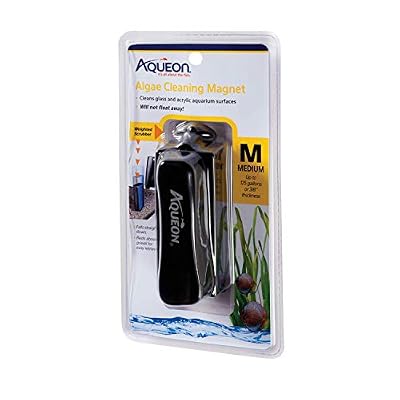
Aqueon Aquarium Algae Scraper, Fish Tank Magnetic Glass Cleaner for Glass/Acrylic, Medium
Included for 'How to Clean Algae Off Aquarium Glass Without Stressing Fish' because the listing specifies Fish Tank Magnetic Glass Cleaner for Glass/Acrylic and Medium, details this guide uses to compare options.
View on Amazon
API Algae Scraper for Glass Aquariums 1-Count Container
Included for 'How to Clean Algae Off Aquarium Glass Without Stressing Fish' as a relevant option in this category; details come from the product listing.
View on Amazon
API HAND HELD ALGAE PAD For Glass Aquariums 1-Count Container
Included for 'How to Clean Algae Off Aquarium Glass Without Stressing Fish' as a relevant option in this category; details come from the product listing.
View on AmazonCheck the manufacturer’s specification or label if you have it. Acrylic tanks are noticeably lighter than glass of the same size, often have rounded corners or seamless joins, and show scratches more easily. Tapping the panel is sometimes suggested as a test, but it is not reliable, so do not rely on sound alone. Many all-in-one tanks and some large display tanks are acrylic, so do not assume.
Tools and What Each One Is Good For
| Tool | Glass | Acrylic | Notes |
|---|---|---|---|
| Magnetic cleaner (pad type) | Good | Good, if the inserts are made for acrylic (some models are glass-only) | Fast for weekly film; weak on hard deposits; can trap grit |
| Algae pad or scrubber sponge on a handle | Good | Only soft, non-abrasive versions | Rinse the pad in clean water before each use |
| Metal razor blade scraper | Good for hard spots | Never | Replace worn or rusty blades |
| Plastic razor blade | Good | The usual choice for hard spots | Safer near silicone seams |
| Cloth dampened with fresh water or diluted vinegar | Outside glass, above the waterline | Use only mild cleaners and test a small area | Removes mineral crust; keep it out of the water |
Avoid household glass sprays and ammonia-based cleaners near an aquarium. Residue and fumes can reach the water, and fish are far more sensitive to them than people are.
Step-by-Step: Cleaning the Glass During a Water Change
- Clean before the water change, not after. Loosened algae and any dislodged particles are then removed with the old water. Cleaning after refilling leaves floating debris behind.
- Turn off or reduce filter flow if the filter intake is close. Fine algae fragments and loose film can clog a sponge or media quickly. Many keepers simply leave the filter running and net or siphon the debris afterward.
- Check the tool for grit. Rinse a pad or scraper under the tap and run a fingertip over it. A grain of sand stuck to a pad acts like sandpaper.
- Push sand or gravel away from the front panel. A hand or a spare piece of airline tubing works. Mounded substrate against the glass is the main reason magnet pads pick up grit.
- Start at the top and work down in smooth strokes. Vertical or overlapping strokes keep the debris moving toward the bottom where it can be siphoned. Let the tool do the work rather than pressing hard.
- Stop about an inch above the substrate. Cleaning guides commonly advise keeping magnet cleaners and pads about an inch clear of sand and gravel. Clean the remaining strip by hand with a soft tool or lower the substrate edge with a gentle swipe first.
- Scrape hard spots last. Use a blade at roughly 45 degrees, with light pressure, only on glass (metal) or any panel (plastic). Held flat, a blade skates over the spot; held too steeply, it can catch and mark the surface.
- Stop short of the seams. Leave a quarter inch or so before the silicone at corners. A nicked seal can weaken and eventually leak.
- Siphon out debris and finish the water change. Then refill with dechlorinated water at a similar temperature.
Match the Method to the Type of Algae
| What you see | Likely cause | Best removal | Fix at the source |
|---|---|---|---|
| Brown dust on new tank glass | Diatoms, common in new setups | Soft pad or magnet; often fades by itself | Patience; avoid long light hours; it usually resolves as the tank matures |
| Green film that returns in days | Light and nutrients out of balance | Magnetic cleaner or pad | Shorten photoperiod, reduce feeding, keep up with water changes |
| Small hard green dots | Green spot algae | Razor blade on glass; plastic blade on acrylic | Check phosphate and light levels; keep a steady plant fertilizer routine in planted tanks |
| Slimy blue-green sheet that smells earthy | Cyanobacteria (a bacterium rather than a true alga) | Siphon it out as you remove it | Improve flow, reduce nutrients, remove dead material |
| White crust above the waterline | Dried mineral deposits | Damp cloth with fresh water or diluted vinegar on the outside or above the water | Wipe the rim regularly; keep a tight lid |
Cleaning only removes the symptom. Reef and freshwater hobby guides alike point out that rapid regrowth signals a nutrient or lighting problem, and that scrubbing more often does not cure it. A commonly suggested starting point is a photoperiod of about six to eight hours, steady feeding of only what the fish finish quickly, and regular partial water changes. Fast-growing live plants also compete with algae for nutrients.
Keeping Sand and Gravel Out of the Cleaner
Sand is the single biggest cause of scratches on both glass and acrylic. A magnet cleaner can pick up grains when it slides near the substrate, and the inner and outer pads then grind that grain across the surface with magnetic force behind it.
- Keep the pad an inch or more above the substrate line.
- Level the substrate near the front glass so it does not pile against the pane.
- Rinse the pad every time you lift it out of the tank.
- Use a magnet strength rated for your glass thickness. A magnet that is too weak will slip, and one that is too strong makes the pad drag and press grit harder into the surface.
- Replace worn or cracked pads and blades; a rough edge acts like a file.
- Consider a cleaner with a blade or pad that touches the glass at only a few points, which leaves a small gap and makes it harder to trap grains.
- In sand tanks, slide the magnet only when the bottom edge is visible, or clean the lowest inch by hand with a soft sponge.
Acrylic Safety Rules
- Never use a metal blade, a scouring pad or a pad labeled for glass only.
- Use a soft acrylic-safe pad, a microfiber-style scrubber, or a plastic blade at a shallow angle.
- Do not use ammonia-based glass sprays, abrasive powders or paper towels, which can scratch, cloud or yellow the surface.
- Expect to polish out light scratches with an acrylic scratch-repair kit, and for inside scratches this usually means draining the water below the mark. Deep scratches are hard to remove, so prevention matters more than repair.
- Wipe in one direction rather than scrubbing in circles, which makes fine swirl marks easier to see.
Handling Stubborn Spots on Glass
Green spot algae is hard and slightly raised, and soft pads often skate over it. On glass, a sharp razor blade scraper held at a shallow angle removes it cleanly. Wet the spot first. Dry scraping increases friction and risk of scratches. For spots in a corner, use a plastic blade so the tip does not nick the silicone.
Coralline algae in saltwater tanks is a similar hard deposit; a blade on glass is the normal removal tool there as well, and it is one reason glass is easier to maintain than acrylic in reef setups.
If spots keep returning on the same panel, look at what is shining on it. A tank near a sunny window often grows algae on the sunlit side first. Moving the tank, using a curtain, or shortening the lighting period usually helps more than a stronger cleaner.
Reducing Stress to Fish While Cleaning
- Work slowly. Quick sweeps near the fish startle them. Slow, steady motions are usually ignored after a minute.
- Do not remove fish unless needed. Netting is usually more stressful than a quiet scrub.
- Shy or skittish species. Clean one pane at a time and pause if fish are crowded into a corner or hiding.
- Bettas and long-finned fish. Keep the tool clear of fins, and avoid drifting algae near the filter intake.
- Shrimp and snails. Look for them on the glass before scraping. A blade or magnet can crush a small snail or a shrimp molting against the pane.
- Avoid bumping the glass. Magnet-related knocks and blade chatter transmit sound into the water.
- Do not use chemical algae treatments while cleaning. Many algaecides, and some liquid additives, contain ingredients that harm invertebrates and sensitive fish.
Maintenance Schedule
| When | Task |
|---|---|
| Each water change (usually weekly) | Wipe the front and sides with a magnet or pad; siphon debris |
| Every two to four weeks | Scrape hard spots; inspect pads and blades for wear |
| Monthly | Wipe the rim, lid and outside of the glass; rinse the pad thoroughly |
| Every few months | Replace worn blades and pads; check seams for nicks |
| Whenever algae returns very fast | Review light hours, feeding, nitrate level and sunlight exposure |
Frequently Asked Questions
Can I use a razor blade on an acrylic aquarium?
A metal razor blade should never be used on acrylic because it leaves permanent scratches. A plastic razor blade made for acrylic is the usual option for hard spots. Always use light pressure and a shallow angle.
Should I take the fish out when cleaning the glass?
In nearly all cases the fish can stay in. Moving fish adds handling stress and exposes them to more risk than a few minutes of quiet scrubbing. The main exceptions are tanks that need major rescaping or tanks where a chemical cleaning agent is required.
Why does algae keep coming back on the glass right after I clean it?
Fast regrowth usually points to too much light, too many nutrients, or both. Shortening the photoperiod, feeding less, and keeping up with water changes are the standard fixes. Increasing how often you scrub does not address the cause.
How do I clean the glass without scratching it with sand?
Keep any magnet or pad at least an inch above the substrate, rinse the tool before each use, and level the substrate away from the front pane. Check the pad for grit by running a finger across it. Scratches in glass are very hard to remove, so prevention is the best approach.
Are magnetic algae cleaners safe for acrylic tanks?
They can be, if the pad is designed for acrylic and is kept free of grit. Glass-only pads and abrasive scrubbers can scratch acrylic. Check the packaging of the cleaner for material compatibility and magnet strength for your panel thickness.
Can I use vinegar to clean the inside of an aquarium?
Diluted vinegar on a cloth is suitable for mineral crust on the outside or above the waterline. It should not be sprayed or poured into the tank water. Rinse the cloth and the area with fresh water afterward, and avoid ammonia-based or scented cleaners.
How often should I clean algae off aquarium glass?
Most home tanks benefit from a wipe at each routine maintenance visit, which is typically weekly. A light film is easier to remove than a thick coating, and regular cleaning keeps the view clear. If a tank needs scraping every few days, it is a sign to look at light and nutrient levels.
Ready to decide? Our #1 pick for 2026 is the Best tool for soft green film on glass.
Live price & availability on Amazon.
Related Reviews & Guides



How to Do a Fish Tank Water Change: The Full Step-by-Step
CO2 for Planted Aquariums: Do You Need It and How Systems Work