Last Updated: October 4, 2026
- First identify the fish, not just the color
- Design the aquarium around adult size
- Water: minerals and stability before a magic number
- Feed a grazer, not a tiny predator
- A maintenance rhythm that exposes problems early
- Pregnancy, fry and responsible population control
- Common mistakes and better corrections
- When ordinary care is no longer enough
- Sources
- Related Guides
Molly Fish Care: Hard Water, Diet and Tank Size
The word “molly” looks precise on a shop label, but it can describe several Poecilia species, domestic hybrids, and body shapes ranging from compact short-finned fish to large sailfins. That ambiguity matters. A tank planned around a small juvenile may be cramped when an adult sailfin matures, and advice borrowed from coastal wild populations can lead to unnecessary salt use in a freshwater aquarium. Good molly fish care starts by identifying what you bought, then providing mineral-rich, clean water and room for a constantly moving livebearer.
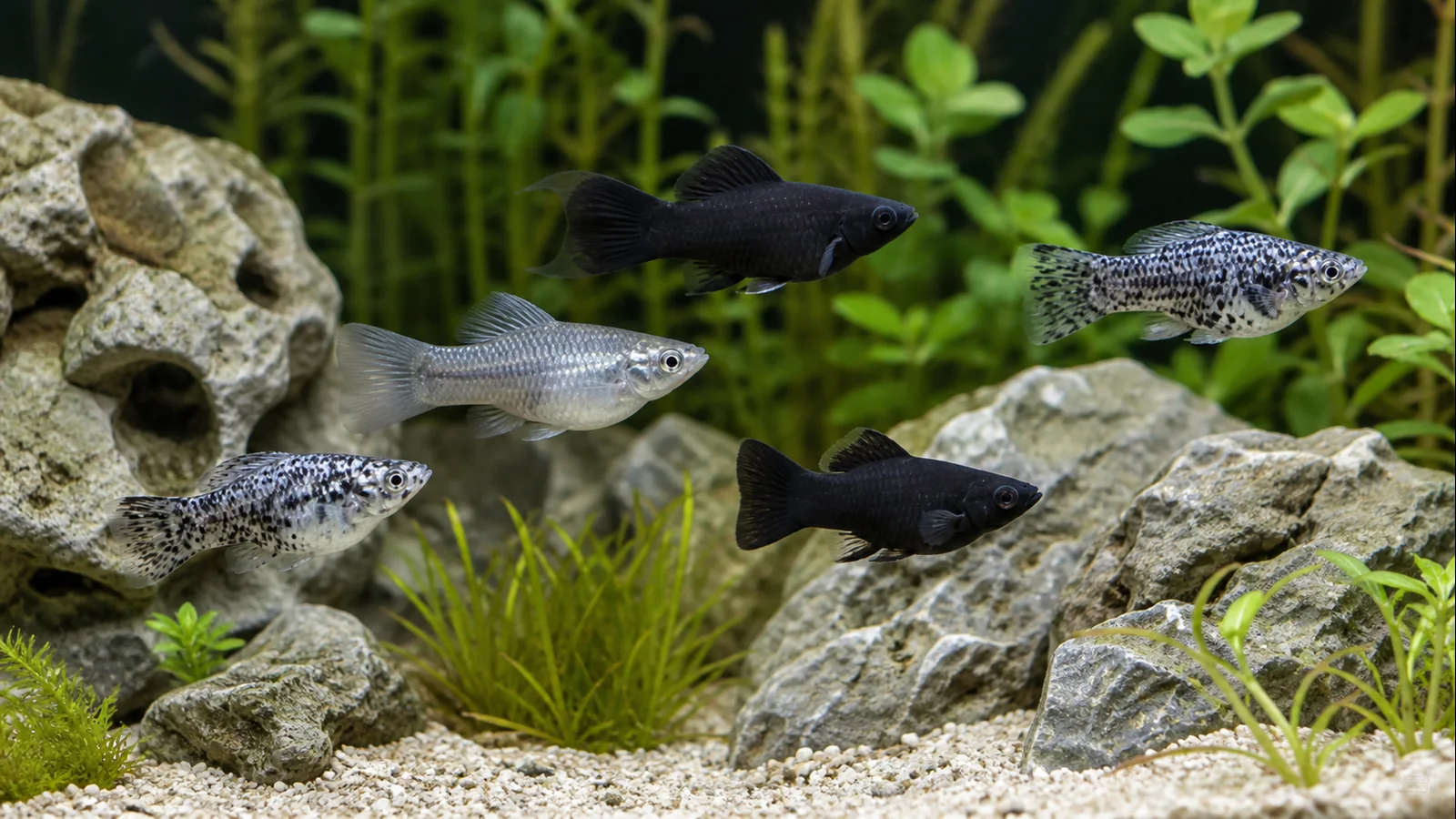
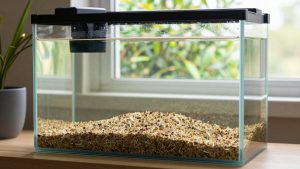
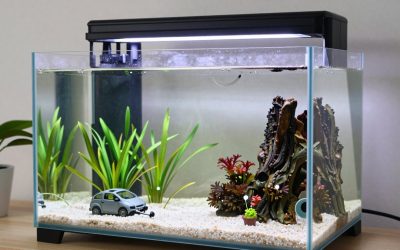
Editorial illustration; not evidence for species identification.
As an Amazon Associate we earn from qualifying purchases at no extra cost to you.




First identify the fish, not just the color
Black, gold, dalmatian and lyretail describe appearance rather than species. The aquarium trade commonly includes Poecilia sphenops, P. latipinna, P. velifera and hybrids. These stable FishBase records help check accepted names, adult size and natural distributions, but they cannot identify a hybrid from a color name alone. Ask the seller about the strain, parent species and expected adult length. A broad-bodied sailfin with a tall dorsal fin needs a larger footprint than a standard short-fin molly.
Wild mollies occupy varied waters, including fresh, brackish and sometimes coastal habitats. That ecological breadth does not mean every captive molly requires salt. Domestic stock can thrive in stable freshwater when hardness and alkalinity suit it. Salt also affects plants and tank mates, accumulates between water changes, and does not repair poor filtration. Use it only for a clearly defined reason supported by a veterinarian or experienced aquatic professional, never as a routine substitute for appropriate minerals and maintenance.
Design the aquarium around adult size
Mollies are active mid- and upper-water swimmers that also browse surfaces. For standard forms, begin with a tank whose usable volume is roughly 75 litres/20 US gallons or more; larger sailfin types deserve substantially more swimming length and dilution capacity. Treat those figures as conservative planning points, not universal minimums. Adult strain, group size, decor displacement and filtration determine the real capacity. A long rectangular aquarium is more useful than a tall narrow one.
Provide open lanes across the front and middle, with robust plants or wood around the edges. Fine-leaved cover gives fry somewhere to evade adults, although saving every fry quickly creates a population problem. Fit a lid because livebearers can jump when startled. Keep intakes guarded if newborn fry may be present, while maintaining enough circulation to prevent debris pockets.
Mollies are social, but adding several creates sex-ratio and reproduction decisions. All-male groups may display and chase; mixed groups produce fry and can subject females to persistent courtship. If keeping both sexes, more females than males may spread attention, but it cannot eliminate harassment. Watch individuals rather than trusting a ratio. Dense cover, ample floor plan and a spare cycled enclosure make intervention possible.
Water: minerals and stability before a magic number
Most domestic mollies perform better in moderately hard to hard, alkaline freshwater than in very soft, acidic water. Published ranges differ among Poecilia species and populations, so there is no honest genus-wide “perfect” value. Verify the likely species and ask what water the breeder used. As a practical captive starting zone, many keepers maintain domestic mollies around 24–28°C/75–82°F with neutral-to-alkaline pH and measurable general and carbonate hardness. This is a husbandry range, not a claim about every wild locality.
The Ornamental Aquatic Trade Association’s fish-keeping guidance emphasizes matching fish to water and maintaining water quality. Test source water before changing it. If tap water is naturally soft, choose a properly formulated remineralization approach and verify results with tests rather than adding unmeasured kitchen ingredients. Sudden changes in conductivity, pH or temperature can be more stressful than a stable value near an accepted boundary.
Ammonia and nitrite should remain undetectable on a suitable aquarium test, while nitrate is controlled through stocking, feeding, plants and water changes. Complete the fishless aquarium cycling process before mollies arrive. Recheck after fry appear because dozens of growing fish can overwhelm a filter that handled the adults.
Feed a grazer, not a tiny predator
Mollies browse algae films, plant-associated material and small invertebrates. In captivity, offer a varied omnivorous diet with a meaningful plant component: a reputable staple food, algae- or vegetable-based items, and appropriately sized frozen or live foods from safe sources. This does not make them aquarium cleaners. They still require complete nutrition, and their grazing will not correct excess light or nutrients.
Feed portions the group can consume without food carpeting the substrate. Observe whether timid females and smaller fish receive food; dominant adults can monopolize a single feeding point. Distribute small portions across the surface and occasionally use sinking or slow-falling formats. Remove persistent leftovers. Avoid prescribing supplements or dosing foods without a diagnosed need, because excess vitamins, minerals or medication can be harmful.
A maintenance rhythm that exposes problems early
Check fish and equipment daily. Healthy mollies should move steadily, show interest in food and hold their fins normally, although behavior varies with strain and social context. Weekly, test key parameters, siphon accessible debris and replace an amount of water appropriate to measured waste accumulation. Condition new water and match temperature reasonably closely. Never rinse all biological media under untreated tap water or replace it simultaneously.
Record temperature, hardness, alkalinity and nitrogen results. A log makes slow drift visible and distinguishes a recurring source-water issue from a one-off test error. Filters should move and oxygenate water without pinning long-finned mollies against the current. If choosing equipment, account for the adult group and expected fry rather than the shop-day bioload.
Pregnancy, fry and responsible population control
Female mollies are livebearers and may store sperm, so a newly purchased female can produce multiple broods without a male currently present. Do not assume a swollen abdomen proves pregnancy; body shape, feeding, constipation and disease can look similar. Provide low-stress cover and observe rather than repeatedly netting a suspected pregnant fish.
Decide before the first brood whether fry will remain, move to a prepared grow-out tank, or be offered to responsible keepers. Local shops may not accept them. Deliberately allowing predation is not a reliable population plan, while saving every newborn can cause crowding within months. Single-sex housing reduces births but requires accurate sexing and monitoring for aggression. Compared with the related advice in our guppy care guide, molly planning must allow for heavier adult bodies and, in sailfins, substantially more space.
Never release unwanted fish or aquarium water outdoors. Rehome through reputable local networks and confirm that the recipient has compatible hard water and adequate space.
Common mistakes and better corrections
- Adding salt automatically: determine species, source water and the actual problem first. Improve mineral balance and water quality with measured methods.
- Buying for color alone: confirm adult size and fin type so the tank does not become undersized.
- Treating mollies as algae control: feed a complete varied diet and address algae through light, nutrients and maintenance.
- Ignoring reproduction: calculate future bioload and arrange homes before keeping mixed sexes.
- Mixing with soft-water specialists: a peaceful temperament does not overcome incompatible chemistry.
- Calling them indestructible beginner fish: mollies can be rewarding, but only when their water matches. Compare alternatives in our beginner fish overview.
When ordinary care is no longer enough
Clamped fins, repeated surface distress, rapid breathing, inability to swim normally, sores, persistent weight loss or unexplained deaths demand prompt action. First verify temperature, ammonia, nitrite, recent changes and equipment operation. Isolate only if a cycled, appropriately heated enclosure is ready and separation will reduce risk. Do not guess at medication, salt concentration or antibiotic treatment from symptoms alone.
Contact a qualified aquatic veterinarian for suspected disease, injury or continuing decline. An experienced aquatic professional can audit water, stocking and filtration, but should not replace veterinary diagnosis or prescribe restricted medicines. Bring the fish’s identification, water log, diet, timeline and clear photographs. Mollies are adaptable fish; their adaptability is best honored with measured freshwater care, not vague labels or automatic additives.
Sources
- FishBase species records for P. sphenops, P. latipinna, and P. velifera — taxonomy, size, distribution and environmental records.
- GBIF species search — accepted-name and occurrence context.
- Seriously Fish knowledge base — specialist captive-care profiles and bibliographies.
- OATA useful fish-keeper information — trade-body guidance on welfare, water and responsible keeping.
Related Reviews & Guides
Cryptocoryne Wendtii Care: Recover From Melt
8 Best Gravel Vacuums: Top Picks Reviewed and Compared (2026)