Last Updated: October 4, 2026
Swordtail Fish Care: Space, Water and Population Control
The male’s sword makes this livebearer look elegant, but the rest of the animal is built for speed. Swordtails are active, can grow substantially larger than guppies or platies, and produce young efficiently. A starter tank selected for a 4 cm shop juvenile may fail on swimming room, social pressure and biomass within months.
The green swordtail is Xiphophorus hellerii, although ornamental lines may be hybridized with platies. Verify species context with FishBase and GBIF. Wild records explain natural distribution and environmental breadth; a domesticated red, lyretail or wagtail strain has a captive history that also matters.
As an Amazon Associate we earn from qualifying purchases at no extra cost to you.







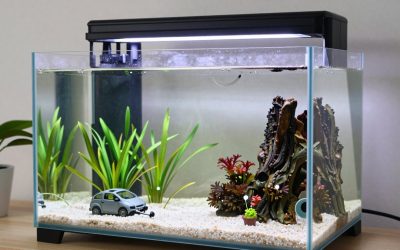
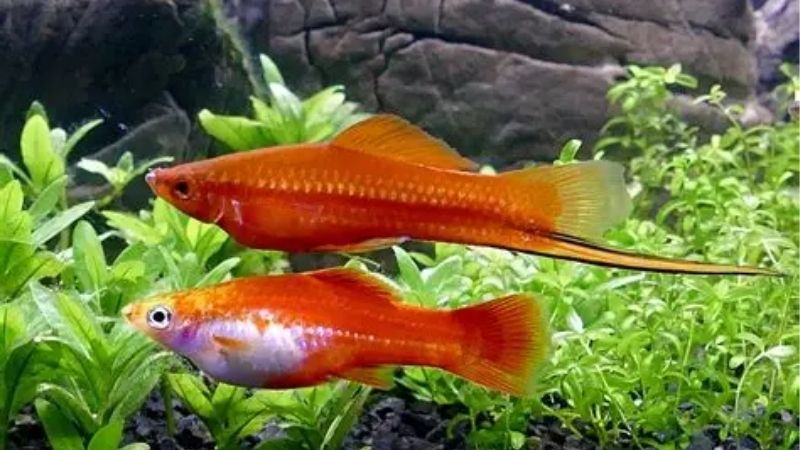
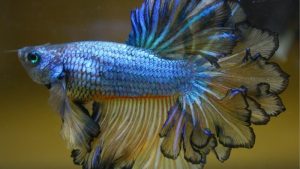
Editorial illustration; not evidence for species identification.
Reject the undersized starter-tank premise
An adult-focused swordtail setup begins around 110 litres/29 US gallons with a long footprint for a small group, and larger is preferable for mixed sexes or companions. Adult females can be robust and males use room for courtship and displays. Tank length and unobstructed routes matter more than a deep decorative column.
Use a fitted lid and close gaps around hoses. Swordtails can jump, especially after startling or during pursuit. Keep water below the rim as the lid design requires, and inspect covers after maintenance.
Place dense plants and wood along the back and ends to provide visual barriers, leaving a broad center lane. Avoid narrow caves that trap a pursued female. Protect filter intakes if fry may be present. A planted perimeter can absorb some nutrients but cannot compensate for excessive stocking.
Swordtails may appear on beginner fish lists, but the required tank and population plan are not tiny. Compare the commitment honestly before purchase.
Water should carry minerals, not constant additives
Captive swordtails generally suit moderately hard, neutral-to-alkaline freshwater, often around 22–26°C/72–79°F. Seriously Fish provides a specialist synthesis, and OATA fish-keeping resources offer industry welfare guidance. Published broad ranges must be reconciled with the breeder’s conditions and your sustainable supply.
Do not infer that tolerance of mineralized water makes aquarium salt a routine requirement or cure. Test general hardness, carbonate hardness and pH. If household water is very soft, consult an experienced aquatic professional about a consistent measured preparation method rather than adding arbitrary scoops.
Choose a stable temperature inside a supported overlap, verify it with an independent thermometer and match replacement water. Wild-habitat seasonal variation should not be recreated as abrupt captive change. Domestic strains may have different rearing histories from wild populations.
Cycle the aquarium before stocking. Ammonia and nitrite should remain undetectable; nitrate and organic waste must be controlled through adult stocking, careful feeding and regular partial changes. Every brood increases load, even when fry are still visually tiny.
Filter an active, growing population
Use biological filtration sized for current and plausible near-future biomass. Moderate flow and surface movement support oxygenation, but provide zones where fish can rest. Check that waste does not settle behind every plant and that no individual is forced to swim against the outlet continuously.
Clean mechanical media when reduced output or trapped debris indicates need. Preserve biological media according to manufacturer instructions and avoid replacing all media simultaneously. A larger filter does not create more swimming space and is not permission to postpone rehoming.
During warm weather or pregnancy-heavy stocking, observe oxygen-related behavior carefully. Surface crowding and rapid respiration demand immediate testing of temperature, filter operation, ammonia and nitrite. Do not assume livebearers gulping near the top are merely hungry.
Social structure and sex pressure
Mature males carry the elongated lower caudal rays called the sword and a narrow gonopodium; females generally have a fan-shaped anal fin. Decorative fin strains and immature fish can complicate identification. Confirm sex over time.
One male with multiple females is often suggested to spread courtship, but a ratio is risk reduction, not a guarantee. More females also mean more potential broods. Multiple males may display and chase, requiring a much larger footprint and broken sight lines. Keep a single-sex group if reproduction is unwanted, remembering that purchased females may already retain sperm from previous mating.
Watch resource access. Short pursuit differs from a female permanently cornered behind equipment. Torn fins, weight loss, hiding and missed meals call for separation. Do not add females automatically when the tank lacks adult capacity; move the aggressor or victim to prepared cycled housing.
Tank mates should share hard-water chemistry, moderate warmth, active swimming and adult scale. Guppies overlap in some respects but bring different fin shapes and another source of fry; review guppy care before mixing. Avoid slow long-finned animals, tiny prey-sized fish and soft-water specialists.
Feed omnivores with variety
Use a complete livebearer flake or appropriately sized granule as a staple. Rotate safe frozen or cultured live invertebrates and vegetable-rich formulated foods. Swordtails browse surfaces but are not algae-removal equipment. Small portions of safe blanched vegetables can supplement variety if remains are removed promptly.
Feed an amount consumed quickly once or twice daily, adjusted for age, temperature and body condition. Spread food across the long tank so subordinate fish can eat. Juveniles may need a different frequency and particle size, which increases maintenance demands.
Persistent swelling, wasting, white stringy feces or refusal is not a diagnosis. Test environmental conditions and document social and dietary context. Do not dose salt, antibiotics or antiparasitics from guesswork. An aquatic veterinarian or qualified fish-health professional should diagnose continuing or severe problems and determine any treatment.
Population control is part of daily care
Swordtails give birth to free-swimming fry. A female may produce repeated broods, and dense planting can increase survival. Before mixing sexes, secure cycled grow-out capacity and confirmed adopters or retailer arrangements. “I will find homes later” is not adequate when local demand is unknown.
Choose among three honest paths: a carefully verified single-sex display; a mixed group with permanent capacity for foreseeable young; or a managed breeding project with records, separation space and placements. Never rely on overcrowding, predation or neglected water to limit numbers.
Do not release swordtails. Introduced livebearers can establish populations and affect ecosystems. The USFWS aquatic invasive species program explains the broader prevention principle; readers outside the United States should consult local law and authorities. Rehome responsibly or seek professional humane advice.
Arrival and operating routine
Quarantine every new group in mature separate housing. The new-fish quarantine guide covers observation and dedicated tools. Match acclimation to measured source and destination water, and avoid unnecessary prophylactic medicine.
Daily, count adults and fry, inspect fins and observe respiration, appetite and chasing. Weekly, test water, perform an appropriate conditioned and temperature-matched partial change, and siphon debris from sheltered zones. Log births and placements so population growth is visible on paper.
Monthly, inspect lid gaps, heater, intake and filter flow. Recalculate whether adult fish and growing juveniles still fit. Maintenance frequency can support water quality, but it cannot give a crowded fish an adequate swimming lane or escape distance.
Keep a written contingency for every life stage: where an injured adult can recover, where a late brood can grow, and who can accept fish. Test spare filters and heaters before they are needed. Population planning becomes credible only when backup housing is cycled, covered and physically available.
Responsible swordtail fish care begins with refusing the miniature-fish myth. Provide length, stable mineral-rich water, a secure lid and a social plan that includes separation. Most importantly, decide the fate of offspring before creating them. When illness or injury exceeds a measurable husbandry correction, professional aquatic-health care—not unsupported dosing—is the welfare boundary.
Related Reviews & Guides


Best Quiet Aquarium Kit for Bedroom: Smart, Restful Picks
Led Aquarium Light vs T5 Fluorescent Light: Which Is Right for Your Home (2026)