Last Updated: September 25, 2026
How much food to feed fish has a measurable answer: roughly 1-2% of body weight per day for tropical adults, delivered as whatever is cleared inside two minutes with nothing reaching the substrate. The charts below convert that into portions you can actually see and repeat, plus the adjustments for temperature and food form.
As an Amazon Associate we earn from qualifying purchases.
As an Amazon Associate we earn from qualifying purchases at no extra cost to you. Prices and availability are accurate as of the date shown and are subject to change.
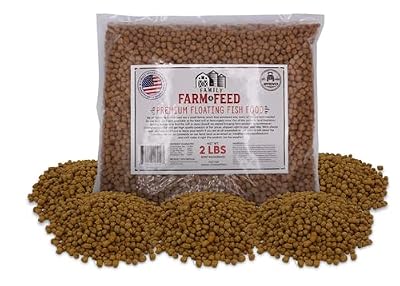
FAMILY FARM AND FEED | Premium Floating Fish Food | Pond and Lake | Pellets | 2 Pounds
Selected for "How Much Food to Feed Fish: Chart, Numbers and Portions": this listing is fish food (FAMILY FARM AND FEED | Premium Floating Fish Food | Pond and Lake | Pe), matching the equipment this article covers.
View on Amazon
Tetra Goldfish Flakes Fish Food, 7.06 oz
Selected for "How Much Food to Feed Fish: Chart, Numbers and Portions": this listing is fish food (Tetra Goldfish Flakes Fish Food, 7.06 oz), matching the equipment this article covers.
View on Amazon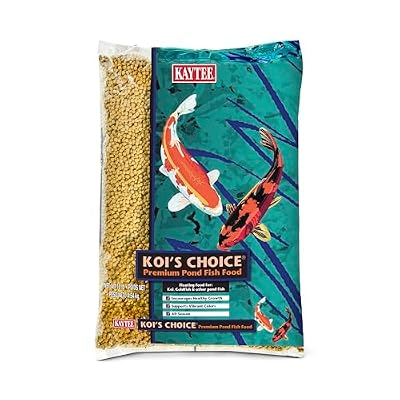
Kaytee Koi's Choice Floating Fish Food for Koi, Goldfish & Pond Fish
Selected for "How Much Food to Feed Fish: Chart, Numbers and Portions": this listing is fish food (Kaytee Koi's Choice Floating Fish Food for Koi, Goldfish & Pond Fish), matching the equipment this article covers.
View on Amazon
Nutrena Nature's Canvas Trophy Fish Feed, Extruded Pellets, 25 lbs
Selected for "How Much Food to Feed Fish: Chart, Numbers and Portions": this listing is fish food (Nutrena Nature's Canvas Trophy Fish Feed, Extruded Pellets, 25 lbs), matching the equipment this article covers.
View on AmazonBy David Nguyen
Quick answer: Our top pick in 2026 is the Under 1 in (2.5 cm) — our #1 rated choice. See the full ranked comparison, alternatives and buying advice below.
The Portion Chart and How to Read It
This is a lookup rather than an explanation. The first table answers how much food to feed fish by adult size and species type; the second gives the adjustments to apply for temperature, tank load and food form. Both belong here rather than at the end.

The Decision Numbers: Body Weight, Clearing Time and Feeds Per Day
Two figures anchor everything. Tropical adults consume roughly 1-2% of body weight in dry food per day, and any portion should be cleared within one to two minutes. The first is a planning figure; the second is the check you run at the tank.
| Adult fish size | Type | Feeds per day | Portion per fish, per feed | Clear within |
|---|---|---|---|---|
| Under 1 in (2.5 cm) | Nano shoaling | 1-2 | 2-3 micro pellets or a flake fragment | 60 seconds |
| 1-2 in (2.5-5 cm) | Community mid-water | 1-2 | 4-6 small pellets or a small pinch | 2 minutes |
| 2-4 in (5-10 cm) | Community, larger | 1 | 6-10 pellets, roughly eye volume | 2 minutes |
| 4-8 in (10-20 cm) | Cichlid or similar | 1 | 10-15 pellets, sized to mouth | 2 minutes |
| Any size | Herbivore grazer | 2 small | Half the above plus grazable surfaces | 2 minutes |
| Any size | Nocturnal bottom feeder | 1, after lights out | Sinking wafer or granules | Overnight |
| Fry and juveniles | Any | 3-5 | Barely visible dusting | 60 seconds |
| Predatory species | Large carnivore | Every 1-2 days | One meal to visible fullness | 5 minutes |
Portion per fish is a starting estimate, not a prescription. Run the clearing-time check for a week and adjust downward whenever anything is still on the substrate afterwards, because that residue is the part that becomes ammonia rather than growth.
The Rule Behind the Portions
Fish have short digestive tracts and no meaningful satiety signal, so they eat what is available rather than what they need. The portion figures above exist because the fish will not stop on their own, which is why the limit has to be set at the container.
The second half of the rule is that the filter, not the fish, sets the ceiling. Whatever is not eaten becomes ammonia within hours, so a tank whose nitrate climbs above 40 ppm each week is being fed more than its filtration and water changes can carry.
Reading the Chart, Units and Margin of Error
Eye volume is the crude field estimate people use per fish, and it is roughly right for community species between 2-4 in (5-10 cm). It becomes unreliable at both extremes, so treat it as a starting point and confirm with clearing time instead.
| Situation | Effect | Adjustment |
|---|---|---|
| Tank below 72 °F (22 °C) | Digestion slows | Cut to one feed daily |
| Tank below 60 °F (16 °C) | Gut transit nearly stops | Feed sparingly or not at all |
| Nitrate above 40 ppm weekly | Filter at its ceiling | Halve the portion before anything else |
| Food on substrate after 2 minutes | Portion too large | Reduce by a third, siphon the residue |
| Bottom species thin | Food intercepted above them | Sinking food, delivered after lights out |
| Mixed feeding levels in one tank | One portion cannot serve both | Split into two smaller deliveries |
| Flake instead of pellets | Same weight looks like far more | Measure by weight or by clearing time |
| Fry present | Higher frequency, tiny portions | 3-5 dustings, siphon residue daily |
Apply the second table after the first. The chart says what a healthy fish of that size should receive; the adjustments say what your particular tank can carry this month, and that second question is where most feeding routines go wrong.
Adjusting for Your Actual Tank
Working out how much food to feed fish is only half a routine. Stocking mix, food form and the physical layout of the tank all change what a given portion actually delivers to the animals it was intended to reach.
Adjusting for Species Mix and Bioload
A community holding top, mid and bottom feeders needs the total split across levels rather than increased. Adding a sinking wafer for the bottom while keeping the flake portion unchanged raises total input, which the nitrate reading will show within two or three weeks.
Herbivores complicate the arithmetic because they graze continuously in the wild. Give them half portions twice daily plus grazable surfaces such as driftwood, algae on hardscape and blanched vegetables, rather than a single large feed that they cannot process at once.
Adjusting for Food Form
Flake and pellet look completely different at the same weight, which is why volume estimates fail when a keeper changes food. A tablespoon of flake weighs a fraction of a tablespoon of pellets, so a portion that looked correct becomes a large overfeed overnight.
Frozen food carries a further complication, since most of its weight is water. Treat a thawed cube as a supplement given once or twice weekly in place of a dry feed rather than as an addition sitting on top of the normal schedule.
Tank Size, Placement and Fit
Measure the lid gap and light clearance before ordering an automatic feeder, since a unit that cannot sit flush against the lid drops food outside the tank. Check the drum clears the fixture and the hinge before committing to a mount position.
Feed away from the filter intake. In tanks under 30 in (76 cm) long, outflow sweeps a surprising share of a flake portion into the filter within seconds, which reads as fish eating quickly and is actually food going straight into the mechanical media.
Where the Chart Stops Working
Any portion chart is a generalisation taken across many tanks. Three situations override it entirely, and recognising them early is worth more than adding further precision to the figures for how much food to feed fish in any size bracket.
When the Formula Fails
Body weight percentages assume a healthy adult at a stable temperature. Fish recovering from illness, newly imported stock still acclimating, and breeding pairs conditioning for spawning all sit outside those assumptions and need observation rather than arithmetic.
Where a fish refuses food for more than a day with clean readings, stop adjusting portions. Test ammonia, nitrite, nitrate and temperature first, correct anything out of range, and take persistent refusal to an aquatic veterinarian rather than dosing the tank.
Variables the Chart Cannot Hold
Competition inside the tank is invisible to a portion figure. A dominant fish can take most of a correctly sized feed, leaving the rest underfed while the total input remains right, which is why individual condition matters more than the number in the dish.
Food quality also varies more than portion size does. A pellet with whole fish or krill meal as the first ingredient delivers more usable protein per gram than one led by wheat or soy, so the same weight on the scale is not the same meal at all.
When to Stop Measuring and Start Watching
Once the routine is running, condition outranks the chart. Fish with rounded but not distended bellies, active feeding responses and no residue on the substrate after two minutes are correctly fed regardless of what the portion table suggested.
Weight loss in one individual while others hold condition points at competition or at that fish specifically, not at the schedule. Feed at two points in the tank, or after lights out for nocturnal species, before changing the overall portion.
Verifying the Portion and Re-Checking It
Any figure for how much food to feed fish is a prediction, and predictions need testing against readings rather than against appearances. This section covers the checks that confirm it, how often to repeat them, and what drifts quietly across a year.
What to Measure and How Accurate It Is
Nitrate before the weekly water change is the single most useful reading, because it integrates everything the tank received over seven days. Use a liquid kit, since strips drift quickly once opened to humidity and nitrate is the test they read worst.
A small digital scale removes the guesswork entirely for anyone switching food types. Weighing a week of portions once tells you far more than repeated visual estimates, and the exercise usually reveals that portions had grown without any decision being made.
How Often to Re-Check
Nitrate weekly. Portion against the two-minute rule monthly, rather than assuming it is unchanged. Fish size annually, because a community stocked with juveniles needs noticeably more food at month eighteen than it did in the first three months.
Re-check after any change to the system: a new food, a new fish, a filter swap or a move to a different room. Each of those resets the assumptions the previous portion figure was built on, sometimes by a considerable margin.
What Drifts Over Time
Portions creep upward almost universally, because a shaken container delivers more as the food settles and because fish behaviour is persuasive. Measuring into a dish rather than shaking over the tank removes most of that drift on its own.
Food itself degrades. Dry products lose vitamin content within roughly six months of opening, faster in a humid room, so buy container sizes you will finish in that window and store them sealed away from heat and light rather than beside the tank.
How Much Food to Feed Fish: Questions
These follow from the chart rather than replacing it. Every answer about how much food to feed fish stays with a measurable check, since visual judgement of portion size drifts steadily upward for almost everyone over a few months.
Is the two-minute rule reliable?
It is the best field check available, provided nothing reaches the substrate. Fish that clear a portion in two minutes and then continue searching are behaving normally rather than signalling hunger, so do not add a second portion on that basis.
How do I feed a mixed community?
Split the total across levels rather than increasing it. Floating food for the upper half and sinking food for the lower, with nocturnal species fed after lights out. Two small deliveries, same daily total, is the working pattern.
Does frozen food count as a full feed?
Yes, and it should replace a dry feed rather than being added to it. Most of a frozen cube is water, so match it against the dry portion it displaces, and thaw it in a little tank water rather than dropping the frozen block in whole.
What if I overfeed once?
Siphon the residue, skip the next feed, and test ammonia the following day. A single overfeed in an established tank is usually absorbed without a measurable reading; the problem is a habit, not an incident, so correct the routine rather than the tank.
See More:
Conclusion
How much food to feed fish comes down to three checks: roughly 1-2% of body weight daily as a planning figure, everything cleared inside two minutes with nothing on the substrate, and nitrate holding under 40 ppm before the weekly water change.
Measure into a dish rather than shaking over the tank, split the total across feeding levels in a mixed community, cut portions as temperature falls, and re-run the two-minute check monthly. Portions drift upward on their own if nobody checks them.
Ready to decide? Our #1 pick for 2026 is the Under 1 in (2.5 cm).
Live price & availability on Amazon.
Related Reviews & Guides

Best Dewalt Hedge Trimmer 20v in 2026: How the Top Models Compare
6 Best Backgrounds For Fish Aquarium 2026