Last Updated: October 4, 2026
- Calculate the future community, not today’s receipt
- Compatibility matrix for a muscular livebearer
- Livebearer matches: similar water, shared complications
- Schooling fish that can keep their place
- Bottom-zone partners and waste reality
- Do not combine
- Control pressure within the swordtail group
- Feed across distance
- Separation and population response
- Sources
- Related Guides
Swordtail Tank Mates: Space, Speed and Water Match
Swordtails are not oversized platys with decorative tails. Adult Xiphophorus hellerii are strong, active swimmers; males can pursue females and challenge rivals, and mixed-sex groups can turn a balanced aquarium into a fry nursery. Appropriate swordtail tank mates must tolerate mineral-rich water and brisk movement while leaving enough length, food and filtration capacity for the population that may exist six months from now.
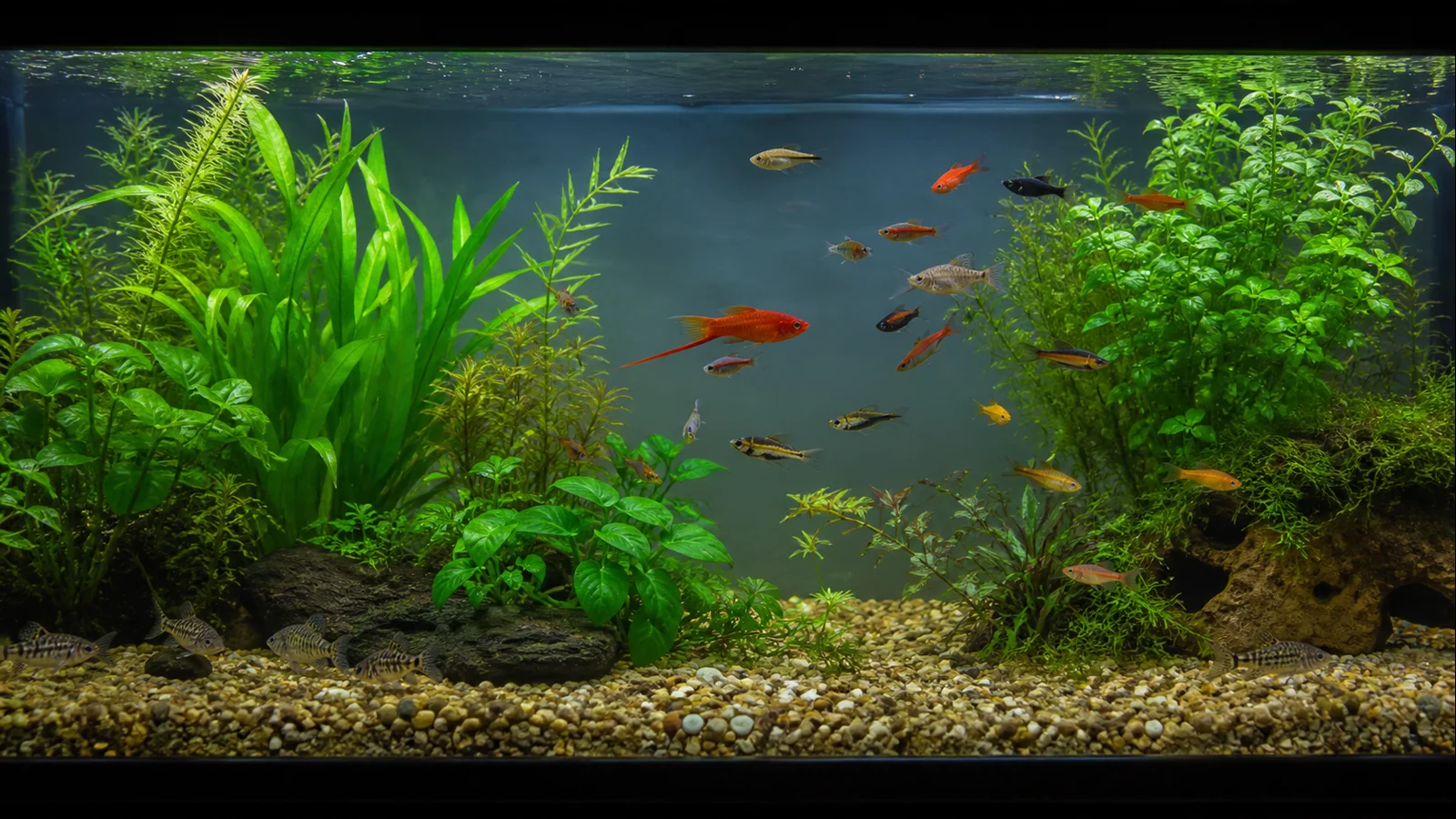
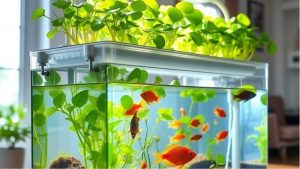
Editorial illustration; not evidence for species identification.
As an Amazon Associate we earn from qualifying purchases at no extra cost to you.





Calculate the future community, not today’s receipt
FishBase documents swordtail identity, size and environmental records, while GBIF provides occurrence context. Domestic strains and hybrids vary, so ask the breeder about adult size and source water. Reported wild conditions explain adaptability but are not a license for arbitrary captive parameters.
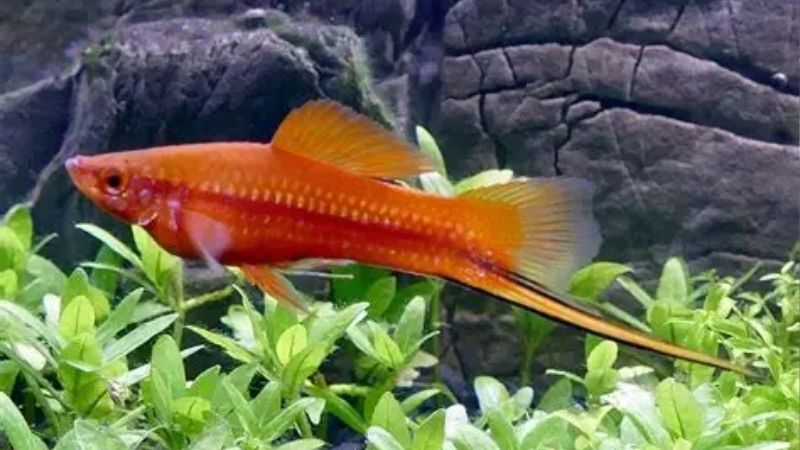
Swordtails generally suit moderate-to-warm freshwater with measurable hardness and alkalinity. Exact ranges differ among sources and stock; select stable conditions comfortably supported by the fish’s history and the swordtail care guide. Test GH and KH rather than inferring minerals from pH. A peaceful soft-water candidate fails if the chemistry cannot serve both species.
Now model biomass. Count adults, likely pregnancies and possible fry retention. Female livebearers may store sperm, so removing males does not immediately stop births. Reserve swimming length and filter capacity for adult bodies, not newborn dimensions. Secure the lid because swordtails can jump.
Compatibility matrix for a muscular livebearer
| Factor | Swordtail requirement | Candidate must demonstrate |
|---|---|---|
| Temperature | Stable moderate/warm setting chosen for the stock | Comfortable central overlap |
| Size | Active adults, males with extended swords | No predation and no fragile scale mismatch |
| Zone | Upper and midwater swimming lane | Separate zone or enough horizontal room |
| Temperament | Courtship and male rivalry possible | Ability to feed without harassment |
| Diet | Omnivorous feeding plus grazing component | Access to its own appropriate food |
| Chemistry | Usually moderate-to-hard, buffered freshwater | Compatible GH, KH and pH |
Passing the table does not guarantee individual peace. It establishes that a trial is reasonable only when an exit tank exists.
Livebearer matches: similar water, shared complications
Platys
Platys often match mineral-rich chemistry and an omnivorous feeding pattern. They are shorter-bodied and usually less athletic, so provide open space and monitor whether swordtails dominate meals. Both reproduce readily. A mixed community can create simultaneous broods and a rapid waste increase.
Mollies
Mollies can share harder water and active behavior, but larger forms need substantial space and may be assertive. Identify the molly strain and avoid automatically adding salt; freshwater swordtails do not need a brackish treatment. Feeding must include appropriate variety and plant-associated material for both.
Guppies and Endlers
Chemistry may overlap, yet fancy guppy fins can attract investigation and guppies are smaller. Choose robust strains, watch male behavior and plan for fry. The guppy care guide helps compare water and reproduction needs. Do not assume cross-species company replaces adequate same-species social management.
Schooling fish that can keep their place
Hard-water-tolerant rainbowfish may match pace in a large aquarium, but many grow larger, require strong groups and consume food rapidly. Compare exact species and adult size. Their combined oxygen and swimming demands push the pairing beyond a beginner tank.
Some robust barbs can fit by speed, though nipping and chemistry vary. A proper barb school may focus behavior among conspecifics, but it does not erase a species’ tendency to test fins. Long male swords and flowing domestic forms are potential targets.
Avoid selecting tetras merely because they are common community fish. Many prefer softer water; others are slower or small enough to be intimidated. A central chemistry overlap supported by captive references is required.
Bottom-zone partners and waste reality
Some hard-water-tolerant Corydoras can occupy the floor, but many commonly sold species prefer different chemistry or temperatures. Identify them, provide a social group and smooth substrate, and deliver sinking food. Swordtails will intercept food in midwater, so observe that each catfish eats.
Bristlenose plecos sometimes work in a roomy aquarium with hides and wood, but they add meaningful waste and may defend caves. They require a real diet, not a job title as algae cleaners. Account for their adult size when choosing filtration using the aquarium filter guide.
Snails may suit the mineral-rich water, yet excess food can fuel population growth. Loaches sold for snail control often need groups, different water, or much more space; buying a vertebrate as a pest tool is poor compatibility planning.
Do not combine
- Soft, acidic-water specialists: shared temperature cannot overcome incompatible mineral needs.
- Slow long-finned fish such as bettas: swordtail motion and investigation can create chronic stress or damage.
- Large predators: speed and a pointed tail do not protect a sleeping livebearer.
- Tiny shy microfish: food competition and constant traffic can keep them hidden.
- Coolwater fish: a midpoint may be too warm for one and too cool for the other.
- Multiple male swordtails in inadequate space: adding other species does not diffuse intraspecific rivalry.
- Unidentified plecos or “sharks”: juvenile sales size conceals adult scale and territorial behavior.
Control pressure within the swordtail group
Community compatibility cannot be solved until swordtail social pressure is addressed. A male may relentlessly pursue females; another male may be excluded from food. More females per male is sometimes recommended, but ratios do not guarantee welfare and also increase reproductive capacity. Plants and wood should interrupt long pursuit paths without eliminating swimming lanes.
An all-male group avoids fry but can intensify rivalry. An all-female group may still produce stored-sperm broods. Watch the actual fish: torn fins, weight loss, a clamped posture, hiding at the heater or repeated jumps are intervention signals. Do not wait for visible wounds if one animal cannot rest.
Feed across distance
Offer a varied, complete diet with suitably sized prepared food and a plant-associated component. Spread portions along the swimming lane so subordinate fish and slower companions can approach. Use separate sinking food for bottom species. Frozen or cultured live foods can add variety when safely sourced; avoid wild-collected food from contaminated waters.
Observe one full meal after every stocking change. If a companion misses food, targeted delivery is better than doubling the total ration. Remove leftovers. Increasing waste can overwhelm the biofilter and lower oxygen long before the aquarium looks dirty.
Separation and population response
Quarantine every addition in a cycled setup matched to the intended hard-water conditions. Keep a second mature aquarium, secure divider or confirmed rehoming route. A divider is useful for aggression but shares pathogens and chemistry. The alternate tank must have a lid and adequate length; placing an athletic adult in a tiny emergency container merely exchanges one welfare problem for another.
Separate immediately for sustained pursuit, blocked feeding, jumping triggered by harassment, predatory stalking or injury. If births push stocking beyond filtration or space, move juveniles to prepared grow-out housing and arrange responsible homes. Never release fish or water outdoors.
The OATA fish-keeper information offers a practical trade-body welfare baseline. If fish show unexplained breathing difficulty, sores, swelling, wasting, loss of balance or continued deterioration, contact a qualified aquatic veterinarian. Test ammonia, nitrite, temperature and equipment promptly, but do not improvise salt or medicines. An aquatic professional can evaluate water and stocking; clinical treatment remains the veterinarian’s role.
Sources
- FishBase swordtail summary — species identity, size and environmental records.
- GBIF Xiphophorus hellerii search — accepted-name and occurrence context.
- Seriously Fish knowledge base — captive profiles for swordtails and candidates.
- OATA useful fish-keeper information — husbandry and welfare guidance.
Ready to decide? Our #1 pick for 2026 is the Temperature.
Live price & availability on Amazon.
Related Reviews & Guides


Acrylic Vs Glass Aquarium Which Is Better: Best Compared Guide
Best Hydroponic Aquarium With Plant Basket: Top Top Picks