Last Updated: October 4, 2026
- Top Pick: Longfin Zebra Danio (Pack of 12 Fish) – Live Fish for Aquarium Exotic Freshwater Live Fish, Live Aquarium Fish, Live Fish, Live Freshwater Fish Freshwater Fish
- Best Value: 10-Pack Zebra Danio Live Fish for Freshwater Aquarium Tanks – Active Hardy Schooling Tropical Community Fish – Striped Fast Swimming Species for Beginner and Established Aquariums
- Premium Choice: JHKKU Men's Tank Tops Zebra Print Stripes Sleeveless Shirts, M
Zebra Danio Tank Mates: Match Speed and Temperature
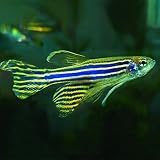
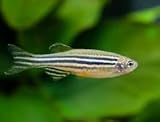
Zebra danios are often sold as universally compatible because they are small and hardy. Their real compatibility constraint is motion. A school of Danio rerio accelerates through the upper and middle water, arrives at food instantly and may investigate long fins. Add their preference for cooler conditions than many tropical show fish, and the usual “peaceful community” list becomes unreliable. Good zebra danio tank mates match sustained temperature and pace while retaining a safe place to feed and rest.
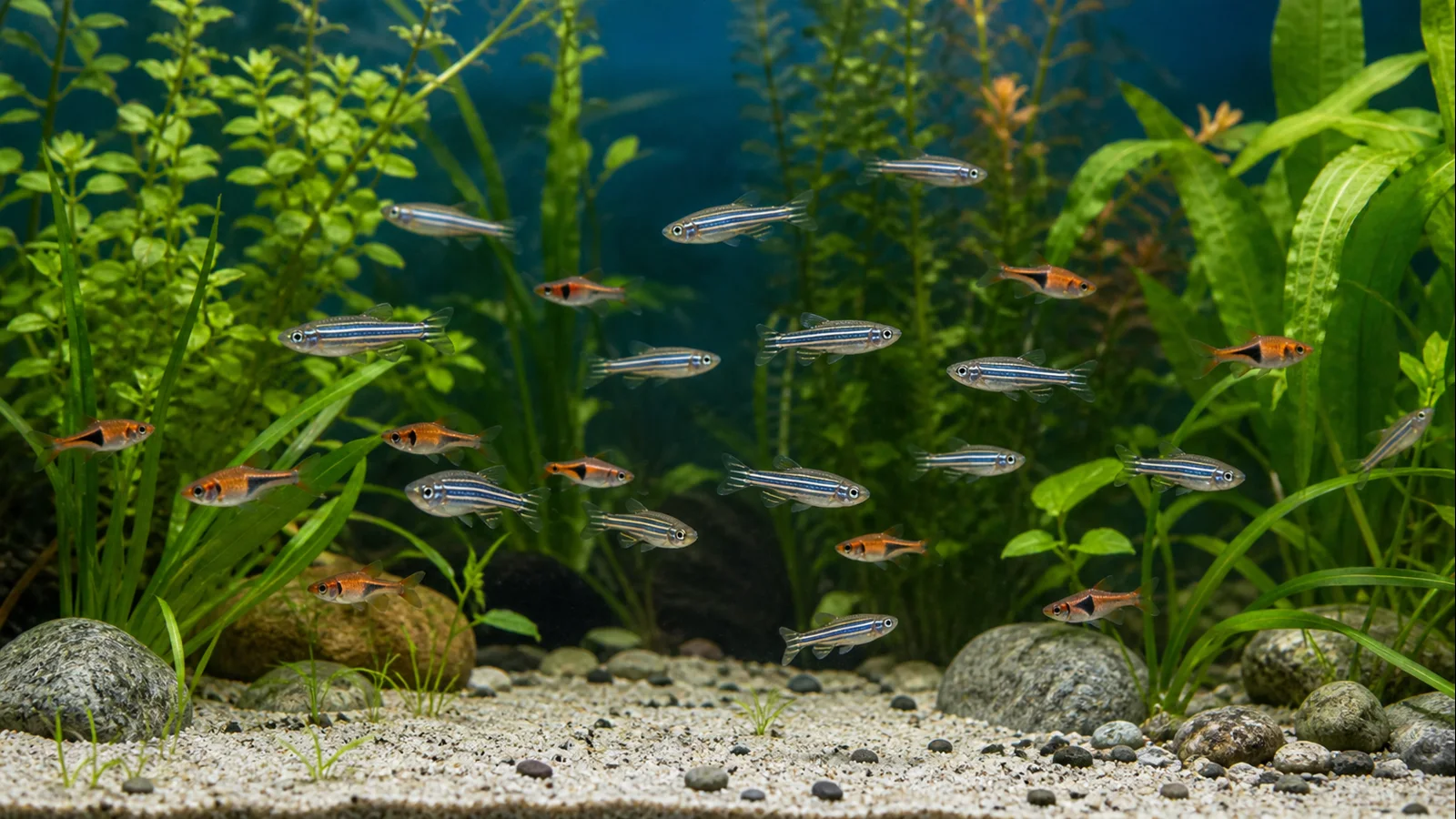
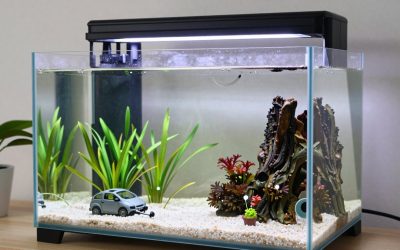
Editorial illustration; not evidence for species identification.
As an Amazon Associate we earn from qualifying purchases at no extra cost to you.


Establish a thermal-speed envelope
FishBase and the GBIF species record document zebra danio identity, distribution and environmental context. The NCBI zebrafish chapter adds authoritative biological background, though laboratory conditions are not automatically pet-aquarium recommendations. Wild occurrence and research use establish evidence about the species; captive care must also account for domestic strains and gradual acclimation.
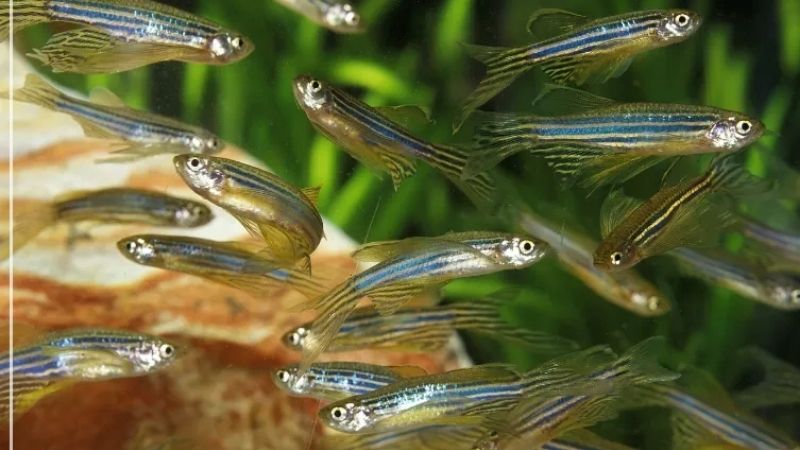
Choose the danio’s stable operating temperature first. Depending on stock and guidance, captive ranges are often cited from the high teens into the mid-20s°C, but the best community point should sit comfortably within the needs of both species. A candidate that tolerates 24°C only at its cool edge is a poor long-term choice, just as a danio should not be kept perpetually at its warm limit to accommodate a heat-loving neighbor.
Then observe pace. Danios need a proper school and a long open run. The zebra danio care guide explains why horizontal length and group behavior matter. A slow companion sharing their feeding zone may experience chronic competition even without a bite.
Candidate test track
Run each possible companion through this sequence:
- Temperature lap: identify a central, sustained overlap from referenced captive sources.
- Adult-size gate: exclude fish able to swallow a danio and fragile animals dwarfed by the school’s motion.
- Zone check: reserve open upper-midwater length for the danios; verify the candidate has separate usable space.
- Temperament review: investigate chasing, nipping, territorial breeding and long-fin vulnerability.
- Food trial design: specify how each species will get its correct food before buying it.
- Chemistry comparison: test GH, KH and pH; do not rely on temperature alone.
A match that fails one gate does not become acceptable because the other five pass. Tank volume also cannot fully substitute for shape: a tall aquarium may hold many litres while offering a short sprint lane.
Fast-water companions worth investigating
White Cloud Mountain minnows—with temperature caution
White Clouds share an active schooling style and generally cooler preference, making them a plausible match in some unheated or temperate indoor systems. They require their own school and may occupy much of the same zone, so a long footprint is essential. Do not assume both species need identical seasonal temperatures. Confirm the captive ranges of the actual stocks and prevent overheating in summer.
Odessa or other selected barbs
Some active barbs can match speed and moderate temperatures, but behavior varies sharply by species. Adult size, nipping reputation and school size must be researched. A full barb group plus a full danio school needs substantial room. Avoid long-finned danio strains when any companion is inclined to sample fins.
Other danios
Related danios may seem obvious, yet body size, temperature and activity differ. Separate species do not reliably replace conspecific group needs. Mixing them can create two incomplete schools or hybridization concerns in some cases. Prefer one well-sized zebra danio school unless the aquarium genuinely supports two groups.
Bottom-zone matches
Weather-compatible Corydoras
Certain Corydoras tolerate the cooler end of tropical community conditions and occupy the substrate. Choose by scientific name. Provide sand, their own group and targeted sinking food. Warm-preferring Corydoras should not be chilled for the danios, and cool-preferring species should not be pushed warm. Fast danios can still steal falling food, so feed in separated locations.
Hillstream loaches only in a purpose-built system
Hillstream loaches overlap with danios in temperature more often than warm tropical fish do, but they bring distinct needs for oxygen, surface area, mature biofilm and flow. Read the hillstream loach care guide before considering the pairing. Strong directional current throughout the aquarium is not automatically ideal for zebra danios; create varied flow and verify both species can rest and feed.
Temperate-tolerant small loaches
Some small loaches may work, but many are highly social, nocturnal, assertive at food or larger than expected. Exact identification is mandatory. Avoid generic “algae eater” purchases; several similarly labeled fish become territorial or large.
Why common warm-community suggestions fail
Bettas and honey gouramis are slow, surface-associated feeders with exposed fins. Even if no danio attacks, constant upper-zone movement can keep them withdrawn. Discus and other sustained warm-water fish impose a thermal mismatch. Fancy guppies may share some chemistry but present long fins and a slower feeding posture; very soft-water choices may not match mineral conditions.
Our beginner fish guide helps compare alternative starter species. “Beginner” is not a compatibility category. Two robust fish can need different temperatures, and two peaceful fish can create an unfair food race.
Do not combine
- Slow long-finned fish: bettas, fancy guppies and similar forms are exposed to investigation and feeding pressure.
- Very warm specialists: keeping danios near a thermal ceiling for years is not justified by survival.
- Large-gaped predators: danio speed does not prevent an ambush at night or in a corner.
- Highly territorial fish: an animal defending the open swimming lane removes the danios’ main resource.
- Tiny shy microfish in a short tank: they may be displaced from food and cover.
- Hardness specialists at the opposite chemistry: a midpoint is not necessarily suitable water.
- Unidentified “cleaner fish”: unknown adult size, diet and aggression make the risk incalculable.
Food access under race conditions
Use small floating and slowly sinking foods suitable for danio mouths, plus variety appropriate to the species. To feed calmer companions, place a modest danio portion at one end, then immediately deliver the companion’s food near cover or the substrate at the other. Feeding tubes can help bottom fish, but observe where food exits and remove excess.
Count swallowing events for the slower fish during the first week rather than judging the amount added. If it repeatedly misses food, changing brands will not solve a speed mismatch. Try separated timing, targeted delivery or physical separation. Overfeeding to create leftovers raises nitrogen waste and can reduce oxygen, especially at warmer temperatures.
Introduction, monitoring and the abort button
Quarantine newcomers in a cycled tank at their intended temperature. A gradual temperature change during quarantine is safer than using the display as an acclimation experiment. Complete the aquascape with clear sprint lanes and sheltered low-flow rests. Add whole social groups rather than lone representatives, while staying within filtration and footprint limits.
For two weeks, record morning and evening positions, feeding success and chasing. Brief parallel swimming within a danio school differs from one fish repeatedly driving another into decor. Test ammonia and nitrite following each stocking change and monitor temperature at the warmest time of day.
Keep a mature alternate tank or arrange a verified rehoming option before mixing. A divider must have gaps too small for slender danios and does not prevent pathogen transfer. Separate promptly if a companion cannot feed, remains motionless behind equipment, suffers fin damage, or is pursued repeatedly. Also reconsider the community if the chosen temperature proves difficult to maintain within both species’ comfortable zones.
The RSPCA fish advice provides general welfare and stocking principles. Rapid breathing, balance loss, lesions, unexplained wasting or ongoing deterioration needs a qualified aquatic veterinarian. Test environmental basics first, but avoid speculative salt or medication dosing. An aquatic professional can review flow and stocking; clinical diagnosis belongs to the veterinarian.
Sources
- FishBase zebra danio summary — size, identity and environmental records.
- GBIF Danio rerio search — accepted taxonomy and occurrence context.
- NCBI Bookshelf zebrafish chapter — species biology and research context.
- RSPCA keeping fish advice — captive welfare baseline.
Related Reviews & Guides


Zebra Danio Care: School Size, Flow and Temperature
Best Ultra Clear Glass Fish Tank: Best Well-Researched Guide