Last Updated: October 21, 2026
How to clean fish tank gravel comes down to one technique and one limit: push the tube in until the gravel lifts and tumbles, and clean only about a third of the bed each week. Doing more at once strips bacteria the tank depends on for filtration. Check the readings first, then work through the three steps below in order.
As an Amazon Associate we earn from qualifying purchases.

Laifoo 5ft-S Aquarium Siphon Vacuum Cleaner for Fish Tank Cleaning Gravel
Included for 'How to Clean Fish Tank Gravel: Method, Depth and Mistakes' as a representative aquarium product in this roundup; selection reflects the product set returned for this topic.
View on Amazon![QZQ Aquarium Gravel Cleaner Vacuum Fish Tank Cleaner Tools Kit | [2026 Edition] Water Changer with Aquarium Thermometers, Fish Net kit, Use for Fish Tank Cleaning Gravel and Sand](https://m.media-amazon.com/images/I/51S+2N20RtL._SL400_.jpg)
QZQ Aquarium Gravel Cleaner Vacuum Fish Tank Cleaner Tools Kit | [2026 Edition] Water Changer with Aquarium Thermometers, Fish Net kit, Use for Fish Tank Cleaning Gravel and Sand
Included for 'How to Clean Fish Tank Gravel: Method, Depth and Mistakes' as a representative aquarium product in this roundup; selection reflects the product set returned for this topic.
View on Amazon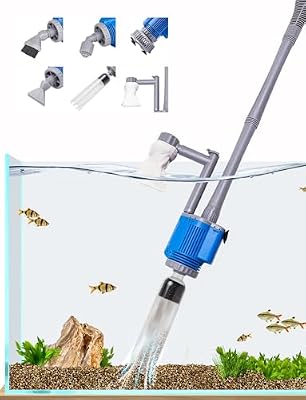
UPETTOOLS Aquarium Gravel Cleaner - Electric Automatic Removable Vacuum Water Changer Sand Algae Cleaner Filter Changer 110V/28W
Included for 'How to Clean Fish Tank Gravel: Method, Depth and Mistakes' as a representative aquarium product in this roundup; selection reflects the product set returned for this topic.
View on Amazon
Natural Rapport Aquarium Gravel Cleaner, No-Vacuum Waste Reducer, 4 oz | Beneficial bacteria, no vacuum, treats 240 gal - Cleans substrate - For betta, nano & small tanks
Included for 'How to Clean Fish Tank Gravel: Method, Depth and Mistakes' as a representative aquarium product in this roundup; selection reflects the product set returned for this topic.
View on Amazon
Carefree Fish Small Aquarium Gravel Vacuum Sand Cleaner Tank Water Changer | Silicone Squeeze Bulb,ABS Material Sturdy & Durable,6Ft Hose,(for 3~8Gal Tank) 2026 New Upgrade Version
Included for 'How to Clean Fish Tank Gravel: Method, Depth and Mistakes' as a representative aquarium product in this roundup; selection reflects the product set returned for this topic.
View on Amazon
Luigi's Fish Tank Cleaner - Turtle Tank Accessories - Gravel Vacuum for Aquarium - Hand Siphon Hose to Remove and Change Water or Sand in Minutes - Aquarium Cleaning Tools
Included for 'How to Clean Fish Tank Gravel: Method, Depth and Mistakes' as a representative aquarium product in this roundup; selection reflects the product set returned for this topic.
View on Amazon
UPETTOOLS Aquarium Gravel Cleaner, 3-in-1 Tank Vacuum Siphon Water Changer
Included for 'How to Clean Fish Tank Gravel: Method, Depth and Mistakes' as a representative aquarium product in this roundup; selection reflects the product set returned for this topic.
View on Amazon
24W Aquarium Vacuum Gravel Cleaner: 8 in 1 Electric Fish Tank Cleaner | Multifunctional Cleaning Tools, Water Change, Sand Washing, Water Filtration, Glass Cleaning, Adjustable Length, Timed Off
Included for 'How to Clean Fish Tank Gravel: Method, Depth and Mistakes' as a representative aquarium product in this roundup; selection reflects the product set returned for this topic.
View on AmazonBy David Nguyen
Check Before You Start Vacuuming
Gravel cleaning removes water as well as waste, which makes it part of the weekly change rather than a separate job. Knowing how to clean fish tank gravel safely starts with exactly the same numbers that govern any other water change.
The numbers that set the job
Plan on removing 20 to 30 percent of real water volume, which is roughly 15 percent below the label figure. On a 20 gallon (76 L) tank that is about 5 gallons (19 L), and the vacuuming has to fit inside that volume rather than exceeding it.
Clean about a third of the substrate each week, rotating which third. The bacterial colony lives on surfaces including the gravel, so stripping the whole bed in one session removes a meaningful share of it and can produce a reading days later.
Test ammonia, nitrite and nitrate before starting. Ammonia and nitrite should read 0 ppm in an established tank, and either appearing turns this from routine maintenance into a response that needs a rather different approach entirely.
Reading what comes out of the gravel
The material lifting into the tube is useful information about the tank rather than just mess to be disposed of. What comes up tells you whether the interval is right and whether the bed has developed problems.
Heavy brown debris lifting immediately means the bed has been holding waste, which is normal in the first few cleans of a neglected tank. Dark grey material with a sulphurous smell indicates anaerobic pockets, usually in deep or compacted gravel.
Almost nothing lifting is also information. A heavily planted tank with good flow traps little in the open substrate, and a bare-looking result there is entirely normal rather than evidence that the technique is wrong.
| What you see | Likely cause | What to check | First action |
|---|---|---|---|
| Thick brown cloud on contact | Accumulated waste | How long since last vacuum | Clean a third, repeat weekly |
| Dark grey, sulphur smell | Anaerobic pocket | Gravel depth and compaction | Clean that area gradually |
| Ammonia the next day | Too much bed cleaned | Filter serviced the same week? | Change 25%, feed less |
| Water stays cloudy for days | Fine substrate disturbed | Gravel grade and tube size | Leave it, it settles |
| Gravel pulled into the tube | Tube too wide for the grade | Siphon diameter | Raise the tube, reduce flow |
| Plants uprooted repeatedly | Vacuuming through root zones | Planted areas mapped? | Work around roots, surface only |
When gravel cleaning is not the answer
Two common problems look like dirty substrate and are not, which matters because the response to both is to leave the gravel alone rather than working it harder every week.
If nitrate climbs back within days of a thorough vacuum, the input is too high rather than the substrate dirty. Feeding is the usual cause, then stocking, and cleaning harder each week only treats the symptom while the load stays exactly where it was.
Cloudy water in a new tank is a bacterial bloom rather than dirty gravel, and vacuuming does nothing for it. In a tank under six weeks old, leave the substrate largely alone and let the bacterial colony establish itself first.
How to Clean Fish Tank Gravel Step by Step
The technique is simple and unusually easy to get slightly wrong. These three steps cover the whole job, and the second is where most people either skim the surface or dig far too deep into the bed.
Step one: prepare and unplug
Switch off and unplug the heater before the water line drops, and the filter too if the level will fall below its intake. Prepare replacement water at the same time, matched within 1 to 2 °F (about 1 °C) and treated for chlorine and chloramine.
Measure the gap behind the tank and the reach from the tap before buying a siphon or hose, since equipment that will not reach gets abandoned quickly. Match the tube diameter to the tank, as too wide a tube empties a nano tank faster than you can control.
Step two: how to clean fish tank gravel with the tube
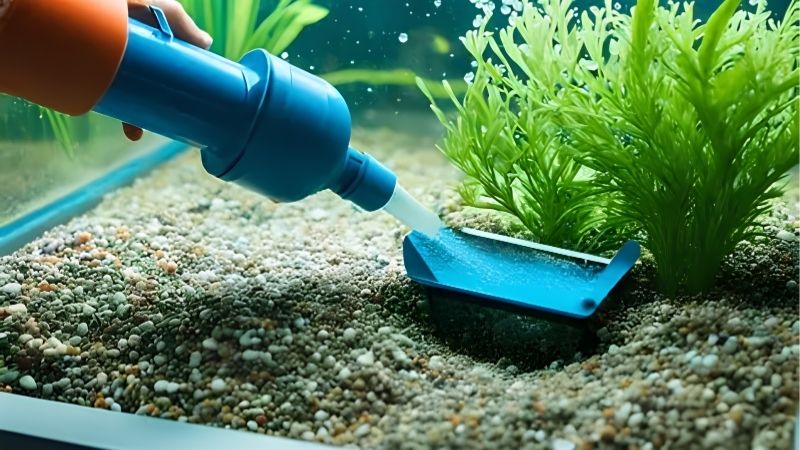
This is the step in how to clean fish tank gravel that separates a session achieving something from one that mostly moves water around. The technique is unintuitive, because effective cleaning means burying the tube rather than gliding it along.
Push the tube straight down into the gravel until the stones lift and tumble inside it, then hold until the water clears and lift out. Skimming the surface removes almost nothing, while dragging the tube sideways just moves debris around the bed.
Work in a grid across roughly a third of the bed, keeping a mental note of which third so the next week covers a different area. Around planted zones, clean the open substrate only and leave the root areas themselves undisturbed entirely.
Step three: stop cleaning fish tank gravel at the planned volume
Stop when the planned 20 to 30 percent has been removed, even if some areas look untouched. Overshooting to 60 percent because the gravel still looks dirty turns a routine job into a chemistry swing that the fish then have to absorb.
Refill gently against the glass, restart the filter and heater once the water covers both, and check the temperature again after twenty minutes have passed. Feed lightly afterwards, or skip the feeding entirely for that day.
How to Clean Fish Tank Gravel Badly: Three Habits
Three habits cause most of the problems that follow a gravel cleaning session, and each of them has a specific mechanism behind it rather than being a general warning about care.
Do not clean the whole bed at once
The substrate holds a real share of the bacterial colony, so a complete strip removes it along with the waste. Combined with a filter clean in the same week, it produces an ammonia reading a day or two later in a tank that was previously stable.
Do not remove the gravel to rinse it
This is the single most damaging thing done to an established tank in the name of cleaning it thoroughly, and it is still recommended regularly by people who mean well.
Taking gravel out and washing it under the tap kills the colony on it directly, since chlorine and chloramine work on contact. A tank set up years ago does not need its substrate washed at all, only vacuumed in place a third at a time.
Do not push the tube into sand
Sand needs the opposite technique. Hover the tube about 1 in (2.5 cm) above the surface so debris lifts while the sand stays put, since pushing in pulls the substrate up into the siphon and disturbs anaerobic pockets deeper down.
Cleaning Fish Tank Gravel Less Often
Most of the useful work happens outside the vacuuming session itself. Reducing what reaches the substrate in the first place is far more effective than removing it more aggressively each week.
The weekly routine
Vacuum a rotating third of the bed as part of the 20 to 30 percent weekly change, and test ammonia, nitrite and nitrate before starting. Keep the filter service in a separate week, so that both colony sites are never disturbed together.
Feed only what is eaten in one to two minutes. Uneaten food is the main thing that ends up in the gravel, so portion control does more for substrate cleanliness than any refinement of vacuuming technique.
What makes gravel dirty faster
Two tanks with identical stocking can need very different amounts of vacuuming, and the difference is usually flow rather than fish. Waste settles wherever the current does not reach, and layout decides where that is.
Dense hardscape and heavy decor create dead spots where flow cannot reach and waste settles, which is why layouts with open swimming lanes stay cleaner. A filter that has slowed through clogging has much the same effect across the whole tank.
Substrate depth matters too. Beyond about 2 in (5 cm) of fine gravel, compacted areas can go anaerobic, and those are the pockets that release a sulphurous smell when they are disturbed months later.
Early signs to act on
Nitrate climbing week on week means production exceeds removal, and the fix is feeding, stocking or a larger change rather than harder vacuuming. Debris visibly drifting past the filter outlet points to a clogged filter instead.
Ammonia appearing the day after a session usually means too much of the bed was cleaned, or the filter was serviced in the same week. Change 25 percent, feed less, and space the two tasks apart in future weeks.
Frequently Asked Questions
These come up in the first months of ownership, usually after a session that looked thorough and satisfying at the time went on to produce an unexpected reading a day afterwards.
How to clean fish tank gravel without disturbing the fish?
Leave them in the tank and work around them, since catching and moving fish is far more stressful than the vacuuming itself. Move slowly, avoid cornering anyone with the tube, and keep the whole session to the planned volume.
How deep should the tube go when cleaning fish tank gravel?
Into the gravel until the stones lift and tumble, which is usually the full depth of a 1 to 2 in (2.5 to 5 cm) bed. Surface skimming removes very little indeed, though sand is the exception and needs hovering instead.
How often should you clean fish tank gravel?
A third of the bed weekly, as part of the normal water change, so the whole surface is covered roughly every three weeks. That interval keeps waste from accumulating, without stripping bacteria faster than the colony can recover.
Should I vacuum a planted tank?
Only the open areas. Work around root zones, clean the surface layer where debris settles, and leave established root systems undisturbed, since plants take up waste directly and heavily planted beds trap far less of it in the first place.
See More:
Getting the Technique Right
How to clean fish tank gravel reduces to three numbers: 20 to 30 percent of the water in one session, one third of the bed each week, and a tube pushed in until the gravel lifts and tumbles rather than skimmed across the top of it.

Aquarium Auto Top Off (ATO) System
Houseplants in Fish Tanks: Pothos, Peace Lily and Lucky Bamboo