Last Updated: October 21, 2026
Picking a display by gallons or looks is how buyers end up with a tank that will not fit. Learning how to choose a rimless aquarium in the right order fixes that: measure the real footprint first, confirm the support, decide the filtration, check the current SKU, and only then compare the price.
As an Amazon Associate we earn from qualifying purchases.
By David Nguyen
Find the Cause of a Bad Rimless Aquarium Choice
Most regret traces to one skipped step, so before the fix it helps to see where the choice goes wrong. The current systems here from Waterbox, Red Sea and CADE expose the four usual failure points: leading with gallons, ignoring support, skipping filtration planning, and buying an outdated generation by mistake.
Starting With Gallons Instead of Length by Width
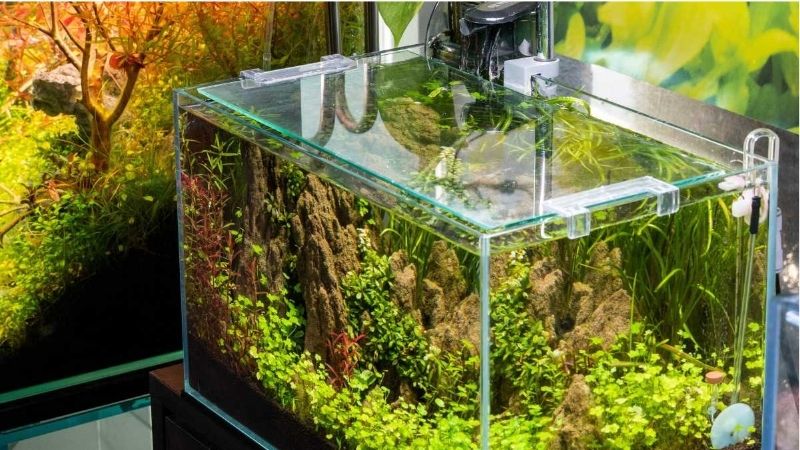
Gallons hide shape entirely. The 53.6-gallon REEFER 250 sits on a 35.4 by 19.7-inch base while the 57-gallon CADE 600 S3 measures 23.6 by 27.5, so two tanks in the same volume class occupy completely different rectangles and suit completely different spots in a real room long before any livestock enters the plan.
When you lead with volume you shop the wrong axis from the start. The fix is to treat length by width as the primary filter and gallons as a secondary planning number, because a tank that reads bigger on paper can still be the one that slots into a narrow wall your larger option never could.
Ignoring the Bottom-Support Requirement
Frameless glass carries its own rule. Aqueon states that the entire bottom of a frameless glass aquarium should be supported, which means a matched stand with a flat, continuous top belongs in the plan well before you fall for a particular display’s looks or its advertised headline price.
Skip that and even a perfect tank ends up on the wrong base. A high shelf rating is not the same as full-bottom contact, so the support decision has to travel with the tank choice rather than getting bolted on afterward, once the display has already shipped to your door and filled with water.
Choosing the Tank Before Choosing Filtration Architecture
Filtration shapes the whole system. The Waterbox and Red Sea examples arrive as sump-based bundles with plumbing and a cabinet, but the exact equipment differs between them, so deciding whether you actually want a sump build changes which SKU even belongs on your shortlist in the first place.
Buyers who pick the glass first often find the filtration plan does not match afterward. Settle the architecture early, sump or not and what pump and return you need, and the tank choice narrows to systems that genuinely deliver it rather than ones you would have to heavily modify later on.
Mixing Current and Previous Generations
Generation is part of the product identity. Red Sea currently ships the G3 line while CADE keeps the S3 alongside older S2 listings, so a search that ignores the suffix can land you on last cycle’s bundle at a price that looks competitive but no longer reflects the current package.
This overlap is normal during a refresh cycle, which is exactly why it catches people out. Confirm the generation on the page you are buying and match its stated features and warranty, rather than reading a current review and assuming a discounted older listing shares the same contents.
Choose the Right Rimless Aquarium Step by Step
With the failure points clear, the fix is a fixed order that starts from your room and ends at price. The table lays out four steps, each with a verified input and a decision, so you can run any candidate system through the same sequence instead of judging tanks on whichever single spec first caught your eye.
| Step | Input | Verified Example | Decision |
|---|---|---|---|
| 1 | Available L by W | 40 by 30 in example | Eliminate footprints that do not fit |
| 2 | Support type | Frameless = full-bottom support | Confirm a matched stand or base |
| 3 | System architecture | Sump, plumbing, cabinet inclusion | Verify the exact SKU contents |
| 4 | Current SKU and price | $1,699 to $4,125 examples | Compare like-for-like packages |
Step 1: Measure Your Real Floor Rectangle
Start with the space, not the tank. Take a worked example of a 40 by 30-inch floor envelope: the Waterbox 60.2 at 23.6 by 19.7 leaves generous margin, while the Peninsula 350 at 37.8 by 25 barely fits, which shows how quickly a real floor rectangle rules candidate systems firmly in or out.
Treat that envelope as an example, not a clearance rule, because plumbing, doors and service access still need their own margins on top of the base. Measure your actual rectangle, mark where access has to stay open, then carry only the footprints that fit forward rather than a gallon wish list.
Step 2: Match the Tank to the Correct Support
Once a footprint fits, lock the support. Frameless glass needs full-bottom support per Aqueon, and Red Sea’s own guidance is to level from the tank glass and confirm every adjustable leg contacts the floor, so the stand and the floor beneath it are both genuinely part of this one single step.
A matched cabinet is the straightforward route because it is built to the tank’s exact base. If you deviate to a third-party stand, confirm it offers continuous top contact and can be leveled precisely, since full-bottom support is a construction requirement here rather than a nice-to-have upgrade.
Step 3: Decide Whether You Want a Sump-Based System
Now choose the architecture on purpose. List what a bundle actually contains: the Waterbox and Red Sea systems include a sump, plumbing and cabinet, but do not assume a pump, return or lighting are part of every package until the included-items table on that exact SKU says so in writing.
Deciding sump-or-not here keeps later comparisons honest. If you want a sump build, restrict the shortlist to systems designed for one; if you do not, a bundle’s extra plumbing is simply cost you will not use, so match the architecture to your plan before price ever enters the picture at all.
Step 4: Compare Current Prices Only After Normalizing the Bundle
Price comes last, and only like-for-like. As of 09/2026 these examples run around $1,699 for the Waterbox, $2,399 for the REEFER 250, $3,399 for the Peninsula 350 and $4,125 for the CADE 600 S3, but each package includes a genuinely different mix of equipment folded inside that single number.
Before ranking those figures, normalize what each one buys. A cheaper system that omits a sump or cabinet is not truly cheaper once you add the missing parts, so compare only after every candidate is priced with the same inclusions, generation and current stock status attached to it.
Frequently Asked Questions
These answers reinforce the same order the steps follow, so you can settle the recurring doubts before checkout. Each opens with the direct call and then the condition that qualifies it, keeping the focus on fit, support and bundle contents rather than the gallon figure that started most of the trouble.
Should I Choose a Rimless Aquarium by Gallons or Dimensions First?
Dimensions first, every time. The length-by-width footprint decides whether a tank physically fits your space and your support, which is the one constraint you cannot work around later once the tank ships, so it belongs ahead of volume in any honest selection order you actually follow.
Gallons still matter, just later in the process. Once the footprint fits and the support is sorted, volume helps you plan livestock, filtration turnover and heating, so treat it as the sizing detail that follows the fit decision rather than the headline number that leads the whole search.
How Much Support Does a Rimless Glass Aquarium Need?
Full-bottom support, according to Aqueon’s guidance for frameless glass, which calls for the entire base of the tank to be supported rather than only its edges or corners resting on a frame or on a set of narrow rails beneath it, and a matched cabinet is built to satisfy exactly that.
In practice that points to a matched cabinet or a stand with a flat, continuous, level top surface. A shelf rated for heavy boxed goods can still fail this test if it only contacts the tank at the corners, so read support as full-contact geometry, not simply a headline weight rating.
Is a Cabinet Included With Every Rimless Aquarium?
No, so never assume it. Some systems price the display alone while others bundle the cabinet, which is exactly why the written included-items list on the exact SKU is the only reliable source of truth, rather than the polished product photo sitting beside the price on the retailer page itself.
In these examples the Waterbox System Only and the Red Sea G3 systems do name a cabinet in the package. That is a property of those specific SKUs, though, not a category guarantee, so confirm inclusion every time instead of carrying one brand’s packaging habit over onto another brand entirely.
Is the Cheapest System the Best Value?
Not automatically, because the sticker price rarely describes the same contents. One package may include a sump, plumbing and cabinet while a cheaper one leaves parts out, so the lower number can quietly cost more once you finish equipping the whole build to actually hold water safely.
Real value shows up only after normalizing. Line up what each SKU includes, add the price of any missing essentials, then compare, and you will sometimes find the higher initial figure is the better deal once both systems are fully equipped to actually run the way you originally intended them to.
Final Thoughts
Knowing how to choose a rimless aquarium comes down to order: measure the real rectangle, lock full-bottom support, decide filtration, confirm the current SKU, and compare price only after each bundle is normalized. Package names change the contents and the suffix is part of the product, so verify both first.
Houseplants in Fish Tanks: Pothos, Peace Lily and Lucky Bamboo

Fish Tank Bacteria Bloom: What It Is and How Long It Lasts