Last Updated: October 21, 2026
How long does an aquarium cycle take has a range rather than a single number: three to eight weeks fishless, or one to two weeks with seeded media. Where a particular tank falls in that range is set by four measurable conditions. Start by testing the water, then read the timeline off your own results rather than the calendar.
As an Amazon Associate we earn from qualifying purchases.
As an Amazon Associate we earn from qualifying purchases at no extra cost to you.



By David Nguyen
Measure Before Estimating How Long It Takes
Elapsed days tell you very little on their own. How long does an aquarium cycle take depends on which stage the tank has reached, and that is visible only in the readings, not in how the water looks or how many weeks have passed since filling.
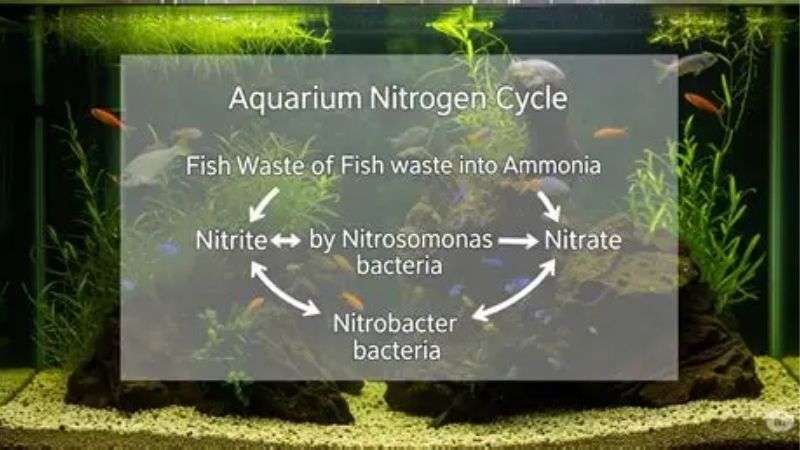
The four numbers that place you on the timeline
Test ammonia, nitrite, nitrate and temperature before estimating anything. Those four locate the tank on the curve: ammonia only, ammonia falling with nitrite rising, or nitrite falling with nitrate appearing, each of which carries a very different amount of remaining time.
Temperature is the number most often ignored and the one with the largest effect. At 78 to 80 °F (26 to 27 °C) bacteria reproduce quickly; below 70 °F (21 °C) the same tank can take roughly twice as long with everything else held identical.
Reading the stage to estimate what remains
Each stage has a characteristic duration, so the readings translate into a rough estimate of time remaining. That estimate is honest only as a range, because the same stage runs at very different speeds in a warm room and in a cold one at the same time of year.
Ammonia present with no nitrite usually means five to ten days into the process, with the bulk of the wait still ahead. This phase is comparatively fast and gives a false impression that the whole cycle will be finished within a fortnight or so.
Nitrite climbing while ammonia falls is the long middle, commonly two to four weeks on its own. Nitrite falling while nitrate rises means days rather than weeks remain, and daily testing from that point is what identifies the finish accurately.
| Stage reached | Readings | Time already elapsed | Typical time remaining | What decides it |
|---|---|---|---|---|
| Nothing started | All zero, no nitrate | Any | 3-8 weeks | No ammonia source added |
| Ammonia stage | Ammonia 2-4 ppm, no nitrite | Days 1-10 | 3-6 weeks | Temperature and oxygen |
| Nitrite stage | Nitrite high, ammonia falling | Weeks 1-4 | 2-4 weeks | pH above 6.5, dose under 5 ppm |
| Nitrate appearing | Nitrite falling, nitrate rising | Weeks 3-7 | 2-10 days | Consistent redosing |
| Seeded start | Nitrate early, short nitrite phase | Days 1-7 | 3-10 days | Donor media health |
| Stalled | Static for 14 days or more | Any | Restarts on correction | pH, chlorine, cold, or filter off |
When the delay is not the cycle at all
Readings that refuse to move for two weeks point to conditions rather than patience. Untreated tap water passing through the filter, a filter switched off at night, or a pH that has fallen below 6.5 will each hold a tank static for as long as they persist.
An unheated tank in a cold room is the most common version in winter. Water sitting at 65 °F (18 °C) does not stop the process, but it stretches it well past eight weeks, which is why identical setups finish in three weeks in July and drag through February.
Steps That Shorten How Long an Aquarium Cycle Takes
Three actions genuinely reduce how long does an aquarium cycle take in practice, and they work best in combination rather than individually. Each one has a number attached to it, and none of them remove the biological requirement underneath it.
Step one: seed the colony from an established tank
Media from a healthy running filter carries an existing population and cuts the wait to one or two weeks. Keep it wet and transfer it within an hour or two, since the bacteria begin dying once flow and oxygen stop and a dried sponge carries almost nothing.
Substrate, a piece of sponge or a handful of bio media all work. Ask about the donor tank first, because media from a tank with an ongoing disease problem transfers a great deal more than bacteria, and the time saved is never worth that risk.
Step two: hold temperature and oxygen steady
Set 78 to 80 °F (26 to 27 °C) and verify it against a separate thermometer, since budget heaters often run 2 to 4 °F (1 to 2 °C) off the setting. Going above 84 °F (29 °C) adds nothing at all and reduces the dissolved oxygen the bacteria depend on.
Surface agitation matters as much as heat. Aim the filter outlet to ripple the surface, or run an air stone, because a nitrifying colony is oxygen-hungry, and a still surface limits growth regardless of how warm and well-fed the tank happens to be.
Step three: control the dose and check the fit
Hold ammonia at 2 to 4 ppm and redose when it hits zero. Above roughly 5 ppm the nitrite-oxidising group slows markedly, which lengthens the process, so overdosing in the hope of speeding things up reliably produces exactly the opposite result.
Check the physical setup too. Measure the gap behind the tank and the water line against the heater before ordering equipment, since a heater that sits partly exposed during a change or a filter that loses prime overnight both cost days of progress.
What Adds Weeks Instead of Removing Them
Three common actions extend how long does an aquarium cycle take, and all three are usually done with the intention of helping the tank along. Each has a specific and measurable mechanism behind it rather than being a superstition passed around.
Rinsing media under the tap
Chlorine and chloramine kill the colony directly, and the media holds nearly all of it. This is the single fastest way to send a nearly finished cycle back several weeks, and it usually happens during a well-meant clean-up in the final fortnight.
Large water changes to clear cloudiness
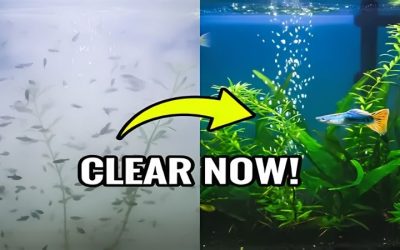
Cloudy water in the first weeks is a bacterial bloom that clears on its own. A large change removes the ammonia the colony feeds on and dilutes nothing that matters, so it slows the process while treating an appearance rather than a problem.
Dosing heavily to force progress
Pushing ammonia to 6 or 8 ppm inhibits the second bacterial group, so the nitrite stage lengthens instead of shortening. If a reading has overshot, bring it back down with a partial water change and resume at 2 to 4 ppm rather than waiting it out.
Keeping the Time Investment
Once the tank finishes, the aim is never to repeat the wait a second time. Most repeat cycles trace back to a handful of entirely predictable events, and a short weekly routine with two cheap precautions prevents nearly all of them happening.
The routine that holds the colony
Change 20 to 30 percent weekly with dechlorinated water matched to within 1 to 2 °F (about 1 °C), and test ammonia, nitrite and nitrate. Rinse mechanical floss in removed tank water, and never clean filter and substrate deeply in the same week.
Feed what is eaten in one to two minutes. Feeding is the input the whole colony sizes itself against, so a quiet increase after new fish arrive is by far the most common reason an established tank starts producing ammonia again a fortnight later.
Equipment that prevents a repeat
A liquid test kit, an independent thermometer and a dechlorinator rated for chloramine cover most failure modes. Reagents expire whether used or not, and an under-shaken nitrate bottle reads low, which produces a false pass at the worst possible moment.
A battery air pump handles the rest. Storm season runs June through November in the Atlantic and winter outages do the same job, and a filter that stops moving water begins losing colony to oxygen shortage within hours of the power going out.
Early signs that time is being lost
Losing weeks usually starts quietly, with a reading that shifts slightly rather than a tank that visibly looks wrong. Catching that shift early is the difference between making a small correction now and repeating a large part of the original wait.
Ammonia above 0.25 ppm, any nitrite reading, or nitrate climbing between changes all mean the colony has fallen behind the load. Change water, cut feeding, and look for the cause in stocking or recent maintenance rather than reaching for an additive.
A mini-cycle after adding fish is normal and short, usually resolving within one to two weeks as the population catches up. Adding fish in small groups a fortnight apart keeps those episodes small enough that no fish is exposed to a meaningful reading.
Frequently Asked Questions
These come up around week three of asking how long does an aquarium cycle take, when the ammonia stage has clearly passed but nitrite is still reading high, and the finish feels no closer than it did a full week earlier.
How long does an aquarium cycle take with bottled bacteria?
Commonly two to four weeks, with results varying between products. Treat any label claim as a possible head start rather than a finished cycle, and confirm with the same test: a 2 to 4 ppm dose clearing to zero ammonia and zero nitrite in 24 hours.
Why has nitrite not moved in ten days?
The nitrite stage is normally the longest at two to four weeks. If it is genuinely static, check that ammonia is under 5 ppm, that pH is above 6.5, and that temperature is holding at 78 to 80 °F (26 to 27 °C) on a separate thermometer rather than the dial.
How long does an aquarium cycle take in a bigger tank?
No. Volume changes the dose needed to reach 2 to 4 ppm, but not the speed of bacterial reproduction. A 10 gallon (38 L) and a 55 gallon (208 L) tank held at the same temperature and the same dose will finish in broadly the same number of weeks.
Can I speed it up by cleaning the tank?
No, and it usually costs time. Wiping glass is harmless, while rinsing media, replacing cartridges or vacuuming heavily removes colony sites. Leave the filter alone entirely until the completion test has passed and fish have been in the tank for a month.
See More:
Reading Your Own Timeline
How long does an aquarium cycle take is answered by the stage you are in rather than the calendar: three to eight weeks fishless, one to two with seeded media, and days rather than weeks once nitrate appears. Hold the temperature, keep the dose steady, and let the test decide.
Fish Quarantine Tank Setup: Complete Beginner Guide
How to Choose a Pond Aerator: A Simple Step-by-Step Guide