Last Updated: September 25, 2026
How often to feed aquarium fish depends on species type more than on tank size. Most community adults do well on one or two feeds a day cleared within two minutes, but herbivores graze continuously and nocturnal species eat after lights out, so one schedule rarely fits a mixed tank. The readings tell you which direction to move in.
As an Amazon Associate we earn from qualifying purchases.
As an Amazon Associate we earn from qualifying purchases at no extra cost to you. Prices and availability are accurate as of the date shown and are subject to change.

Tetra Vacation Food Slow-Release Feeder Block For Tropical Fish, 1.06 oz
Selected for "How Often to Feed Aquarium Fish: A Step by Step Routine": this listing is fish food (Tetra Vacation Food Slow-Release Feeder Block For Tropical Fish, 1.06 ), matching the equipment this article covers.
View on Amazon
Tetra Weekend and Vacation Feeder Slow-Release Fish Food for Tropical Fish
Selected for "How Often to Feed Aquarium Fish: A Step by Step Routine": this listing is fish food (Tetra Weekend and Vacation Feeder Slow-Release Fish Food for Tropical ), matching the equipment this article covers.
View on Amazon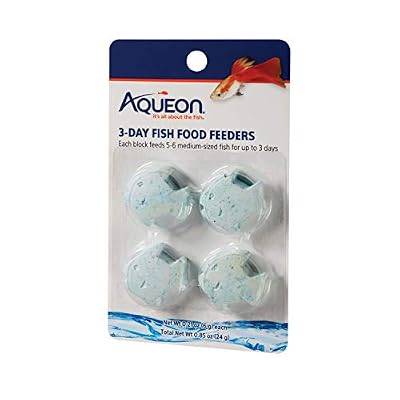
Aqueon Vacation Fish Feeder, Fish Food, 3 Day - 4 Pack
Selected for "How Often to Feed Aquarium Fish: A Step by Step Routine": this listing is fish food (Aqueon Vacation Fish Feeder, Fish Food, 3 Day - 4 Pack), matching the equipment this article covers.
View on Amazon
Pro Balance 14-Day Vacation Feeding Blocks, Fish Shape (2/Blistercard)
Selected for "How Often to Feed Aquarium Fish: A Step by Step Routine": this listing is aquarium equipment (Pro Balance 14-Day Vacation Feeding Blocks, Fish Shape (2/Blistercard)), matching the equipment this article covers.
View on AmazonBy David Nguyen
Take the Readings Before Touching the Portion
Before adjusting how often to feed aquarium fish in a stocked tank, take readings. Food is the largest single input into the system, so most feeding questions are really water quality questions, and the numbers tell you which direction to move in.

The Numbers to Take Before Changing Anything
Four readings every time: ammonia, nitrite, nitrate and temperature. Ammonia and nitrite should read 0 ppm, nitrate should sit below 40 ppm immediately before the weekly change, and temperature should hold within 1-2 °F (about 1 °C) across a full day.
Add two counts that are not chemistry. Record the hours the light runs, since long photoperiods drive the algae usually blamed on food, and record the actual volume of food entering the tank daily, because almost nobody estimates that accurately from memory.
Reading the Numbers: What Each Pattern Means
The table below maps what you see against what you measured. Work from the readings rather than from behaviour, since fish beg identically whether they are underfed, correctly fed or receiving considerably more than the filter can process.
| What you see | Readings to take | Most likely cause | First action |
|---|---|---|---|
| Food on the substrate after two minutes | None needed | Portion too large for the tank | Halve the portion, siphon leftovers |
| Nitrate above 40 ppm every week | Nitrate before the change | Overfeeding or overstocking | Drop to one feed daily, raise change volume |
| Ammonia above 0.25 ppm | Ammonia, nitrite | Overfeeding or an immature filter | 30-50% change, pause feeding 24 hours |
| Algae returning within days of cleaning | Nitrate, light hours | Light duration plus surplus nutrients | Cut light to 6-7 hours, reduce food |
| Bottom species thin, others fat | None needed | Food eaten before it sinks | Feed sinking food after lights out |
| Food ignored for more than a day | Ammonia, nitrite, temperature | Water quality or temperature out of range | Correct the water before touching food |
When It Is Not About Feeding
If ammonia and nitrite read 0 ppm, nitrate sits under 40 ppm, temperature is stable and in range, and a fish still refuses food across several days, the cause lies outside the feeding schedule and outside anything a water change will resolve.
At that point take the readings to an aquatic veterinarian or an experienced fish store rather than dosing the tank. Adding treatments without a diagnosis risks killing the filter bacteria, and a symptom that survives good water needs someone who can examine the fish.
Setting the Schedule, In Order
Once the readings are clear, work through these steps in sequence. Deciding how often to feed aquarium fish is a matter of matching frequency to species type, then sizing the portion, then adjusting both for the temperature the tank actually runs at.
Step 1: Set Frequency by Species Type
Most community adults take one or two feeds a day. Herbivores such as mollies and many plecos graze continuously and do better with two smaller feeds plus grazable surfaces, while predatory species eat larger meals less often, sometimes every other day.
Fry and juveniles are the exception in the other direction, needing three to five small feeds daily because their guts are short and growth is rapid. Nocturnal species should be fed after lights out, otherwise the food never reaches them at all.
Step 2: Size the Portion to the Tank
The working rule is what the fish clear in one to two minutes with nothing reaching the substrate, judged for the tank rather than per fish. Measure into a small dish rather than shaking the container, since a shaken portion varies by a factor of two or three.
Where the tank holds species that feed at different levels, size each portion separately. A pinch of flake for the top and a single sinking wafer for the bottom is a schedule; one large pinch of flake for everyone is a nitrate problem.
Step 3: Adjust for Temperature, Tank Size and Placement
Metabolism tracks temperature closely. A tropical tank at 78 °F (26 °C) supports the standard schedule, while the same fish at 72 °F (22 °C) digest more slowly and need less. Coldwater species below 60 °F (16 °C) need feeding cut back sharply.
Measure the lid gap and light fixture clearance before ordering an automatic feeder, since a unit that cannot sit flush drops food outside the tank. In tanks under 30 in (76 cm) long, feed away from the filter outflow so food is not swept into the intake.
What Not to Do
Three habits undo an otherwise correct answer to how often to feed aquarium fish. Each one looks like attentive care from the outside, and each shows up in the nitrate reading within two or three weeks of starting it.
Never Feed Because the Fish Are Begging
Most aquarium species are opportunistic feeders that will keep eating well past satiety, because wild food supply is unpredictable. Treating that behaviour as hunger is the most common route to a tank holding nitrate above 40 ppm week after week.
The consequence is measurable rather than theoretical. Surplus food becomes ammonia, ammonia becomes nitrate, and persistent nitrate fuels algae and stresses fish. Judge the schedule from readings rather than from what happens when you approach the glass.
Never Feed One Food to a Mixed Tank
A single floating flake feeds top and mid-water fish and starves everything below them, which is why bottom species in busy community tanks are often thin while the rest look well fed. The tank appears correctly fed from the front.
Feed by level instead. Flake or floating pellet for the upper half, sinking granules or wafers for the lower, delivered after lights out where the species is nocturnal. That is two small feeds rather than one large one, and total volume stays the same.
Never Use Vacation Feeding Blocks
Blocks dissolve on their own schedule rather than the fish’s, releasing binder and food into a closed system with nobody present to siphon the excess. A week of that produces exactly the ammonia spike the trip was meant to avoid.
Healthy adult community fish tolerate roughly a week without food far better than they tolerate fouled water. For longer absences use an automatic feeder set to a portion tested while you are home, or arrange pre-measured doses with someone.
Keeping the Schedule Right Over Time
Feeding routines drift. Fish grow, room temperature moves across the year, and portions creep upward without any decision being made. This section covers the checks that keep how often to feed aquarium fish correct as those conditions change.
The Routine That Holds It Steady
Weekly: test nitrate immediately before the water change and write it down. A steady figure means the schedule matches the tank; a figure climbing month over month means portions have grown, the fish have grown, or the change volume needs raising.
Monthly: re-measure the portion against the two-minute rule rather than assuming it is unchanged, and check food dates. Dry foods lose vitamin content within roughly six months of opening, so buy container sizes you will realistically finish in that window.
Equipment That Removes the Guesswork
A liquid test kit is what makes any of this work, since strips drift quickly once the container has been opened to humidity. An independent thermometer matters too, because a heater dial reading 78 °F (26 °C) can sit 2-4 °F (1-2 °C) off after a year.
An automatic feeder earns its place for travel or irregular hours. Test the portion for a week while you are home, since most units dispense more than expected on the first setting, and choose one that holds its schedule through a short power interruption.
Seasonal Drift and Early Warning Signs
Room temperature moves the answer twice a year. In midsummer a tank in a room above 80 °F (27 °C) holds less dissolved oxygen while the fish digest faster, so heavy feeding lands on the system with the least margin, which is why gasping questions peak in July and August.
Watch three signals between tests: food visible on the substrate after two minutes, glass needing cleaning noticeably more often, and bottom species looking thinner than the rest. Each appears before the nitrate reading confirms the problem.
How Often to Feed Aquarium Fish: Common Questions
These follow directly from the schedule above. Every answer about how often to feed aquarium fish ties back to a reading or a timed observation, since those stay accurate as the fish grow and as the room changes temperature across the year.
Is once a day enough?
For most adult community fish, yes. Two smaller feeds spread the load on the filter more evenly, which is the main argument for splitting, but the daily total is what determines nitrate. Fry and juveniles are the clear exception at three to five feeds.
Should I use a fasting day?
It is optional rather than necessary for most community tanks. A weekly fast gives the digestive tract a clear interval and gives you a checkpoint to observe behaviour when food is not the focus, which makes it a useful habit rather than a requirement.
How long can fish go without food?
Healthy adults tolerate around a week comfortably, and longer in cooler water, which makes short trips a non-issue. Fry cannot, and a tank with juveniles needs a feeder or a person. Feed a normal portion on return, not a larger one.
Why is my bottom feeder thin?
Almost always because food never reaches it. Mid-water fish intercept flake before it sinks, and algae wafers dropped during the day are found by everyone else first. Feed sinking food after lights out and check the fish again in two weeks.
See More:
Conclusion
How often to feed aquarium fish resolves to one or two feeds daily for most community adults, three to five for fry, and separate deliveries for each feeding level in a mixed tank, with every portion cleared inside two minutes and nothing reaching the substrate.
Treat the four readings as the control loop. Ammonia and nitrite at 0 ppm with nitrate under 40 ppm before the weekly change means the schedule fits; any drift is the signal to adjust portions first and to reach for a treatment product last.
How to Cycle a New Aquarium Without Fish (Fishless Cycle)
How to Choose an Aquarium Rack: Smart Step-by-Step Guide