Last Updated: September 28, 2026
Knowing how to choose a pond aerator is a short, repeatable process rather than a guess: measure the water, turn depth into the pressure the pump must beat, decide how many diffusers the shape needs, then set a power and noise budget that suits where the pond sits.
As an Amazon Associate we earn from qualifying purchases.
By David Nguyen
Start by Sizing the Pond Aerator to Your Water
A good choice starts with the pond, not the product. Measure volume, depth and shape first, because those numbers decide the pressure and coverage a pump must provide, and only then do the spec sheets mean anything. Work through the steps below and the shortlist narrows itself.
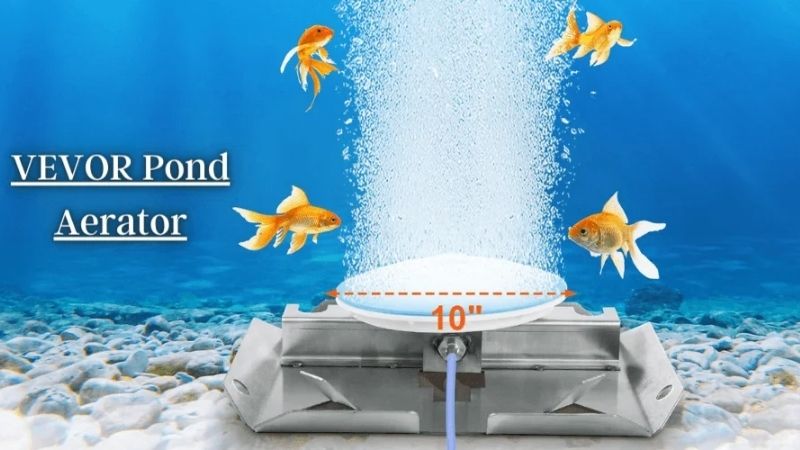
Measure Volume, Depth and Shape
Start with the basics of the pond: its rough volume in gallons, its deepest point, and whether it is round, long or irregular. These three shape everything that follows, so estimate them before looking at any pump. Estimating them roughly is fine; precision comes later, but skipping them does not.
Volume gives a first filter, but depth and shape refine it. A long or L-shaped pond and a round one of equal volume have different needs, so record all three rather than reaching for gallons alone. A long pond and a round one of equal volume rarely want the same pump.
Translate Depth Into Pressure
Depth sets how hard the pump must push, since water pressure rises with depth at roughly psi equal to depth in feet divided by 2.31. A pump has to beat that pressure to get air to the bottom. Beat that pressure and air reaches the bottom; fall short and it stalls midway.
Use your deepest point to estimate the pressure needed, then check a pump’s rating covers it. This single step prevents the common result of a pump that bubbles at the surface but never reaches the deep water. Confirming the rating covers your deepest point prevents a surface-only result.
Decide How Many Diffusers
Shape decides coverage. A compact round pond may be served by one diffuser, while a long or irregular pond needs two or more, or a multi-outlet pump, to avoid still corners where debris settles and oxygen drops. Count the corners that would otherwise sit still before you settle on outlets.
Count the zones that need movement, then choose outlets to match. Planning diffusers to the layout is what turns even bubbling across the whole pond into reality, rather than a lively middle and dead ends. Coverage, not just output, is what keeps the whole pond evenly oxygenated.
Set Your Power and Noise Budget
Because a pond pump runs continuously, power draw and noise are ongoing factors. A 4.5W pump using about 39 kWh a year costs little to run, while a louder unit near a patio can become a daily annoyance. Decide the trade where the pond sits before you weigh any single model.
Decide what draw and noise you will accept given where the pond sits. A pump near seating leans toward a low dBA rating, while a distant pond can prioritize output, so set this budget before comparing models. With the budget set, the spec sheets finally have something to be judged against.
Match the Aerator to Your Conditions and Fix Common Gaps
With the pond measured, matching is straightforward, and most poor choices show up as one of a few fixable gaps. The table pairs each symptom with what it appears alongside, the likely cause and the first action, so you can correct a mismatch quickly or avoid it at purchase.
| Symptom | Sign Alongside | Likely Cause | First Action |
|---|---|---|---|
| Weak surface movement | Bubbles barely break the top | Pump underpowered for the depth | Choose a higher-pressure rating |
| Dead corners | Debris settling at the ends | One diffuser on a large pond | Add an outlet or reposition |
| High running cost | Meter creeping upward | Pump oversized for the need | Right-size to the pond |
| Noise complaints | Audible hum near seating | High dBA or poor placement | Pick lower dBA; damp and move |
Match Pressure to Depth
Once you know the depth-driven pressure, pick a pump whose rating clearly covers it, with a little margin. Air that reaches the bottom is the whole point, and a pump chosen only on gallons often falls short here. A small margin over the required pressure gives the pump room on hot days.
If a pond already bubbles weakly at depth, the cause is usually too little pressure for the depth. Stepping up to a higher-pressure pump, rather than a higher gallon rating, is the fix that actually gets air down. Reaching for a bigger gallon rating instead leaves the depth problem intact.
Place Diffusers for Full Coverage
Position matters as much as count. Set diffusers to spread movement across the pond, favoring the deeper zones and the ends of a long shape, so no corner is left still and low in oxygen. Placing air near the ends of a long pond is what clears those stubborn corners.
If corners collect debris, that is a coverage gap, not always a weak pump. Adding an outlet or repositioning a diffuser often solves it more cheaply than buying a larger unit that still points at the same spot. Repositioning first is cheaper than replacing a pump that was never the issue.
Right-Size to Control Running Cost
An oversized pump wastes power and can over-mix a small pond. Matching the pump to the pond keeps the annual draw sensible, since the difference between a 4.5W and a 6W unit adds up over a year of nonstop running. Over a year of nonstop running, that gap between wattages turns into real money.
If bills climb, an oversized pump is a common cause. Right-sizing to the pond’s real need, rather than buying the biggest that fits, keeps running cost in check without giving up the aeration the water actually requires. Right-sizing keeps the bill sensible without starving the pond of air.
Choose for Quiet Where It Matters
Where the pond sits near living space, noise becomes a selection factor. Compare dBA at a matched distance and favor a lower rating, then plan placement on a damped base away from seating to keep the hum unobtrusive. A rubber pad, shade and distance together do most of the quieting for free.
If an installed pump is annoying, placement usually helps before replacement. A rubber pad, a sheltered spot and distance can tame it, but for a pond beside a patio, choosing a low dBA pump from the start is wiser. Choosing quiet up front spares you the fiddling once the pump is in place.
Frequently Asked Questions
Common questions cover how to size the pump, how many diffusers to use, whether depth changes the choice, and how to keep it quiet and cheap to run. Each answer gives the practical rule first, then the condition that adjusts it for your pond. Read the rule, apply the exception, and the sizing decision resolves itself.
How do I size a pond aerator?
Start with volume as a first filter, then refine by depth and shape. Volume narrows the field, depth sets the pressure the pump must beat, and shape decides how many diffusers you need, so all three together give the size. Depth in particular is the factor most buyers underweight when sizing by gallons.
Avoid sizing on gallons alone, which ignores depth and layout. A quick check that the pump’s pressure covers your deepest point and its outlets suit your shape turns a rough gallon match into a proper fit. That short follow-up check is the difference between a fitted and a lucky pump.
How many diffusers do I need?
It depends on shape more than size. A compact round pond may need only one, while a long or irregular pond needs two or more, or a multi-outlet pump, to keep every corner moving and free of still, low-oxygen water. Match outlets to the zones that need movement, not to the pond’s total size.
Count the zones that need circulation and match outlets to them. If corners go stagnant with one diffuser, that is the signal to add an outlet or reposition, rather than assuming the pump itself is too weak. Treating a coverage gap as a weak pump is how buyers overspend on capacity.
Does depth change which aerator I need?
Yes, strongly. Depth sets the pressure the pump must overcome, roughly depth in feet divided by 2.31 in psi, so a deep pond needs a higher-pressure pump even if its volume is modest. Ignoring depth is why some ponds only bubble on top. Two ponds of equal gallons but different depths do not want the same pump.
Check your deepest point and confirm the pump’s rating covers that pressure. Two ponds of equal gallons but different depths can need different pumps, which is why depth belongs in the decision from the start. Bring depth into the decision early and the surface-only trap never appears.
How do I keep it quiet and cheap to run?
Choose a low power draw and a low dBA rating, then place the pump well. A 4.5W pump costs little over a year, and a low-rated unit on a damped base away from seating stays unobtrusive through continuous running. For a pond beside a patio, a low dBA choice at purchase beats any later fix.
Match both to where the pond sits: a pump near a patio prioritizes quiet, a distant one can prioritize output. Good placement, a rubber pad and a sheltered spot then keep whatever you choose quiet and efficient. Set the budget to the location and the pump quietly does its job for years.
Final Thoughts
In short, how to choose a pond aerator is a sequence: measure volume, depth and shape, turn depth into the pressure the pump must beat, plan diffusers for the layout, and set a power and noise budget for where the pond sits. Work through it in order and the right pump becomes clear.
Related Reviews & Guides
Pond Aerator Buying Guide for Beginners: Where to Begin
Best Aquarium Stand Cabinet With Storage For Large Tanks