Last Updated: October 21, 2026
How to speed up aquarium cycling has three answers that work and several that waste time. Seeded media, water held at 78 to 80 °F and a controlled ammonia dose account for nearly all of the gain that is actually available. Start by testing the water, then apply the steps below in the order they are given.
As an Amazon Associate we earn from qualifying purchases.
As an Amazon Associate we earn from qualifying purchases at no extra cost to you.



By David Nguyen
Measure Before Trying to Speed Anything Up
Acceleration only helps if the tank is actually progressing. How to speed up aquarium cycling depends on which stage the readings show, because a stalled tank needs a correction rather than an accelerant and the two look identical on a calendar.
The four numbers to check first
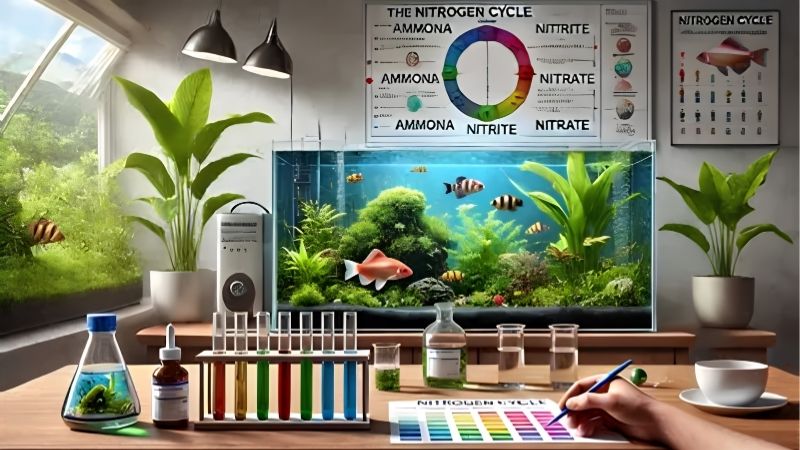
Test ammonia, nitrite, nitrate and temperature before changing anything. Those four locate the tank on the curve and reveal the two most common brakes: a dose above 5 ppm inhibiting the second bacterial group, and water sitting below 70 °F (21 °C).
Add pH to that list if readings have been static for a fortnight. Nitrifying bacteria slow sharply below 6.5, and the process consumes carbonate hardness as it runs, so soft tap water can drift downward over weeks and halt an otherwise healthy cycle.
Matching the lever to the stage
Not every accelerant helps at every point, and applying the wrong one wastes both money and days. The readings tell you which stage the tank has actually reached, and each of those stages responds to a completely different intervention from the other two.
In the first week, with ammonia present and no nitrite, seeded media gives the largest single gain because it supplies the population that would otherwise take days to establish. Temperature and aeration are the useful additions at this point.
Once nitrite is climbing, seeding helps less and conditions matter more. This stage is limited by the reproduction rate of the second bacterial group, so holding temperature, oxygen and pH steady is what shortens it rather than adding anything to the water.
| Current situation | Readings | Fastest lever | Realistic gain |
|---|---|---|---|
| Tank just filled | All zero | Seeded media plus ammonia dose | Cuts 3-8 weeks to 1-2 |
| Ammonia stage | Ammonia 2-4 ppm, no nitrite | Hold 78-80 °F (26-27 °C) | Several days to a week |
| Nitrite stage | Nitrite high, ammonia falling | Aeration and steady pH | Up to a week |
| Dose too high | Ammonia above 5 ppm | Partial change to 2-4 ppm | Removes an active brake |
| pH has fallen | Below 6.5, readings static | Restore carbonate hardness | Restarts a stalled cycle |
| Cold room | Water below 70 °F (21 °C) | Correctly sized heater | Can halve total time |
When it is a stall rather than slow progress
Readings that have not moved in fourteen days point to a specific cause rather than a need for patience. Untreated tap water passing through the filter, a filter switched off overnight, or a heater that has failed will each hold a tank static indefinitely.
Check the heater against an independent thermometer rather than trusting its dial, since budget units routinely run 2 to 4 °F (1 to 2 °C) off setting. A cycle that appears stalled in February is very often a room problem rather than a biology problem.
How to Speed Up Aquarium Cycling Step by Step
Three actions produce nearly all of the available gain, and they work together rather than separately. Anyone asking how to speed up aquarium cycling should work through them in exactly this order before considering anything sold in a bottle.
Step one: seed the colony, the biggest single speed up
Media from a healthy established tank carries an existing population and reduces the wait to one or two weeks. Keep it wet and transfer it within an hour, because the bacteria begin dying once flow and oxygen stop and a dried sponge carries almost nothing useful.
A handful of bio media, a squeezed sponge or a cup of established substrate all work. Ask about the donor tank first, since media from a tank with an ongoing disease problem carries considerably more than bacteria and the time saved is not worth that risk.
Step two: hold temperature, oxygen and pH
Once the colony has been seeded, conditions do the rest of the work. These three are the only environmental variables really worth managing at this point, and holding all of them steady matters more than pushing any single one of them higher.
Set 78 to 80 °F (26 to 27 °C) and verify against a separate thermometer. Going higher than 84 °F (29 °C) offers no further gain at all and reduces dissolved oxygen, which works against the colony rather than for it during the longest stage.
Aim the filter outlet to ripple the surface or run an air stone continuously, because a nitrifying colony is oxygen-hungry and a still surface limits growth regardless of temperature. Keep pH above 6.5 throughout, since the process itself pushes it downward.
Step three: control the dose, since overdosing slows cycling
Hold ammonia at 2 to 4 ppm and redose only when it reaches zero. Above roughly 5 ppm the second bacterial group slows markedly, so heavy dosing in the hope of feeding the colony faster reliably produces the exact opposite of the intended result.
Check the physical setup while the tank is still empty. Measure the gap behind the tank and the water line against the heater before ordering equipment, since a filter that loses prime overnight or a partly exposed heater costs days of progress each time.
What Fails to Speed Up Aquarium Cycling
Three popular shortcuts either waste time or actively cost it, and all three are widely repeated whenever someone asks how to speed up aquarium cycling. Each has a specific mechanism behind it rather than being a simple matter of preference.
Rinsing media or changing water to freshen the tank
Chlorine and chloramine kill nitrifying bacteria on contact, so rinsing media under the tap sends a nearly finished cycle back weeks. Large water changes remove the ammonia the colony feeds on, which slows a fishless cycle rather than tidying it up.
Dosing bottled bacteria repeatedly through the process
These products can seed a colony at the start, and once the stage is running the limiting factor is reproduction time rather than the starting population. Repeated dosing through week three rarely changes the timeline and adds cost without adding speed.
Running the light or heating past 84 °F
Nitrifying bacteria are not photosynthetic, so lighting does nothing for them and encourages algae on the bare glass instead. Heating beyond 84 °F (29 °C) reduces dissolved oxygen by enough to cancel out any gain from the higher temperature.
Not Needing to Speed Up Aquarium Cycling Next Time
The fastest cycle is the one you never have to repeat, and most repeat cycles come from a short list of avoidable events. Protecting the existing colony costs far less effort and money than accelerating a new one from scratch a second time.
The routine that protects the result
Change 20 to 30 percent weekly with dechlorinated water matched to within 1 to 2 °F (about 1 °C), rinse mechanical floss in removed tank water only, and never deep clean the filter and vacuum the substrate thoroughly during the same week as each other.
Feed what is eaten in one to two minutes and stock in small groups a fortnight apart. Adding a full stocking list at once produces a mini-cycle, which is the most common reason a tank that finished quickly is back to daily testing a month later.
Equipment that prevents a restart
A liquid test kit, an independent thermometer and a dechlorinator rated for chloramine cover most of the failure modes. Reagents expire whether used or not, so note the date on the box and replace them rather than trusting an old kit through a problem.
A battery air pump covers the remaining risk. Atlantic hurricane season runs June through November and winter storms cause identical outages, and a filter that stops moving water loses colony to oxygen shortage within hours of the power going out.
Early signs that time is being lost
Losing a colony rarely announces itself. It shows first as a small reading that would have been zero the week before, which is why weekly testing needs to continue long after a tank has been declared finished, stocked and largely forgotten about.
Ammonia above 0.25 ppm, any nitrite reading, or nitrate climbing between changes each mean the colony has fallen behind. Respond with a water change and lighter feeding, then find the cause in stocking or recent maintenance rather than reaching for an additive.
Keep a cycled sponge running in the filter of an established tank if you plan to set up another. That single habit turns the next three to eight week wait into one or two weeks without buying any product at all, and it costs nothing to maintain.
Frequently Asked Questions
These come up in the second week, once the first readings have appeared, nitrite has started climbing, and the finish now looks considerably further away than the original three week estimate had ever suggested it would be.
How to speed up aquarium cycling as fast as possible?
Seeded media from a healthy running filter, water held at 78 to 80 °F (26 to 27 °C), strong surface agitation and a steady 2 to 4 ppm ammonia dose. Together these four reliably reduce a three to eight week process down to one or two weeks in practice.
Does bottled bacteria speed up aquarium cycling?
Results vary by product and by storage, and the honest position is that it can help at the start and never removes the confirmation test. Treat any claim as a possible head start rather than as proof, and stock only after a 24 hour clearance test has passed.
Can raising the temperature further speed it up?
Only to a point. Bacterial activity increases with warmth up to roughly 84 °F (29 °C), beyond which falling dissolved oxygen cancels out the benefit. Holding 78 to 80 °F (26 to 27 °C) steadily beats pushing higher and letting the temperature swing.
Why is my cycle slower than the guides on how to speed up aquarium cycling say?
Usually room temperature. A tank cycling in a cold room in winter can take roughly twice as long as the same setup running in summer, which is why two otherwise identical tanks finish in three weeks in July and drag past eight weeks in February.
See More:
Cutting the Wait Sensibly
How to speed up aquarium cycling comes down to seeded media, 78 to 80 °F (26 to 27 °C), good aeration, pH above 6.5 and a dose held at 2 to 4 ppm. Confirm the finish with the 24 hour clearance test rather than assuming the shortcuts worked.
Aquarium Basics: How to Start Your First Fish Tank
Endler’s Livebearer Care Guide: A Colorful Nano Fish for Beginners